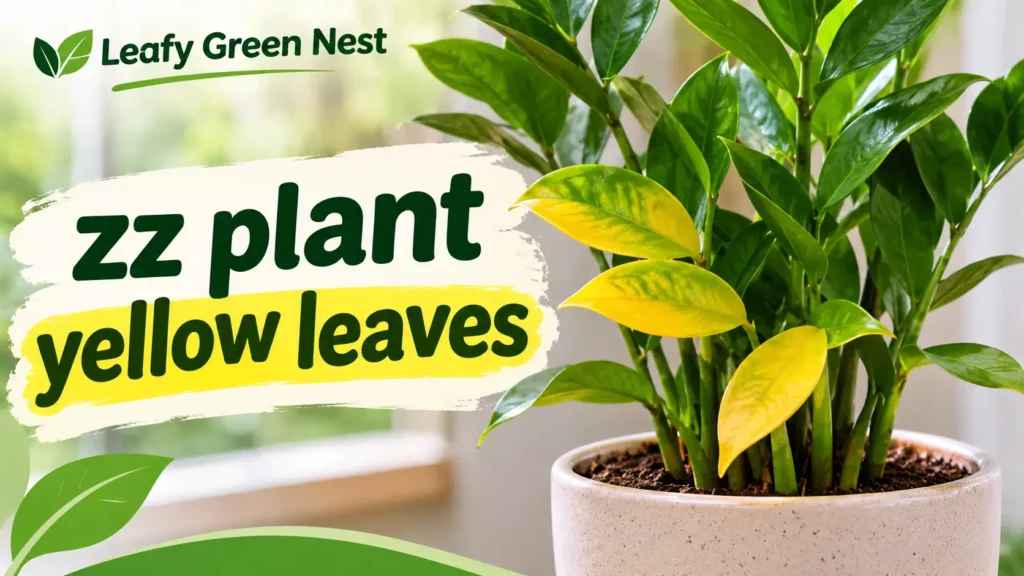
Have you noticed your ZZ plant losing its beautiful green color? Maybe one stem has turned yellow, the leaf tips look brown, or several leaves are falling off. It can be worrying, especially when you thought this was one of the easiest houseplants to care for.
The good news is that ZZ plant yellow leaves do not always mean your plant is dying. Sometimes an older leaf is simply reaching the end of its life. In other cases, the plant may be getting too much water, too little light, or growing in soil that stays wet for too long.
The trick is to look at the whole plant instead of guessing. A yellow leaf with dry soil tells a different story from a yellow leaf with a soft, mushy stem.
Let’s look at what might be happening and how you can help your ZZ plant get back to looking healthy.
Table of Contents
What Are ZZ Plant Yellow Leaves?
ZZ plant yellow leaves are leaves that lose their natural green color because of age, watering problems, root damage, or changes in growing conditions. The plant may develop yellow spots, pale tips, or completely yellow stems.
The ZZ plant, scientifically known as Zamioculcas zamiifolia, is a popular indoor plant with thick stems and shiny green leaflets. It also has underground parts called rhizomes. These thick, potato-like structures store water, helping the plant survive dry periods.
Think of the rhizomes as little water tanks. They allow the plant to go without watering for longer than many other houseplants.
However, this does not mean you can keep pouring water into the pot. Too much moisture can damage the roots and cause the leaves to turn yellow.
Key Takeaways
Yellow leaves are a warning sign, but the cause is not always serious. Look at the soil, stems, and affected leaves together before deciding what your plant needs.
- Overwatering is a common reason ZZ plant leaves turn yellow.
- Poor drainage can cause root rot even if you water only occasionally.
- Dry soil and crispy leaves may point to underwatering.
- One yellow stem may simply be an old stem dying naturally.
- Brown tips can result from watering stress or fertilizer buildup.
- Yellow leaves usually do not turn green again.
- Healthy roots, firm stems, and fresh growth are good signs of recovery.
Why Is My ZZ Plant Turning Yellow?
A ZZ plant usually turns yellow when something affects its roots, leaves, or growing environment. Watering mistakes are common, but light, temperature, pests, and natural aging can also play a part.
Here are the main causes and the signs that can help you tell them apart.
Overwatering
Overwatering is one of the most common causes of ZZ plant yellow leaves. Because this plant stores water in its rhizomes, it does not need frequent watering.
Imagine wearing wet socks all day. Your feet would feel uncomfortable, right? Plant roots also struggle when they stay surrounded by water for too long. They need air as well as moisture.
When the soil remains wet, roots may become damaged and start to rot.
Look for these signs:
- Several leaves turning yellow together.
- Soft or mushy stems.
- Soil that stays wet for many days.
- Yellow leaves dropping easily.
- Dark, soft roots.
- A bad smell coming from the pot.
How to fix it: Stop watering and check the soil. If you suspect root rot, remove the plant carefully and inspect the roots. Cut away rotten parts with clean scissors, then repot the healthy sections in fresh, well-draining soil.
The University of Connecticut’s ZZ plant care guide also warns that excessive water can cause yellow leaves and rotting rhizomes.
Underwatering
Can a ZZ plant turn yellow because it is too dry? Yes, although it is naturally good at handling dry conditions.
If you forget to water your plant for a long time, it may begin to lose moisture. Older leaves can become dry, yellow, and crispy.
Common signs include:
- Crispy leaf edges.
- Dry, wrinkled stems.
- Soil pulling away from the pot.
- Leaflets becoming papery.
- Leaves drying and falling off.
How to fix it: Check the soil with your finger. If it is completely dry, water the plant thoroughly and let the extra water drain away.
Do not give it a tiny splash every day. A proper watering followed by a drying period is a better approach.
Poor Drainage and Root Rot
Sometimes your ZZ plant develops yellow leaves even though you are not watering too often. The problem may be the soil or pot rather than your watering habits.
For example, you might water your plant every three weeks, but heavy soil may hold moisture for much longer. A pot without drainage holes makes things worse.
What should you check?
- Does the pot have drainage holes?
- Does water collect at the bottom?
- Does the soil feel wet long after watering?
- Are the roots dark and mushy?
- Is the stem soft near the soil?
How to fix it: Use a loose houseplant potting mix with perlite or orchid bark. Choose a pot with drainage holes and empty the saucer after watering.
The University of California’s guide to houseplant problems explains how poor drainage and compacted potting soil can contribute to root problems.
Insufficient Light
ZZ plants can survive in low-light rooms, but that does not mean they enjoy sitting in a dark corner forever.
Think about a plant placed behind a sofa, far away from the window. It may stay alive, but its growth can slow down because it receives less light.
Signs of insufficient light include:
- Very slow growth.
- Older leaves turning yellow.
- Pale-looking foliage.
- Few new shoots.
- Long periods without fresh growth.
How to fix it: Move the plant closer to a bright window where sunlight is filtered. An east-facing window is often a good choice.
Avoid placing it directly under strong afternoon sunlight. Too much direct sun can scorch the leaves.
Natural Leaf Aging
Not every yellow leaf is a reason to panic. Sometimes your ZZ plant is simply getting rid of an old leaf.
Imagine a tree dropping its older leaves. Houseplants also lose old growth as they develop new leaves.
Natural aging is more likely when only one older stem turns yellow and the rest of the plant looks healthy.
You may notice the leaflets falling first, followed by the stem slowly drying out.
If the remaining stems are firm and the plant continues growing, you probably do not need to do anything.
Temperature Stress
ZZ plants prefer warm, stable indoor conditions. Sudden changes in temperature can cause yellowing, curling, and falling leaves.
A plant sitting beside an air conditioner or cold window may experience stress without you noticing.
Keep your plant away from:
- Cold drafts.
- Air conditioning vents.
- Direct heat from heaters.
- Frequently opened exterior doors.
A comfortable indoor temperature is generally around 65–80°F (18–27°C).
Nutrient Deficiency and Excess Fertilizer
ZZ plants grow slowly, so they do not need heavy feeding. However, poor soil conditions or a lack of nutrients may contribute to pale leaves.
Too much fertilizer can also cause trouble. Excess fertilizer salts may build up in the soil and damage roots.
Look for brown tips, pale leaves, white deposits on the soil, or yellowing that started after frequent feeding.
Use a balanced houseplant fertilizer sparingly during active growth. Avoid feeding a plant that already has damaged roots.
Pest Infestation
Have you noticed tiny spots, sticky patches, or fine webbing on your ZZ plant? Pests may be the problem.
Spider mites and scale insects can damage leaves by feeding on plant tissues.
Check underneath the leaves and around the stem joints. These are places where small insects can hide.
If you find pests, move the plant away from other houseplants, wipe away visible insects, and use an indoor-plant insecticidal soap according to its label.
ZZ Plant Leaves Turning Yellow at Tips
Yellow tips can be caused by watering stress, fertilizer buildup, or mineral salts in the soil. Sometimes the affected tips also become brown and crispy.
Look closely at the rest of the leaf. If most of it is still green, the damage may be limited.
What should you do?
- Check whether the soil is too wet or too dry.
- Reduce fertilizer if you have been feeding the plant often.
- Look for white crusty deposits on the soil.
- Keep the plant away from strong direct sunlight.
- Trim the dry tip if it bothers you.
Do not cut off a whole healthy leaf just because its tip has turned brown.
ZZ Plant Yellow Leaves Not Overwatering
If your ZZ plant has yellow leaves but you are sure you are not overwatering, there may be another reason. Underwatering, poor light, cold drafts, pests, and natural aging can all cause yellow foliage.
Before changing your watering routine, take a closer look at the plant.
Here are a few everyday clues:
- Dry soil: Your plant may need water.
- Very dark room: It may need a brighter spot.
- Cold window: Temperature stress may be responsible.
- Tiny spots or webbing: Check for pests.
- One old yellow stem: It may be natural aging.
- White marks on the soil: Fertilizer or mineral buildup may be present.
We should not blame watering every time a leaf turns yellow. Sometimes the problem is hiding somewhere else.
ZZ Plant Leaves Turning Yellow and Falling Off
When ZZ plant leaves turn yellow and fall off, the plant may be dealing with root damage, long periods without water, or natural aging. The number of affected leaves matters.
If one old leaf drops while everything else looks fine, there is usually little reason to worry.
But what if several leaves fall within a few days?
Check the stems near the soil. Firm stems are generally more reassuring than soft, dark, or mushy ones.
If the soil is wet and the stems feel soft, inspect the roots for rot. If the soil is very dry, check whether the plant needs a thorough watering.
Should I Cut Off Yellow ZZ Plant Leaves?
Yes, completely yellow, dead, or rotting leaves can be removed. However, partly green leaves can stay on the plant while you work out what is causing the problem.
Use clean, sharp scissors and cut the damaged stem close to the soil without hurting nearby growth.
| Leaf condition | What to do |
|---|---|
| Completely yellow | Remove it |
| Brown and crispy | Remove if badly damaged |
| Slightly yellow | Watch it for changes |
| Yellow and mushy | Remove and inspect for rot |
| Mostly green with a brown tip | Keep it |
| Old yellow stem | Remove when fully dry |
One important thing: removing yellow leaves will not fix the cause. If the soil is still soggy, more leaves may turn yellow even after pruning.
ZZ Plant Yellow Leaves With Brown Tips
Yellow leaves with brown tips may point to inconsistent watering, excess fertilizer, mineral buildup, or root damage. The edges may feel dry and rough when you touch them.
Start by checking the soil instead of reaching for the watering can.
If the soil is wet, improve drainage. If you have been feeding the plant too often, reduce fertilizer. If the soil has a white crust, mineral or fertilizer salts may have collected there.
You can trim the brown parts with clean scissors, but leave the healthy green section alone.
ZZ Plant Yellow Leaves on One Stem
If only one ZZ plant stem turns yellow, natural aging is a likely explanation, especially when it is the oldest stem. This is usually less worrying than several stems turning yellow together.
Check the stem carefully.
If it is firm and the rest of the plant looks healthy, let it finish its natural cycle. Once it becomes completely yellow or dry, you can remove it.
However, if the stem feels soft near the soil or has dark patches, check for rot. A single yellow stem can sometimes be an early warning of a bigger problem.
ZZ Plant Leaves Turning Yellow and Curling
Yellow leaves that curl inward can be a sign of water stress, root damage, strong sunlight, or temperature changes. The plant may be struggling to maintain healthy leaves.
Start with the soil. Is it bone dry or still wet?
If it is dry, give the plant a thorough watering. If it is wet, do not add more water. Check the roots instead.
Also look at where the plant sits. A sunny windowsill that becomes very hot in the afternoon or a spot directly under an air conditioner may be causing trouble.
How to Fix ZZ Plant Yellow Leaves
The best way to fix yellow leaves is to find the actual cause first. Changing several things at once can make it harder to understand what is helping your plant.
Work through these simple checks.
Check the soil moisture. Push your finger into the soil. If it is wet, wait before watering. If it is dry and the roots are healthy, water thoroughly.
Inspect the roots and rhizomes. If you suspect root rot, gently remove the plant from its pot. Healthy roots should feel firm, while rotten roots may be dark and mushy.
Remove rotten sections. Use sterilized scissors to cut away damaged roots and rhizomes. Keep the healthy parts.
Change the soil if necessary. Use a loose potting mix with good drainage. A mixture containing houseplant soil, perlite, and orchid bark can work well.
Choose a suitable pot. Use a container with drainage holes. Avoid putting a small plant in a huge pot because extra soil can hold moisture for longer.
Find a brighter spot. Place your ZZ plant near a window with indirect sunlight. Avoid sudden exposure to strong sun.
Remove badly damaged leaves. Cut off completely yellow or rotting stems with clean scissors.
Give it time. Watch for firm stems, stable foliage, and new growth. ZZ plants are slow growers, so recovery may take time.
How to Prevent ZZ Plant Leaves From Turning Yellow
Good ZZ plant care does not have to be complicated. A few sensible habits can keep your plant looking fresh without making you check it every day.
- Check before watering: Never water just because a certain number of days have passed.
- Use suitable soil: Choose a loose mixture that drains well.
- Pick the right pot: Make sure excess water can escape.
- Give it indirect light: Keep the plant in a bright spot without harsh afternoon sun.
- Feed lightly: ZZ plants do not need frequent fertilizer.
- Keep temperatures steady: Avoid cold drafts and direct heat.
- Check the leaves: Look for pests, brown tips, and unusual spots.
A helpful tip is to lift the pot after watering and remember how heavy it feels. As the soil dries, the pot becomes lighter. This simple trick can help you understand when your plant is ready for water.
Best ZZ Plant Care Conditions
ZZ plants are low-maintenance, but they still need suitable light, water, and soil. Giving them the right conditions makes yellow leaves less likely.
| Care requirement | Recommended condition |
|---|---|
| Botanical name | Zamioculcas zamiifolia |
| Light | Bright, indirect light |
| Watering | When the soil has dried |
| Soil | Loose, well-draining potting mix |
| Temperature | Around 65–80°F (18–27°C) |
| Humidity | Normal indoor humidity |
| Fertilizer | Light feeding during active growth |
| Growth rate | Slow |
| Pruning | Remove dead or damaged leaves |
| Repotting | When the plant outgrows its pot or the soil needs replacing |
The University of Florida’s ZZ plant care factsheet explains that this plant tolerates low light and drought but should not sit in water.
Common Mistakes That Cause ZZ Plant Yellow Leaves
Small care mistakes can slowly affect your plant, even when everything looks fine at first. Avoid these habits to keep your ZZ plant in better shape.
- Watering too often: Constantly wet soil can damage roots.
- Using a fixed schedule: Your plant’s water needs change with the weather and room conditions.
- Choosing a pot without drainage: Extra water can collect around the roots.
- Leaving it in harsh sunlight: Strong sun can burn the leaves.
- Adding too much fertilizer: Excess salts may damage roots and leaf tips.
- Ignoring pests: Small insects can cause bigger problems if left untreated.
- Cutting leaves without checking the cause: Pruning removes damaged growth but does not repair unhealthy roots.
Pros and Cons of Growing a ZZ Plant
ZZ plants are popular because they can handle some neglect and look attractive indoors. However, they are not completely trouble-free, especially when it comes to watering.
| Pros | Cons |
|---|---|
| Tolerates low light | Grows slowly |
| Stores water in rhizomes | Sensitive to overwatering |
| Needs relatively little care | Can develop root rot |
| Has glossy green foliage | Older leaves naturally drop |
| Handles occasional missed watering | Strong sunlight can damage leaves |
| Works well as an indoor plant | Toxic if chewed or swallowed |
One safety point deserves attention: ZZ plants contain calcium oxalate crystals. Chewing the leaves may cause irritation in the mouth and throat. Keep the plant away from children and pets who might try to eat it.
The North Carolina State Extension plant profile provides further information about its growth, care, and toxicity.
Keep Your ZZ Plant Healthy, Green, and Growing Strong
A ZZ plant does not need constant attention to look beautiful. It needs the right amount of water, suitable light, and soil that does not stay soggy.
If you notice yellow leaves, do not rush to water or fertilize the plant. First, check what is happening around the roots and leaves. I would always start with the soil because it can tell you a lot about what the plant is experiencing.
The University of Maryland Extension also recommends checking soil moisture instead of following a fixed watering schedule. Its gardening experts explain that older ZZ leaves can turn yellow and fall naturally, especially when the plant is otherwise healthy.
Give your plant a little time, avoid unnecessary changes, and watch for healthy new growth. A few yellow leaves do not mean you have failed as a plant parent!
Frequently Asked Questions About ZZ Plant Yellow Leaves
Still wondering what is happening to your ZZ plant? These answers cover some common problems that plant owners notice at home.
Why are my ZZ plant leaves turning yellow?
ZZ plant leaves commonly turn yellow because of overwatering, poor drainage, root damage, insufficient light, or natural aging. Check the soil and stems to narrow down the cause.
Can yellow ZZ plant leaves turn green again?
No. Completely yellow leaves generally cannot return to their original green color. Focus on fixing the problem and protecting the remaining healthy foliage.
Should I cut off yellow ZZ plant leaves?
Yes, remove completely yellow, dead, or rotting leaves with clean scissors. If a leaf is only slightly yellow, leave it for now and watch for further changes.
Why does my ZZ plant have yellow leaves but the soil is not wet?
Underwatering, low light, temperature stress, pests, and natural aging may be responsible. Check the leaves, stems, and growing conditions before changing your watering routine.
Why are my ZZ plant leaves turning yellow and curling?
Yellowing and curling can happen because of water stress, damaged roots, strong sunlight, or sudden temperature changes. Check the soil first and move the plant away from harsh conditions if needed.
Does a ZZ plant need sunlight to prevent yellow leaves?
Yes. ZZ plants tolerate low light but generally grow better in bright, indirect sunlight. Keeping them in a very dark spot for long periods can slow their growth.