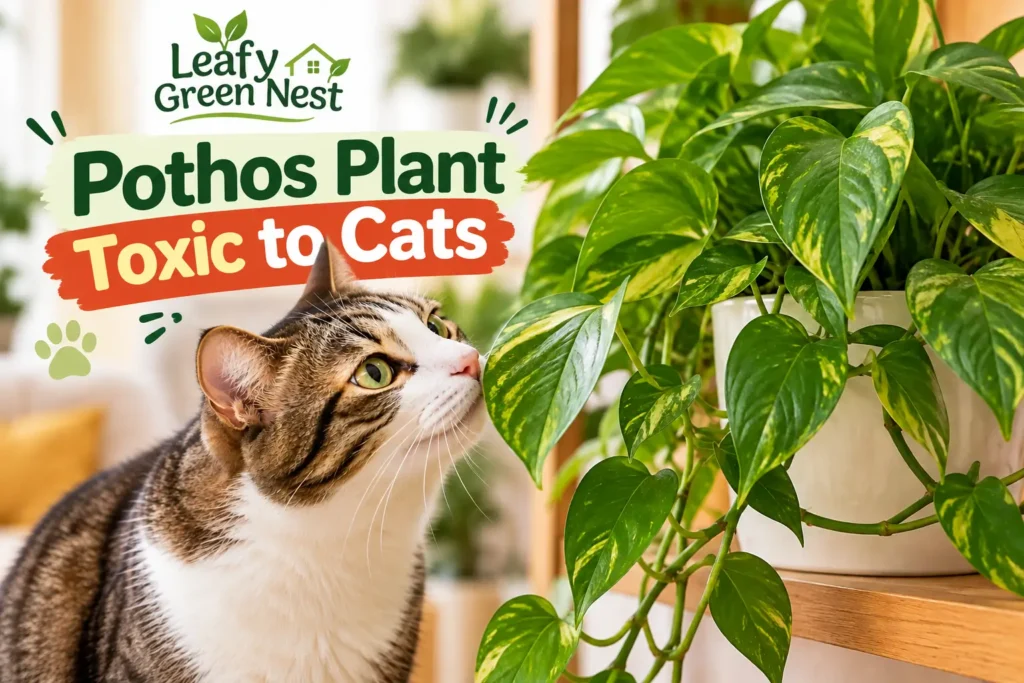
If you have a cat and love keeping houseplants, you might want to think twice before bringing home a pothos plant. Its beautiful green leaves and trailing vines make it a favorite in many homes, but the pothos plant toxic to cats concern is something every cat owner should know about.
If your curious cat decides to take a bite, it can cause mouth irritation, drooling, vomiting, and trouble swallowing. The good news is that most cases are manageable with proper care. Knowing the symptoms to watch for and what to do if your cat eats pothos can help you protect your furry friend and keep your home safer.
Table of Contents
Quick Answer: Is Pothos Plant Toxic to Cats?
Yes. Pothos is toxic to cats because its leaves and stems contain insoluble calcium oxalate crystals. These tiny, needle-shaped crystals can cause intense oral irritation, drooling, pawing at the mouth, vomiting, and difficulty swallowing.
Most exposures cause localized irritation, but the severity depends on how much plant material your cat chewed and how your cat responds. Remove access to the plant and contact your veterinarian for guidance.
Key Takeaways
- Pothos is toxic to cats and dogs.
- Its insoluble calcium oxalate crystals cause pain and irritation when chewed.
- Common symptoms include drooling, vomiting, mouth swelling, and difficulty swallowing.
- Most cases improve with appropriate supportive care.
- Breathing problems or severe throat swelling require emergency veterinary attention.
- Prevention is safer than relying on your cat to avoid houseplants.
Why Is Pothos Toxic to Cats?
Pothos contains insoluble calcium oxalate crystals, which are tiny, needle-shaped structures found within the plant’s tissues. When a cat bites a leaf or stem, these crystals can enter the sensitive tissues of the mouth and throat.
The crystals cause mechanical irritation and pain. Your cat may immediately pull away from the plant, shake its head, drool heavily, or paw at its mouth.
Unlike certain other plant toxins, insoluble calcium oxalates usually cause localized irritation rather than widespread organ damage. However, inflammation can become serious if the mouth or throat swells enough to interfere with swallowing or breathing.
The American Society for the Prevention of Cruelty to Animals (ASPCA) lists golden pothos (Epipremnum aureum) as toxic to cats and dogs.
Symptoms of Pothos Poisoning in Cats
Symptoms can begin shortly after a cat chews the plant. The most noticeable signs involve the mouth, tongue, lips, and digestive system.
Common symptoms include:
- Excessive drooling or foaming at the mouth
- Pawing at the mouth or rubbing the face
- Redness, pain, or swelling around the mouth
- Vomiting or retching
- Difficulty swallowing food or water
- Reduced appetite
- Irritated behavior or unusual vocalization
In more serious cases, swelling of the tongue or throat can affect breathing. This is an emergency.
How Severe Are the Symptoms?
The severity depends on the amount eaten, the extent of chewing, and your cat’s reaction. A small bite may cause significant mouth pain even if little plant material is swallowed.
| Symptom | Recommended response |
|---|---|
| Brief drooling or mouth discomfort | Contact your veterinarian for advice |
| Repeated vomiting | Seek prompt veterinary assessment |
| Refusal to eat or difficulty swallowing | Arrange urgent veterinary care |
| Tongue or throat swelling | Seek emergency care |
| Labored breathing or collapse | Go to an emergency veterinarian immediately |
Do not assume your cat is safe simply because symptoms appear mild at first.
My Cat Ate Pothos but Seems Fine. What Should I Do?
If your cat ate pothos but seems fine, stay calm and take the exposure seriously. Symptoms may be subtle, and your cat might hide discomfort.
Follow these steps:
- Remove the plant. Move your cat away from the pothos and prevent further chewing.
- Check for plant material. Look for visible leaf pieces around your cat’s mouth. Remove loose material only if you can do so safely.
- Contact a veterinarian. Explain what happened, when it happened, and whether your cat swallowed any pieces.
- Keep a sample or photograph. This helps the veterinarian confirm the plant’s identity.
- Monitor your cat. Watch for drooling, vomiting, swelling, appetite changes, or swallowing difficulties while following veterinary advice.
Never induce vomiting or give human medication unless a veterinarian specifically instructs you to. Vomiting can increase discomfort from crystals already irritating the mouth and throat.
Do not force water or food into your cat’s mouth. If swallowing is difficult, forcing liquids can create additional risks.
Pothos Toxic to Cats: Treatment Options
There is no specific antidote for pothos exposure. Treatment focuses on removing plant material, relieving irritation, controlling symptoms, and protecting the airway when necessary.
Depending on the examination, a veterinarian may:
- Carefully remove remaining plant material.
- Examine the mouth and throat for irritation or swelling.
- Provide appropriate pain relief.
- Administer medication for persistent vomiting.
- Offer fluids or other supportive care when needed.
- Provide emergency airway support if severe swelling affects breathing.
Never try home remedies before seeking veterinary guidance. Milk, oils, salt water, and other household treatments are not reliable substitutes for professional care.
Most cats recover well after exposure because the primary effect is localized irritation. Recovery depends on the severity of symptoms and whether complications develop.
Are All Pothos Varieties Toxic to Cats?
Common pothos varieties should not be considered safe for cats simply because their leaves have different colors or patterns.
Golden pothos, marble queen pothos, and similar cultivars belong to the same general plant group and can contain irritating calcium oxalate crystals. Satin pothos is a different species, Scindapsus pictus, but it is also listed as toxic to cats by the ASPCA.
Check plant labels carefully. Common names can overlap, and different houseplants may look similar. If you cannot identify a plant confidently, take a clear photograph and ask a veterinarian or qualified plant specialist to help.
How to Keep Cats Safe Around Houseplants
The safest option is to keep toxic plants out of your cat’s environment.
Use this checklist to reduce exposure:
- Remove pothos plants from rooms your cat can access.
- Avoid hanging baskets if your cat can reach trailing vines.
- Clean up fallen leaves and discarded cuttings promptly.
- Keep propagation jars and water-grown cuttings inaccessible.
- Check new plants against a reliable pet-toxicity database.
- Tell family members which plants are unsafe.
- Provide suitable cat grass or other veterinarian-approved enrichment.
Remember that cats climb, jump, and explore narrow spaces. A plant placed on a high shelf may still be reachable.
Cat-Safe Alternatives to Pothos
If you enjoy indoor greenery, consider plants generally recognized as non-toxic to cats, such as:
- Spider plant (Chlorophytum comosum)
- Boston fern (Nephrolepis exaltata)
- Areca palm (Dypsis lutescens)
- Calathea species
- Some peperomia species
Plant safety can depend on correct identification and the particular species. Even non-toxic plants may cause stomach upset if a cat eats large amounts. Check each plant with the ASPCA’s toxic and non-toxic plant database before bringing it home.
Frequently Asked Questions
Can a small bite of pothos hurt my cat?
Yes. Even a small bite can release calcium oxalate crystals that irritate the mouth. Contact your veterinarian for advice, even if your cat appears comfortable afterward.
When do pothos poisoning symptoms appear?
Symptoms often begin shortly after chewing because the crystals cause direct irritation. However, timing and severity vary, so contact a veterinarian rather than waiting for symptoms.
Is pothos deadly to cats?
Pothos exposure is usually not fatal, and most cats recover with appropriate care. Severe swelling can threaten breathing, however, so urgent veterinary treatment is essential when serious symptoms develop.
Should I make my cat vomit after eating pothos?
No. Do not induce vomiting unless a veterinarian specifically directs you to do so. Vomiting may worsen irritation and distress.
Does pothos cause kidney failure in cats?
Pothos typically causes irritation of the mouth and digestive tract rather than kidney damage. Its insoluble calcium oxalate crystals differ from soluble oxalates, which can cause systemic problems.
What should I do if my cat keeps vomiting after eating pothos?
Contact a veterinarian promptly. Repeated vomiting, difficulty swallowing, or swelling may require examination and supportive treatment. Seek emergency care immediately if breathing becomes difficult.
Expert Tips for Preventing Plant Poisoning
Experienced pet owners know that prevention starts with plant identification. Keep a list of your houseplants, check their scientific names, and review reliable veterinary resources before purchasing unfamiliar varieties.
If your cat regularly chews greenery, offer safe enrichment and remove tempting trailing vines. Do not assume that a plant is harmless because it is common in homes.
If exposure occurs, write down when it happened and record any symptoms. This information helps your veterinarian assess the situation.
Final Verdict: Keep Pothos Away From Cats
Pothos is toxic to cats because it contains insoluble calcium oxalate crystals that cause painful irritation. Although many cats recover well, swallowing or chewing the plant should never be ignored. Remove access, contact your veterinarian, and seek emergency care for breathing problems or severe swelling. Choosing verified cat-safe plants is the simplest way to enjoy indoor greenery while protecting your pet.
References:
- ASPCA Animal Poison Control: Golden Pothos toxicity information
- Pet Poison Helpline: Golden pothos exposure guidance
- Merck Veterinary Manual: Houseplants toxic to animals