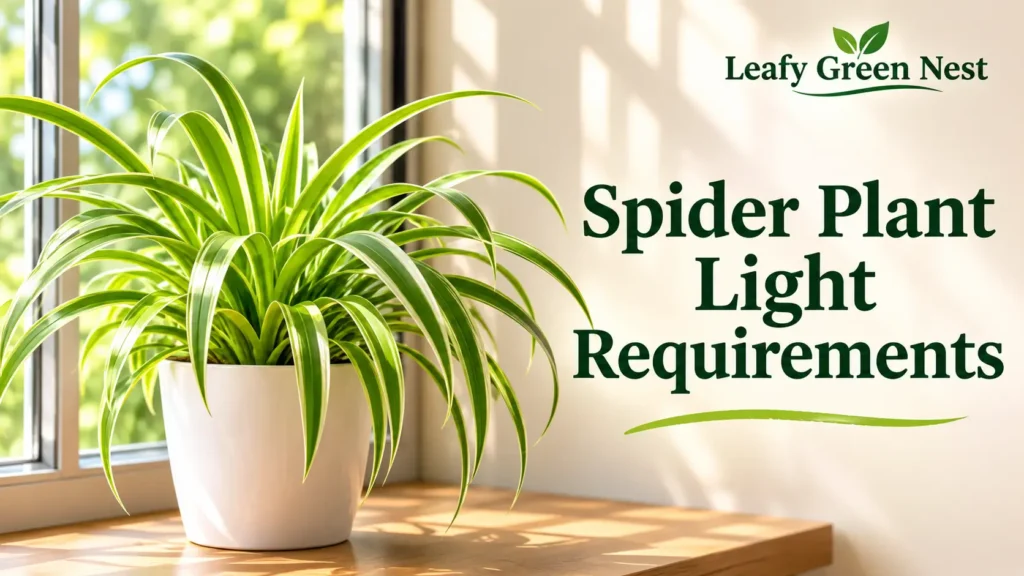
Spider plant light requirements are easy to manage once you understand how much sunlight these popular houseplants need. Spider plants grow best in bright, indirect light, where they can develop healthy leaves, maintain their natural colors, and produce baby plants.
The spider plant (Chlorophytum comosum) is a favorite among indoor gardeners because it adapts to different growing conditions. It can survive in lower-light rooms, tolerate some shade, and grow happily near a bright window. However, the wrong lighting conditions can cause brown leaf tips, faded stripes, and slow growth.
The secret is finding the right balance. Your spider plant needs enough light for healthy growth but should stay protected from harsh afternoon sunlight.
This guide explains spider plant light requirements indoors and outdoors, the best window positions, artificial lighting, common problems, and practical ways to keep your plant healthy throughout the year.
Disclosure: This post contains affiliate links. If you purchase through these links, I may earn a small commission at no extra cost to you.
Table of Contents
What Are Spider Plant Light Requirements?
Spider plant light requirements describe the amount and intensity of light needed for healthy foliage, strong roots, and consistent growth. These plants prefer bright, indirect sunlight rather than prolonged exposure to strong direct sunlight.
Spider plants naturally grow in environments where surrounding vegetation provides some protection from intense sunlight. This makes them well suited to bright indoor spaces with filtered daylight.
Here are the basic lighting conditions to aim for:
- Ideal light: Bright, indirect sunlight.
- Daily exposure: Approximately 6 to 8 hours of useful natural daylight.
- Best window: East-facing window.
- Light tolerance: Low to bright indirect light.
- Direct sunlight: Gentle morning exposure may be tolerated.
- Indoor placement: Near a bright window or in a naturally well-lit room.
- Artificial lighting: Full-spectrum LED grow lights can provide additional light.
| Lighting condition | Effect on spider plant | Suitability |
|---|---|---|
| Bright indirect light | Healthy foliage and steady growth | Excellent |
| Medium indirect light | Slower but generally healthy growth | Good |
| Low light | Reduced growth and fewer plantlets | Limited |
| Strong direct sunlight | Scorched or bleached leaves | Avoid |
| Complete darkness | Cannot support healthy growth | Unsuitable |
The 6 to 8-hour recommendation is a practical starting point, not a strict requirement. Actual light needs depend on light intensity, window direction, season, and the plant’s growing environment.


Spider Plant Light Requirements Indoors
Spider plants grow well indoors when they receive consistent natural daylight without excessive direct sunlight. A bright room near a window is usually the easiest place to maintain healthy foliage.
The best position depends on which direction your window faces and how much sunlight enters your home.
East-Facing Windows
East-facing windows are often the best choice for indoor spider plants because they provide gentle morning sunlight. The sunlight is generally less intense than afternoon exposure, reducing the risk of leaf scorching.
Place your plant on a nearby shelf, windowsill, or hanging basket. It can receive morning sunlight followed by indirect daylight throughout the day.
West-Facing Windows
West-facing windows receive afternoon sunlight, which can become quite intense during warmer months. Spider plants can grow near these windows if you protect them from direct exposure.
Try these adjustments:
- Keep the plant away from hot window glass.
- Use a sheer curtain to filter sunlight.
- Place the pot slightly farther from the window.
- Check the leaves for brown or bleached patches.
South-Facing Windows
South-facing windows generally provide strong natural light for several hours. This can support healthy growth, but direct sunlight may damage the leaves.
In hot climates, place your plant a few feet away from the window. A light curtain can also help reduce the intensity of incoming sunlight.
North-Facing Windows
North-facing windows usually receive weaker natural light. Spider plants can tolerate these conditions, but their growth may be slower than plants kept in brighter locations.
Place your plant close to the window rather than in a distant corner. If new growth becomes weak or faded, consider providing additional artificial light.
Growing tip: Window direction is only a starting point. Nearby buildings, trees, curtains, window glass, and seasonal changes can all affect the amount of light reaching your plant.
Spider Plant Low Light Bathroom: Can It Grow There?
A bathroom can be a suitable location for a spider plant if it receives enough natural daylight. Its humidity may also help maintain comfortable growing conditions for the foliage.
However, humidity does not replace sunlight. A bathroom without windows needs artificial lighting to support healthy plant growth.
Consider these tips when choosing a bathroom location:
- Place the plant near a bright or frosted window.
- Avoid completely dark corners.
- Use an LED grow light if natural daylight is limited.
- Maintain good air circulation.
- Avoid keeping the pot in a constantly wet environment.
A bathroom with a bright window can be a comfortable home for a spider plant. A windowless bathroom can also work with supplemental lighting, but darkness alone will not support healthy growth.
Outdoor Spider Plant Light Requirements
Outdoor spider plants prefer bright shade or filtered sunlight rather than prolonged exposure to direct sunlight. Covered balconies, shaded patios, and sheltered garden areas are generally suitable locations.
Outdoor sunlight can be much stronger than indoor daylight, especially during summer. Moving an indoor spider plant directly into full sunlight can cause leaf damage.
Best Outdoor Locations for Spider Plants
Choose a location that offers:
- Gentle morning sunlight.
- Bright shade during the afternoon.
- Protection from strong winds.
- Shelter from excessive heat.
- Good air circulation.
If you live in a hot region such as Lahore, keep your plant under a shaded roof or covered balcony during summer. Protect it from intense afternoon sunlight and check soil moisture regularly.
Can Spider Plants Grow in Full Sun Outdoors?
Spider plants generally do not perform well in prolonged full sunlight. Strong exposure can cause brown patches, bleached leaves, dry edges, and heat stress.
Some established plants may tolerate short periods of gentle morning sunlight after gradual adjustment. However, filtered sunlight is a safer option for maintaining attractive foliage.
How to Move a Spider Plant Outdoors
If you want to move your indoor plant outside, introduce it gradually.
- Start with a shaded outdoor location.
- Keep it away from direct midday sunlight.
- Observe the leaves for signs of stress.
- Maintain suitable soil moisture.
- Avoid sudden changes in temperature.
- Move it back indoors when outdoor conditions become unsuitable.
Gradual adjustment helps the plant adapt to its new environment.
Grow Light for Spider Plant: Choosing the Right Light
A full-spectrum LED grow light can help spider plants grow when natural sunlight is insufficient. It is particularly useful for dark apartments, offices, windowless bathrooms, and rooms with limited daylight.
You do not need an expensive professional growing system. A suitable LED grow light with adjustable brightness can provide enough artificial light for an ordinary houseplant.
What Type of Grow Light Is Best?
Choose a full-spectrum LED grow light designed for indoor plants. These lights provide wavelengths that support photosynthesis and help maintain healthy foliage.
Look for these features:
- Adjustable brightness.
- Low heat production.
- A suitable light spectrum for foliage plants.
- Adjustable height or positioning.
- A built-in timer, if available.
A regular household LED bulb may provide some usable light, but a dedicated grow light makes it easier to control the lighting conditions.
How Many Hours Should a Grow Light Stay On?
Start with approximately 10 to 12 hours of artificial light daily, then adjust according to the lamp’s strength and distance from the plant.
A weak light may need a different setup from a powerful grow light. Follow the manufacturer’s instructions and avoid leaving artificial lights on continuously.
Spider plants also need a normal period of darkness. Keeping grow lights on around the clock is unnecessary.
How Far Should a Grow Light Be From a Spider Plant?
There is no universal distance because LED grow lights differ in brightness, wattage, and design. The manufacturer’s recommended distance is the best starting point.
Follow these practical steps:
- Position the light above the foliage.
- Start with the recommended distance.
- Make sure the leaves do not become hot.
- Watch for bleaching, curling, or brown patches.
- Adjust the height or brightness when necessary.
A properly positioned grow light can support healthy growth without exposing the plant to excessive light intensity.
Spider Plant Light Requirements for Different Varieties
Different spider plant varieties have slightly different appearances and may respond differently to lighting. Variegated varieties generally benefit from brighter indirect light to maintain their attractive leaf patterns.
Understanding your plant variety can help you choose a suitable location.
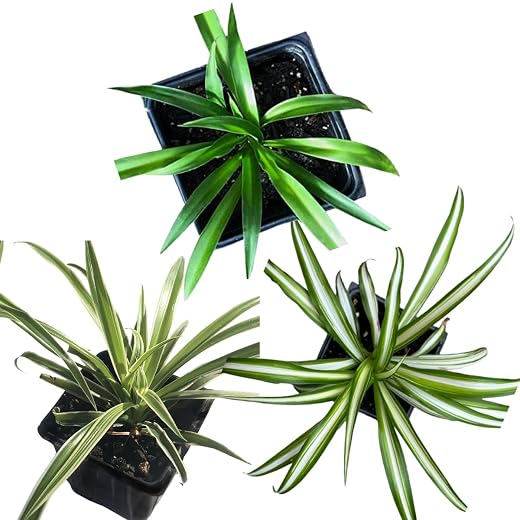
Variegated Spider Plant (Vittatum)
This variety has green leaves with a white stripe running through the center. Bright indirect light helps maintain its contrasting colors.
In low-light conditions, the leaf pattern may become less noticeable. Avoid strong direct sunlight because it can damage the foliage.
Organic Spider Plant Collection - Vittatum, Shamrock and Reverse Variegated Spider Plants in 2.5-Inch Pots
Variegatum Spider Plant
Variegatum has green leaf centers with white or cream-colored edges. It benefits from consistent indirect sunlight.
A bright room near an east-facing window is often a suitable location.
Organic Spider Plant, (Chlorophytum comosum Reverse variegatum) 2.5-inch Pot - aka - Spider Ivy - Hen and Chickens - Ribbon Plant - House Plant
Solid Green Spider Plant
Solid green spider plants do not have white stripes and can adapt well to medium-light conditions.
They may tolerate lower light better than some variegated varieties, although brighter indirect light generally supports better growth.
Spider Plant Green ~ Solid Green Spider Plant ~ Low Maintenance Spider Plant for Home and Office ~ air Purifier
Bonnie Curly Spider Plant
The Bonnie variety has distinctive curled leaves and may also have attractive white or cream-colored patterns.
Keep it in bright indirect light to support healthy foliage and maintain its natural appearance.
Do variegated spider plants need more light?
They often benefit from brighter conditions because their white or cream-colored leaf sections contain less chlorophyll than green sections. However, this does not mean they need direct sunlight.
Bonnie Curly Spider Plant, Variegated Curly Leaves, Pet-Friendly, Air Purifying, Easy to Care and Grow Attractive Plant in 4 inch Pot - Hopewind Plants Shop
Spider Plant Temperature Requirements
Spider plants prefer comfortable indoor temperatures and grow best when protected from extreme heat and cold. Stable temperatures also help maintain healthy foliage and reduce environmental stress.
A temperature range of approximately 65°F to 75°F (18°C to 24°C) is a useful target for indoor growing.
Keep these points in mind:
- Protect the plant from cold drafts.
- Avoid placing it near heaters.
- Keep leaves away from hot appliances.
- Protect outdoor plants from frost.
- Avoid sudden temperature changes.
During hot weather, move the plant away from windows that become excessively warm in the afternoon.
Spider Plant Soil Requirements
Spider plants need loose, well-draining soil that holds some moisture without becoming waterlogged. Good drainage protects the roots and helps prevent problems caused by excessive moisture.
A standard indoor potting mix is usually suitable for growing spider plants.
Good potting soil should:
- Drain excess water easily.
- Retain enough moisture for the roots.
- Allow air to circulate.
- Avoid becoming hard or compacted.
You can mix perlite into ordinary potting soil if it retains too much water. Always choose a container with drainage holes.
How Does Soil Affect Lighting and Watering?
Light and soil conditions work together to influence how quickly a spider plant uses water. Plants in brighter locations often dry out faster than those growing in low-light rooms.
Check the upper layer of soil before watering. If it still feels moist, wait rather than adding more water.
For additional guidance on indoor plant lighting, consult a university horticulture resource such as the University of Minnesota Extension’s guide to lighting for indoor plants. This helps explain how light intensity and plant placement affect indoor growth.
How to Identify Too Much or Too Little Light
Spider plant leaves can reveal changes in their growing conditions. Brown patches, faded patterns, and slow growth may indicate that the plant needs a different amount of light.
However, lighting is not the only possible cause of leaf problems. Watering, mineral buildup, temperature, and root health can also affect foliage.
| Symptom | Possible cause | Recommended action |
|---|---|---|
| Brown patches | Excessive direct sunlight | Move to filtered light |
| Bleached leaves | Strong sunlight | Reduce direct exposure |
| Slow growth | Insufficient light | Move closer to a bright window |
| Faded leaf patterns | Insufficient light or other stress | Improve indirect lighting |
| Long, weak growth | Insufficient light | Provide brighter conditions |
| Brown leaf tips | Water quality or moisture stress | Review watering and water quality |
| Yellowing leaves | Several possible causes | Check roots, soil, and watering |
How to Fix a Spider Plant With Sunburned Leaves
Sunburned leaves often develop dry brown or bleached patches. Damaged tissue usually will not return to its original green color, but the plant can produce healthy new leaves.
Follow these steps:
- Move the plant away from direct sunlight.
- Choose a bright location with filtered daylight.
- Check the soil before watering.
- Trim completely damaged sections with clean scissors.
- Avoid exposing the plant suddenly to stronger sunlight.
- Monitor new growth over the following weeks.
How to Fix a Spider Plant Growing in Low Light
A spider plant kept in a dark location may develop weak foliage and produce fewer baby plants. Improving its lighting conditions can encourage stronger growth.
Move it gradually toward a brighter window instead of exposing it suddenly to intense sunlight. If natural daylight is limited, consider using an LED grow light.
Also, remember that low-light plants generally use water more slowly. Avoid increasing watering simply because the plant looks unhealthy.
Snake Plant Light Requirements Compared With Spider Plants
Spider plants and snake plants are popular indoor houseplants, but their lighting preferences are not exactly the same. Snake plants generally tolerate lower-light conditions better, while spider plants often grow more vigorously in brighter locations.
| Feature | Spider plant | Snake plant |
|---|---|---|
| Ideal light | Bright indirect | Bright indirect |
| Low-light tolerance | Moderate to good | Very good |
| Direct sunlight | Avoid harsh exposure | Some gradual exposure tolerated |
| Growth habit | Long, arching leaves | Upright, stiff leaves |
| Common light problem | Brown or faded leaves | Sun stress or slower growth |
Which plant is better for a dark room?
A snake plant is generally a better choice for a low-light room. However, neither plant can grow healthily in complete darkness.
Common Spider Plant Lighting Mistakes to Avoid
Even an adaptable houseplant can struggle when its lighting conditions are unsuitable. Avoiding a few common mistakes can help maintain healthy foliage and consistent growth.
- Using harsh afternoon sunlight: Strong direct sunlight can scorch the leaves. Use filtered light instead.
- Keeping the plant in a dark corner: Poor lighting can slow growth. Move it closer to a bright window.
- Assuming every window provides equal light: Window direction, nearby buildings, and curtains affect sunlight. Observe the actual conditions.
- Leaving grow lights on overnight: Plants benefit from a regular dark period. Maintain a consistent lighting schedule.
- Changing locations too quickly: Sudden exposure to stronger sunlight can stress the foliage. Introduce brighter conditions gradually.
- Watering without checking the soil: Low-light plants use water more slowly. Check soil moisture before watering.
Spider Plant Care Checklist for Healthy Growth
Good lighting works best when combined with suitable watering, soil, and temperature conditions. Use this checklist to maintain healthy spider plants throughout the year.
- Place the plant near a bright window.
- Provide several hours of indirect daylight.
- Protect the leaves from harsh afternoon sunlight.
- Use filtered sunlight for outdoor plants.
- Install a grow light when natural daylight is insufficient.
- Rotate the pot occasionally for balanced growth.
- Check for brown patches and faded leaves.
- Use well-draining potting soil.
- Water when the upper soil layer begins to dry.
- Protect the plant from extreme temperatures.
Best Light for Spider Plants: The Right Balance
Spider plants grow best in bright, indirect sunlight with protection from intense afternoon heat. Choosing the right location and maintaining consistent growing conditions will help your plant develop healthy leaves and attractive foliage.
An east-facing window is often an excellent choice for indoor growing. If your home receives limited daylight, a full-spectrum LED grow light can provide additional support.
Remember that healthy spider plant growth depends on more than sunlight alone. Suitable watering, well-draining soil, and comfortable temperatures all contribute to a strong, attractive plant.
Frequently Asked Questions About Spider Plant Light Requirements
What is the best window for a spider plant?
An east-facing window is usually the best choice because it provides gentle morning sunlight. South- and west-facing windows can also work when you filter strong sunlight.
Can spider plants survive without direct sunlight?
Yes. Spider plants do not need direct sunlight to grow. Bright, indirect daylight is generally better because it supports healthy foliage without exposing the leaves to excessive heat.
Is 12 hours of artificial light enough for spider plants?
Yes. Twelve hours of suitable artificial light can support healthy growth when natural daylight is limited. Choose a full-spectrum LED grow light and provide darkness at night.
Why is my spider plant losing its white stripes?
Insufficient light can make variegated spider plant leaves appear less colorful. Move the plant gradually to a brighter location with indirect sunlight to help maintain its natural leaf patterns.
Should I rotate my spider plant for better sunlight?
Yes. Rotating the pot occasionally helps different sides receive more even light. This encourages balanced foliage growth and prevents the plant from leaning toward one window.
Does a spider plant need sunlight during winter?
Yes. Spider plants still need sufficient light during winter, even when growth slows. Keep yours near a bright window or provide supplemental LED lighting when natural daylight becomes limited.