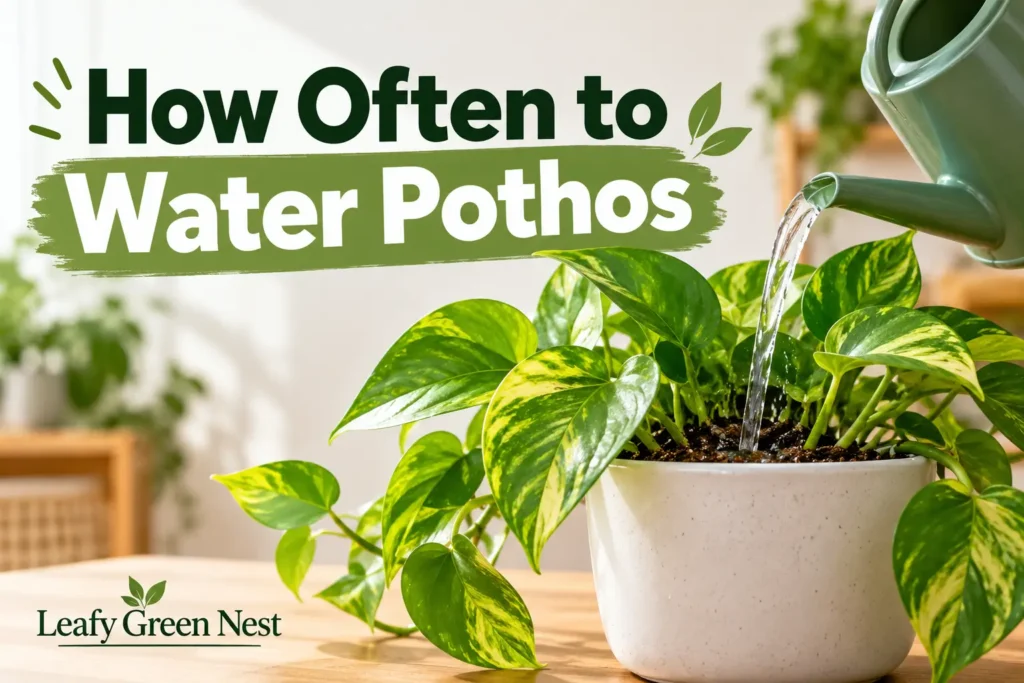
Knowing how often to water pothos helps keep your plant healthy, green, and full of beautiful trailing vines. Although pothos is an easy-care houseplant, too much or too little water can cause yellow leaves, drooping stems, and unhealthy roots.
Most indoor pothos plants need water every 1 to 2 weeks. However, the right schedule depends on the season, light, temperature, pot size, and soil drainage. The best approach is to check the soil before watering rather than follow a fixed schedule.
Table of Contents
What Is Pothos Watering?
Pothos watering means providing enough moisture for healthy root growth without keeping the soil constantly wet. Pothos (Epipremnum aureum) is a tropical houseplant that grows well in a well-draining potting mix.
The simplest rule is to let the top 1 to 2 inches of soil dry before watering again. This gives the roots access to moisture and oxygen while reducing the risk of root rot.
Key Takeaways
- Water indoor pothos approximately every 1 to 2 weeks.
- Check the soil before watering because conditions affect drying time.
- Water thoroughly until excess water drains through the pot.
- Water less frequently in winter if the soil dries more slowly.
- Check soil moisture more often during hot summer weather.
- Use a pot with drainage holes and well-draining soil.
- Investigate yellow leaves and drooping instead of assuming the plant always needs more water.
How Often to Water Pothos Indoors
Indoor pothos plants usually need water every 7 to 14 days. Plants growing near bright windows may dry out faster, while those in low-light rooms often need less frequent watering.
Check the top 1 to 2 inches of soil with your finger. If the soil feels dry, water thoroughly and allow excess water to drain. If it still feels damp, wait a few days and check again.
Several factors influence how often your pothos needs water:
- Light: Bright, indirect light often increases water use.
- Temperature: Warm rooms usually cause soil to dry faster.
- Humidity: Higher humidity can slow moisture loss.
- Pot size: Small pots often dry out faster than large pots.
- Pot material: Terracotta usually dries faster than plastic.
- Soil type: Loose, airy soil drains more easily than compact soil.
How Often to Water Pothos in Summer
Pothos often needs water more frequently in summer because warmer temperatures and brighter light can increase water use. Checking the soil every 5 to 7 days is a useful starting point during hot weather.
Follow these summer watering tips:
- Check the soil regularly during warm weather.
- Water when the upper soil layer has dried sufficiently.
- Water thoroughly instead of adding a small splash.
- Empty the saucer after watering.
- Keep the plant in bright, indirect light.
Do not water automatically just because the weather is hot. A pothos in an air-conditioned room or a shaded location may still have moist soil after several days.
How Often to Water Pothos in Winter
Pothos usually needs less water in winter because cooler temperatures and lower light levels can slow growth. Many indoor plants may need watering every 2 to 3 weeks during this season.
However, the timing depends on your home’s conditions. A pothos in a warm room or under grow lights may continue using water more quickly.
During winter, check the soil before every watering, keep the plant away from cold drafts, and avoid leaving water in the saucer. If the soil remains damp, wait longer before watering again.
How Often to Water Golden Pothos
Golden pothos follows the same basic watering routine as other pothos varieties. Let the top 1 to 2 inches of soil dry before watering thoroughly.
A Golden Pothos growing in bright, indirect light may need water sooner than one growing in a darker location. Variegated varieties may also grow more slowly in low light, which can reduce their water use.
Watering Pothos From the Bottom
Bottom watering allows the soil to absorb water through the drainage holes at the bottom of the pot. It can help moisten dry soil evenly, but the plant should never sit in water indefinitely.
Follow these steps to water pothos from the bottom:
- Place the pot in a shallow container of water.
- Let the soil absorb moisture for about 10 to 20 minutes, checking as it soaks.
- Remove the pot once the soil has absorbed enough water.
- Allow excess water to drain completely.
- Return the pot to its usual location.
Top watering is also effective and helps flush some accumulated salts from the soil. Choose whichever method works best for your plant, pot, and growing conditions.
What Is the Best Soil for Pothos?
The best soil for pothos holds some moisture while allowing excess water to drain freely. A standard indoor potting mix can work well if it does not become compacted or waterlogged.
For better drainage and airflow, you can mix indoor potting soil with perlite and fine orchid bark. Adjust the proportions based on how quickly your plant’s soil dries.
Avoid dense garden soil in indoor pots because it can restrict airflow around the roots. Always use a container with drainage holes whenever possible.
How Often to Water Monstera, Snake Plant, and Philodendron
Monstera, snake plant, and philodendron have different watering needs, so their watering schedules should not automatically be applied to pothos. Comparing these plants shows why checking soil moisture is more useful than following one schedule for every houseplant.
| Houseplant | General watering approach |
|---|---|
| Pothos | Water when the top 1 to 2 inches of soil dry |
| Monstera | Let the upper soil layer dry before watering thoroughly |
| Snake plant | Allow more of the soil to dry between waterings |
| Philodendron | Water when the upper soil layer dries, adjusting for the species |
Snake plants generally tolerate more dryness than pothos. Monstera and many philodendrons prefer moisture with good drainage, although their needs vary by species and growing conditions.
How to Tell When Your Pothos Needs Water
The most reliable way to know when to water pothos is to check the soil directly. Leaf symptoms can provide useful clues, but they do not always identify the cause on their own.
Look for these signs:
- Dry soil: The upper 1 to 2 inches feel dry to the touch.
- Lightweight pot: The container feels lighter than it did after watering.
- Drooping leaves: The foliage may look limp when the plant lacks water.
- Yellow leaves: These can indicate overwatering, poor drainage, natural aging, or other problems.
- Brown, crispy edges: These may occur when the plant stays too dry or experiences other environmental stress.
If the soil is wet and the leaves are drooping, do not immediately add more water. Check drainage and root health first.
How to Fix Overwatered or Underwatered Pothos
Watering problems can cause yellow leaves, drooping stems, and slow growth. The best solution depends on whether the soil is too wet or too dry.
How to fix overwatered pothos
- Stop watering while the soil remains wet.
- Empty any standing water from the saucer.
- Check whether the pot has drainage holes.
- Inspect the roots if the plant continues to decline.
- Remove mushy, rotten roots with clean scissors.
- Repot into fresh, well-draining soil if root rot or severely compacted soil is present.
Healthy roots are generally firm, while rotten roots may be soft, dark, and unpleasant-smelling.
How to fix underwatered pothos
- Check whether the root ball is completely dry.
- Water slowly and thoroughly.
- If water runs straight through, pause briefly and water again.
- Allow the pot to drain completely.
- Monitor the plant over the next few days.
A thirsty pothos may recover after proper watering if its roots remain healthy. However, leaves that are severely damaged may not return to their original condition.
How to Keep Your Pothos Healthy With Proper Watering
Healthy pothos growth starts with a simple routine: check the soil, water thoroughly when needed, and let excess water drain away. Most indoor plants need water every 1 to 2 weeks, but seasonal changes and growing conditions can shift that timing.
Avoid watering on a fixed schedule, use a well-draining potting mix, and adjust your routine as your plant grows. These habits will help prevent common watering problems and support healthy leaves and trailing vines throughout the year.
Frequently Asked Questions
How often should I water pothos indoors?
Most indoor pothos plants need water every 1 to 2 weeks. Check the upper soil layer before watering because temperature, light, humidity, and pot size affect how quickly it dries.
Is it better to underwater or overwater pothos?
Pothos generally tolerates brief periods of dryness better than constantly waterlogged soil. Allow the soil to dry between waterings without leaving the plant severely dehydrated.
Can I water pothos every day?
Daily watering is usually unnecessary for pothos grown in soil. Water when the upper soil layer has dried sufficiently to avoid keeping the roots constantly wet.
Should I mist pothos leaves instead of watering the soil?
No. Misting does not replace watering the roots. Water the soil thoroughly when it has dried enough to support healthy growth.
Why are my pothos leaves yellow after watering?
Yellow leaves may indicate overwatering, poor drainage, or root damage. Older leaves can also yellow naturally, so check soil moisture and drainage before changing your routine.
Does pothos need less water in winter?
Yes, most indoor pothos plants need water less frequently in winter because growth often slows. However, warm rooms and grow lights can increase water use, so check the soil before watering.