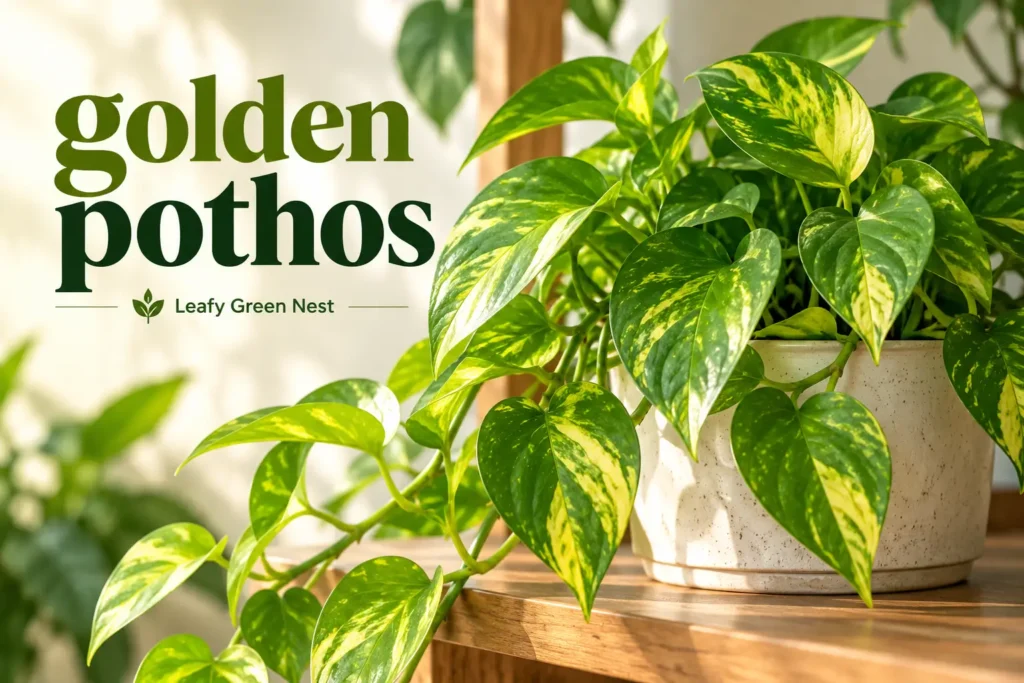
Pothos plants are popular houseplants because they have attractive leaves, trailing vines, and simple care needs. However, not every pothos looks the same. Some have golden splashes, while others feature bright neon green, creamy white, or deep blue-green leaves.
Exploring different pothos varieties can help you find the right plant for your home. Whether you want an easy-care houseplant or a rare type for your collection, there are plenty of options to explore.
In this guide from Leafy Green Nest, you will discover 15 popular pothos types, learn how to identify them, and find tips for choosing and caring for your favorite plants.
Table of Contents
15 Pothos Varieties With Names and Pictures
Pothos varieties differ in leaf color, variegation, shape, and growth habits. Some are easy to find at garden centers, while others can be harder to locate.
Use the descriptions below to compare these beautiful plants. Add a clear, labeled picture of each variety to help readers identify it.
1. Golden Pothos
Golden Pothos is one of the most common and beginner-friendly pothos plants. Its heart-shaped green leaves have golden-yellow patches and streaks that create a beautiful contrast.
This variety grows quickly in suitable conditions and produces long, trailing vines. It looks lovely in hanging baskets, on shelves, or climbing a moss pole.
Best for: Beginners and low-maintenance indoor gardens.
Care tip: Give it bright, indirect light to encourage healthy growth and attractive golden markings. It can tolerate lower light, although growth may slow and variegation may fade.
2. Marble Queen Pothos
Marble Queen Pothos stands out because of its green leaves covered with creamy white marbling. Each leaf has a different pattern, making the plant visually interesting.
Its pale variegation gives it a fresh, elegant appearance. However, it usually grows more slowly than Golden Pothos because its lighter leaves contain less chlorophyll.
Best for: Plant lovers who prefer white and green foliage.
Care tip: Provide bright, indirect light to help maintain its creamy patterns. Avoid keeping the soil constantly wet.
3. Jade Pothos
Jade Pothos has solid, deep green leaves without the yellow or white markings found on many other types. Its simple appearance makes it easy to combine with other houseplants.
It is a good option for people who prefer rich green foliage over variegated leaves. Jade Pothos can also tolerate lower light conditions, although it grows best with adequate indirect light.
Best for: Minimalist interiors and beginner plant collections.
Care tip: Let the top layer of soil dry before watering again. Do not leave the pot sitting in water.
4. Neon Pothos
Neon Pothos is easy to recognize because of its bright chartreuse or lime-green leaves. New growth often looks especially vivid, adding a cheerful splash of color to an indoor space.
Unlike Golden Pothos, Neon Pothos does not need yellow patches to stand out. Its nearly solid, luminous foliage is the main attraction.
Best for: Brightening shelves, desks, and darker green plant collections.
Care tip: Place it in bright, indirect light for the strongest leaf color. Protect it from harsh direct sunlight.
5. Manjula Pothos
Manjula Pothos is known for its broad, wavy-edged leaves and striking mix of green, cream, and white. Some leaves also show subtle silver or pale green markings.
Its unusual leaf shape helps distinguish it from Marble Queen and other variegated types. Because its patterns vary from leaf to leaf, every plant can look a little different.
Best for: Collectors and anyone who enjoys distinctive foliage.
Care tip: Give it bright, indirect light and well-draining soil. Avoid excessive watering, especially when the plant is growing slowly.
6. N’Joy Pothos
N’Joy Pothos has small to medium green leaves with distinct white or creamy sections. Its variegation often appears in clean blocks rather than the fine marbling seen on Marble Queen.
The compact leaves give this plant a neat appearance. It works well on desks, narrow shelves, and small plant stands.
Best for: Small spaces and compact indoor plant displays.
Care tip: Provide bright, indirect light to support its white markings. Allow the soil to dry slightly between waterings.
7. Pearls and Jade Pothos
Pearls and Jade Pothos features green leaves with white, gray-green, and creamy variegation. Its markings are often irregular, with small green or gray speckles appearing within lighter sections.
It is sometimes confused with N’Joy Pothos because both have green and white leaves. Looking closely at the size, shape, and detailed pattern of the markings can help you tell them apart.
Best for: Plant collectors who like detailed leaf patterns.
Care tip: Keep it in bright, indirect light and avoid overwatering. Its lighter foliage benefits from enough light to support healthy growth.
8. Snow Queen Pothos
Snow Queen Pothos is often used to describe a highly white-variegated Marble Queen-type plant. Its leaves can look almost white, with green markings scattered across the surface.
The pale foliage creates a striking display, but plants with more white areas may grow more slowly than greener pothos types.
Best for: Bright, airy indoor plant displays.
Care tip: Give it plenty of bright, indirect light. Watch for leaf scorching if direct sunlight reaches the foliage for long periods.
Note: Snow Queen and Marble Queen are often treated as closely related or overlapping trade names, so confirm the plant’s identity with the seller.
9. Cebu Blue Pothos
Cebu Blue Pothos has narrow, elongated leaves with a blue-green or silvery sheen. Its foliage looks different from the classic heart-shaped leaves of Golden and Jade Pothos.
As it matures under suitable climbing conditions, its leaves can become larger and develop natural splits. This gives the plant a more dramatic appearance.
Best for: Collectors who want unusual leaf shapes and cool-toned foliage.
Care tip: Provide bright, indirect light and a support structure if you want to encourage climbing growth.
10. Global Green Pothos
Global Green Pothos features green leaves with lighter and darker green sections. Its variegation creates a layered look without the strong white or yellow patches seen in many other varieties.
The pattern makes it a good choice for people who want something different while keeping a mostly green plant collection.
Best for: Indoor gardeners who prefer green-on-green foliage.
Care tip: Grow it in bright, indirect light and water when the upper layer of soil begins to dry.
11. Baltic Blue Pothos
Baltic Blue Pothos is prized for its deep blue-green leaves and distinctive mature foliage. Under suitable conditions, mature leaves may develop natural splits known as fenestrations.
Although it is often compared with Cebu Blue, Baltic Blue usually has broader, darker leaves. The exact appearance depends on the plant’s age and growing conditions.
Best for: Collectors who enjoy tropical-looking foliage.
Care tip: Provide bright, indirect light and a climbing support. Keep the soil well-drained and avoid leaving the roots waterlogged.
12. Jessenia Pothos
Jessenia Pothos has green leaves with lighter lime-green or yellow-green marbling. Its patterns are generally softer than the bold yellow markings of Golden Pothos.
This variety can be harder to find than common green or golden pothos, depending on the local market.
Best for: Plant lovers who enjoy unusual green variegation.
Care tip: Provide bright, indirect light to support healthy growth and visible leaf patterns.
13. Hawaiian Pothos
Hawaiian Pothos is commonly associated with a vigorous, large-leaved form of Golden Pothos. Its green leaves display prominent golden-yellow variegation, and mature plants can produce impressive trailing or climbing growth.
The name may be used differently by sellers, so check the plant’s leaf characteristics before purchasing.
Best for: Large indoor displays and climbing plant arrangements.
Care tip: Give it enough room to grow and provide a sturdy support if you want it to climb.
14. Shangri-La Pothos
Shangri-La Pothos has curled, twisted leaves that give it a compact, unusual appearance. Its foliage is generally green, but the leaves do not lie flat like those of most common pothos plants.
This distinctive growth habit makes it especially appealing to collectors looking for something unusual.
Best for: Plant enthusiasts who want a conversation-starting houseplant.
Care tip: Use a pot with drainage holes and provide bright, indirect light. Check the soil before watering rather than following a fixed schedule.
15. Harlequin Pothos
Harlequin Pothos is a collector-oriented name associated with highly variegated plants that display substantial cream or white areas alongside green markings. The name can be used inconsistently in the plant trade, and some plants may be sold under different cultivar labels.
Its bold patterns make it attractive, but highly variegated plants may require more careful light management.
Best for: Experienced collectors and lovers of unusual foliage.
Care tip: Provide bright, indirect light and avoid excessive watering. Choose a plant with healthy stems and enough green leaf tissue to support growth.
Which Pothos Varieties Are Rare?
Some pothos varieties are less commonly available than others. However, rarity depends on your region, local growers, and current demand.
Here are several types worth exploring if you want to expand your collection:
- Manjula Pothos: Popular for its broad leaves and mixed cream, white, and green patterns.
- Jessenia Pothos: Appreciated for its lime-green marbling.
- Harlequin Pothos: Sought after for its dramatic variegation, although the name is not always used consistently.
- Cebu Blue Pothos: Valued for its elongated, blue-green leaves.
- Baltic Blue Pothos: Popular for its darker foliage and mature leaf splits.
- Shangri-La Pothos: Unusual because of its curled and twisted leaves.
When shopping for rare pothos varieties, compare photographs from multiple sellers. Ask for pictures of the actual plant rather than relying only on a stock photo.
Best Pothos Varieties for Beginners
If you are new to houseplants, start with a pothos that is easy to grow and widely available.
Golden Pothos: A dependable choice for beginners. It grows well in a range of indoor conditions and is forgiving when care is not perfect.
Jade Pothos: A good option if you want solid green leaves and a simple care routine.
Neon Pothos: Ideal if you want bright foliage without complicated care requirements.
Marble Queen Pothos: A beautiful option if you can provide enough indirect light to support its white variegation.
N’Joy Pothos: Suitable for compact displays, provided you avoid overwatering and give it enough light.
Remember that no pothos variety thrives in complete darkness. Even plants that tolerate low light need some natural or suitable artificial light to grow.
How to Choose the Right Pothos Variety
Choosing between pothos types is easier when you consider your space, lighting, and preferred leaf color.
Consider Your Light Conditions
Bright, indirect light suits most pothos varieties. Golden and Jade Pothos can tolerate lower light better than highly variegated types, although growth may slow.
Plants with large white or cream sections often need brighter indirect light to maintain healthy growth.
Choose Your Favorite Leaf Color
Different pothos types can create very different looks:
- Green: Jade Pothos
- Golden yellow: Golden Pothos
- Bright lime: Neon Pothos
- Cream and white: Marble Queen and Manjula Pothos
- Blue-green: Cebu Blue and Baltic Blue Pothos
Think About Growth Habits
Trailing pothos can decorate shelves, hanging baskets, and tall plant stands. Climbing them on a support can encourage larger leaves in some types.
If you have limited space, consider compact-growing plants such as N’Joy Pothos.
Check Your Care Routine
Most pothos prefer well-draining soil, pots with drainage holes, and watering after the upper layer of soil has begun to dry.
If you tend to water plants too often, focus on learning the plant’s soil and moisture needs before adding several varieties to your collection.
Where to Find Pothos Varieties for Sale
You can often find common pothos types at local nurseries, garden centers, plant shops, and online houseplant stores. Specialty sellers may carry less common cultivars.
Before buying pothos varieties for sale, check the following:
- Leaf health: Look for firm leaves without widespread yellowing, mushy spots, or signs of pests.
- Root condition: When possible, check that the roots are firm and not black or mushy.
- Correct identification: Ask the seller to confirm the cultivar, especially for rare types.
- Actual plant photos: Request current pictures if the seller uses generic product images.
- Shipping conditions: Choose sellers who package plants carefully and explain their shipping process.
- Price comparison: Compare plant size, number of rooted stems, shipping costs, and seller reviews.
Rare plant names can be confusing, and different sellers may use the same name for plants with slightly different appearances. A reputable seller who provides clear photos and accurate descriptions is often a better choice than a listing that simply claims a plant is rare.
How to Care for Different Pothos Varieties
Although their leaves look different, most pothos types have similar basic care needs.
Light
Place your pothos in bright, indirect light whenever possible. Some varieties tolerate lower light, but highly variegated plants generally need more light to maintain their patterns.
Watering
Water when the upper layer of soil has dried. The exact frequency depends on light, temperature, pot size, soil mix, and the season.
Avoid keeping the soil constantly wet because this can lead to root problems.
Soil
Use a well-draining indoor potting mix. A mix that holds some moisture while allowing excess water to escape works well for most pothos plants.
Temperature and Humidity
Normal indoor temperatures are generally suitable. Protect pothos from cold drafts and sudden temperature changes. Average household humidity is often adequate, although moderate humidity can support healthy foliage.
Pruning and Propagation
Trim long or sparse vines to encourage a fuller appearance. Healthy stem cuttings with at least one node can often be propagated in water or a suitable potting mix.
For more details, read our pothos plant propagation guide, and link it to the published propagation article on Leafy Green Nest.
Are Pothos Varieties Safe for Pets?
Pothos plants are toxic to cats and dogs when chewed or eaten. They contain insoluble calcium oxalate crystals that can irritate the mouth and digestive tract.
Common varieties, including Golden Pothos, Jade Pothos, Neon Pothos, and Manjula Pothos, should be kept away from curious pets.
If you have cats or dogs, place pothos where they cannot reach the leaves and consider genuinely pet-safe plants instead. Hanging baskets are not always enough because trailing vines can still be accessible.
If a pet chews or eats pothos, contact a veterinarian for advice, especially if you notice drooling, mouth irritation, vomiting, or difficulty swallowing.
Choose the Best Pothos Variety for Your Home
Pothos plants offer an impressive range of leaf colors, patterns, and growth habits. Golden Pothos is a reliable choice for beginners, Neon Pothos adds a bright pop of color, and Manjula Pothos brings beautiful cream and green patterns to a collection.
If you are comparing pothos varieties with names and pictures, focus on leaf shape, variegation, and growth habits instead of relying on color alone. Choose a plant that suits your space and care routine, then give it suitable light, well-draining soil, and careful watering.
At Leafy Green Nest, our goal is to help you choose and care for houseplants with confidence. Start with one variety you love, learn its needs, and build your indoor garden from there.
Frequently Asked Questions
How many pothos varieties are there?
There are many named pothos cultivars and selections, with new plants and trade names appearing over time. The exact number depends on how cultivars and trade names are counted.
Which pothos variety is the easiest to grow?
Golden Pothos is widely considered a beginner-friendly choice because it tolerates a range of indoor conditions and grows readily with basic care.
Is Manjula Pothos rare?
Manjula Pothos is a sought-after cultivar, but availability varies by location. It may be easy to find in some plant markets and harder to locate in others.
Which pothos variety has the brightest leaves?
Neon Pothos is famous for its bright lime-green foliage. New leaves can appear especially vivid under suitable lighting.
Which pothos varieties tolerate low light?
Golden Pothos and Jade Pothos generally tolerate lower light better than highly variegated types. However, all pothos need some light to stay healthy.
Can different pothos varieties grow together?
Yes. You can grow several pothos types in one large container if they have similar light and watering needs. However, individual pots make it easier to manage growth, watering, and plant identification.
Are pothos varieties toxic to cats?
Yes. Pothos plants contain insoluble calcium oxalate crystals that can irritate a cat’s mouth and digestive tract if chewed or eaten. Keep them out of reach of pets.
References:
1. University of Wisconsin–Madison Extension: Pothos, Epipremnum aureum
2. Penn State Extension: Propagating Houseplants
3. Iowa State University Extension: How to Propagate Houseplants by Stem Tip Cuttings
4. Royal Horticultural Society: How to Grow Epipremnum
5. University of Vermont Extension: More, Please! Propagating Houseplants