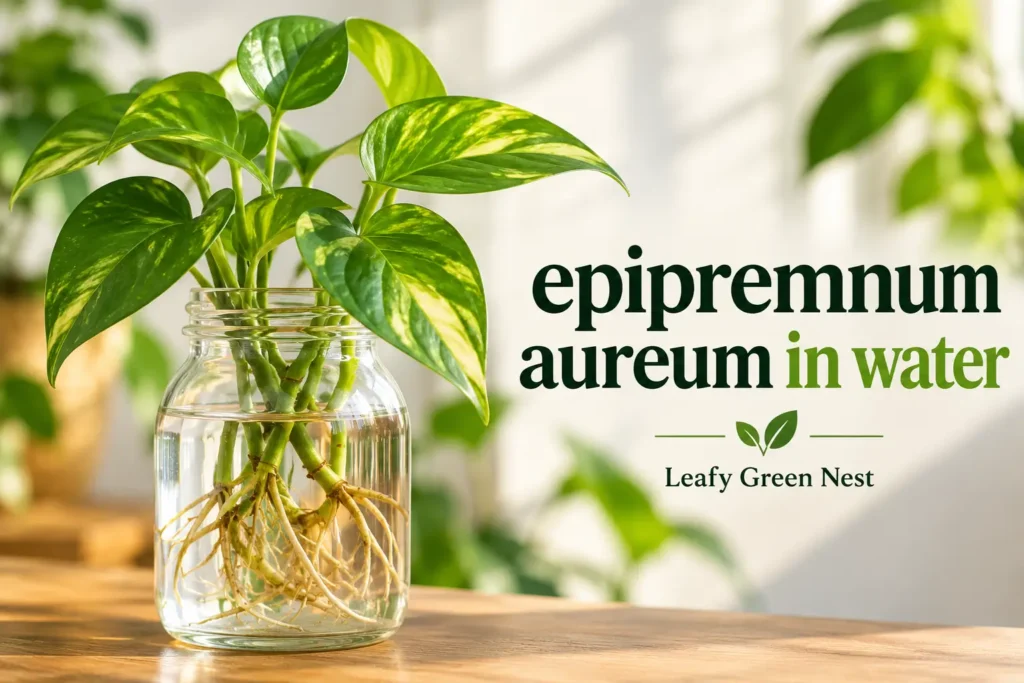
Epipremnum aureum in water means growing pothos in a container filled with water instead of potting soil. This tropical vine is easy to propagate and makes an attractive indoor plant for homes, offices, and small spaces.
Commonly known as pothos, golden pothos, or devil’s ivy, this plant can develop healthy roots and new leaves in water. With proper lighting, clean water, and suitable nutrients, you can maintain it in water for years.
Table of Contents
Key Takeaways
Epipremnum aureum can grow in water long-term when its roots receive oxygen, nutrients, and proper care. A clean container, bright indirect light, and regular water checks help keep the plant healthy.
- Light: Bright, indirect sunlight.
- Water: Clean, room-temperature water.
- Propagation: Use a healthy stem cutting with at least one node.
- Fertilizer: Use a diluted hydroponic nutrient solution.
- Maintenance: Check water quality and root health regularly.
- Safety: Keep pothos away from pets that may chew its leaves.
Epipremnum Aureum Common Name and Plant Characteristics
Epipremnum aureum belongs to the Araceae family and is a tropical climbing vine commonly grown as a houseplant. Its heart-shaped leaves and trailing stems make it popular for shelves, hanging baskets, and glass containers.
The plant is often called golden pothos, devil’s ivy, or money plant, although common names vary by region. Golden pothos usually has green leaves with yellow markings, while other varieties may have cream or white patterns.
How to Grow Epipremnum Aureum in Water
Growing Epipremnum aureum in water starts with a healthy cutting, a clean container, and a suitable location. Follow these steps to encourage root development and establish a healthy water-grown plant.
Step 1: Select a Healthy Stem
Choose a firm, healthy stem with at least one node. A node is the point where a leaf or aerial root emerges, and it is where new roots commonly develop.
Cut just below the node using clean scissors. Keep one or two leaves on the cutting, but remove any leaves that would sit underwater.
Step 2: Place the Cutting in Water
Fill a clean glass jar or vase with room-temperature water. Submerge the node while keeping the leaves above the waterline to reduce the risk of leaf decay.
Make sure the stem remains stable and the container is large enough to hold the cutting comfortably.
Step 3: Provide Suitable Light
Place the container in bright, indirect light near a suitable window. Avoid strong direct sunlight, which can overheat the water and encourage algae growth.
In low light, pothos may survive but develop roots and new leaves more slowly. Rotate the container occasionally if the plant grows toward one side.
Step 4: Wait for Roots to Develop
New roots often begin appearing within a few weeks, depending on temperature, light, and cutting health. Keep checking the water and replace it if it becomes cloudy or develops an unpleasant smell.
Once the roots are established, the plant can continue growing in water with appropriate long-term care.
Can I Keep My Pothos in Water Forever?
Yes, pothos can live in water for years if you provide clean water, adequate light, and essential nutrients. Plain water alone does not supply everything a mature plant needs for sustained growth.
For long-term water culture, inspect the roots, clean the container, and use a complete hydroponic fertilizer according to its label. Growth may be slower than in suitable potting soil, but moving the plant to soil is not necessary simply because roots have developed.
What Fertilizer to Use for Pothos in Water
A complete hydroponic nutrient solution is generally the best choice for pothos growing permanently in water. It supplies essential nutrients, including nitrogen, phosphorus, potassium, and trace minerals.
Choose a product intended for hydroponic growing and follow its dilution instructions. Avoid adding concentrated fertilizer directly to the jar, as excess nutrients can damage roots and build up in the water.
Check the plant’s growth and root condition before feeding again. Do not automatically add fertilizer every time you refill the container.
For additional propagation advice, read this related guide from University of Vermont Extension on propagating houseplants.
Pothos in Water With Rocks: How to Grow It
Pothos can grow in water with decorative rocks that support the stem and improve the appearance of a glass container. However, rocks do not supply the nutrients needed for healthy long-term growth.
Wash the stones before use and arrange them without tightly packing the roots. Keep at least one node underwater, leave the leaves above the waterline, and clean the container whenever algae or residue appears.
Pothos in Water With Fish: Is It Safe?
Pothos can grow with its roots in an aquarium while its leaves remain above the water. The roots may absorb some dissolved nutrients, but the plant cannot replace proper filtration, water testing, or routine aquarium maintenance.
Secure the plant so it cannot fall into the tank, and avoid exposing fish to unsuitable fertilizers or pesticide residues. Monitor water quality and fish health, and never assume that pothos alone will keep an aquarium safe.
Epipremnum Aureum Flower: Can It Bloom in Water?
Epipremnum aureum can flower in its mature growth stage, but flowering is rare in ordinary indoor conditions. Most houseplants remain in a juvenile form with trailing stems and heart-shaped leaves.
Growing pothos in water does not guarantee flowers. Focus on healthy roots, balanced nutrients, and suitable light rather than expecting blooms from a water-grown plant.
How Often Should You Change Pothos Water?
Check the water every few days and refresh it regularly, especially when it becomes cloudy, dirty, or unpleasant-smelling. For many indoor setups, changing the water about every one to two weeks is a useful starting point.
- Top up the container when water evaporates.
- Replace dirty water promptly.
- Rinse the jar if algae or mineral residue appears.
- Remove fallen leaves and other debris.
- Inspect roots for soft, slimy, or damaged sections.
Clear water does not always mean the plant has enough nutrients, so consider fertilizer and root health as well.
Common Pothos Problems in Water and Their Solutions
Yellow leaves, brown roots, and slow growth can result from poor light, nutrient imbalance, or unhealthy water conditions. Check the whole plant before deciding what to change.
| Problem | Possible cause | Solution |
|---|---|---|
| Yellow leaves | Nutrient problems, poor light, or natural aging | Check light and roots before adjusting fertilizer |
| Soft, dark roots | Root decay | Remove damaged roots and clean the container |
| Slow growth | Low light or limited nutrients | Improve lighting and review feeding |
| Green algae | Light reaching nutrient-rich water | Clean the jar or use an opaque container |
| Brown leaf tips | Mineral buildup or excess fertilizer | Review water quality and nutrient concentration |
| Cloudy water | Debris or decaying plant material | Replace the water and clean the container |
Not every brown root is diseased, and not every yellow leaf signals a nutrient deficiency. Look for changes in texture, smell, and overall growth before taking action.
Pros and Cons of Growing Pothos in Water
Growing pothos in water is convenient for small spaces and lets you see root development without removing the plant from its container. However, long-term water culture requires nutrient management and regular cleaning.
Pros
- No potting soil is needed.
- Roots are easy to inspect.
- Glass containers make attractive displays.
- Stem cuttings are easy to propagate.
- Water levels are simple to monitor.
Cons
- Nutrients must be supplied for continued growth.
- Algae can develop in clear containers.
- Fertilizer buildup can harm roots.
- Growth may be slower than in suitable soil.
- Water quality needs regular attention.
Growing Epipremnum Aureum in Water: Is It Right for You?
Epipremnum aureum is a good choice for anyone who wants an attractive indoor plant without potting soil. With a healthy cutting, indirect light, clean water, and suitable nutrients, it can remain in water for years.
Start with a simple glass jar and one healthy cutting, then monitor root development and water quality. Consistent care matters more than expensive equipment, and a little attention each week can help your pothos thrive.
Frequently Asked Questions About Epipremnum Aureum in Water
What is the common name of Epipremnum aureum?
Epipremnum aureum is commonly called pothos, golden pothos, or devil’s ivy. In some regions, it is also known as money plant, although that name can refer to other plants.
Can pothos grow in water without sunlight?
Pothos needs light for photosynthesis, although it can tolerate lower-light conditions. Bright, indirect light generally supports healthier foliage and better growth than a dark room.
Should I use tap water or distilled water for pothos?
Tap water is usually suitable if its quality is appropriate for houseplants. Distilled water can also work, but it contains very few minerals, making a suitable nutrient solution essential for long-term growth.
Why are my pothos roots turning brown in water?
Brown roots may indicate natural aging, mineral staining, or root decay. If they become soft, slimy, or foul-smelling, remove damaged sections, clean the container, and replace the water.
When should I add fertilizer to pothos growing in water?
Add suitable hydroponic nutrients after the cutting has developed roots and begun establishing itself. Follow the product’s dilution instructions to avoid fertilizer buildup and root damage.
Does pothos grown in water grow faster than pothos in soil?
Not necessarily. Growth depends on light, nutrients, temperature, and root health. A well-maintained soil-grown pothos may grow faster, while water culture offers a simple, decorative alternative.
References
1. University of Wisconsin-Madison Extension: Pothos Plant Care and Propagation
2. Royal Horticultural Society: How to Grow Epipremnum
3. University of Vermont Extension: Propagating Houseplants
4. ASPCA: Golden Pothos: Plant Toxicity Information