Why Are My Pothos Leaves Turning Brown? Pothos leaves usually turn brown when your plant is stressed by watering problems, too much sunlight, low humidity, or damaged roots. The good news is that most causes are easy to fix when you identify the symptoms early.
If you notice brown tips, crispy edges, yellow patches, or black spots, check the leaves and soil before changing your plant care routine. These clues can help you find the cause, restore healthy growing conditions, and encourage fresh, green growth.
Table of Contents
What Causes Pothos Leaves to Turn Brown?
Pothos, also known as devil’s ivy, is a tropical houseplant with the botanical name Epipremnum aureum. Its leaves can turn brown when the roots, light, or growing conditions cannot support healthy growth.
The table below summarizes common symptoms, their possible causes, and the best first step to take.
| Symptoms | Possible cause | First step |
|---|---|---|
| Brown, crispy tips | Dry soil or mineral buildup | Check soil moisture |
| Yellow and brown leaves | Watering problems or root damage | Check soil and roots |
| Dry patches on one side | Direct sunlight | Move to indirect light |
| Soft, dark spots | Excess moisture or cold injury | Inspect the plant |
| Brown leaves after repotting | Root disturbance | Keep conditions stable |
| Brown leaves on pothos in water | Damaged roots or poor water conditions | Inspect roots and refresh water |
Key Takeaways
- Check soil moisture before watering your pothos.
- Provide bright, indirect light and avoid harsh afternoon sun.
- Use a pot with drainage holes and well-draining soil.
- Remove dead leaves, but keep healthy green foliage.
- Inspect roots when several leaves turn yellow or brown.
- Remember that damaged brown tissue will not turn green again.
Why Are My Pothos Leaves Turning Brown and Crispy?
Brown, crispy pothos leaves usually indicate moisture stress, low humidity, fertilizer buildup, or sun damage. Check the soil and leaf edges to identify the likely cause.
Underwatering and dry soil
When pothos roots cannot absorb enough water, the leaf tips and edges may become dry and brittle. The soil may feel dry several centimeters below the surface, and the leaves may curl or droop.
How to fix it:
- Check soil moisture with your finger.
- If the soil is dry, water thoroughly until excess water drains out.
- Let the pot drain completely before returning it to its outer container.
- Check the soil regularly instead of following a strict watering schedule.
Low humidity and dry air
Dry air from fans, heaters, and air conditioners can increase moisture loss from leaves. Move your plant away from direct airflow and consider a humidifier if the room is consistently dry.
Fertilizer and mineral buildup
Excess fertilizer salts or minerals in tap water can damage leaf tips. Reduce feeding, check for white deposits on the soil, and flush the potting mix with clean water if drainage is good.
Pothos Leaves Turning Brown at Tips
Brown leaf tips often develop when moisture levels fluctuate or salts accumulate in the soil. If the rest of the leaf looks healthy, inspect the growing conditions before repotting.
Start by checking the soil, sunlight, water quality, and recent fertilizer use. Trim brown tips with clean scissors if needed, following the natural shape of the leaf without cutting into healthy tissue.
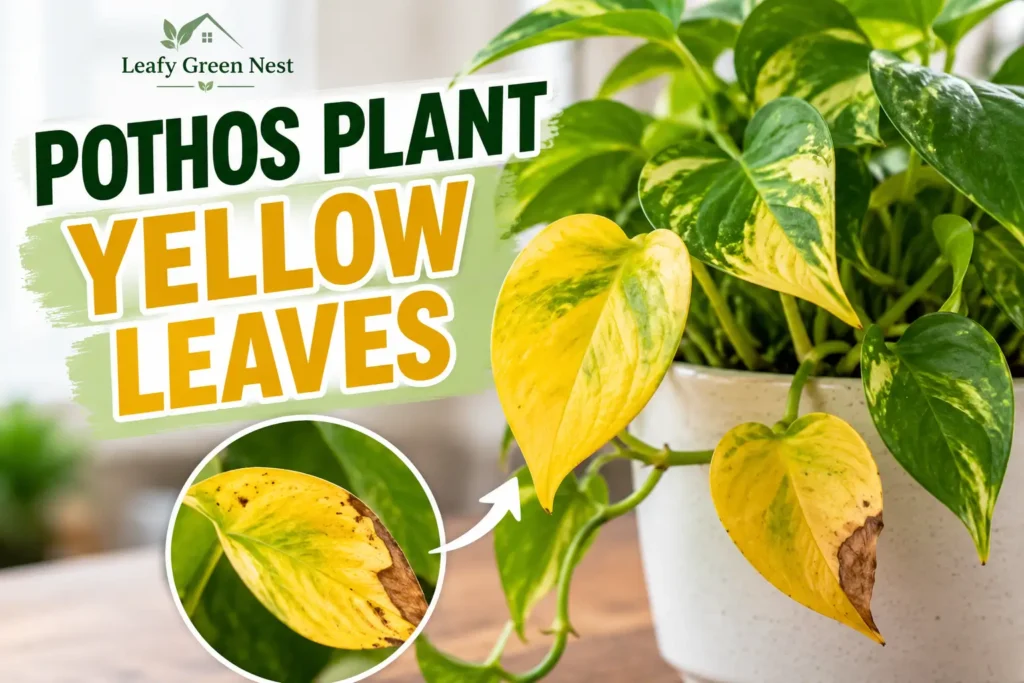
Pothos Leaves Turning Brown and Yellow
Yellow leaves with brown patches can indicate overwatering, underwatering, poor drainage, or root damage. The condition of the soil is one of the most useful clues.

If the soil stays wet for several days and the plant continues to decline, inspect the roots. Healthy roots are generally firm, while rotten roots often feel mushy and may smell unpleasant.
If the soil is dry, water thoroughly and allow the excess to drain. Avoid watering again until the upper portion of the soil has dried.
Why Are My Pothos Leaves Turning Black?
Black spots or dark patches can result from cold damage, prolonged wet soil, or possible leaf disease. Soft, spreading spots need more attention than small, dry marks.
Move the plant away from cold drafts, check drainage, and avoid keeping the leaves constantly wet. If the spots continue spreading, isolate the plant and inspect it for pests or other signs of disease.
Why Are My Pothos Leaves Turning Brown After Repotting?
Pothos may develop brown leaves after repotting because the roots were disturbed or the new soil retains too much moisture. A much larger pot can also keep the root zone wet for longer.
Place the plant in bright, indirect light and keep its environment stable. Avoid immediate heavy fertilizing, unnecessary watering, or repeatedly disturbing the roots.
Pothos Leaves Turning Brown in Water
Pothos can grow in water, but its roots still need oxygen and clean growing conditions. Brown leaves may indicate damaged roots, stagnant water, poor light, or temperature stress.
Change dirty water, clean the container, and remove clearly rotten roots with clean scissors. Keep the roots underwater while leaving the leaves above the waterline, and place the container in bright, indirect light.
Why Are My Pothos Leaves Turning Yellow?
Yellow leaves can develop because of overwatering, underwatering, insufficient light, or natural aging. One older leaf turning yellow occasionally is usually less concerning than several leaves changing color quickly.
Check the soil first and look for other symptoms, such as wilting, soft stems, or dark roots. Adjust watering based on moisture levels rather than adding water whenever a leaf turns yellow.
Pothos Overwatering Symptoms and Root Rot Treatment
Overwatering symptoms include persistently wet soil, yellowing leaves, wilting despite moist soil, and soft brown or black roots. Root rot becomes more likely when several of these signs appear together.
To help an affected plant, remove it from the pot if necessary, trim rotten roots with clean scissors, and repot it in fresh, well-draining soil. Use a pot with drainage holes and avoid leaving water in the saucer.
For additional plant care advice, read the Penn State Extension guide to growing pothos as a houseplant.
How to Fix Brown Pothos Leaves Step by Step
Most brown-leaf problems improve when you identify the cause and correct the growing conditions. Follow these steps before making major changes to the plant.
- Check soil moisture: Determine whether the soil is dry or waterlogged.
- Check drainage: Make sure water can escape through the bottom of the pot.
- Adjust lighting: Provide bright, indirect light rather than harsh direct sunlight.
- Inspect the roots: Check for rot if several leaves deteriorate or the plant wilts in wet soil.
- Remove dead foliage: Trim fully brown leaves with clean scissors.
- Monitor new growth: Watch for healthy leaves and avoid changing several care conditions at once.
How to Prevent Pothos Leaves from Turning Brown
Consistent care helps prevent recurring brown tips, yellow leaves, and root problems. Focus on moisture, light, drainage, and occasional inspections.
- Water when the upper portion of the soil has dried.
- Use a loose, well-draining potting mix.
- Keep the plant away from harsh sunlight and cold drafts.
- Fertilize according to the product label.
- Empty standing water from saucers and outer pots.
- Inspect leaves and stems for pests.
- Repot only when the soil or roots need attention.
How to Keep Pothos Leaves Healthy and Prevent Brown Leaves
Brown pothos leaves are usually a sign of stress caused by watering, lighting, drainage, or environmental conditions. Check the soil first, then inspect the leaves and roots before deciding on a fix.
With proper watering, bright indirect light, and good drainage, your pothos can recover and produce healthy new foliage.
Frequently Asked Questions
Why are all my pothos leaves turning brown at once?
Several brown leaves appearing together may indicate severe watering stress, root damage, temperature changes, or sunburn. Check the soil, roots, and plant location promptly.
Can brown pothos leaves turn green again?
No. Dead brown tissue cannot turn green again. Correct the underlying problem to protect healthy leaves and encourage new growth.
Should I cut off brown pothos leaves?
Yes, you can remove fully brown or badly damaged leaves using clean scissors. Keep partially green leaves if they remain healthy.
Why are my new pothos leaves turning brown before opening?
Possible causes include inconsistent watering, damaged roots, dry air, temperature stress, or pests. Inspect the new growth and check the growing conditions.
Does tap water make pothos leaves turn brown?
Minerals in tap water can contribute to brown tips when salts accumulate in the soil. However, watering problems and sunlight exposure can cause similar symptoms.
When should I repot a pothos with brown leaves?
Repot when the soil drains poorly, stays wet too long, or the roots are damaged or overcrowded. Use fresh, well-draining soil and a suitable pot with drainage holes.