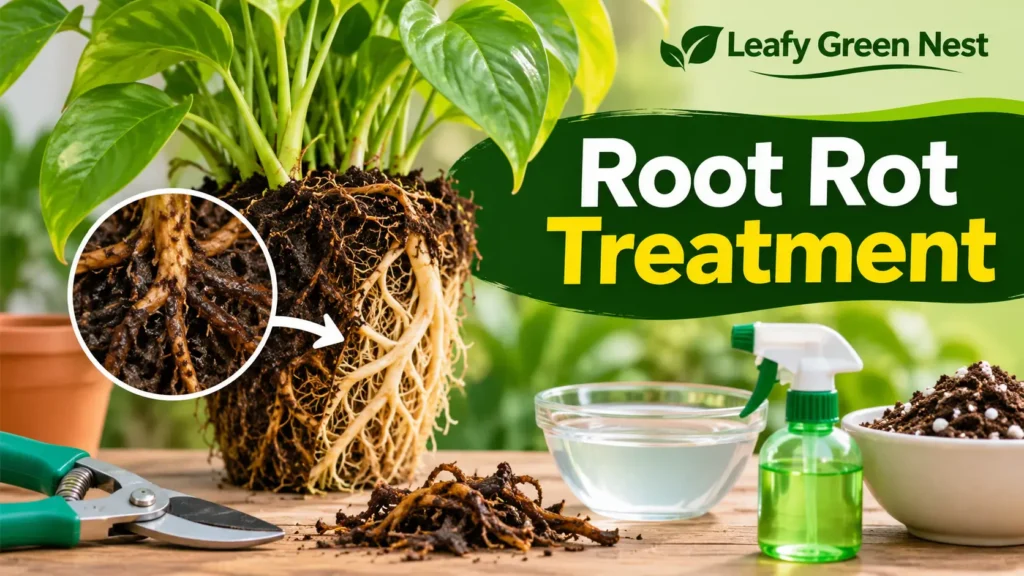
Root rot treatment helps save plants suffering from overwatering, poor drainage, and harmful soilborne pathogens. If your plant has yellow leaves, drooping stems, or dark, mushy roots, learning how to identify and treat root rot can prevent further damage.
The most effective approach is to remove decaying roots, correct moisture problems, improve soil conditions, and use an appropriate disease-control product when necessary. Early treatment gives plants a better chance of recovery, although severely damaged plants may not survive.
Table of Contents
What Is Root Rot?
Root rot is a plant disease that causes roots to decay, lose their structure, and stop absorbing water and nutrients properly. It commonly develops in wet, poorly drained soil where roots receive insufficient oxygen and harmful organisms can multiply.
Several pathogens can cause root rot, including Pythium, Phytophthora, Fusarium, and Rhizoctonia. Some are true fungi, while Pythium and Phytophthora are fungus-like organisms called oomycetes.
Root rot affects many types of plants, including:
- Indoor houseplants
- Succulents and cacti
- Vegetables and herbs
- Fruit trees and shrubs
- Ornamental garden plants
- Lawn grasses
Not every case of root damage is caused by an infectious disease. Roots can also die from prolonged oxygen deprivation in waterlogged soil. Identifying the actual problem helps you choose an effective treatment instead of applying unnecessary chemicals.
Root Rot Symptoms: How to Identify Infected Roots
Root rot symptoms often appear in leaves and stems before you notice damage below the soil. Recognizing these warning signs early makes treatment easier and may prevent the loss of the entire plant.
Common symptoms include:
- Yellow leaves: Damaged roots struggle to absorb nutrients, causing leaves to turn yellow.
- Persistent wilting: Plants droop even when their soil is wet.
- Dark roots: Infected or decaying roots may become brown or black.
- Soft root tissue: Rotten roots feel mushy, slimy, or fragile.
- Unpleasant smell: Severely decaying roots may produce a sour or rotten odor.
- Stunted growth: New leaves become smaller, and overall growth slows.
- Leaf drop: The plant may lose leaves as root damage becomes more severe.
Healthy roots are generally firm and resilient. Their color varies depending on the plant species, so do not remove roots simply because they look brown.
Root Rot vs. Underwatering
Root rot and underwatering can cause similar symptoms, particularly yellow leaves and wilting. However, checking soil moisture and root condition can help distinguish them.
| Sign | Root rot | Underwatering |
|---|---|---|
| Soil condition | Often persistently wet | Usually dry |
| Root texture | Soft or mushy | Often dry or brittle |
| Root smell | May smell rotten | Usually no rotten smell |
| Leaves | Yellowing and wilting | Dry, crispy, or drooping |
| Plant response | May remain wilted in wet soil | Often improves after suitable watering |
Always inspect the soil before adding more water to a struggling plant.
What Causes Root Rot in Plants?
Root rot develops when unfavorable growing conditions damage roots or allow harmful pathogens to infect them. Excess moisture is a major risk factor, but several other conditions can contribute.
Overwatering: Frequent watering fills soil air spaces with water and reduces oxygen around the roots.
Poor drainage: Heavy soil and compacted growing media prevent excess water from escaping.
Containers without drainage holes: Water collects inside the pot, keeping roots wet for extended periods.
Soilborne pathogens: Organisms such as Phytophthora and Pythium can infect susceptible plants.
Excessive rainfall: Outdoor plants may experience root damage when garden soil remains saturated.
Poor growing conditions: Inappropriate pot size, unsuitable soil, and limited airflow can increase plant stress.
An important distinction is that wet soil does not automatically mean a plant has an infectious root disease. Sometimes the primary problem is oxygen deprivation, while in other cases a pathogen is actively damaging the roots.
Root Rot Treatment for Houseplants
The best root rot treatment for houseplants combines root inspection, removal of decaying tissue, suitable growing media, and better watering habits. The treatment should match the amount of damage and the plant’s specific growing requirements.
Inspect the plant: Carefully remove it from its container and examine the root system.
Remove damaged soil: Gently shake away wet, compacted, or contaminated potting mix. Rinse the remaining soil with clean water if necessary.
Trim rotten roots: Use sharp, disinfected scissors to remove roots that are soft, slimy, or severely decayed. Avoid cutting firm, healthy roots.
Prepare fresh potting mix: Choose a growing medium that provides enough airflow and drainage. Perlite and orchid bark can improve aeration for many tropical houseplants.
Select an appropriate pot: Use a clean container with drainage holes. Choose a size that comfortably accommodates the remaining healthy roots.
Replant carefully: Position the plant at its original soil depth. Keep the crown above the growing medium when appropriate.
Adjust watering: Check soil moisture before watering and allow excess water to drain completely.
Do not fertilize heavily during recovery. Damaged roots may struggle to absorb nutrients, and unnecessary fertilizer can increase stress.
Root Rot Treatment Fungicide: Which Products Are Effective?
A root rot treatment fungicide can help manage certain plant pathogens, but no single product controls every type of root rot. The correct choice depends on the disease, plant species, and approved product label.
Some active ingredients used against particular root diseases include:
| Active ingredient | Common disease targets |
|---|---|
| Mefenoxam | Certain Pythium and Phytophthora diseases |
| Metalaxyl | Certain oomycete diseases |
| Fosetyl-Al | Certain Phytophthora diseases |
| Phosphorous acid or phosphonates | Management of certain Phytophthora infections |
| Fludioxonil | Certain fungal diseases, depending on the formulation |
These products are not interchangeable. For example, a treatment that works against certain oomycetes may not control root rot caused by Fusarium.
How to Choose a Root Rot Fungicide
Check the product label for the target pathogen, approved plant species, application method, and safety instructions.
Some products are applied as soil drenches, while others are intended for different uses. Never assume that a foliar fungicide is suitable for treating infected roots.
Fungicides also have important limitations. They cannot restore dead root tissue, and they will not correct poor drainage or excessive watering. Removing damaged roots and improving growing conditions remain essential.
Root Rot Treatment Home Remedies
Root rot treatment home remedies focus on improving soil conditions, reducing excess moisture, and limiting further root damage. These approaches are useful for basic plant care, but they should not be mistaken for proven cures for every soilborne infection.
Reduce unnecessary watering: Allow the growing medium to reach the appropriate moisture level before watering again.
Improve drainage: Use suitable potting materials and containers with working drainage holes.
Remove decaying roots: Trim soft, damaged tissue with clean tools.
Improve airflow: Keep plants in locations with suitable air circulation.
Replace heavily damaged soil: Use fresh growing medium when the existing mix is waterlogged or potentially contaminated.
Are Cinnamon and Baking Soda Effective?
Cinnamon is sometimes recommended as a natural antifungal remedy, but sprinkling it on rotten roots is not a proven treatment for established root rot.
Baking soda is also not a reliable cure. Incorrect application can affect soil chemistry and damage sensitive plants.
The most dependable home approach is to correct moisture problems, remove decayed tissue, and maintain clean growing conditions.
Root Rot Treatment Hydrogen Peroxide: Does It Work?
Hydrogen peroxide is a popular home remedy for root rot because it can kill certain microorganisms under specific conditions. However, it is not a reliable standalone treatment for infected plants.
Hydrogen peroxide breaks down into water and oxygen, but its effects depend on concentration, exposure time, and application method. It can also damage healthy root tissue.
Does Hydrogen Peroxide Kill Root Rot?
Hydrogen peroxide may reduce some microorganisms, but it does not reliably eliminate every root rot pathogen. It also cannot repair roots that have already decayed.
Pouring concentrated hydrogen peroxide directly onto roots can cause additional damage. For most houseplants, removing rotten tissue and correcting drainage problems are more dependable approaches.
If you suspect a Phytophthora infection, the University of California Integrated Pest Management guide to Phytophthora root and crown rot provides useful information about symptoms, prevention, and disease management.
Root Rot Treatment Without Repotting
Root rot treatment without repotting may be possible when symptoms are mild and most roots remain healthy. However, this approach has limitations when the soil is contaminated or the root system has extensive damage.
You may be able to avoid repotting if the container has working drainage holes, the growing medium is not severely waterlogged, and the plant is showing only minor symptoms.
How to Manage Mild Root Rot Without Repotting
- Stop unnecessary watering and check soil moisture regularly.
- Empty standing water from the plant saucer.
- Check that drainage holes are not blocked.
- Improve airflow around the plant.
- Provide suitable light without exposing sensitive plants to harsh conditions.
- Monitor new leaves and stems for further damage.
Avoid adding fertilizer or repeatedly applying home remedies in an attempt to force recovery.
If the plant continues wilting, develops a rotten smell, or shows worsening symptoms, inspect the roots. Removing decaying tissue and replacing unsuitable soil may then be necessary.
Root Rot Treatment in Ground: How to Save Outdoor Plants
Root rot treatment in ground requires better drainage, careful irrigation, and management of infected plant material. Unlike potted plants, established trees and shrubs cannot always be removed and replanted.
Start by checking the soil after rainfall or irrigation. If water collects around the plant or the ground remains saturated, drainage may be contributing to the problem.
Effective Outdoor Root Rot Management
Improve drainage: Redirect surface water and address compacted soil where appropriate.
Adjust irrigation: Reduce unnecessary watering and avoid repeatedly saturating the same area.
Protect the plant crown: Prevent water and excessive mulch from collecting around the base of stems and trees.
Use raised beds: Raised growing areas can help when existing garden soil drains poorly.
Remove severely infected plants: Plants with extensive root and crown damage may need to be removed to reduce disease risks.
Choose resistant varieties: Select plants that are less susceptible to the identified pathogen when replacing affected vegetation.
For established trees, professional diagnosis may be worthwhile. Some soilborne pathogens can persist in the ground and affect replacement plants.
Root Rot Treatment Lawn: How to Protect Grass
Root rot treatment lawn management depends on the turf disease responsible for the damage. Yellow or brown grass patches do not always indicate root rot, as drought, insects, nutrient deficiencies, and other diseases can produce similar symptoms.
Common warning signs include:
- Irregular yellow or brown patches.
- Weak and thinning grass.
- Dark or damaged roots.
- Grass that pulls out easily.
- Poor recovery after irrigation.
- Declining turf during periods of environmental stress.
How to Manage Root Rot in Lawns
Identify the disease: Check the roots and lower stems rather than relying only on the appearance of grass blades.
Improve drainage: Address standing water and compacted soil where possible.
Adjust irrigation: Water according to the grass species, weather, and soil conditions.
Maintain suitable mowing height: Avoid cutting grass too short, particularly when it is already stressed.
Apply balanced nutrients: Use soil-test information to guide fertilization rather than applying excessive fertilizer.
Consider targeted fungicides: Use an appropriate product only when the disease has been identified and the label supports its use on the affected turf.
Take-all root rot is one example of a disease affecting warm-season grasses. It requires specific management practices, and routine watering or random fungicide applications will not necessarily solve the problem.
How Long Does Root Rot Treatment Take?
Plant recovery depends on the amount of root damage, plant species, growing conditions, and effectiveness of treatment. Mild cases may improve within several weeks, while severely affected plants may take months or fail to recover.
| Plant condition | General recovery outlook |
|---|---|
| Mild root damage | Several weeks |
| Moderate root damage | Several weeks to months |
| Severe root damage | Recovery uncertain |
| Completely decayed roots | Plant may not survive |
These are general observation periods rather than guaranteed recovery times.
Signs Your Plant Is Recovering
Look for healthy new leaves, firm stems, stable growth, and fresh root development. These are stronger signs of recovery than expecting damaged leaves to become green again.
Avoid disturbing the root system repeatedly just to check for progress. Give the plant time to respond to improved growing conditions.
Common Root Rot Treatment Mistakes to Avoid
Some gardening mistakes can make root damage worse even after you identify the problem. Correcting these habits is essential for long-term plant recovery.
- Watering immediately after wilting: Check soil moisture before adding water.
- Removing healthy roots: Cut away decaying tissue, not every root that looks brown.
- Applying excessive fungicide: Follow the product label and avoid unnecessary chemical applications.
- Choosing an oversized pot: Large containers can retain moisture longer than a small root system can use.
- Reusing contaminated soil: Replace heavily damaged growing media.
- Applying fertilizer too early: Allow the plant to recover before returning to normal feeding.
- Ignoring drainage: Root pruning will not help if the soil remains saturated.
How to Prevent Root Rot in the Future
Preventing root rot is easier than managing an established infection. Suitable watering habits, well-draining soil, and regular plant inspections help maintain healthy roots.
Use these preventive practices:
- Choose pots with drainage holes.
- Use potting mix suited to each plant.
- Check soil moisture before watering.
- Empty water from plant saucers.
- Avoid compacting garden soil.
- Clean pruning tools between infected plants.
- Remove dead plant material.
- Inspect newly purchased plants.
- Avoid transferring potentially contaminated soil.
- Choose resistant plant varieties where available.
Remember that different plants have different moisture requirements. A succulent and a tropical foliage plant should not follow the same watering schedule.
Choosing the Right Root Rot Treatment for Lasting Plant Health
Effective root rot treatment starts with identifying the cause of the damage and selecting a solution that matches the affected plant. Correct watering, healthy soil, and proper drainage are more important than relying on chemical products alone.
For houseplants, remove decayed roots and replace unsuitable soil when necessary. For outdoor plants and lawns, focus on drainage, irrigation management, and accurate disease identification.
Fungicides may help manage specific pathogens, while home remedies and hydrogen peroxide have important limitations. Taking action early gives plants a better chance of recovery and helps protect healthy roots from further damage.
Root Rot Book: Finding Reliable Plant Disease Information
A good root rot book can help gardeners understand plant diseases, root health, and soil management. Choose references that explain disease identification, pathogen differences, prevention, and treatment rather than relying on unverified home remedies.
When selecting a gardening reference, look for information about:
- Common soilborne plant pathogens.
- Root inspection and disease diagnosis.
- Soil drainage and watering practices.
- Fungicide selection and safe application.
- Disease-resistant plant varieties.
- Treatment differences between houseplants, trees, and lawns.
University horticulture publications and plant pathology textbooks are particularly useful because they explain the science behind plant diseases.
Frequently Asked Questions About Root Rot Treatment
What Is the Fastest Way to Treat Root Rot?
Remove soft, decaying roots, replace heavily waterlogged soil, and correct drainage problems. Early treatment can prevent further damage and improve the plant’s chances of recovery.
Is Root Rot Curable?
Yes, plants can recover from root rot when enough healthy roots remain. However, plants with severely damaged roots or infected crowns may not survive.
Can Hydrogen Peroxide Cure Root Rot?
Hydrogen peroxide is not a reliable cure. It may kill certain microorganisms, but it can also damage healthy roots and cannot restore decayed plant tissue.
Does Root Rot Spread to Other Plants?
Yes, certain root rot pathogens can spread through contaminated soil, water, infected plant material, and gardening tools. Clean equipment and avoid transferring potentially infected soil.
Can a Plant Survive With Only a Few Healthy Roots?
Yes, some plants can recover with a small amount of healthy root tissue. Recovery depends on the plant species, remaining root health, and growing conditions.
Should I Use Fungicide for Every Case of Root Rot?
No. Fungicides are useful only against certain pathogens and when the product is approved for the affected plant. Correct drainage and watering problems before considering chemical treatment.