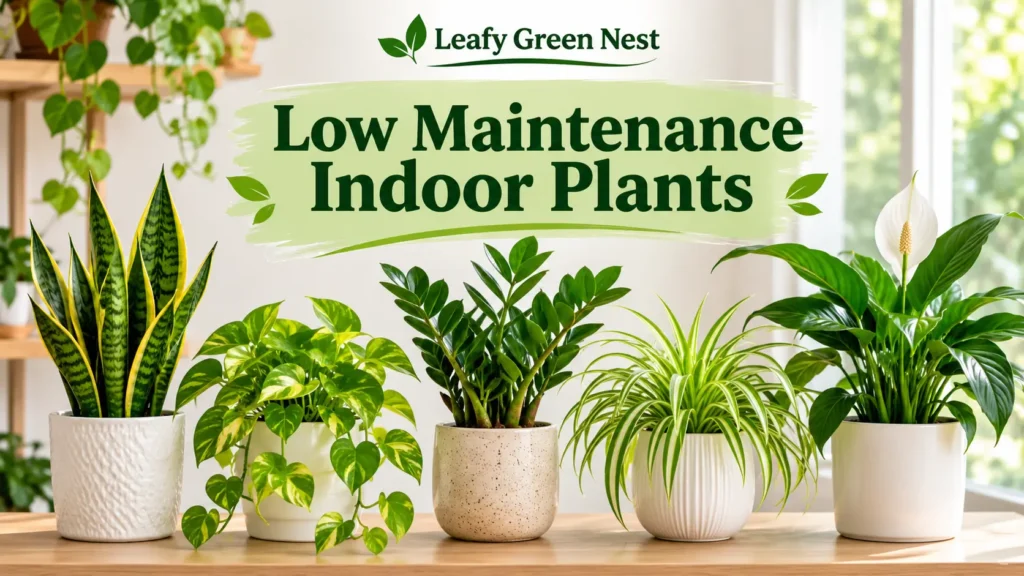
Low maintenance indoor plants are perfect for people who love greenery but do not have time for demanding gardening routines. They need less frequent watering, tolerate common indoor conditions, and make homes feel more welcoming.
You do not need a green thumb to grow beautiful houseplants. The secret is choosing varieties that suit your available sunlight, living space, and daily routine. From hardy snake plants to beautiful trailing pothos, there are plenty of easy-care options for beginners, busy professionals, and apartment owners.
Some indoor plants thrive in low light, while others prefer bright windowsills. Certain varieties are also suitable for homes with cats and dogs. Understanding these differences helps you choose plants that stay healthy without unnecessary effort.
Table of Contents
What Are Low Maintenance Indoor Plants?
Low maintenance indoor plants are houseplants that require relatively little watering, pruning, and attention to remain healthy. They generally tolerate common indoor conditions and are easier to manage than plants with demanding care requirements.
These plants are popular in bedrooms, living rooms, offices, and apartments. Some store water in their leaves or roots, while others adapt to different lighting conditions. Popular examples include snake plants, ZZ plants, pothos, spider plants, and cast iron plants.
Common Characteristics of Low Maintenance Indoor Plants
The best low-maintenance houseplants share several characteristics:
- They do not require daily watering.
- They tolerate typical indoor temperatures.
- They need little pruning.
- They can adapt to suitable indoor lighting.
- They are relatively resistant to common care mistakes.
- They grow well in ordinary household conditions when properly maintained.
However, low maintenance does not mean maintenance-free. Every living plant needs suitable light, water, healthy roots, and occasional attention.
Key Takeaways
- Snake plants and ZZ plants are excellent choices for people who forget to water.
- Pothos and heartleaf philodendrons work beautifully in hanging baskets.
- Cast iron plants and Chinese evergreens tolerate lower-light environments.
- Spider plants and parlor palms are good choices for cat owners.
- Peperomia and small snake plants suit desks and compact apartments.
- Tall snake plants and dracaena varieties add greenery to empty corners.
- Proper drainage is essential for preventing root rot.
- Indoor plants can support a pleasant living environment but should not replace proper ventilation or air filtration.
Low Maintenance Indoor Plants for Beginners
The best indoor plants combine attractive foliage with manageable care requirements. These ten varieties offer different shapes, sizes, and growing habits to suit a wide range of homes.
Snake Plant (Dracaena trifasciata)
The snake plant is one of the most forgiving indoor plants for beginners. Its tall, upright leaves create a modern appearance and fit easily into living rooms, bedrooms, and offices.
It tolerates lower-light conditions and needs infrequent watering because its thick leaves store water. Allowing its soil to dry between watering sessions helps prevent root problems.
Care Requirements
- Light: Low to bright indirect light.
- Water: Allow the soil to dry completely before watering.
- Soil: Well-draining cactus or succulent mix.
- Maintenance: Remove damaged leaves when necessary.
- Best for: Busy people, beginners, offices, and people who sometimes forget watering.
- Watch out for: Snake plants are toxic to cats and dogs if eaten.

BubbleBlooms Variegated Snake Plant in a 4 inch Pot Classic Dracaena trifasciata Cow's Tongue, Lengua de Vaca
ZZ Plant (Zamioculcas zamiifolia)
The ZZ plant is known for its glossy green leaves and ability to tolerate dry conditions. Its underground rhizomes store water, helping it survive occasional missed watering.
It grows slowly and works well in offices, bedrooms, and shaded indoor spaces. It is particularly useful for people who want attractive greenery without a demanding care routine.
Care Requirements
- Light: Low to bright indirect light.
- Water: Let the soil dry before watering again.
- Soil: Well-draining houseplant mix.
- Maintenance: Wipe dusty leaves occasionally.
- Best for: Beginners, offices, and people who prefer slow-growing plants.
- Watch out for: Overwatering can cause root rot, and the plant is toxic if ingested.

ZZ Plant Live Indoor Houseplant 4 Inch Pot Easy Care Zamioculcas Zamiifolia
Pothos (Epipremnum aureum)
Pothos is a popular trailing plant with attractive heart-shaped leaves. Its vines look beautiful in hanging baskets, decorative pots, and bookshelves.
It tolerates different indoor lighting conditions, although bright indirect light generally encourages fuller growth and stronger leaf patterns. You can also propagate new plants from healthy stem cuttings.
Care Requirements
- Light: Low to bright indirect light.
- Water: Water when the upper soil begins to dry.
- Soil: Well-draining indoor potting mix.
- Maintenance: Trim long vines when necessary.
- Best for: Small apartments, hanging baskets, and decorative shelves.
- Watch out for: Pothos is toxic to cats and dogs.

Live Golden Pothos, Indoor Vining Plant, Easy to Grow, 4" Pot
Spider Plant (Chlorophytum comosum)
Spider plants are beginner-friendly houseplants with long, narrow leaves. They produce small baby plants called spiderettes that can be separated and grown in new containers.
They prefer indirect light and moderate watering. Their arching foliage makes them especially attractive in hanging baskets.
Care Requirements
- Light: Medium to bright indirect light.
- Water: Water when the upper soil starts drying.
- Soil: General indoor potting mix.
- Maintenance: Remove dry leaves and damaged tips.
- Best for: Kitchens, hanging baskets, and homes with cats or dogs.
- Watch out for: Brown leaf tips can develop because of mineral buildup, inconsistent watering, or dry conditions.

Spider Plant Chlorophytum comosum, Established Live Houseplant - 4 x 2 inch Cups
Peace Lily (Spathiphyllum)
Peace lilies are popular flowering houseplants with dark green leaves and elegant white flowers. They tolerate lower-light conditions and add a soft, natural appearance to indoor spaces.
Unlike snake plants and ZZ plants, peace lilies prefer more consistent soil moisture. Their leaves may droop when they become thirsty, although repeated wilting should be avoided.
Care Requirements
- Light: Low to medium indirect light.
- Water: Keep the soil lightly moist, not waterlogged.
- Soil: Moisture-retaining but well-draining mix.
- Maintenance: Remove faded flowers and damaged leaves.
- Best for: Living rooms and people who enjoy flowering houseplants.
- Watch out for: Peace lilies contain calcium oxalate crystals and are toxic to cats and dogs.

Live Peace Lily Plant, Spathiphyllum, Low Light, Easy to Grow, 4" Pot
Chinese Evergreen (Aglaonema)
Chinese evergreen is an attractive foliage plant with leaves in green, silver, cream, and pink patterns. Its colorful appearance makes it a popular choice for modern interiors.
Many varieties tolerate lower-light environments, making them useful for offices and rooms without strong direct sunlight. They generally prefer warm indoor conditions and moderate watering.
Care Requirements
- Light: Low to medium indirect light.
- Water: Allow the upper soil to dry slightly.
- Soil: Well-draining potting mix.
- Maintenance: Remove damaged leaves occasionally.
- Best for: Apartments, offices, and shaded indoor spaces.
- Watch out for: Chinese evergreen is toxic to cats and dogs if ingested.

Live Aglaonema Chinese Evergreen Collection (4 Pack) Houseplants
Cast Iron Plant (Aspidistra elatior)
The cast iron plant gets its name from its ability to tolerate less-than-ideal growing conditions. Its broad, dark green leaves create a simple and elegant appearance.
It grows slowly and handles low-light areas better than many decorative houseplants. It is also relatively forgiving when watering routines are not perfectly consistent.
Care Requirements
- Light: Low to medium indirect light.
- Water: Allow the soil to dry partly between watering.
- Soil: Well-draining potting mix.
- Maintenance: Remove old or damaged leaves.
- Best for: Dim rooms, hallways, and beginners.
- Watch out for: Slow growth is normal. Avoid keeping its roots constantly wet.

Milky Way Aspidistra Cast Iron Plant | 2 inch | Tropical Ambiance
Jade Plant (Crassula ovata)
Jade plants are attractive succulents with thick leaves that store water. They are suitable for people who prefer plants that need less frequent watering.
Unlike many low-light houseplants, jade plants need plenty of natural light. A bright windowsill is generally better than a dark bedroom corner.
Care Requirements
- Light: Bright light, including some direct sunlight.
- Water: Allow the soil to dry between watering.
- Soil: Cactus or succulent mix.
- Maintenance: Prune occasionally to maintain shape.
- Best for: Sunny windowsills, desks, and small decorative spaces.
- Watch out for: Jade plants are toxic to cats and dogs if eaten.

Jade Plant 4" Crassula Ovata Jade Compact Succulent Plants Live, Easy to Grow Hard to Kill Houseplant by The Succulent Cult
Heartleaf Philodendron (Philodendron hederaceum)
Heartleaf philodendron is an easy-care trailing plant with attractive heart-shaped leaves. It grows well in hanging baskets, on bookshelves, and in decorative containers.
It tolerates lower light, although brighter indirect light encourages fuller growth. Its vines can be trimmed to maintain a compact appearance.
Care Requirements
- Light: Low to bright indirect light.
- Water: Allow the upper soil to dry partly.
- Soil: Well-draining potting mix.
- Maintenance: Trim long or damaged vines.
- Best for: Small rooms, hanging planters, and beginners.
- Watch out for: This plant is toxic to cats and dogs.

Shop Succulents Brasil Philodenron Heartleaf Hanging Plant, Live Indoor Plant, Easy Care Hanging Ivy Houseplant in Nursery Pot, Air Purifying Plant in Soil,...
Parlor Palm (Chamaedorea elegans)
The parlor palm brings a soft tropical appearance to indoor spaces. Its graceful leaves make it a popular choice for living rooms, bedrooms, and offices.
It grows slowly and tolerates lower light than many other palm varieties. It is also considered non-toxic to cats and dogs.
Care Requirements
- Light: Low to medium indirect light.
- Water: Water when the upper soil begins to dry.
- Soil: Well-draining potting mix.
- Maintenance: Remove yellow or damaged leaves.
- Best for: Pet-friendly homes and tropical indoor decoration.
- Watch out for: Avoid leaving its soil completely dry for extended periods.

Live Parlor Palm Plant, Neanthe Bella Palm, Pet Safe, 4" Pot
Low-Maintenance Indoor Plants for Low Light
Low-maintenance indoor plants for low light are suitable for rooms with small windows, shaded corners, or limited natural sunlight. They can tolerate less light than many houseplants, but none can grow indefinitely in complete darkness.
Some of the best choices include snake plants, ZZ plants, cast iron plants, Chinese evergreens, and parlor palms.
Best Low-Light Indoor Plants Compared
| Plant | Low-Light Tolerance | Care Level |
|---|---|---|
| Snake Plant | Very good | Very easy |
| ZZ Plant | Very good | Very easy |
| Cast Iron Plant | Very good | Very easy |
| Chinese Evergreen | Good | Easy |
| Parlor Palm | Good | Easy |
| Pothos | Good | Easy |
| Heartleaf Philodendron | Moderate to good | Easy |
| Peace Lily | Moderate to good | Moderate |
How to Help Low-Light Plants Grow Well
- Place them near a window whenever possible.
- Avoid completely dark corners.
- Rotate pots occasionally for balanced growth.
- Reduce watering when soil dries slowly.
- Consider a grow light if natural light is extremely limited.
One common mistake is watering low-light plants too frequently. Because they receive less light, they often use water more slowly than plants growing in brighter locations.
Low-Maintenance Indoor Plants With Health Benefits
Indoor plants can make living spaces more attractive and create a stronger connection with nature. They may also support a relaxing atmosphere and add small amounts of moisture to indoor air.
Potential Benefits of Indoor Plants
Support mental well-being: Spending time around greenery may help create a calmer environment. Watering plants and observing new growth can also become enjoyable activities.
Improve room appearance: Plants add natural color, texture, and visual interest to bedrooms, living rooms, and workspaces.
Add indoor humidity: Plants release water vapor through a natural process called transpiration. Several plants grouped together may slightly increase local humidity.
Encourage a connection with nature: Caring for houseplants provides an opportunity to interact with nature, even when you live in an apartment.
Are Indoor Plants Really Air Purifying?
Some indoor plants can remove certain pollutants in controlled laboratory experiments. However, a few houseplants cannot significantly clean the air in an average home.
For healthier indoor air, focus on proper ventilation, controlling moisture, preventing mold, and reducing indoor pollution sources. Houseplants are best viewed as decorative and lifestyle additions rather than replacements for air filtration.
For practical information about choosing and maintaining indoor greenery, read this university guide to dependable and durable houseplants.
Low-Maintenance Indoor Plants Safe for Cats
Cat owners should choose indoor plants carefully because several popular houseplants contain substances that can harm pets when eaten. Fortunately, attractive non-toxic varieties are available for pet-friendly homes.
Pet-Friendly Indoor Plants
| Plant | Safety for Cats | Care Level |
|---|---|---|
| Spider Plant | Non-toxic | Easy |
| Parlor Palm | Non-toxic | Easy |
| Cast Iron Plant | Non-toxic | Easy |
| Peperomia | Generally non-toxic | Easy |
| Calathea | Non-toxic | Moderate |
The spider plant and parlor palm are particularly useful choices because they combine attractive foliage with relatively simple care requirements.
Indoor Plants to Avoid Around Cats
Plants to avoid around cats include:
- Snake Plant
- ZZ Plant
- Pothos
- Peace Lily
- Chinese Evergreen
- Jade Plant
- Heartleaf Philodendron
Even non-toxic plants can cause mild stomach upset if pets eat large quantities. Check the botanical name before purchasing because common plant names sometimes refer to different species.
Low-Maintenance Indoor Plants for Small Spaces
Small indoor plants are perfect for apartments, desks, shelves, and windowsills. They add greenery without taking up valuable floor space or requiring large containers.
Best Indoor Plants for Small Spaces
Peperomia: A compact plant with attractive leaves that works well on desks and shelves. Most varieties prefer bright indirect light and soil that partly dries between watering.
Mini Snake Plant: A smaller version of the popular snake plant that fits easily into decorative pots. It is a good choice for desks and bedside tables.
Haworthia: A small succulent with thick leaves. It grows well in bright indoor spaces and needs infrequent watering.
Small Pothos: A young pothos plant fits comfortably on a bookshelf or table. Its vines can be trimmed to control their length.
Baby Rubber Plant: This compact peperomia has thick green leaves and a neat appearance. It is suitable for indoor decoration and small containers.
Choose pots with drainage holes and avoid overcrowding your plants. Good airflow helps reduce moisture-related problems and makes routine care easier.
Low Maintenance Indoor Plants Tall for Living Rooms
Tall indoor plants can make empty corners look more attractive and create a natural focal point. They are especially useful in larger living rooms, open spaces, and homes with high ceilings.
Best Tall Indoor Plants
| Plant | Appearance | Light Requirements |
|---|---|---|
| Tall Snake Plant | Upright leaves | Low to bright indirect |
| Dracaena | Long stems and narrow leaves | Medium to bright indirect |
| Rubber Plant | Large glossy leaves | Bright indirect |
| Monstera | Large split leaves | Bright indirect |
| Areca Palm | Feathery tropical foliage | Bright indirect |
The snake plant is one of the easiest tall options because it grows slowly and needs infrequent watering. Dracaena and rubber plants are also attractive choices, although they generally need more attention to their lighting requirements.
Before purchasing a large plant, consider its mature height and width. A plant that looks small in a nursery pot may eventually need considerable floor space.
Easy Plants to Take Care of for Beginners
Beginners should start with forgiving houseplants that tolerate occasional care mistakes. Choosing the right variety makes indoor gardening easier and reduces the risk of losing plants.
Beginner-Friendly Indoor Plants
| Plant | Main Advantage |
|---|---|
| Snake Plant | Needs infrequent watering |
| ZZ Plant | Tolerates dry conditions |
| Pothos | Easy to propagate |
| Spider Plant | Produces baby plants |
| Cast Iron Plant | Handles lower light |
| Heartleaf Philodendron | Easy trailing growth |
Before buying a plant, check your room’s lighting, available space, watering habits, and household pets. Choose a variety that naturally suits your environment instead of trying to change your home to accommodate a demanding plant.
Start with one or two plants and learn their basic requirements before expanding your collection.
How to Care for Low Maintenance Indoor Plants
Even easy-care plants need basic attention to remain healthy. Proper lighting, watering, drainage, and occasional cleaning can prevent many common houseplant problems.
Understand Lighting Requirements
Identify whether your plant needs low, medium, or bright indirect light. Avoid placing shade-tolerant varieties under intense direct sunlight unless their specific care requirements allow it.
Avoid Overwatering
Check soil moisture before adding water. Snake plants and ZZ plants prefer dry soil between watering, while peace lilies need more consistent moisture.
Use Well-Draining Soil
Choose a suitable potting mix that allows excess water to escape while retaining enough moisture for healthy roots. Succulents generally need a faster-draining mix than foliage plants.
Choose Pots With Drainage Holes
Proper drainage reduces the risk of water collecting around roots and causing rot. If you prefer decorative containers without holes, use a removable nursery pot inside them.
Clean the Leaves
Remove dust with a soft, damp cloth. Clean leaves allow you to inspect the plant more easily for pests and damage.
Check for Pests
Inspect leaves and stems for spider mites, mealybugs, aphids, and other common indoor pests. Isolate affected plants before treating an infestation.
Rotate Plants Occasionally
Turning pots helps encourage balanced growth when plants lean toward their main light source. A small rotation every few weeks is sufficient for many houseplants.
Common Mistakes to Avoid When Growing Indoor Plants
Even low-maintenance houseplants can struggle when their basic needs are ignored. Understanding common mistakes helps you maintain healthier plants with less effort.
Common Indoor Plant Care Mistakes
| Common Mistake | Why It Causes Problems | Better Approach |
|---|---|---|
| Overwatering | Damages roots | Check soil moisture |
| Poor lighting | Slows growth | Match plants to available light |
| No drainage holes | Traps excess water | Use draining pots |
| Too much direct sunlight | Can scorch leaves | Check light requirements |
| Heavy garden soil | Reduces root airflow | Use suitable potting mix |
| Ignoring pests | Allows infestations to spread | Inspect leaves regularly |
| Excessive fertilizer | Can damage roots | Follow product instructions |
Why Are My Indoor Plant Leaves Turning Yellow?
Yellow leaves can result from overwatering, underwatering, poor lighting, nutrient problems, pests, or natural aging.
Check the soil before changing your watering routine. If the soil remains wet for several days, inspect drainage and roots. If it is extremely dry, adjust watering according to the plant’s needs.
Why Is My Indoor Plant Not Growing?
Some indoor plants naturally grow slowly, including snake plants, ZZ plants, and cast iron plants. However, very limited light, cold temperatures, poor soil, and root problems can also restrict growth.
Improve the growing conditions gradually instead of immediately adding extra fertilizer or water.
How to Choose the Best Low Maintenance Indoor Plants
The best houseplant depends on your lifestyle, available light, and living space. A suitable plant should fit naturally into your routine without requiring constant attention.
Choose Plants Based on Your Needs
| Your Situation | Recommended Plants |
|---|---|
| You forget watering | Snake Plant, ZZ Plant |
| Your room has limited light | Cast Iron Plant, Snake Plant |
| You want hanging greenery | Pothos, Spider Plant |
| You have cats | Spider Plant, Parlor Palm |
| You have limited space | Peperomia, Mini Snake Plant |
| You want a tall plant | Snake Plant, Dracaena |
| You want flowers | Peace Lily |
| You have a sunny windowsill | Jade Plant |
| You are a beginner | ZZ Plant, Pothos |
For most beginners, the snake plant is an excellent overall choice. It tolerates low light, needs infrequent watering, and grows well in suitable indoor conditions.
Pet owners should consider non-toxic alternatives such as spider plants and parlor palms. Always confirm the botanical identity of a plant before bringing anything home with animals.
Best Low Maintenance Indoor Plants for a Healthier Home
Low maintenance indoor plants make it easier to enjoy natural greenery without spending hours on gardening. Snake plants, ZZ plants, pothos, spider plants, and cast iron plants are excellent starting choices.
Choose varieties that match your lighting conditions, watering habits, available space, and household needs. If you have pets, check plant toxicity before bringing anything home.
Start with one or two easy-care plants, learn their basic requirements, and gradually build an indoor garden that makes your home feel more welcoming.
Frequently Asked Questions About Low Maintenance Indoor Plants
What Are the Easiest Indoor Plants to Keep Alive?
Snake plants, ZZ plants, pothos, and cast iron plants are among the easiest indoor plants to maintain. They tolerate common indoor conditions and require relatively little attention.
Is There an Indoor Plant That Does Not Need Sunlight?
No green houseplant can grow indefinitely without light. However, snake plants, ZZ plants, and cast iron plants tolerate low-light conditions better than many other varieties.
Can Indoor Plants Survive Without Water for Two Weeks?
Some indoor plants, including snake plants and ZZ plants, can survive two weeks without watering. Other varieties may need water sooner depending on temperature, humidity, pot size, and soil conditions.
Should I Keep Indoor Plants in My Bedroom?
Yes. Many houseplants can grow well in bedrooms when they receive suitable light and care. Spider plants and parlor palms are popular options, particularly for homes with cats.
Why Are Low Maintenance Indoor Plants Better for Beginners?
They generally tolerate small care mistakes, need less frequent watering, and adapt to common indoor conditions. This makes them easier to manage while learning basic gardening skills.
When Should I Repot My Indoor Plants?
Repot when roots grow through drainage holes, the soil dries unusually quickly, or growth becomes restricted. Choose a container slightly larger than the existing pot.