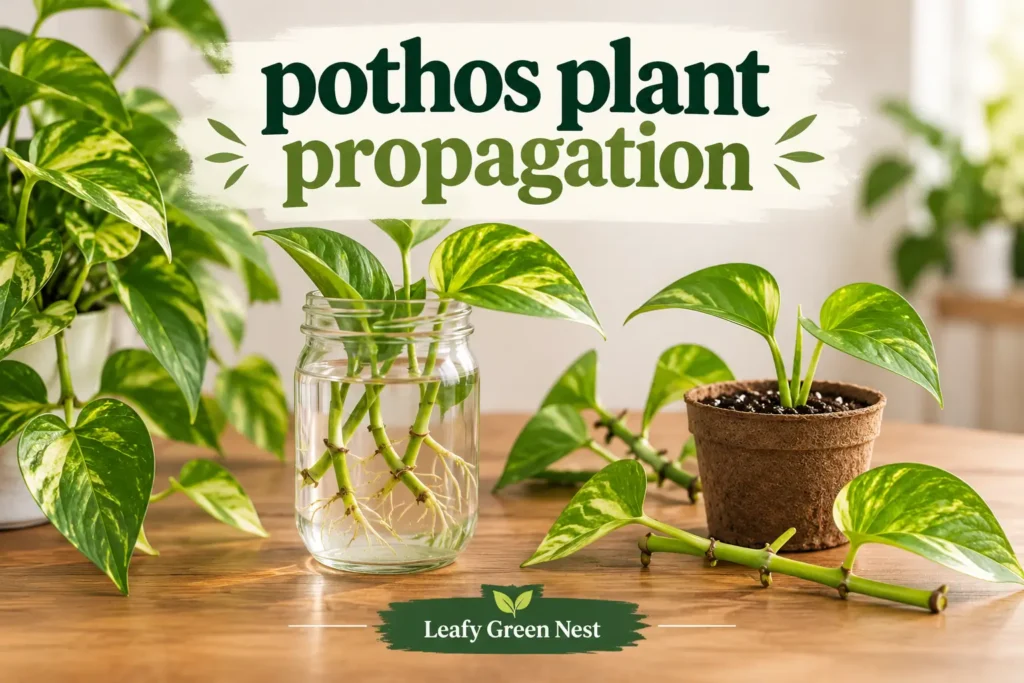
Pothos plant propagation is one of the easiest ways to grow new houseplants from an existing vine. Whether you want to fill a hanging basket, decorate your shelves, or share plants with friends, you can grow new pothos plants with just a few simple supplies.
The best part is that you do not need advanced gardening skills or expensive equipment. You can propagate pothos in water or soil using healthy stem cuttings.
The key is knowing where to cut, identifying the right node, and providing suitable conditions for root growth. With patience and proper care, your cuttings can develop into healthy new plants.
Table of Contents
What Is Pothos Plant Propagation?
Pothos plant propagation is the process of growing new plants from pieces of an existing pothos plant. It is simple, affordable, and beginner-friendly. You can propagate pothos in water or soil using healthy stem cuttings that contain at least one node.
If your pothos has long, trailing vines, you can turn a few cuttings into new plants for your shelves, hanging baskets, or indoor garden. The key is knowing where to cut the stem and how to care for the cutting while it develops roots.
The most reliable method is propagating pothos from a stem cutting with a visible node. A leaf alone usually cannot grow into a complete new plant because it lacks the stem tissue and growth point needed to produce new shoots.
Quick Answer: How Do You Propagate Pothos?
To propagate pothos, cut a healthy vine just below a node, place the node in clean water or moist potting mix, and keep the cutting in bright, indirect light. Roots often begin to appear within one to three weeks, although timing varies with temperature, light, and plant health.
Follow these basic steps:
- Choose a healthy pothos vine.
- Find a node, which is the small joint where a leaf or aerial root emerges.
- Cut about 0.5–1 inch below the node using clean scissors.
- Place the node in water or a suitable propagation medium.
- Keep the cutting warm and provide bright, indirect light.
- Monitor moisture and root growth.
- Transfer water-rooted cuttings to soil once they have several healthy roots.
Key Takeaways
- Best beginner method: Pothos plant propagation in water because you can see the roots develop.
- Where to cut: Just below a healthy node.
- Can you propagate from a leaf? A detached leaf without a node will not normally grow into a complete pothos plant.
- How long does it take? Rooting commonly takes a few weeks, with longer times possible in cool or low-light conditions.
- Can you propagate without roots? Yes. A healthy stem cutting does not need existing roots to begin growing them.
- Water or soil? Both work when the cutting contains a viable node and receives proper care.
- Best time: Spring and summer usually encourage faster growth, but indoor propagation can work throughout the year.
How Pothos Plant Propagation Works
Pothos, scientifically known as Epipremnum aureum, grows new roots from nodes along its stems. These nodes can also produce new shoots, which is why a properly prepared cutting can develop into a complete plant.
Here are the main parts of a pothos cutting:
- Node: The joint on the stem where a leaf and sometimes an aerial root emerge. This is the most important part of a propagation cutting.
- Internode: The section of stem between two nodes.
- Aerial root: A small root that grows from a stem node. It may help the cutting develop roots in water or soil.
- Leaf: The part that captures light and supports the cutting while new roots develop.
A cutting with one or two nodes can work, but including multiple healthy nodes gives you more flexibility when placing the cutting in water or soil.
Where to Cut Pothos to Propagate in Water
To propagate pothos successfully, cut the stem just below a node. This leaves the node attached to the cutting so it can produce new roots.
Follow these steps to choose the right cutting:
- Find a healthy green vine with no signs of rot or pest damage.
- Locate a node where a leaf joins the stem. Look for a small bump or aerial root nearby.
- Measure about 0.5–1 inch below the node.
- Use clean, sharp scissors to make the cut.
- Remove any leaf that would sit below the waterline.
- Place the cutting in water with at least one node submerged.
Expert tip: If you want to make several new plants, cut the vine into sections. Each section should have at least one viable node, preferably with a healthy leaf attached.
Avoid cutting through the middle of a node. A clean cut below it leaves the node intact for root development.
Pothos Plant Propagation in Water: Step-by-Step Guide
Water propagation is one of the easiest ways to grow new pothos plants at home. It requires only a healthy cutting, a clean container, and fresh water.
What You Need
- A healthy pothos plant
- Clean scissors or pruning shears
- A clear glass, jar, or small vase
- Room-temperature water
- A bright spot away from harsh direct sunlight
Step 1: Prepare the Cutting
Choose a healthy vine and cut it below a node. A cutting with one to three leaves and one or more nodes is a practical starting point.
Remove the lower leaves so they do not sit in the water. Submerged leaves can decay and make the water dirty.
Step 2: Place the Cutting in Water
Fill a clean jar with room-temperature water. Position the cutting so at least one node is underwater while the leaves remain above the surface.
If the cutting has an aerial root, submerge that area too. It may help the cutting establish roots.
Step 3: Choose the Right Location
Place the jar where the cutting receives bright, indirect light. A bright windowsill with filtered light is often suitable.
Avoid strong afternoon sunlight, which can heat the water and stress the cutting. Very dark corners may slow root development.
Step 4: Change the Water Regularly
Check the water every few days. Top it up when needed, and replace it if it becomes cloudy, smells unpleasant, or contains debris.
Changing the water approximately once or twice a week is a useful routine. Keep the node submerged as roots develop.
Step 5: Wait for Roots to Grow
Small roots may appear within one to three weeks. Some cuttings take longer, particularly when temperatures are cool or light levels are low.
Once the roots are around 2–3 inches long and have started to branch, you can transfer the cutting into potting mix. Smaller cuttings may be planted earlier if they already have a healthy root system, but giving roots time to develop makes handling easier.
Step 6: Transfer the Cutting to Soil
Choose a small pot with drainage holes and fill it with a well-draining indoor potting mix.
Make a hole, position the roots carefully, and cover the rooted nodes with mix. Water gently until the mix is evenly moist, then let excess water drain away.
Keep the potting mix lightly moist while the cutting adjusts. Avoid leaving it waterlogged.
How to Propagate Pothos in Soil
Propagating pothos directly in soil is another reliable method. It is especially useful if you want to avoid moving water-grown roots into potting mix later.
Step-by-Step Soil Propagation
- Select a healthy stem with at least one node.
- Cut just below the node using clean scissors.
- Remove the lowest leaf if it would be buried.
- Fill a small pot with moist, well-draining potting mix.
- Make a hole and place the cutting so at least one node is beneath the surface.
- Firm the mix gently around the stem.
- Water lightly and let excess water drain.
- Place the pot in a warm area with bright, indirect light.
Keep the growing medium slightly moist, not soaked. Since the cutting has no established root system at first, check the moisture frequently without watering automatically every day.
Roots commonly develop within three to six weeks, depending on conditions. You may see fresh growth as the cutting becomes established, but a new leaf alone does not prove that a strong root system has formed.
Which Soil Mix Is Best?
Use an airy potting mix that retains some moisture but drains well. A quality indoor potting mix amended with perlite is a practical choice.
Avoid dense garden soil in small indoor pots. It can remain wet for too long and limit the air available to developing roots.
Pothos Propagation in Water vs. Soil
Both methods can produce healthy plants. The better choice depends on how you prefer to care for your cuttings.
| Feature | Water propagation | Soil propagation |
|---|---|---|
| Difficulty | Very easy | Easy |
| Root visibility | Roots are easy to see | Roots remain hidden |
| Moisture control | Maintain clean water | Keep mix lightly moist |
| Transplanting | Usually needed for soil growing | No transfer needed |
| Main risk | Stagnant water and stem rot | Overwatering and poor drainage |
| Best for | Beginners and monitoring roots | Direct planting into a pot |
Which method should you choose? Start with water if you want to observe root growth and learn how propagation works. Choose soil if you want the cutting to establish directly in its long-term growing medium.
Neither method is automatically better for every home. Healthy cuttings, suitable warmth, adequate indirect light, and proper moisture matter more than the choice of medium.
Can You Propagate Pothos From a Leaf?
A pothos leaf without a node will not normally produce a complete new plant. It may remain green for a while or develop limited root growth, but it lacks the necessary stem growth point to produce a new vine.
This is why the search phrase “pothos plant propagation from leaf” can be misleading.
There is an important difference between these two cuttings:
- Leaf only: A detached leaf with no node. It is not a reliable way to grow a complete pothos plant.
- Leaf with a node: A leaf attached to a small section of stem containing a node. This can root and develop into a new plant.
If a leaf breaks off with a small piece of stem, inspect it carefully. If the stem section includes a node, it may still be worth propagating.
For dependable results, always select a stem cutting with at least one healthy node.
How to Propagate Pothos Without Roots
You can propagate pothos without existing roots because new roots can develop from a healthy stem node. This is the normal starting point for stem-cutting propagation.
To do it successfully:
- Select a healthy stem section with at least one node.
- Cut below the node.
- Remove leaves that would be submerged or buried.
- Place the cutting in water or moist propagation mix.
- Keep it warm and provide bright, indirect light.
- Monitor for root growth and signs of rot.
Do not confuse a cutting without roots with a cutting without a node. The first is normal. The second is unlikely to develop into a complete new plant.
How to Propagate Pothos Stems Without Leaves
Leafless pothos stem sections can sometimes produce roots and new shoots if they contain viable nodes. However, they may take longer to establish because they lack leaves to capture light and support growth.
This method is sometimes called propagating pothos from stem segments or using node cuttings.
For better results:
- Use firm, healthy stem sections rather than soft or blackened pieces.
- Make sure each segment contains at least one viable node.
- Keep the node in contact with moist propagation medium or water.
- Provide warmth and bright, indirect light.
- Check regularly for rot without disturbing the cutting unnecessarily.
A node with an aerial root or visible bud is a useful candidate. Still, not every bare stem section will grow, and success depends on its condition and the viability of its growth points.
For beginners, a cutting with both a node and a leaf is usually the more dependable choice.
How to Propagate Golden Pothos
Golden pothos is a popular variety of Epipremnum aureum with green leaves marked by yellow or golden patterns. It can be propagated using the same basic stem-cutting methods as other common pothos varieties.
To propagate golden pothos:
- Select a healthy vine with clear yellow-and-green variegation.
- Cut below a node.
- Place the node in water or moist potting mix.
- Maintain warm conditions and bright, indirect light.
- Wait for roots and new growth to develop.
Light matters for variegated pothos. Adequate indirect light helps maintain attractive leaf patterns, while very low light can encourage less vigorous growth and greener leaves.
If you want a fuller pot, grow several rooted cuttings together rather than relying on a single cutting to fill the container quickly.
How Long Does Pothos Propagation Take?
Pothos propagation often takes two to four weeks to produce noticeable roots, although some cuttings need longer. Rooting speed depends on temperature, light, water quality, and the condition of the cutting.
| Stage | Typical timeline | What to look for |
|---|---|---|
| Fresh cutting | Day 1 | Firm stem and healthy leaf |
| Early rooting | 1–3 weeks | Small white root tips |
| Root development | 3–4 weeks | Longer roots and possible new buds |
| Transplanting | Often 3–6 weeks | Several healthy roots, ideally branching |
| Establishment in soil | Following few weeks | Stable leaves and continued growth |
These timelines are estimates, not deadlines. Do not discard a cutting simply because it has not rooted within a week. If the stem remains firm and healthy, continue providing appropriate care.
Common Pothos Propagation Problems and Solutions
Most propagation problems come from cutting without a viable node, excess moisture, poor light, or a deteriorating stem.
| Problem | Likely cause | What to do |
|---|---|---|
| No roots appearing | No viable node, cool conditions, or insufficient light | Check for a node and improve the growing conditions |
| Stem turning black or mushy | Rot or stagnant water | Remove damaged tissue and restart with a healthy section |
| Yellow leaves | Stress, decay, or unsuitable light | Check the stem, water, and light conditions |
| Roots growing slowly | Cool temperatures or low light | Move the cutting to a warmer, brighter location away from direct sun |
| Cutting wilting | Water loss before roots form | Recheck water contact and moisture; remove severely damaged leaves |
| Cutting struggles after transplanting | Adjustment to soil or damaged roots | Keep the mix lightly moist and avoid harsh direct sunlight |
Why Is My Pothos Cutting Not Rooting?
First, check whether the cutting contains a node. Without one, a typical pothos cutting will not produce a new plant.
If the node is present, check that it is in contact with water or moist propagation mix. Then review the temperature and light. Avoid repeatedly pulling the cutting out to inspect its progress because this can disturb developing roots.
Why Is My Pothos Cutting Rotting in Water?
Rot can develop when the cutting is damaged, the water becomes dirty, or leaves remain submerged. Remove the affected cutting, clean the container, and restart with a firm, healthy stem section if possible.
Keep the leaves above water and replace cloudy or foul-smelling water promptly.
Why Did My Pothos Cutting Wilt After Planting?
Water-rooted cuttings may struggle when moved into soil because their roots must adjust to a different environment. Handle the roots gently, use a well-draining mix, and maintain even moisture without soaking the pot.
Give the cutting time to adjust before applying fertilizer or moving it into stronger light.
Expert Tips for Successful Pothos Propagation
Use these practical tips to improve your chances of growing healthy new plants.
- Start with a hydrated parent plant. A healthy, well-watered plant is a better source of cuttings than one that is severely wilted.
- Use clean tools. Wipe scissors or pruning shears before cutting to reduce the chance of spreading disease.
- Choose healthy stems. Avoid vines with mushy sections, pests, or widespread yellowing.
- Keep leaves above water. Only the node and lower stem need to be submerged.
- Avoid overwatering soil cuttings. Moist soil provides water, while air in the mix supports healthy root development.
- Be patient. Root development varies with the season and indoor conditions.
- Plant several cuttings together. This is a simple way to create a fuller-looking pothos pot.
- Keep pets and children safe. Pothos contains calcium oxalate crystals and is toxic if chewed or swallowed. Keep cuttings and mature plants out of reach.
Pothos Propagation Checklist
Use this checklist before starting a new batch of cuttings.
- Choose a healthy pothos vine.
- Identify at least one viable node per cutting.
- Cut just below the node with clean scissors.
- Remove leaves that would be underwater or buried.
- Prepare clean water or moist, well-draining potting mix.
- Place cuttings in warm, bright, indirect light.
- Check moisture and inspect for rot regularly.
- Transplant water-rooted cuttings when roots are well developed.
Final Verdict: The Best Way to Propagate Pothos
Pothos plant propagation is a simple way to grow more houseplants without buying new ones. For most beginners, water propagation offers the clearest view of root development, while direct soil propagation is a practical option if you prefer to skip transplanting.
The most important rule is to include a healthy node in every cutting. Give it suitable light, warmth, and moisture, and allow enough time for roots to develop. With a little patience, one healthy pothos vine can provide several new plants for your home.
References:
1. University of Wisconsin-Madison Extension: Pothos: Care and Propagation
2. Penn State Extension: Pothos as a Houseplant
3. University of Vermont Extension: More, Please: Propagating Houseplants
4. Iowa State University Extension and Outreach: How to Propagate Houseplants by Stem Tip Cuttings