
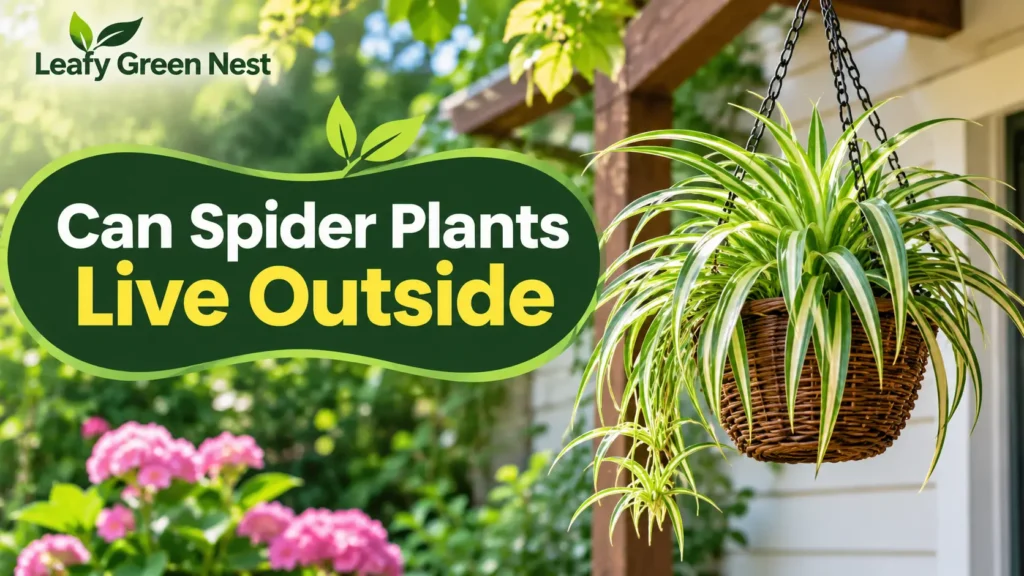
Spider plants are popular indoor plants, but they can grow outdoors too. If you are wondering, can spider plants live outside, the answer is yes. They thrive in warm weather, bright indirect light, and sheltered outdoor spaces.
You can grow them in hanging baskets, patio containers, balconies, or garden beds. However, spider plants need protection from intense sunlight, extreme heat, and frost. Their ability to survive outdoors depends mainly on your local climate and how you care for them.
With the right location and a simple watering routine, you can enjoy healthy outdoor spider plants throughout the warmer months. In suitable frost-free climates, they can even grow outdoors all year.
Table of Contents
What Is a Spider Plant?
A spider plant (Chlorophytum comosum) is an evergreen perennial known for its long, arching leaves and small baby plants that grow from trailing stems. It belongs to the Asparagaceae family and originates from southern Africa.
Spider plants are popular because they are attractive, adaptable, and relatively easy to maintain. Their narrow leaves usually have green and white stripes, although some varieties have completely green foliage.
Popular varieties include:
- Variegated spider plant: Green leaves with white or cream stripes.
- Reverse variegated spider plant: White or cream centers with green edges.
- Bonnie spider plant: Curly leaves that create a compact appearance.
- Green spider plant: Solid green leaves without variegation.
Although many people grow spider plants indoors, their natural adaptability allows them to grow outdoors when temperatures, light, and moisture levels are suitable.
Can Spider Plants Live Outside All Year?
Yes, spider plants can live outside all year in warm, frost-free climates. They grow best in moderate temperatures and sheltered locations where they receive bright, indirect sunlight.
However, they are not frost-hardy plants. Freezing temperatures can damage their leaves, roots, and growing points.
Here is how different climates affect outdoor spider plants:
| Climate | Outdoor growing suitability |
|---|---|
| Warm, frost-free | Suitable throughout the year |
| Mild winters | Suitable with occasional protection |
| Cold winters | Move indoors during winter |
| Hot summers | Grow in partial shade |
| Freezing winters | Not suitable for permanent outdoor planting |
If you live in a warm region, spider plants can become attractive additions to shaded patios and garden beds.
In colder regions, grow them in movable containers so you can bring them indoors before temperatures become too low.
How Long Can Spider Plants Live Outside?
Spider plants can live outdoors for several years when they receive suitable temperatures, proper watering, and protection from harsh weather. In colder climates, they can spend the warmer months outside and return indoors during winter.
Their lifespan depends on several growing conditions:
- Temperature: Warm conditions encourage healthy growth, while frost can cause severe damage.
- Sunlight: Filtered light protects leaves from scorching.
- Watering: Consistent moisture supports healthy roots without causing waterlogging.
- Soil: Well-draining soil reduces the risk of root rot.
- Pest control: Regular inspections help prevent infestations.
Healthy spider plants also produce baby plants called plantlets. These develop on long stems and can be separated to grow new plants.
This natural propagation makes it easy to replace older plants or expand your outdoor collection.
Can Spider Plants Live Outside in the Summer?
Yes, summer is one of the best times to move spider plants outdoors. Warm temperatures, fresh air, and suitable sunlight can encourage new leaf growth and plantlet production.
However, intense summer heat can cause stress, especially when plants receive direct afternoon sunlight.
Follow these simple tips:
- Place the plant under a covered patio or shaded balcony.
- Provide gentle morning sunlight if possible.
- Avoid strong afternoon sunlight.
- Check soil moisture regularly.
- Water when the top inch of soil feels dry.
- Protect the plant from strong winds and heavy rain.
If you live in a hot region, choose a location that stays cool during the afternoon.
Temperatures above 90°F (32°C) can increase moisture loss, particularly when combined with dry winds and direct sunlight. During heatwaves, move containers to a cooler, sheltered area.
Can Spider Plants Live Outside in Full Sun?
Spider plants generally cannot tolerate prolonged full sun, particularly during hot summer afternoons. They prefer bright indirect sunlight or partial shade.
Strong sunlight can scorch their leaves, causing brown patches, faded colors, and dry edges.
Common signs of excessive sunlight include:
- Brown or crispy leaf tips.
- Yellow or bleached patches.
- Faded green and white markings.
- Dry or curled leaves.
- Drooping despite moist soil.
Gentle morning sunlight is usually safer than direct afternoon sunlight. However, plants that have grown indoors should be gradually introduced to outdoor light.
The best outdoor locations include:
- Covered patios.
- Shaded balconies.
- Areas beneath trees with filtered sunlight.
- Sheltered garden corners.
- Pergolas and partially shaded porches.
If you notice leaf scorching after moving your spider plant outside, relocate it to a shadier area.
Can Spider Plants Live Outside in the Winter?
Spider plants can survive mild outdoor winters, but they should not be exposed to frost or prolonged cold conditions. Their growth slows in cooler weather, and their leaves may become damaged when temperatures fall too low.
For reliable winter protection, bring container-grown spider plants indoors before temperatures approach 50°F (10°C).
Follow these winter care steps:
- Move the plant indoors before cold weather arrives.
- Place it near a bright window with indirect sunlight.
- Keep it away from cold drafts and heating vents.
- Reduce watering as growth slows.
- Check the soil before watering.
- Make sure the container drains properly.
A brief drop in temperature does not always kill a spider plant, but repeated cold exposure increases the risk of damage.
Can Spider Plants Live Outside in Zone 6?
Spider plants are not reliably winter-hardy in USDA Zone 6 because winter temperatures can fall well below their cold tolerance.
You can still grow them outside during spring and summer by following a seasonal routine:
- Keep plants in movable containers.
- Wait until frost danger has passed before moving them outdoors.
- Place them in partial shade.
- Monitor temperatures during autumn.
- Bring them indoors before cold weather becomes severe.
This approach allows you to enjoy outdoor spider plants without risking winter damage.
Can You Plant Spider Plants Outside in the Ground?
Yes, you can plant spider plants directly in the ground in warm climates with suitable growing conditions. They can grow as attractive ground-cover plants in partially shaded garden areas.
Their trailing stems produce small plantlets that can develop roots when they touch the soil.
However, direct garden planting is less practical in regions with cold winters. Container-grown plants are easier to protect because you can move them indoors when temperatures drop.
How to Plant Spider Plants in the Ground
Follow these six steps to establish healthy outdoor spider plants.
- Choose a suitable location: Select a partially shaded area that receives filtered sunlight.
- Prepare the soil: Use loose, well-draining soil. Improve heavy clay soil with suitable organic matter.
- Dig a planting hole: Make it slightly wider than the plant’s root ball.
- Position the plant: Place the root ball at the same depth as it was growing in its original container.
- Cover and water: Fill the hole with soil and water thoroughly.
- Monitor growth: Check for wilting, leaf scorching, pests, and poor drainage.
Avoid planting spider plants in low areas where rainwater collects. Constantly wet soil can damage their roots.
Spider Plant Outside Hanging Basket: Is It a Good Idea?
Yes, an outdoor hanging basket is an excellent way to grow spider plants. Their long leaves and cascading stems create a beautiful display on patios, balconies, and covered porches.
Hanging baskets also make seasonal care easier because you can move them indoors when temperatures become too cold.
Benefits include:
- Attractive appearance: Long leaves create a natural cascading effect.
- Flexible placement: You can hang baskets in sheltered outdoor areas.
- Easy movement: Lightweight containers can be moved indoors.
- Space-saving: They are suitable for small balconies and patios.
- Good drainage: Containers with drainage holes allow excess water to escape.
Choose a basket with drainage holes and fill it with a lightweight potting mix.
Remember that hanging baskets dry out faster than regular pots, especially during hot weather. Check soil moisture frequently and water when the top inch becomes dry.
How to Care for Spider Plants Outdoors
Outdoor spider plant care is simple when you provide the right sunlight, water, temperature, and soil. A few regular checks can prevent most common growing problems.
Provide Bright Indirect Sunlight
Spider plants grow best in bright, indirect light or partial shade.
A covered patio, shaded balcony, or location beneath a tree can provide suitable conditions. Avoid prolonged exposure to strong afternoon sunlight.
Water When the Soil Begins to Dry
Spider plants prefer lightly moist soil but do not tolerate constantly wet roots.
Check the top inch of soil before watering. If it feels dry, water thoroughly until excess water drains from the container.
During summer, outdoor plants may need more frequent watering because heat increases evaporation.
Avoid watering on a fixed schedule without checking the soil. Rainfall, temperature, container size, and sunlight all affect moisture levels.
Use Well-Draining Soil
Good drainage is essential for healthy roots.
Choose a lightweight potting mix that holds some moisture without becoming soggy. Avoid compacted soil because it can restrict root growth and increase the risk of root rot.
Maintain Suitable Temperatures
Spider plants generally grow best around 65°F to 75°F (18°C to 24°C).
They can tolerate warmer conditions, but prolonged heat combined with direct sunlight can cause stress.
Protect outdoor plants from freezing winds, sudden temperature changes, and extremely hot surfaces.
Fertilize During Active Growth
Spider plants do not need heavy feeding.
Apply a balanced liquid houseplant fertilizer during spring and summer if necessary. Follow the manufacturer’s instructions and avoid excessive applications.
Too much fertilizer can cause salt buildup and brown leaf tips.
Prune Damaged Leaves
Remove yellow, brown, or damaged leaves with clean scissors.
Cut damaged foliage close to the base without harming healthy leaves. You can also remove old flower stems after collecting the plantlets.
Check for Outdoor Pests
Outdoor spider plants may attract:
- Spider mites.
- Aphids.
- Mealybugs.
- Scale insects.
- Whiteflies.
Inspect the undersides of leaves regularly. If you find pests, wash the foliage with water or use an appropriate insecticidal soap according to its label.
For additional growing advice, consult the Royal Horticultural Society’s spider plant growing guide.
How to Move an Indoor Spider Plant Outside Safely
Moving a spider plant directly from an indoor room into bright outdoor conditions can shock its leaves. A gradual adjustment process called hardening off helps the plant adapt to outdoor sunlight, temperature, and airflow.
Follow these steps:
- Choose a warm day: Wait until frost danger has passed and outdoor temperatures are suitable.
- Start in the shade: Place the plant outside in a sheltered location for two to three hours.
- Increase outdoor exposure: Gradually increase the time it spends outside over 7 to 10 days.
- Introduce gentle sunlight: Allow some morning sunlight if the plant shows no signs of stress.
- Monitor the leaves: Watch for yellowing, browning, and wilting.
- Choose a permanent location: Once adjusted, keep the plant in a sheltered spot with filtered light.
For example, if your spider plant has been growing beside an indoor window, do not immediately place it on an exposed balcony. Start under a covered porch and gradually introduce it to brighter conditions.
This simple process helps prevent leaf scorch and makes the transition easier.
Common Outdoor Spider Plant Problems and Solutions
Outdoor spider plants can experience problems caused by excessive sunlight, poor drainage, temperature changes, and pests. Identifying these issues early helps prevent serious damage.
| Problem | Possible cause | Recommended solution |
|---|---|---|
| Brown leaf tips | Mineral buildup or dry soil | Use rainwater and check moisture |
| Yellow leaves | Overwatering or poor drainage | Improve drainage |
| Crispy foliage | Excessive direct sunlight | Move into partial shade |
| Drooping leaves | Underwatering or root damage | Check soil and roots |
| Slow growth | Cold temperatures or poor light | Improve growing conditions |
| Root rot | Waterlogged soil | Remove damaged roots |
| Pest damage | Spider mites or aphids | Wash leaves and treat pests |
Why Are My Outdoor Spider Plant Leaves Turning Brown?
Brown leaf tips are common in spider plants and do not always indicate a serious problem. They can result from dry soil, mineral buildup, excessive fertilizer, or too much direct sunlight.
Start by checking the soil moisture and moving the plant away from harsh sunlight. If the problem continues, try rainwater or filtered water and reduce fertilizer applications.
You can trim brown tips with clean scissors to improve the plant’s appearance.
Why Is My Spider Plant Drooping Outside?
Drooping leaves usually indicate water stress, excessive heat, or root problems. Check the soil before adding more water.
If the soil feels dry, water thoroughly. If it feels wet and smells unpleasant, inspect the roots for signs of rot.
Moving the plant into a cooler, shaded location can also help during extremely hot weather.
Can Spider Plants Live Outside? Tips for Healthy Plant Growth
Spider plants can grow outdoors successfully when their basic growing requirements are met. They are excellent choices for shaded patios, balconies, hanging baskets, and warm-climate gardens.
Before moving your plant outside, remember these important care tips:
- Provide bright indirect sunlight or partial shade.
- Water when the top inch of soil becomes dry.
- Use loose, well-draining soil.
- Protect plants from frost and extreme heat.
- Bring containers indoors before winter temperatures become too cold.
- Check regularly for pests and damaged leaves.
- Introduce indoor plants to outdoor conditions gradually.
If you live in a warm climate, you may be able to enjoy your spider plant outdoors throughout the year. In colder regions, simply move it indoors when temperatures drop.
With the right care, your spider plant can produce healthy foliage and plenty of baby plants while adding natural beauty to your outdoor space.
Frequently Asked Questions
Can spider plants live outside permanently?
Yes, spider plants can live outside permanently in warm, frost-free climates. They need partial shade, well-draining soil, and suitable temperatures to remain healthy throughout the year.
Can spider plants survive a night outside?
Yes, spider plants can survive a night outside when temperatures remain comfortably warm. However, cold nights can cause stress, particularly when temperatures fall below 50°F (10°C).
Do spider plants grow faster outside?
Spider plants may grow faster outdoors when they receive suitable warmth, filtered sunlight, and enough water. However, excessive heat and direct sunlight can slow growth by damaging their leaves.
Can spider plants tolerate heavy rain?
Spider plants can tolerate occasional rain, but prolonged heavy rainfall can cause waterlogged soil and root rot. Use containers with drainage holes and move hanging baskets under shelter during severe storms.
Should I cut off spider plant babies before moving them outside?
No, removing baby plants is not necessary before moving the parent plant outdoors. You can leave them attached or separate healthy plantlets and grow them in individual containers.
Does outdoor sunlight make spider plant leaves brighter?
Bright, filtered sunlight supports healthy leaf color, but excessive direct sunlight can bleach or scorch the foliage. Variegated varieties generally look best when protected from harsh afternoon sunlight.


