
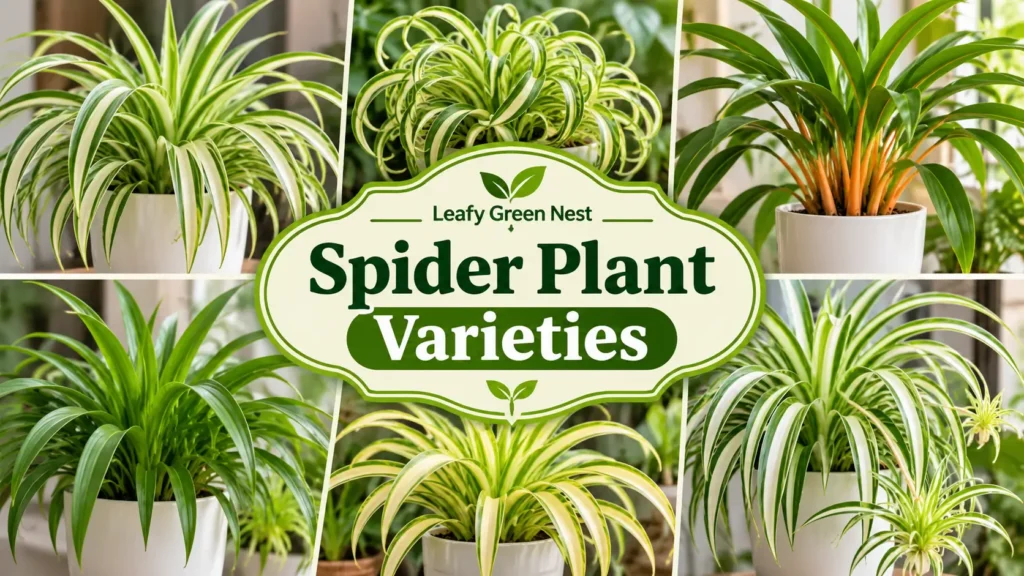
Spider plant varieties offer beautiful combinations of green, white, cream, and yellow foliage, making them popular choices for indoor gardens. Some have long, arching leaves, while others feature curly foliage, compact growth, or unusual orange stems.
Most traditional spider plants belong to Chlorophytum comosum, an easy-care perennial known for its attractive leaves and baby plants. Popular types include Vittatum, Variegatum, Bonnie, Hawaiian, and Milky Way. Related plants, such as the Green Orange Spider Plant, offer even more variety.
If you are looking for different spider plant types, this article explains their names, identifying features, growth habits, and care requirements. It also covers rare spider plant varieties, solid green forms, and the best choices for different indoor spaces.
Table of Contents
What Are Spider Plant Varieties?
Spider plant varieties are different cultivars and related species grown for their attractive foliage, leaf patterns, and growth habits. They can have solid green leaves, white borders, yellow stripes, curly foliage, or colorful stems.
The traditional spider plant, Chlorophytum comosum, belongs to the Asparagaceae family and is native to parts of tropical and southern Africa. Its long leaves grow from a central base, while mature plants produce arching runners that carry small flowers and baby plants called spiderettes.
Not every plant sold as a spider plant belongs to the same species. For example, Green Orange is Chlorophytum orchidastrum, a close relative with orange stems and an upright growth habit.
How Many Types of Spider Plants Are There?
There are several recognized spider plant cultivars, but no single official number covers every named selection sold worldwide. The best-known cultivars include Vittatum, Variegatum, Bonnie, Hawaiian, Milky Way, Picturatum, and White Stripe.
You may also find descriptive names such as Zebra Spider Plant, Large Spider Plant, and Solid Green Spider Plant. These names do not always represent separate botanical cultivars.
The following table gives a quick overview of popular types.
| Variety | Identifying feature | Growth habit |
|---|---|---|
| Vittatum | White central stripe | Arching |
| Variegatum | White leaf edges | Cascading |
| Bonnie | Curly foliage | Compact |
| Hawaiian | Distinctive variegated foliage | Depends on selection |
| Milky Way | Pale center, green edges | Arching |
| Picturatum | Yellow central stripe | Upright to arching |
| Mandaianum | Short leaves, yellow stripe | Compact |
| White Stripe | Narrow white central line | Arching |
| Solid Green | Entirely green leaves | Arching |
| Green Orange | Orange stems and green leaves | Clump-forming |
Spider Plant Varieties With Names and Pictures
Different spider plant varieties have unique leaf patterns, colors, and shapes that make them easy to compare. Although photographs are useful for identification, checking the botanical name is important because some nursery labels use informal or overlapping names.
Vittatum Spider Plant
Vittatum is one of the most recognizable spider plant cultivars. It has green leaves with a broad white or creamy stripe running down the center.
Its long, arching foliage creates a cascading appearance, making it a popular choice for hanging baskets and elevated shelves.
Key characteristics:
- Green leaves with a central white stripe.
- Long, narrow foliage.
- Graceful arching growth.
- Produces flowers and baby plantlets.
Best for: Traditional indoor displays and hanging baskets.
Variegatum Spider Plant
Variegatum has green leaf centers surrounded by white or cream-colored margins. This pattern gives it a bright appearance and makes it easy to distinguish from Vittatum.
Its leaves can grow quite long, and mature plants look attractive in hanging containers.
Key characteristics:
- Green central leaf areas.
- White or cream-colored edges.
- Long, arching foliage.
- Produces runners and baby plants.
Best for: People who prefer white-edged foliage.
Bonnie Spider Plant
Bonnie is a popular curly spider plant variety with naturally twisted leaves. Its compact shape and unusual foliage make it different from traditional straight-leaved types.
Many Bonnie plants have green leaves with cream or white central markings, although the exact appearance depends on the selection.
Key characteristics:
- Naturally curly leaves.
- Compact growth.
- Attractive green and cream patterns.
- Suitable for small containers.
Best for: Desks, shelves, and small indoor spaces.
Hawaiian Spider Plant
Hawaiian is a named cultivar of Chlorophytum comosum. It is included among recognized spider plant selections, although its appearance can vary in commercial descriptions.
Check the plant’s actual foliage and nursery identification rather than relying only on its common name.
Key characteristics:
- Decorative green foliage.
- May be sold with distinctive lighter markings.
- Suitable for indoor containers.
- Less commonly available than traditional types.
Best for: Houseplant collectors interested in less common cultivars.
Milky Way Spider Plant
Milky Way is an attractive cultivar with pale white or cream-colored central leaf areas and green margins. Its lighter foliage creates a noticeable contrast with traditional dark green houseplants.
It is a good choice if you want a variegated plant with a different pattern from Vittatum.
Key characteristics:
- Pale central leaf areas.
- Green leaf margins.
- Decorative foliage.
- Less common in general nurseries.
Best for: Collectors and people who enjoy light-colored foliage.
Picturatum Spider Plant
Picturatum is known for its green leaves and yellow central stripe. Its colorful foliage makes it an interesting alternative to traditional white-striped spider plants.
It may be harder to find than common varieties, depending on your local nursery.
Key characteristics:
- Yellow central stripe.
- Green outer leaf areas.
- Decorative foliage.
- Attractive indoor growth.
Best for: People who prefer yellow and green leaf combinations.
Mandaianum Spider Plant
Mandaianum is a compact cultivar with shorter leaves and a bright yellow or cream central stripe. Its smaller size makes it suitable for indoor containers where space is limited.
It has a different appearance from larger, long-leaved spider plant forms.
Key characteristics:
- Shorter leaves.
- Yellow central stripe.
- Green leaf margins.
- Compact growth habit.
Best for: Small plant collections and tabletop displays.
White Stripe Spider Plant
White Stripe has a narrow white or cream line running down the central leaf vein. Unlike Vittatum, its stripe is generally thinner and can become less noticeable as the leaves mature.
It is a distinctive cultivar for people who prefer subtle variegation.
Key characteristics:
- Narrow central white stripe.
- Green foliage.
- Arching leaves.
- Decorative flower stems.
Best for: Simple, understated indoor plant displays.
Solid Green Spider Plant Varieties
Solid green spider plants have leaves without white or yellow stripes. Their consistent green color creates a natural appearance that blends easily with other indoor plants.
These forms are useful for people who prefer traditional green foliage instead of variegated patterns.
Key characteristics:
- Completely green leaves.
- No contrasting leaf borders.
- Fountain-like growth.
- Suitable for hanging containers.
Best for: Minimalist indoor gardens and green foliage collections.
Green Orange Spider Plant
The Green Orange Spider Plant is a close relative of the traditional spider plant. Its botanical name is Chlorophytum orchidastrum ‘Green Orange’, and it is also known as the Mandarin Plant and Fire Flash.
Its dark green, lance-shaped leaves grow from a central clump, while the stems display attractive orange or pinkish-orange tones. Unlike Chlorophytum comosum, it does not produce the typical hanging spiderettes.
Key characteristics:
- Dark green leaves.
- Bright orange or pinkish-orange stems.
- Upright, clump-forming growth.
- Propagated through division.
Best for: People who want colorful foliage and an unusual houseplant.
Zebra Spider Plant
Zebra Spider Plant is a descriptive name used by some plant sellers for spider plants with contrasting green and white stripes. It is not a consistently recognized cultivar name.
The appearance may differ between sellers, so check the leaf pattern and botanical identification before buying.
Key characteristics:
- Contrasting green and white foliage.
- Noticeable stripes.
- Narrow or arching leaves.
- Decorative appearance.
Best for: People who enjoy bold striped foliage.
Large Spider Plant Varieties
Large spider plants are mature specimens with broad leaf clusters and long cascading runners. Their final size depends on age, cultivar, growing conditions, and container space.
Vittatum and Variegatum are popular choices for creating fuller hanging displays when they have enough room to grow.
Key characteristics:
- Full clusters of foliage.
- Long arching leaves.
- Numerous hanging runners.
- Suitable for larger containers.
Best for: Living rooms, large corners, and hanging baskets.
Compact Spider Plant Varieties
Compact spider plants are useful when you have limited growing space. Bonnie and Mandaianum are good examples of smaller forms that can fit comfortably on desks and shelves.
Their manageable size also makes them useful for indoor plant arrangements.
Key characteristics:
- Smaller growth habit.
- Manageable foliage.
- Suitable for tabletop pots.
- Attractive in small spaces.
Best for: Apartments, offices, and windowsills.
Rare Spider Plant Varieties
Rare spider plant varieties are less commonly available than traditional green-and-white cultivars. Milky Way and Picturatum are examples of named selections that may be harder to find in ordinary plant shops.
Availability depends on local growers and specialist nurseries. A rare label does not automatically mean that a plant is a separate species or officially recognized cultivar.
Key characteristics:
- Unusual leaf patterns.
- Limited availability.
- Interesting foliage colors.
- Often sold by specialist growers.
Best for: Experienced collectors and unusual houseplant displays.
Ocean Spider Plant
Ocean is a name used for a compact variegated spider plant selection. It is generally described as having green foliage with lighter margins and a fuller appearance.
Because cultivar descriptions and availability can differ between sellers, confirm the plant’s identity before purchasing.
Key characteristics:
- Compact appearance.
- Green and cream foliage.
- Decorative leaf patterns.
- Suitable for smaller containers.
Best for: Small indoor gardens and tabletop arrangements.
Variegated Bonnie Spider Plant
Variegated Bonnie combines the curly growth habit of Bonnie with contrasting green and cream or white leaf markings. Its curled foliage gives the plant a fuller appearance than many straight-leaved types.
It is a decorative option for people who want both unusual leaf texture and attractive color patterns.
Key characteristics:
- Curly leaves.
- Green and cream markings.
- Compact growth.
- Suitable for decorative pots.
Best for: Collectors who enjoy curly and variegated foliage.
Spider Plant Varieties Comparison: Colors and Growth Habits
Comparing leaf patterns and growth habits helps you identify the right spider plant for your home. This comparison also makes it easier to distinguish true cultivars from descriptive nursery names.
| Type | Leaf pattern | Best feature |
|---|---|---|
| Vittatum | White center stripe | Traditional appearance |
| Variegatum | White outer edges | Bright foliage |
| Bonnie | Curly green and cream | Unusual texture |
| Hawaiian | Variegated foliage | Collector appeal |
| Milky Way | Cream center, green edges | Light-colored leaves |
| Picturatum | Yellow center stripe | Warm leaf colors |
| Mandaianum | Short leaves, yellow stripe | Compact size |
| White Stripe | Narrow white center | Subtle pattern |
| Solid Green | Plain green | Natural appearance |
| Green Orange | Green leaves, orange stems | Colorful stems |
How to Choose the Best Spider Plant Variety
The best spider plant depends on your available space, preferred leaf pattern, and growing conditions. Consider the following recommendations when selecting a plant.
- For beginners: Choose Vittatum or Variegatum because both are popular and easy to grow.
- For hanging baskets: Choose Vittatum for its long, cascading leaves.
- For small spaces: Choose Bonnie or Mandaianum for their compact growth.
- For colorful foliage: Choose Green Orange for its orange stems.
- For simple greenery: Choose a solid green spider plant.
- For collectors: Look for Milky Way, Picturatum, or Hawaiian selections.
Before purchasing, inspect the leaves for healthy color, firm growth, and signs of pests. Avoid plants with soft roots, widespread yellowing, or damaged growing centers.
How to Care for Different Spider Plant Varieties
Most traditional spider plant varieties have similar growing requirements, so you do not need a separate care routine for every cultivar. Consistent watering, suitable light, and well-draining soil will help keep their leaves healthy.
Bright, Indirect Light
Spider plants grow best in bright, indirect light. An east-facing window is often a good location, while plants near south- or west-facing windows may need protection from strong afternoon sunlight.
Variegated types benefit from adequate indirect light to maintain their attractive leaf patterns. Too little light can slow growth and reduce the contrast in their foliage.
Proper Watering
Water your spider plant when the upper layer of soil begins to dry. Avoid keeping the pot constantly wet because excess moisture can damage the roots.
Use a pot with drainage holes and empty the saucer after watering. Reduce watering during cooler months when plant growth naturally slows.
Well-Draining Soil
A loose, well-draining indoor potting mix is suitable for most spider plants. Adding perlite can improve airflow and help excess water drain away.
Avoid heavy garden soil because it can become compacted and hold too much moisture around the roots.
Comfortable Temperature and Humidity
Most traditional spider plants grow well at normal indoor temperatures, preferably around 18–24°C. Protect them from freezing temperatures, cold drafts, and sudden changes in their surroundings.
In hot climates, place plants away from intense afternoon sunlight and hot windows. Moderate indoor humidity is generally sufficient.
Fertilizing and Repotting
Feed spider plants with a balanced houseplant fertilizer during active growth in spring and summer. Follow the fertilizer label and avoid excessive feeding because too much fertilizer can cause salt buildup and brown leaf tips.
Repot when roots become crowded or start growing through drainage holes. Select a container slightly larger than the existing pot rather than moving the plant into an unnecessarily large container.
For additional growing instructions, see this related university resource: University of Wisconsin: Spider Plant Growing and Care Guide.
How to Propagate Different Spider Plant Types
Most Chlorophytum comosum varieties are easy to propagate using baby plantlets or division. Propagation allows you to grow new plants without purchasing additional mature specimens.
Propagation Through Baby Plantlets
This is the simplest method for traditional spider plant varieties.
- Find a healthy baby plant growing on a runner.
- Wait until it develops small leaves and visible root growth.
- Place it in a small pot filled with moist potting mix.
- Keep it attached to the mother plant while it develops roots, if practical.
- Cut the connecting runner after the baby establishes itself.
- Continue caring for the new plant.
Propagation Through Water
You can also root baby spider plants in water before transferring them to soil.
- Select a healthy plantlet.
- Cut it from the mother plant.
- Place its root area in clean water.
- Keep the leaves above the water.
- Change the water regularly.
- Transfer the plantlet to potting mix once healthy roots develop.
Propagation Through Division
Division works well for mature spider plants with several healthy growth points. Remove the plant from its container and gently separate the root cluster into smaller sections.
Each section should have healthy roots and leaves. Plant the sections in separate containers with fresh potting mix and water them lightly.
Important: Green Orange is propagated through division rather than the typical spiderette method because it does not produce the familiar hanging baby plants.
Common Spider Plant Problems and Their Solutions
Spider plants are generally easy to maintain, but unsuitable growing conditions can affect their leaves and roots. Identifying the cause early helps prevent further damage.
| Problem | Possible reason | Recommended solution |
|---|---|---|
| Brown leaf tips | Mineral buildup or dry conditions | Check water quality and watering |
| Yellow leaves | Overwatering | Improve drainage |
| Pale foliage | Insufficient light | Provide brighter indirect light |
| Wilting leaves | Dry soil or root damage | Check moisture and roots |
| No baby plants | Plant maturity or growing conditions | Improve care and allow time |
| Soft roots | Root rot | Remove damaged roots and repot |
| Damaged foliage | Pests or environmental stress | Inspect leaves and growing conditions |
Why Do Spider Plant Leaves Turn Brown?
Brown leaf tips can result from mineral buildup, excessive fertilizer, inconsistent watering, or dry conditions. They do not always indicate that the entire plant is unhealthy.
Use filtered water or rainwater when practical, avoid excessive feeding, and maintain a consistent watering routine.
Why Is My Spider Plant Not Producing Baby Plants?
A spider plant may not produce baby plants because it is young or growing under unsuitable conditions. Light levels and seasonal changes can also influence the development of runners and flowers.
Provide suitable indirect light, avoid excessive nitrogen fertilizer, and give the plant time to mature.
Choosing the Best Spider Plant Variety for Your Home
The best spider plant is the one that suits your space, lighting, and preferred appearance. Vittatum and Variegatum are excellent everyday choices, Bonnie is ideal for compact displays, and Green Orange adds an unusual touch with its colorful stems.
Choose a healthy plant, provide bright indirect light, and avoid overwatering. With basic care, spider plants can remain attractive indoor plants for many years.
Frequently Asked Questions About Spider Plant Varieties
These answers address common questions about spider plant identification, selection, and growing conditions. They also explain the differences between traditional cultivars and related species.
What are the most popular spider plant varieties?
Vittatum, Variegatum, Bonnie, Hawaiian, Milky Way, and Mandaianum are popular named selections. They differ in leaf color, stripe placement, shape, and overall growth habit.
Is the Green Orange Spider Plant a true spider plant?
Green Orange belongs to the related species Chlorophytum orchidastrum. It has dark green leaves and orange stems but does not produce the typical hanging spiderettes.
Can spider plant varieties grow outdoors?
Yes. Spider plants can grow outdoors in warm climates with partial shade and protection from harsh sunlight. Bring them indoors when temperatures become too cold.
Should I choose a solid green or variegated spider plant?
Choose solid green varieties if you prefer simple foliage or have a lower-light location. Variegated varieties are better if you want contrasting leaf patterns and can provide suitable indirect light.
Why are some spider plant varieties more expensive?
Less common cultivars may cost more because they are harder to find or available in limited quantities. However, a higher price does not automatically mean a plant is genuinely rare.
Does every spider plant variety produce baby plants?
No. Most Chlorophytum comosum cultivars produce baby plants on runners, but related species such as Green Orange generally grow as clumps and are propagated through division.


