
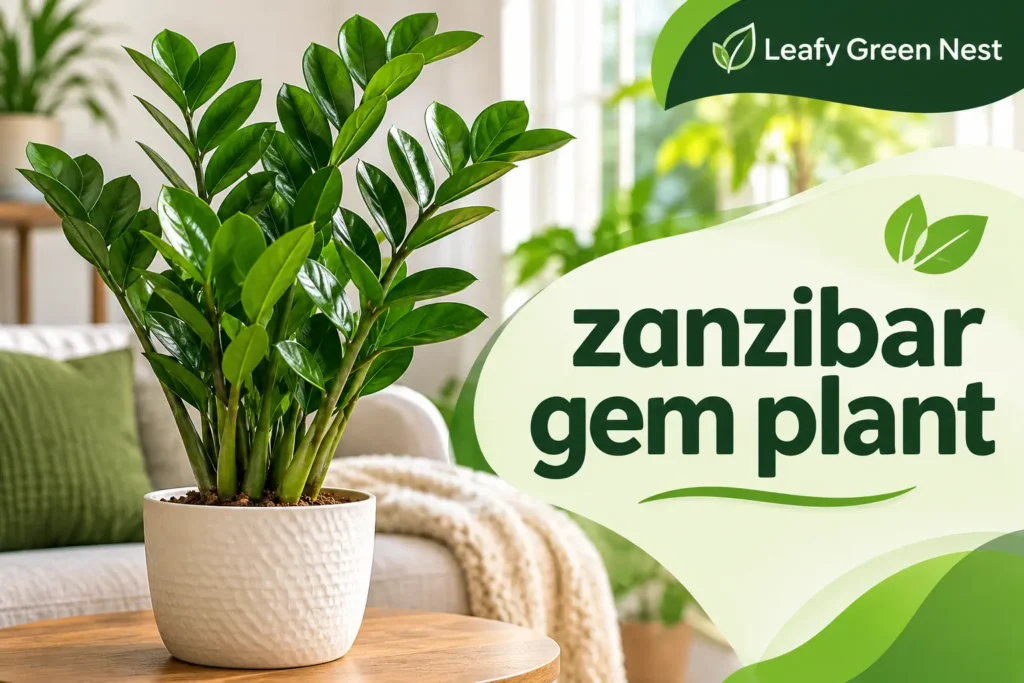
Have you ever wanted a houseplant that looks beautiful but does not need your attention every single day? The Zanzibar gem plant might be just what you need. With its shiny green leaves, strong upright stems, and easy-going nature, this plant can make even a plain room feel more alive.
Also known as the ZZ plant (Zamioculcas zamiifolia), the Zanzibar gem is a favorite among people who love indoor plants but do not always have time for gardening. Forgot to water your plants last week? No big deal. The ZZ plant can handle dry soil much better than many common houseplants.
But there is more to this plant than its good looks. It has unusual underground roots that store water, can produce small flowers, and grows well in different indoor settings. Some people even keep it at home because they believe it brings wealth and good luck.
So, is the Zanzibar gem really as easy to grow as people say? Let’s look at how it grows, what it needs, and what you should watch out for before bringing one home.
Table of Contents
What Is a Zanzibar Gem Plant?
The Zanzibar gem is a tropical, evergreen plant that belongs to the Araceae family. It comes from eastern and southeastern Africa and is grown in homes and offices because it can handle less frequent watering and different light conditions.
Its scientific name is Zamioculcas zamiifolia. People commonly call it the ZZ plant, Zamioculcas plant, or eternity plant.
What makes it stand out? Look closely at its leaves. They are thick, smooth, shiny, and arranged along upright stems. They almost look polished, as if someone has gently wiped them with a soft cloth.
The secret behind its tough nature is underground. The plant has thick structures called rhizomes. These look a little like small potatoes and store water and nutrients.
Think of them as little water tanks hidden beneath the soil. When the soil becomes dry, the plant uses this stored moisture to keep going.
According to the North Carolina State University Extension’s ZZ plant profile, the plant is valued for its attractive foliage and ability to tolerate a range of indoor growing conditions.
ZZ Plant Care: How to Keep It Healthy
The ZZ plant needs bright, indirect light, occasional watering, and loose soil that drains well. You do not need a complicated gardening routine to keep it looking good.
Imagine placing a plant near your living room window, watering it when the soil dries, and watching its glossy leaves slowly grow. That is pretty much what caring for a Zanzibar gem looks like.
Light: Place it near a window where sunlight is filtered through curtains. It can tolerate low light, but brighter indirect light usually supports better growth. Keep it away from strong afternoon sunlight, which can scorch the leaves.
Water: Let the soil dry before watering again. Push your finger about 2 inches into the soil. If it still feels damp, wait. If the soil is dry, water thoroughly and let the extra water drain away.
Soil: Use loose, well-draining soil. A simple mixture of regular potting soil and perlite works well. You can also use a cactus or succulent potting mix.
Temperature: Keep the plant in a warm room. Temperatures between 18°C and 29°C are generally suitable. Avoid cold drafts and sudden temperature changes.
Humidity: Normal indoor humidity is usually enough. You do not need to spray the leaves with water every morning.
Fertilizer: Feed the plant lightly once or twice during spring and summer. A balanced liquid houseplant fertilizer is usually enough.
Pot: Choose a pot with drainage holes. A beautiful pot without drainage may look great, but trapped water can damage the roots.
One thing I have learned from looking at common houseplant care problems is that people often love their plants a little too much with the watering can. With a ZZ plant, less frequent watering is usually the safer choice.
ZZ Plant Benefits at Home: Why Do People Love It?
The main ZZ plant benefits at home include easy care, attractive leaves, low watering needs, and the ability to grow in areas with limited natural light. It is a handy option for people who want greenery without spending hours looking after it.
Here is why so many people keep this plant around.
It is easy to care for. You do not have to water it every morning or check it several times a day. It is a good match for students, office workers, and busy families.
It makes rooms look better. Its dark-green leaves add a lovely touch to living rooms, bedrooms, hallways, and workspaces. Put it in a simple decorative pot, and even an empty corner can look more welcoming.
It tolerates low light. Not every home has big, sunny windows. The ZZ plant can manage in areas where other houseplants may struggle. Just remember that low light does not mean no light.
It stores water. Its underground rhizomes help it survive dry periods. This makes it more forgiving if you occasionally forget to water it.
It suits office spaces. It does not need much attention, so it can be a practical choice for desks, reception areas, and indoor corners.
It adds a touch of nature. Green plants can make a room feel calmer and more pleasant. Many people also enjoy the simple pleasure of watching a new leaf slowly unfold.
Does the ZZ Plant Clean Indoor Air?
The ZZ plant is sometimes advertised as a natural air cleaner. But can one plant really clean the air in your whole room?
Some laboratory studies show that plants can absorb certain airborne chemicals. However, there is not enough evidence that a few potted plants can noticeably clean the air in an ordinary home.
The NASA Clean Air Study explored how plants remove certain pollutants under controlled conditions. Those findings should not be treated as proof that a houseplant can replace proper ventilation.
Enjoy your ZZ plant for its beauty and easy care, rather than expecting it to work like an air purifier.
ZZ Plant Benefits at Home Spiritual: Does It Bring Good Luck?
Many people believe the ZZ plant brings wealth, prosperity, and positive energy into a home. These ideas come from Feng Shui traditions, where healthy green plants are often linked with growth and abundance.
Its upright stems and shiny leaves are sometimes seen as symbols of progress and financial growth. That is one reason people like placing it near their front doors, in living rooms, or beside their office desks.
Some Feng Shui followers also suggest placing the plant in the southeast area of a home, which is traditionally linked with wealth.
Of course, there is no scientific proof that a plant can bring money or change your luck. Still, having a healthy green plant in your home can make the space feel more welcoming.
My practical advice? Place it somewhere you enjoy seeing it. A plant that makes you smile has already earned its place in your home.
ZZ Plant Flower: Does the Zanzibar Gem Produce Flowers?
Yes, a mature Zanzibar gem can produce flowers, but indoor flowering is uncommon. Most people grow this plant for its beautiful green leaves rather than its blooms.
The flower has two main parts:
- Spadix: A small central spike covered with tiny flowers.
- Spathe: A leaf-like covering that surrounds the flower spike.
The flowers are usually cream, pale yellow, or greenish. They grow close to the soil, so you might not notice them unless you look carefully.
Why does your ZZ plant refuse to flower? It may simply be too young or not growing in ideal conditions. Light, plant maturity, and overall health can affect flowering.
According to botanical descriptions of Zamioculcas zamiifolia, its flowers are typical of the Araceae family. They are quite different from the large, colorful blooms people expect from flowering houseplants.
Do not worry if your plant never flowers. Healthy leaves and firm stems are much better signs that your Zanzibar gem is doing well.
Zanzibar Gem Propagation: How to Grow New ZZ Plants
You can grow new Zanzibar gem plants from an existing plant using rhizome division or leaf cuttings. Rhizome division is usually faster, while leaf propagation requires more patience.
Want to turn one plant into two or three? It is possible, but do not expect overnight results. The ZZ plant takes its sweet time.
Rhizome Division
This is a good method when your plant has become crowded in its pot.
- Carefully remove the plant from its container.
- Brush away some of the soil to reveal the underground rhizomes.
- Find sections with healthy roots and growing points.
- Separate the sections carefully using clean gardening tools.
- Place each section in a separate pot.
- Fill the pots with fresh, well-draining soil.
- Keep the plants in a warm place with indirect light.
Wear gardening gloves while handling the plant, and avoid damaging healthy rhizomes.
Leaf Cutting Propagation
You can also grow a new plant from a healthy leaflet. This method takes longer because the cutting must first develop roots and a small underground rhizome.
- Choose a healthy, mature leaflet.
- Cut it using clean scissors.
- Insert its bottom end into a suitable propagation mix.
- Keep the soil slightly moist, not soggy.
- Place the container somewhere warm with indirect light.
- Wait for roots and rhizome growth.
A new shoot may take several months to appear. Do not keep digging around the cutting to check its progress. That can disturb the tiny roots before they become established.
For more growing advice, the University of Florida’s ZZ plant growing guide provides useful information about ZZ plant care and propagation.
ZZ Plant in the Wild: Where Does It Grow Naturally?
The ZZ plant naturally grows in parts of eastern and southeastern Africa. It is adapted to environments where wet and dry periods alternate throughout the year.
Its natural range includes parts of Kenya, Tanzania, Mozambique, and nearby regions. It grows in woodland and forest habitats, where conditions can change with the seasons.
This explains a lot about its indoor care.
Think about what happens during a dry season. Rain becomes less frequent, and the soil loses moisture. The ZZ plant survives because its underground rhizomes store water.
Its thick stems and waxy leaves also help it conserve moisture.
The Kew Science Plants of the World Online database provides botanical information about the plant’s scientific identity and natural distribution.
So, when someone says the Zanzibar gem is difficult to kill, there is a good reason behind that reputation. It has natural features that help it handle dry conditions.
Zamioculcas Plant: Common Problems and Easy Fixes
The Zamioculcas plant is tough, but it can still develop problems when its growing conditions are unsuitable. The good news is that most common issues can be spotted by looking closely at its leaves and stems.
| Problem | Possible reason | What to do |
|---|---|---|
| Yellow leaves | Too much water | Check soil and drainage |
| Drooping stems | Watering or root problems | Check moisture and roots |
| Brown patches | Strong sunlight or damage | Move to indirect light |
| Black, soft stems | Rot | Remove damaged sections |
| Slow growth | Low light or natural growth habit | Improve light and be patient |
| Wrinkled leaflets | Lack of water or stress | Check soil moisture |
Why Are ZZ Plant Leaves Turning Yellow?
Yellow leaves often point to overwatering, especially when several leaves change color at once. Check the soil before adding more water.
If the soil smells unpleasant or the roots feel mushy, remove the plant from its pot and inspect the rhizomes. Cut away rotten sections with a clean tool and repot healthy parts in fresh soil.
Why Is My ZZ Plant Drooping?
Drooping stems can develop when the plant receives too much or too little water. Check the soil first, then look for signs of damaged roots.
If the plant leans toward a window, rotating the pot occasionally can help it receive light more evenly.
Why Does My ZZ Plant Have Brown or Black Spots?
Brown patches may result from harsh sunlight, physical damage, or watering stress. Some dark marks are natural, but spreading black areas that feel soft may indicate rot.
The Royal Horticultural Society’s houseplant advice offers further guidance on caring for indoor plants and spotting common growing problems.
ZZ Plant Disadvantages: What Should You Know Before Buying?
The ZZ plant has many good qualities, but it is not perfect for every household. Its toxicity, slow growth, and sensitivity to overwatering are worth considering before you bring one home.
Toxicity: The plant contains calcium oxalate crystals. Chewing or swallowing its leaves can cause burning, irritation, and discomfort in the mouth and throat. Keep it away from pets and small children.
Slow growth: If you want a plant that produces fresh leaves every few weeks, the ZZ plant may test your patience. New stems can take time to appear.
Root rot: Too much water can damage the underground rhizomes. A pot without drainage holes makes this problem more likely.
Limited flowers: The flowers are small and often hidden near the soil. If you love colorful blooms, a flowering houseplant may be a better choice.
Not suitable for darkness: It tolerates low light but still needs some light to survive and grow.
Space requirements: A mature plant can reach around 2–4 feet indoors, depending on its growing conditions and variety.
The ASPCA’s toxic plant information is a useful resource for pet owners checking plant safety. When in doubt, keep the ZZ plant out of reach and contact a veterinarian if a pet chews it.
Simple Tips for Growing a Healthy Zanzibar Gem
A healthy Zanzibar gem does not need much attention, but a few small habits can make a big difference. Keep these tips in mind if you want glossy leaves and strong, upright stems.
- Give it bright, indirect light whenever possible.
- Check the soil before watering.
- Always use a pot with drainage holes.
- Avoid leaving water in the plant saucer.
- Reduce watering during cooler months.
- Wipe dusty leaves with a soft, damp cloth.
- Use fertilizer sparingly during spring and summer.
- Repot when the roots and rhizomes become crowded.
- Keep the plant away from cold drafts.
- Place it somewhere pets and children cannot reach.
One mistake worth avoiding is watering the plant just because the soil surface looks dry. Check a little deeper first. The soil underneath may still be wet.
Is the Zanzibar Gem Plant a Good Choice for Your Home?
The Zanzibar gem is a lovely choice if you want a houseplant that looks elegant without demanding constant care. Its glossy green leaves, slow growth, and ability to tolerate dry soil make it suitable for many homes and offices.
Just remember three things: give it some light, avoid overwatering, and keep it away from pets and young children.
If you are new to indoor gardening, this plant is a good place to start. You do not need a green thumb to enjoy it. Give it the right conditions, leave it alone when it does not need attention, and let it grow at its own pace.
Frequently Asked Questions About the Zanzibar Gem Plant
The Zanzibar gem plant is easy to grow, but you may still have questions about its care, watering, flowers, and safety. Here are answers to common questions to help you keep your ZZ plant healthy and thriving.
What Is the Difference Between a Zanzibar Gem and a ZZ Plant?
There is no difference. Both names refer to Zamioculcas zamiifolia, an evergreen tropical plant known for its glossy leaves and ability to tolerate dry conditions.
Is the Zanzibar Gem Plant Good for Bedrooms?
Yes, it can grow in bedrooms with enough natural or artificial light. It is easy to maintain and looks attractive indoors, but keep it away from pets and children.
Can a ZZ Plant Survive Without Sunlight?
A ZZ plant can tolerate low-light conditions, but it cannot grow without light indefinitely. Place it near a window or provide suitable artificial lighting.
Should I Mist My Zanzibar Gem Plant?
No, regular misting is not necessary. Normal household humidity is usually enough. Wipe the leaves with a damp cloth when they become dusty.
Why Does My ZZ Plant Have Black Spots on Its Stems?
Some dark marks are natural. However, spreading black patches, soft stems, and unpleasant smells may indicate rot caused by excessive moisture.
Does the Zanzibar Gem Plant Bring Good Luck?
Some Feng Shui traditions connect the Zanzibar gem with wealth, prosperity, and positive energy. These are traditional beliefs, not scientifically proven effects.


