Snake plants are popular for a simple reason. They look beautiful, tolerate a range of indoor conditions, and do not need constant attention. But even a tough houseplant has one weakness: roots that stay wet for too long.
Imagine wearing wet socks all day. They become uncomfortable because moisture cannot escape. Snake plant roots face a similar problem when they sit in soggy, compacted soil. Over time, poor drainage can damage roots and cause them to rot.
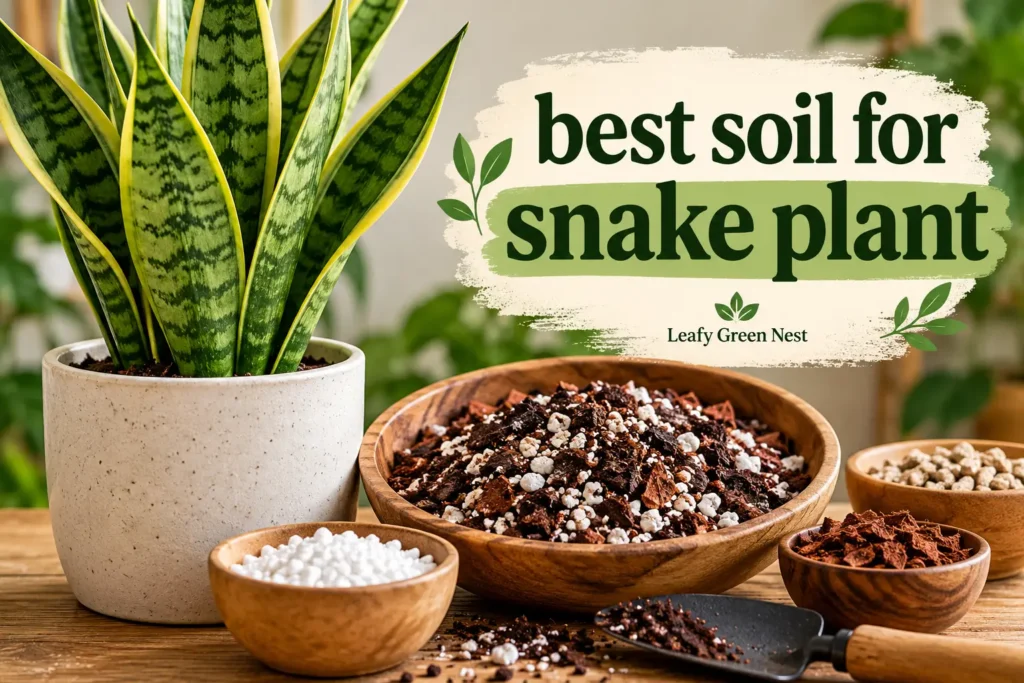
The best soil for snake plant provides enough moisture for healthy growth while allowing excess water to drain away. You do not need an expensive potting mix or a complicated recipe to achieve this balance.
In this guide, you will learn how to choose ready-made soil, mix your own ingredients, improve ordinary potting soil, and avoid common mistakes. You will also find practical product comparisons to help you choose the right option for your home and budget.
Disclosure: This post contains affiliate links. If you purchase through these links, I may earn a small commission at no extra cost to you.
Table of Contents
TL;DR: Best Soil for Snake Plant
The right soil should drain well, remain loose, and hold enough moisture for the roots to use without staying soggy. A suitable cactus or succulent mix is usually the easiest starting point.
- Best overall: A snake plant-specific mix containing suitable drainage ingredients.
- Best budget option: A basic cactus and succulent potting mix.
- Best for beginners: A ready-made succulent mix in a pot with drainage holes.
- Best DIY recipe: Two parts succulent soil, one part perlite, and one part pumice or coarse horticultural grit.
- Best for indoor plants: A loose, well-draining mix suited to the room’s temperature, light, and humidity.
- Best for improving regular potting soil: Add perlite when the existing mix is too dense or slow to dry.
- Best for a custom mix: Combine potting soil, suitable pine bark, and perlite.
The most important rule is simple: Choose soil that allows excess water to escape, then adjust your watering to match how quickly it dries. A good mix cannot compensate for a pot without drainage holes or constant overwatering.


Best Soil for Snake Plant: Comparison Table
Different soil options suit different budgets and levels of experience. This table compares ready-made products with practical DIY alternatives.
| Product or mix | Best for | Main features | Pros | Cons |
|---|---|---|---|---|
| Perfect Plants Snake Plant Soil Mix | Overall convenience | Coconut coir, pine bark, perlite, and sand, according to the supplied product information | Formulated for snake plants | May cost more than a basic mix |
| Miracle-Gro Indoor Potting Mix for Cactus & Succulent | Beginners on a budget | Potting ingredients, sand, perlite, and plant food, according to the supplied product information | Ready to use | May need extra drainage material |
| Generic cactus and succulent mix | Simple indoor growing | Formula varies by manufacturer | Convenient and widely available in many markets | Texture and drainage vary |
| Regular potting mix with perlite | Budget DIY | Organic potting medium with added air spaces | Customizable and practical | Requires mixing |
| Succulent mix with pumice | Chunky soil blends | Potting medium with porous mineral particles | Helps maintain an open structure | Pumice may be difficult to find |
| Potting mix with pine bark and perlite | Custom indoor mix | Organic base, coarse bark, and lightweight mineral material | Adjustable to your conditions | Requires several ingredients |
Important: Product formulations can change, and availability differs by market. Check the current packaging before buying. The DIY options are mix types rather than individual branded products.
Expert Advice: What Makes the Best Soil for Snake Plant?
A good soil mix needs to balance water, air, and support. Understanding these three needs will help you choose soil without wasting money on unnecessary ingredients.
Drainage and aeration
Drainage allows excess water to leave the pot. Aeration leaves spaces between soil particles so that roots can access oxygen.
These are related but different functions. Water may pass through the bottom of a pot while the soil in the center remains wet. That is why a mix’s texture and drying time matter as much as the presence of drainage holes.
Snake plants store water in their thick leaves and underground rhizomes. They generally cope better with periods of dryness than with constantly wet soil.
When the root zone remains saturated, roots may struggle to obtain enough oxygen. This can lead to damaged roots and root rot.
How this article evaluates soil products
This comparison uses a research-based approach rather than claiming hands-on testing. Product ingredients and intended uses are considered alongside the practical needs of indoor snake plants.
The main selection criteria are drainage, aeration, ingredient transparency, ease of use, maintenance, and value. No product is automatically the best simply because it costs more or carries a snake plant label.
Growing conditions also matter. A snake plant in a warm, bright room may use water faster than one in a cool room with little natural light. A terracotta pot usually dries faster than a similar plastic pot.
The best mix is the one that works in your actual growing conditions. Start with a suitable soil, observe how it behaves, and make changes only when needed.
Best Soil for Snake Plant Indoors: Six Product Reviews
Ready-made soil is convenient, while homemade mixes give you more control over texture and drainage. These six options cover the main choices for beginners and experienced indoor gardeners.
Perfect Plants Snake Plant Soil Mix
Best for: Growers who want a ready-made mix designed for snake plants.
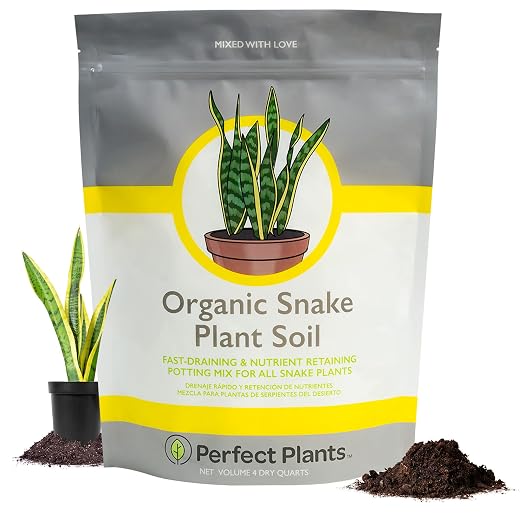
Perfect Plants Snake Plant Soil Mix is worth considering if you want to avoid measuring and mixing separate ingredients. The supplied product information lists coconut coir, pine bark, perlite, and sand as ingredients.
Each ingredient has a different role. Coconut coir helps the mix retain some moisture, pine bark provides structure, and perlite creates air spaces. Sand contributes mineral material, although its effect depends on the particle size and proportion used.
A specialist mix can save time when repotting a snake plant. It also removes some of the guesswork involved in preparing a homemade blend. According to the supplied product information, the mix does not contain added fertilizer, so you can manage feeding separately.
The main consideration is cost. A specialist product may be more expensive than a basic succulent mix, especially if shipping is required. If a similar product is unavailable locally, a suitable cactus mix with additional perlite may be a practical alternative.
Pros
- Formulated for snake plants and similar plants.
- Contains ingredients intended to support drainage and aeration.
- Ready to use without measuring separate materials.
- Allows you to manage fertilizer separately.
Cons
- May cost more than a basic succulent mix.
- May require separate fertilizer during active growth.
- Availability and shipping costs vary by location.
Recommendation: Consider this option if convenience is your priority and the current ingredient list suits your needs. Compare its price with a local succulent mix before deciding.
Perfect Plants Snake Plant Soil, 4 qt, Coco Coir Potting Mix
Miracle-Gro Indoor Potting Mix for Cactus & Succulent
Best for: Beginners who want a ready-made cactus and succulent mix.
Miracle-Gro Indoor Potting Mix for Cactus & Succulent is another option to consider when shopping for snake plant soil. The supplied product information lists forest products, sphagnum peat moss, sand, and perlite, along with plant food.
A ready-made mix is useful when you are repotting your first snake plant and want to keep things simple. You can start with one bag instead of purchasing several ingredients.
However, fast-draining soil does not become completely dry immediately. Peat moss can retain moisture, and the mix’s performance depends on the pot, temperature, light, and watering routine.
If your plant grows in a cool room or receives little light, check the soil before watering again. If it stays damp for too long, adding perlite may improve its structure. Do not add extra ingredients automatically if the mix already drains well.
Product formulas, bag sizes, and prices can vary by market. Check the current label and compare the cost with similar local products.
Pros
- Designed for cacti and succulents.
- Includes perlite and sand, according to the supplied product information.
- Contains plant food.
- Convenient for beginners.
Cons
- Peat-based ingredients can retain moisture.
- May need extra perlite in slow-drying conditions.
- Product availability and formulation can vary.
Recommendation: This is a reasonable starting option for many indoor growers. Check its drying time before changing the formula.
Miracle-Gro Succulent Potting Mix, 4 qt.
Generic Cactus and Succulent Mix
Best for: People who want a simple soil option from a local garden shop.
A basic cactus and succulent mix can be suitable for snake plants. You do not need a product labeled specifically for snake plants if another mix provides the right balance of drainage and moisture retention.
Ingredients vary by manufacturer. Some formulas contain peat or coir, while others include bark, sand, perlite, or other coarse materials.
The main advantage is convenience. You can buy one bag, pot your plant, and begin caring for it without purchasing several separate ingredients. This is particularly useful if you own only one or two houseplants.
The main drawback is that the product name does not guarantee the same performance across brands. Some mixes remain damp longer than expected, while others drain quickly.
Check the ingredient list and texture before use. If the mix feels dense when moist or stays wet for too long in your pot, consider adding perlite or choosing a different formula.
Pros
- Often available from local garden suppliers.
- Requires little preparation.
- Usually intended for plants that prefer good drainage.
- Comes in different bag sizes and price ranges.
Cons
- Ingredients vary by manufacturer.
- Some formulas may retain too much moisture.
- Product labels alone do not guarantee suitable drainage.
Recommendation: This is often the easiest option for beginners. Choose a loose mix from a reliable supplier and adjust it only when necessary.
Miracle-Gro Indoor Potting Mix for Cactus & Succulent, 8 qt. (2-Pack)
Regular Potting Mix and Perlite
Best for: Growers who already have indoor potting soil at home.
You may not need to buy an entirely new soil mix. If you have a reasonable indoor potting soil, adding perlite can help improve its structure.
Perlite is a lightweight material made by heating volcanic glass. It creates spaces between soil particles, helping improve aeration and water movement through the growing medium.
A practical starting point is one part regular potting mix to one part perlite. For example, combine one cup of potting mix with one cup of perlite. This is a starting recipe, not a fixed rule.
If the original mix is already loose and drains well, you may need less perlite. If it is dense and remains wet for days, you may need to replace it with a more suitable mix instead of relying on an additive alone.
Handle dry perlite carefully and avoid breathing in its dust. Lightly moistening it before mixing can reduce airborne particles.
Perlite does not provide meaningful nutrition by itself. The potting mix supplies the organic material, while fertilizer may be needed depending on the soil and plant’s growth.
Pros
- Makes use of soil you already own.
- Lightweight and easy to mix.
- Helps create air spaces in dense soil.
- Allows you to adjust the texture.
Cons
- Requires preparation.
- Does not provide the plant’s main nutrient supply.
- The best ratio depends on the original soil.
Recommendation: This is a useful budget option when your existing potting soil is suitable but needs better aeration.
Miracle-Gro Houseplant Potting Mix, 4 qt.
Succulent Mix with Pumice
Best for: Growers who prefer a chunkier, more mineral-based mix.
Pumice is a porous volcanic material used in container growing. Its particles help maintain air spaces between soil ingredients and can reduce compaction.
You can combine pumice with a cactus or succulent mix to make a chunkier snake plant soil blend. A practical starting point is two parts succulent mix to one part pumice.
Observe how quickly the mix dries before making further changes. If it becomes dry too quickly, you may need a little more moisture-retaining material. If it stays damp for too long, review the entire setup, including pot size, light, and watering habits.
Pumice is not essential. Perlite can provide a similar function in many mixes. Pumice is usually heavier, which can help stabilize a pot holding tall snake plant leaves.
Availability is the main drawback. If pumice is expensive or difficult to find, suitable horticultural perlite is a reasonable alternative.
Pros
- Helps maintain an open soil structure.
- Creates additional air spaces.
- Adds more weight than perlite.
- Can be mixed with an existing succulent soil.
Cons
- May be expensive or difficult to find.
- Does not supply the plant’s main nutrients.
- Excessive amounts can make the mix dry too quickly.
Recommendation: Consider pumice if you want a chunkier mix and can find it at a reasonable price. Do not buy it simply because it sounds more specialized.
Molly's Succulent Potting Mix, Cactus and Bonsai Gritty Blend, 5 Dry Quarts
Potting mix with pine bark and perlite
Best for: Indoor gardeners who want to customize their soil.
A homemade mix of regular potting soil, pine bark, and perlite offers control over the final texture. It can be especially useful if you grow several houseplants and can use the ingredients for more than one purpose.
Pine bark creates larger spaces in the mix, perlite adds lightweight air spaces, and potting soil retains moisture and some nutrients.
Start with two parts potting mix, one part suitable horticultural bark, and one part perlite. Use bark intended for container growing rather than fresh wood chips collected outdoors.
This ratio is a starting point. A fine potting mix may need more drainage material, while a mix that dries too quickly may need more moisture-retaining material.
The disadvantage is preparation. You need to buy and measure several ingredients, and you may have leftover materials to store. For a single small plant, a ready-made succulent mix may be more practical.
Pros
- Offers control over soil texture.
- Uses ingredients that can serve several houseplants.
- Pine bark helps maintain structure.
- Can be adjusted to suit indoor conditions.
Cons
- Takes more time to prepare.
- Requires space to store extra ingredients.
- Results depend on particle size and proportions.
Recommendation: This is a practical choice for experienced plant owners who want to customize their growing medium. Beginners can start with a suitable ready-made mix.
Perfect Plants Money Tree Potting Soil, 2 qt, Indoor Coco Coir Mix
Best Soil for Snake Plant in Pots: Five Comparisons
The ingredients and container you choose affect how quickly the soil dries. These comparisons can help you select a mix without buying materials you do not need.
Succulent Soil vs. Regular Potting Soil
Succulent soil is usually the easier starting point because it is designed for plants that prefer good drainage. Regular indoor potting soil can also work, but dense formulas may need perlite or another suitable coarse material.
Think of succulent soil as a ready-made meal and regular potting soil as a basic ingredient. One may be ready to use, while the other may need adjustment.
Choose succulent soil if you want convenience. Choose regular potting soil with added drainage material if you already own it and want to save money.
Cactus Mix vs. Snake Plant-Specific Soil
Both options can work well. A specialist mix is designed for snake plants, while a cactus mix provides a practical alternative for plants that prefer well-draining soil.
Do not assume the specialist label guarantees better performance. Compare the ingredients and consider how quickly the mix is likely to dry in your home.
Perlite vs. Coarse Sand
Perlite is lightweight and creates air spaces. Coarse horticultural sand adds mineral material and can make the mix heavier.
Particle size matters. Very fine sand can fill spaces between soil particles and make the mixture denser instead of improving drainage.
For many beginners, perlite is easier to measure and mix. Coarse horticultural grit can be useful if you want a heavier, more mineral-based blend.
Tropical Soil vs. Succulent Soil
Tropical plant mixes may retain more moisture than snake plants need. However, some formulas contain bark, coir, and perlite in proportions that can work for a snake plant.
Can I use tropical soil for snake plant? Yes, if the mix drains well and does not remain soggy. If it is dense or slow to dry, add perlite or suitable coarse bark, or choose another mix.
Homemade Mix vs. Store-Bought Mix
A store-bought mix saves time and reduces preparation. A homemade blend lets you adjust ingredients and may cost less if you already own the materials.
Neither option is automatically better. If a ready-made mix drains well, there may be no reason to change it. If your current soil remains wet for too long, a custom blend may help.
For additional background on container growing, consult the University of Maryland Extension’s guide to potting and repotting indoor plants. It explains the role of potting media and container choice in indoor plant care.
Buying Guide: How to Choose the Best Soil for Snake Plant
You do not need the most expensive soil to grow a healthy plant. Focus on texture, drainage, ingredients, and how the mix behaves in your home.
What texture should snake plant soil have?
Look for a mix that feels loose and breaks apart easily. It should support the plant without turning into a dense, sticky mass when wet.
Visible pieces of perlite or bark can indicate a coarse texture, but appearance alone cannot prove that a mix drains well. Observe how water moves through the pot and how long the root zone stays damp.
If the soil resembles thick mud when wet, it may be too dense. Consider adding perlite or switching to a suitable succulent mix.
Which ingredients matter most?
Each ingredient has a different role. Understanding these differences helps you avoid paying for unnecessary extras.
Perlite is lightweight and helps create air spaces. It is useful for improving dense potting soil.
Pine bark adds structure and creates larger spaces between particles. Choose bark intended for potting mixes.
Pumice is a porous mineral material that helps keep the mix open. It is an alternative to perlite.
Coarse horticultural grit adds mineral material and weight. Avoid fine sand that may fill air spaces.
Coconut coir retains some moisture and helps create a workable growing medium. Too much moisture retention can be a problem in slow-drying conditions.
Peat moss holds water. It can be useful in a balanced formula, but a peat-heavy mix may need adjustment depending on your pot and environment.
You do not need every ingredient. A suitable succulent mix with one drainage amendment may be enough.
Snake Plant Soil Mix Ratio: What Should You Use?
There is no single ratio that suits every home. A practical starting recipe is two parts cactus or succulent soil, one part perlite, and one part pumice or coarse horticultural grit.
For example, combine two cups of succulent soil, one cup of perlite, and one cup of pumice. Mix thoroughly before potting.
If pumice is difficult to find, start with a suitable succulent mix and add perlite only if the soil needs it. Check the texture and drying time before making further changes.
The best snake plant soil mix ratio provides enough moisture retention for the roots without leaving the mix soggy. The right balance depends on the ingredients, pot material, temperature, and light.
Best Soil for Snake Plant in Pots: Choosing a Container
The pot matters almost as much as the soil. Choose a container with drainage holes so excess water can escape.
Terracotta pots allow moisture to evaporate through their sides and often dry faster. Plastic and glazed ceramic pots retain moisture longer. Either can work if you adjust watering accordingly.
Avoid placing a small plant in a much larger pot. Extra soil around a small root system can remain damp for longer than necessary. When repotting, choose a container only slightly larger than the root ball.
If you prefer a decorative pot without drainage holes, keep the plant in a separate nursery pot with holes. Remove it for watering and empty any collected water before returning it to the decorative container.
Can I Use Succulent Soil for Snake Plant?
Yes. Cactus and succulent soil is generally a suitable choice for snake plants. These plants prefer a well-draining mix and can develop root problems when the soil stays excessively wet.
However, formulas vary. If your succulent mix contains lots of fine peat or stays damp for too long, add perlite or consider a grittier blend.
You do not need to change a mix that already drains well. Observe how it behaves before spending money on additional ingredients.
Can I Use Indoor Potting Soil for Snake Plant?
Yes, regular indoor potting soil can work if it drains well enough. Dense soil may hold too much moisture, especially in cool rooms or containers without proper drainage.
Check the texture first. If it is compacted, mix in perlite or a suitable coarse material. An equal-parts blend of regular potting soil and perlite is one possible starting point, but the best proportion depends on the original mix.
If the soil smells sour, remains wet for a long time, or contains damaged roots, simply adding perlite may not solve the problem. Repotting into fresh, suitable soil may be a better choice.
What About Soil pH and Fertilizer?
Snake plants generally grow well in suitable commercial potting mixes without special pH adjustments. Good drainage and appropriate watering are usually more important than trying to change soil pH without a clear reason.
Avoid adding lime, sulfur, or other pH-changing materials unless you have evidence that the growing medium needs adjustment.
Fertilizer is a separate consideration. Some mixes contain starter or slow-release plant food, while others do not. Check the label before adding more fertilizer to avoid unnecessary feeding.
Is Premium Snake Plant Soil Worth the Price?
A specialist mix may be worth the extra cost if it saves time and contains suitable ingredients. It may be less useful if you can achieve similar drainage with an affordable succulent mix and some perlite.
Compare the cost per usable volume rather than the bag price alone. Consider shipping, availability, and whether you can use leftover ingredients for other plants.
For one small snake plant, a ready-made mix may be the easiest option. For a collection, buying ingredients separately may provide better value.
Snake Plant Soil Maintenance and Repotting Tips
Even a good potting mix needs proper care. The goal is to keep the roots healthy without watering too often or repotting unnecessarily.
How to Water Snake Plants in the Right Soil
Do not water just because a calendar says it is time. Check the soil first.
Use your finger or a wooden stick to check whether the mix is still damp below the surface. If the root zone remains moist, wait. When the soil has dried sufficiently, water thoroughly and allow excess water to drain.
Snake plants often need less frequent watering in winter or in low-light rooms. They may use water faster in warmer, brighter conditions. Let the soil’s actual condition guide your watering routine.
When Should You Repot a Snake Plant?
Repot when the plant has outgrown its container, the pot is damaged, or the soil has become compacted and difficult to manage. Roots growing through drainage holes may indicate that more space is needed, although snake plants can tolerate being somewhat rootbound.
Choose a pot with drainage holes that is only slightly larger than the root ball. Remove old soil gently, especially if the roots look damaged, and keep the plant at roughly the same depth as before.
If you find soft, dark, or mushy roots, trim the damaged parts with a clean tool and repot the plant in fresh, well-draining soil. Healthy roots are generally firm rather than slimy.
How to Store Leftover Soil
Keep unused potting mix sealed in a cool, dry place. Protect it from rain, standing water, and contamination from garden soil.
If a bag smells rotten, shows unusual growth, or appears heavily infested with pests, inspect it carefully before use. Do not assume contaminated soil is safe simply because it has been stored indoors.
Healthy soil does not need replacing every few months. If the mix drains properly and the plant is growing well, wait until repotting is necessary.
Best Soil for Snake Plant: Choose the Right Mix
For most indoor growers, a well-draining cactus or succulent mix is the simplest starting point. It generally requires less adjustment than dense, general-purpose potting soil.
If you prefer a ready-made option formulated for snake plants, consider a specialist mix such as Perfect Plants Snake Plant Soil Mix, provided its current ingredients and price suit your needs. For a budget-friendly alternative, choose a suitable cactus and succulent mix and add perlite if it retains too much moisture.
You can also make your own blend with two parts succulent soil, one part perlite, and one part pumice or coarse horticultural grit. This gives you control over the texture without requiring a long list of ingredients.
Before spending more money, check your current soil, the pot’s drainage, and your watering habits. A basic mix can work very well when these three things are right.
My recommendation: Choose loose, well-draining soil, use a pot with drainage holes, and water only when the mix has dried sufficiently. These habits matter more than buying the most expensive bag on the shelf.
Frequently Asked Questions: Best Soil for Snake Plant
These are common questions growers ask before buying soil or repotting a snake plant. The answers focus on practical choices for healthy roots and easier care.
Can I Use Succulent Soil for Snake Plant?
Yes. Cactus and succulent soil is a suitable starting option because it is designed to drain more freely than many standard potting mixes. If it stays damp too long in your home, add perlite or pumice to improve the structure.
Can I Use Regular Indoor Potting Soil for Snake Plant?
Yes, provided it drains well enough. Dense indoor potting soil may need perlite or a coarse horticultural material. Check the soil’s texture and drying time, use a pot with drainage holes, and avoid watering while the root zone is still damp.
Can I Use Tropical Soil for Snake Plant?
Yes, if the mix drains well and does not remain soggy. Tropical mixes vary, so check the ingredients before use. If the soil retains too much moisture, blend in perlite or suitable coarse bark, or choose a more appropriate succulent mix.
What Is the Best Snake Plant Soil Mix Ratio?
A practical starting ratio is two parts cactus or succulent soil, one part perlite, and one part pumice or coarse horticultural grit. Adjust the mixture based on the original soil, pot material, and how quickly it dries.
How Much Perlite Should I Add to Snake Plant Soil?
Start with one part perlite to two parts potting soil if the original mix drains reasonably well. Dense soil may need a different blend. Mix thoroughly and observe the drying time instead of following a fixed percentage for every product.
What Soil Helps Prevent Snake Plant Root Rot?
A well-draining mix combined with proper watering helps reduce the risk of root rot. Use a pot with drainage holes, avoid oversized containers, and allow the soil to dry sufficiently between waterings. If roots are already damaged, repotting in fresh soil may be necessary.