A snake plant is one of the easiest houseplants to grow. It handles dry soil, adapts to different indoor spaces, and does not need constant attention. But even a low-maintenance plant needs the right container.
The wrong pot can create problems. A container that is too large may hold excess moisture. A pot without drainage can leave the roots sitting in water. A lightweight pot may also tip over when the leaves grow tall.
The best snake plant pot gives the roots enough room, allows extra water to escape, and keeps the plant stable. It should also suit your home and make everyday care simple.
This guide explains how to choose the right pot size, depth, material, and style. You will also learn which pots work best indoors, outdoors, and with plant stands.
Table of Contents
TL;DR: The Best Snake Plant Pot for Your Needs
The right pot depends on your plant’s size, location, and growing conditions. For most snake plants, a snug container with drainage holes is the safest starting point.
- Best overall: Terracotta pot with drainage holes.
- Best decorative option: Glazed ceramic pot with drainage.
- Best lightweight option: Plastic pot.
- Best for large plants: Heavy ceramic or cement pot.
- Best for beginners: Plastic nursery pot with drainage.
- Best for modern interiors: Matte ceramic pot in a neutral color.
- Best elevated option: A sturdy pot and plant stand.
- Best for outdoor use: Weather-resistant terracotta or durable plastic.
Our main recommendation: Choose a pot that is only slightly larger than the root ball. Prioritize drainage and stability before color or design.


Snake Plant Pot With Drainage: The Feature You Need Most
Drainage holes allow extra water to leave the pot after watering. They help prevent the soil from staying wet around the roots for too long.
Snake plants store water in their thick leaves. They do not need frequent watering, and their roots can suffer when the soil stays soaked. A pot with drainage holes makes it easier to control moisture.
After watering, excess water should flow out of the bottom. Empty the saucer rather than allowing the pot to sit in collected water.
A decorative pot without drainage can still be useful. Place the plant in a separate nursery pot with drainage holes, then set that pot inside the decorative container. Remove the inner pot when watering and let it drain fully before returning it.
Do not treat a layer of stones at the bottom as a replacement for drainage holes. Choose a pot that can release excess water through its base.
Snake Plant Pot Indoor: Choosing the Right Container
An indoor snake plant pot should look good while making plant care easy. Consider the plant’s size, the location, and how often you may need to move it.
For a shelf or desk, a small plastic or ceramic pot may be practical. For a tall plant beside a sofa, a heavier container can provide better stability.
Think about the surface beneath the pot, too. A saucer can protect wooden floors, shelves, and furniture from water. Choose one that catches drainage without keeping the bottom of the pot submerged.
If you prefer a decorative basket or cover, keep the plant in a separate nursery pot. This makes watering easier and protects the outer container from excess moisture.
The best indoor pot is one that fits the room without making the plant difficult to maintain.
Snake Plant Pot Size: How to Find the Right Fit
Pot size affects how much soil surrounds the roots and how quickly that soil dries. A pot that is too large can make watering harder to manage.
Snake plants generally do well when their roots fit snugly. They do not need a large amount of unused soil around the root ball.
When repotting, choose a container around 1 to 2 inches wider in diameter than the current pot. For example, if the plant is in a 6-inch pot, a 7- or 8-inch pot may be suitable.
Use the root ball as your guide rather than judging by leaf height alone. A plant with tall leaves may still have a relatively small root system.
Avoid moving a small plant into a very large container. The extra soil can take longer to dry because the roots cannot use all the available moisture. This can increase the chance of overwatering.
A good-sized pot leaves a little room for growth while keeping the plant secure.
How Deep of a Pot for Snake Plant?
A snake plant does not need an unusually deep container. The pot should comfortably hold the roots and provide enough weight and support for the leaves.
The root system and underground rhizomes need room to develop. However, extra depth is not automatically helpful if the plant does not need it.
Choose a container that is at least as deep as the current root system. Leave a little space near the rim so you can water without spilling soil.
For tall or top-heavy plants, consider the width and weight of the pot as well. A wide base can provide better balance than a narrow, deep container.
If your plant leans, check whether the root ball is secure. A heavier or wider pot may solve the problem more effectively than choosing a much deeper one.
Large Snake Plant Pot: What Mature Plants Need
A large snake plant needs a container that supports its weight without giving the roots too much unused soil. Stability matters as much as size.
Tall leaves can make a mature plant top-heavy. A lightweight container may shift or tip, especially if the plant has several large leaves growing from one side.
Heavy ceramic and cement pots can help balance larger plants. A wide base can also make the arrangement more stable.
Check the root ball before moving the plant into a bigger container. If the roots still have plenty of room, repotting may not be necessary.
For a large plant with several shoots, make sure the new pot can hold the full root mass. Choose a container with drainage holes and enough space for the plant to sit upright.
Best Snake Plant Pot Materials: Pros and Cons
Pot materials affect weight, moisture loss, durability, and appearance. Each option has benefits, so choose according to your plant and your home.
Terracotta Pots
Terracotta is a popular choice because it is porous. Its unglazed walls allow some moisture to evaporate, which can help the potting mix dry.
It works well for people who tend to water too often. Its natural finish also suits many home styles. However, terracotta can dry out faster than plastic or glazed ceramic, and larger pots can be heavy.
Pros
- Porous walls allow some moisture to evaporate.
- Natural appearance suits many indoor spaces.
- Useful for people who tend to overwater.
- Available in different shapes and sizes.
Cons
- Soil may dry faster than in less porous pots.
- Can crack or break if dropped.
- Larger containers can be heavy.
- Mineral deposits may appear on the surface.
D'vine Dev Terracotta Plant Pot with Saucer, 10 Inch, 40-X-A-5
Ceramic Pots
Ceramic pots offer many colors, shapes, and finishes. Glazed ceramic is especially useful when you want a decorative container that is easy to wipe clean.
The material is less porous than terracotta, so the soil may stay moist for longer. Choose a ceramic pot with drainage holes and check the soil before watering.
A heavier ceramic pot can also help support a tall plant. The main drawbacks are weight and the risk of breakage.
Pros
- Available in many colors and designs.
- Heavy options can help stabilize tall plants.
- Glazed surfaces are easy to clean.
- Works with modern and traditional interiors.
Cons
- Can break if dropped.
- Large pots can be difficult to move.
- Glazed ceramic does not release moisture through its walls like unglazed terracotta.
- Some decorative designs do not include drainage holes.
SQOWL Ceramic Planter 8 Inch - Pot for Indoor Outdoor Plants Round Ceramic Plant Pot with Drainage Hole and Saucer Modern Flower Pot Glazed Blue
Plastic Pots
Plastic pots are lightweight and practical. They are often a good choice for beginners, small plants, and anyone who needs to move containers regularly.
Plastic does not absorb moisture through its walls. The soil may therefore stay wet longer than it would in terracotta. Use a well-draining mix and avoid watering on a fixed schedule.
A plastic nursery pot also works well inside a decorative outer container.
Pros
- Lightweight and easy to move.
- Usually less expensive than many decorative pots.
- Does not break as easily as ceramic.
- Available in many sizes.
- Useful as an inner pot.
Cons
- Soil may stay moist for longer.
- Lightweight pots can tip with tall plants.
- Basic designs may not suit every room.
- Some plastic can become brittle after long exposure to sunlight.
D'vine Dev 2-Pack Black Plastic Planters with Saucers, 4 in, 74-Y-E-1
Cement and Concrete Pots
Cement and concrete pots provide a heavy base for large or top-heavy snake plants. Their simple appearance also suits modern rooms and outdoor spaces.
Their weight is useful, but it can make moving and cleaning difficult. Check the drainage before planting, and make sure the floor or stand can support the filled container.
Pros
- Heavy base helps support tall plants.
- Simple design works in modern spaces.
- Durable when handled carefully.
- Suitable for larger displays.
Cons
- Heavy when filled with soil.
- Difficult to move once planted.
- Some designs do not have drainage holes.
- Rough bases may scratch delicate surfaces.
Kante Modern Home Minimalist 14" Dia Charcoal Concrete Bowl Planter
Fiberglass Pots
Fiberglass pots can provide a modern appearance without the weight of many concrete containers. They may be useful when you want a large decorative pot that is easier to move.
Quality and construction vary, so check the product details before buying. Make sure the pot has drainage or can hold a separate nursery pot.
Pros
- Lighter than many concrete pots.
- Available in modern designs.
- Suitable for larger decorative displays.
- Easier to move than some heavy materials.
Cons
- Quality varies between products.
- Some designs can be expensive.
- Drainage holes may not be included.
- Lightweight versions may need extra stability.
Mars Fiberglass Planter, 15.7", Black, for Indoors & Outdoors
Metal Pots
Metal pots can create an industrial or contemporary look. They are often better suited to use as decorative outer containers than as direct planting pots.
Some metals can rust or corrode, and dark metal containers may become hot in strong sunlight. If you like this style, place a plastic nursery pot with drainage inside the metal container.
Pros
- Distinctive modern appearance.
- Available in different finishes.
- Useful as a decorative outer container.
- Smooth surfaces can be easy to wipe clean.
Cons
- Some metals can rust or corrode.
- Can become hot in direct sunlight.
- May not include drainage holes.
- Thin containers may not provide enough stability.
D'vine Dev Cylinder Planter Pot with Metal Stand, Black, 14 in, 96-T-B-4
Snake Plant Pot Ideas for Different Home Styles
A pot can complement your room without taking attention away from the plant. Choose a design that fits your space and remains practical to use.
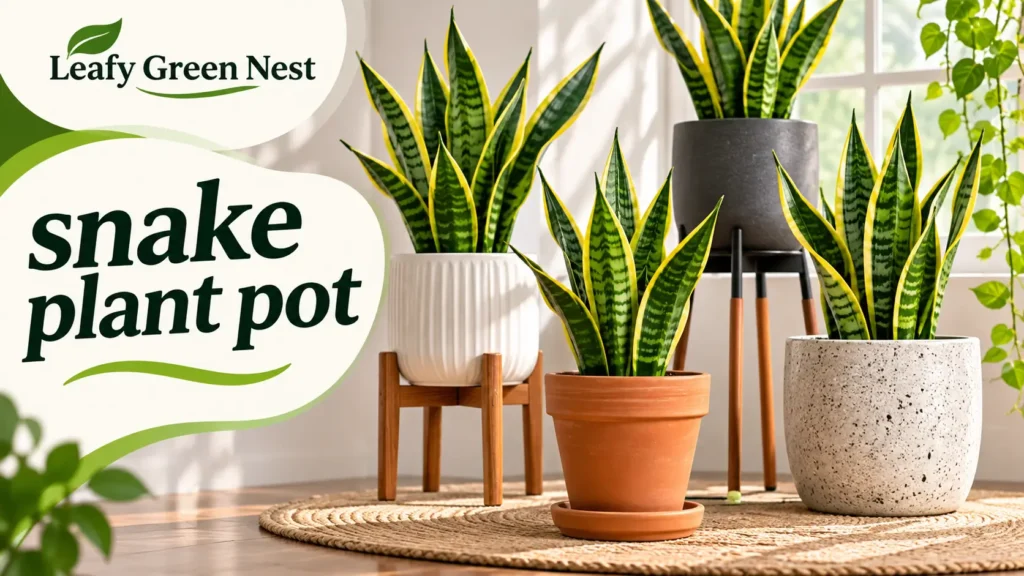
For a natural look, try terracotta. Its warm color works well with wood, neutral walls, and natural textures.
For a modern room, consider matte black, white, or gray ceramic. These simple colors create a clean contrast with the plant’s green leaves.
A woven basket can add texture to a room. Use it as an outer cover and keep the plant in a nursery pot with drainage holes.
For a minimalist space, choose a plain container with a simple shape. This lets the upright leaves become the main feature.
For a large plant, choose a wide pot with a stable base. A narrow decorative container may look attractive but can be less secure.
Outdoor Snake Plant Pot: Choosing a Weather-Ready Container
An outdoor snake plant pot needs to handle rain, sunlight, and changing temperatures. The container should drain freely and suit the conditions where the plant will grow.
Terracotta can work outdoors because its porous walls allow moisture to evaporate. Durable plastic is another practical choice because it is light and easy to move.
If the pot sits in direct sunlight, consider how hot the container may become. Dark containers can absorb more heat, so move the plant if the pot and soil become excessively warm.
Rain can also change your watering routine. An outdoor plant may receive more water than you expect, especially during heavy rainfall. Make sure the drainage holes are clear and that water does not collect beneath the pot.
Snake plants are not frost-hardy. If your outdoor area gets cold, move the plant to a protected indoor location before freezing weather arrives.
Snake Plant Pot With Stand: Is It Worth Buying?
A pot with a stand can lift your snake plant off the floor and make it a stronger part of your room design. It can also help a smaller plant stand out.
A raised planter may look good beside a sofa, near a bright window, or in an empty corner. It can make the plant appear taller without changing the container itself.
Choose a stand that can support the combined weight of the pot, soil, and plant. The pot should sit securely on the stand without wobbling or hanging over the edges.
Check the stand’s material as well. Wood should be protected from water, and metal should be suitable for the room or outdoor conditions.
A stand does not replace drainage. Use a pot with drainage holes and protect the floor from water that escapes after watering.
Potting Mix and Watering: Keep the Roots Healthy
The right pot works best when it is paired with suitable soil. Snake plants need a mix that drains freely rather than staying wet for long periods.
A cactus and succulent potting mix is a practical option. You can also improve a regular houseplant mix by adding materials such as perlite or pumice to increase drainage.
Do not press the mix too tightly around the roots. The plant should sit securely, but the soil should not become dense and compacted.
Check the soil before watering. Let it dry well between waterings, and remember that drying time changes with the pot material, room temperature, light, and season.
For more guidance on choosing a container and repotting houseplants, read the Montana State University Extension guide to repotting houseplants. It explains how pot size, material, and drainage affect container choice.
When Should You Repot a Snake Plant?
Snake plants do not need frequent repotting. If the plant is healthy and the roots have room, there is no need to move it just because it has been in the same pot for a long time.
Look for roots growing through the drainage holes, a root ball that fills most of the container, or a pot that has become cracked or unstable.
A plant that dries out unusually quickly may also need attention. Check the roots and soil before deciding that a bigger pot is the answer.
When repotting, choose a container around 1 to 2 inches wider than the current one. Remove the plant carefully, check the roots, and place it in fresh, well-draining mix.
Avoid choosing a much larger pot. Extra soil can stay wet for longer when the roots are not using the available moisture.
Common Snake Plant Pot Mistakes to Avoid
Most pot-related problems come from poor drainage, unsuitable sizing, or a lack of stability. A few simple checks can help you avoid them.
- Choosing a pot without drainage: Extra water can collect around the roots.
- Using a container that is too large: Unused soil may stay wet for longer.
- Choosing a very light pot for a tall plant: The plant may become unstable and tip over.
- Watering on a fixed schedule: Check the soil rather than watering automatically.
- Leaving water in the outer pot: Empty collected water after watering.
- Using dense potting soil: Compact soil can hold too much moisture.
- Ignoring outdoor conditions: Protect the plant from freezing temperatures and excessive rain.
- Choosing appearance over function: A decorative pot still needs a safe way to manage water.
The Right Snake Plant Pot for Healthy, Balanced Plant Growth
The best snake plant pot is one that fits the roots, drains properly, and keeps the plant stable. It does not need to be expensive or oversized to do its job.
For most plants, a snug pot with drainage holes is a reliable choice. Terracotta suits people who want moisture to escape through the pot walls. Ceramic offers more design options, plastic is lightweight and practical, and cement can support larger plants.
Check the root ball before choosing a new size. A pot that is only slightly wider is usually enough. Pair it with a well-draining mix and let the soil dry between waterings.
Choose function first and style second. Your snake plant will have a better growing environment, and your container will look right in your home.
Frequently Asked Questions
These answers cover common questions about choosing and using a snake plant pot. Use them as a quick check before buying or repotting.
What is the best pot for a snake plant?
A terracotta pot with drainage holes is a good option for many snake plants. It allows some moisture to evaporate through its walls. Ceramic and plastic can also work when the pot drains properly.
Do snake plants need deep pots?
No. Choose a pot that comfortably holds the roots and provides enough stability. Extra depth is not necessary if the root system already fits.
Should a snake plant be in a small pot?
A snug pot is usually suitable. Snake plants do not need a lot of unused soil around their roots, and an oversized container can take longer to dry.
Can I use a pot without drainage holes?
Use it as a decorative outer container rather than planting directly into it. Keep the plant in a nursery pot with drainage holes, and remove it when watering.
Are plastic pots good for snake plants?
Yes. Plastic pots are lightweight and practical. Because they do not absorb moisture through their walls, use a well-draining mix and check the soil before watering.
Can snake plants grow outdoors in pots?
Yes, in suitable warm conditions. Use a pot with drainage holes and protect the plant from freezing temperatures, excessive rain, and extreme heat.