
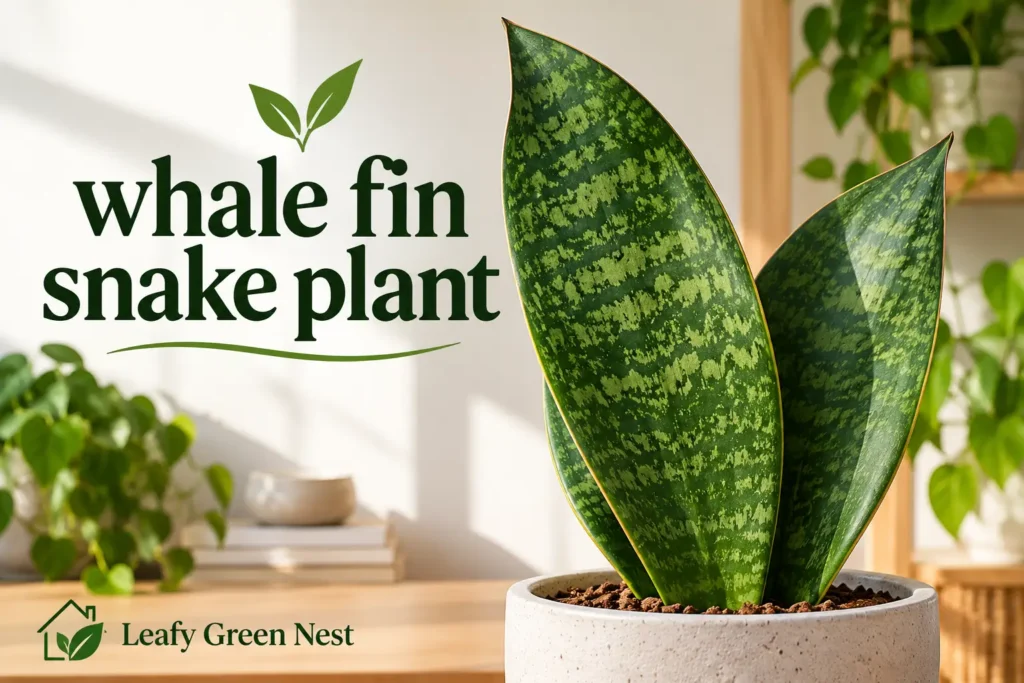
The Whale Fin Snake Plant is a striking indoor plant known for its huge, paddle-shaped leaves. Its unusual appearance, slow growth, and relatively simple care make it a popular choice for houseplant collectors.
This tropical plant does not need frequent watering or constant attention. However, it needs suitable light, well-draining soil, and a little patience. Whether you are growing your first plant or adding a mature specimen to your collection, this guide explains how to care for it, propagate it, solve common problems, and choose the right supplies.
Table of Contents
What Is a Whale Fin Snake Plant?
The Whale Fin Snake Plant (Dracaena masoniana) is a tropical perennial native to Central Africa. It belongs to the Asparagaceae family and was previously classified as Sansevieria masoniana.
Its thick, upright leaves are dark green with lighter green markings. Each leaf has a broad, paddle-like shape that resembles a whale’s fin or a shark’s fin.
Unlike many snake plants that grow in clusters of narrow leaves, this species can produce individual, oversized leaves from an underground rhizome. A young plant may have only one leaf, while an established plant can develop several.
| Feature | Details |
|---|---|
| Botanical name | Dracaena masoniana |
| Former botanical name | Sansevieria masoniana |
| Common names | Whale Fin Snake Plant, Shark Fin Plant |
| Family | Asparagaceae |
| Origin | Central Africa |
| Mature height | Around 3–5 feet |
| Mature width | Around 1–2 feet |
| Growth rate | Slow |
| Light | Bright, indirect light |
| Watering | Allow soil to dry between waterings |
| Soil | Loose, well-draining mix |
| Propagation | Division and leaf cuttings |
| Toxicity | Toxic if ingested |
The plant’s large leaves make it an attractive focal point in living rooms, offices, and indoor plant collections. Its slow growth also means it usually needs less frequent pruning and repotting than faster-growing houseplants.


Whale Fin Snake Plant Care
Whale Fin Snake Plant care is straightforward when you provide the right growing conditions. The most important factors are suitable light, careful watering, warm temperatures, and well-draining soil.
Overwatering is one of the main problems to avoid. A healthy root system helps the plant produce strong leaves and maintain steady growth.
Light Requirements
Place your Whale Fin Snake Plant in bright, indirect light for healthy growth. A position near an east-facing window is often suitable.
The plant can tolerate lower light conditions, but its growth may become slower. Avoid strong afternoon sunlight because it can scorch the leaves.
If your room has limited natural light, place the plant near the brightest available window. Rotate the pot occasionally to encourage even light exposure.
Watering Needs
Water your Whale Fin Snake Plant when its growing medium has dried out. Its thick leaves store moisture, so it can tolerate periods without watering.
Check the soil before adding water. Do not follow a rigid weekly schedule because drying time depends on temperature, light, pot size, and soil composition.
When watering, moisten the soil thoroughly and allow excess water to drain through the bottom. Empty the saucer so the roots do not sit in standing water.
Reduce watering during cooler months when growth slows. If the soil remains wet for several days, review the drainage and potting mix.
Best Soil for Whale Fin Snake Plant
Use a loose, well-draining potting mix that allows excess water to escape. Dense soil can retain moisture around the roots and increase the risk of root rot.
You can prepare a suitable mix using:
- Two parts regular indoor potting mix
- One part perlite
- One part pumice or another coarse drainage material
Adjust the proportions depending on the texture of your ingredients. The finished mix should feel loose rather than heavy or muddy.
Choose a container with drainage holes. Avoid using a pot that is much larger than the root system because excess soil can stay wet for too long.
Temperature and Humidity
The Whale Fin Snake Plant prefers warm indoor conditions. A temperature range of 65–85°F is suitable for its growth.
Keep it away from cold drafts, air conditioners, and sudden temperature changes. Avoid exposing the plant to temperatures below 55°F.
It can tolerate ordinary indoor humidity, although moderate humidity can support healthy foliage. Good airflow is also important, especially when the soil takes longer to dry.
Fertilizing
This plant does not need heavy feeding because it grows slowly. Apply a balanced houseplant fertilizer during the active growing season.
Follow the product label and avoid applying more than recommended. Excess fertilizer can damage the roots and cause leaf problems.
Do not fertilize a plant that is already stressed, recently repotted, or showing signs of root rot. Correct its growing conditions before feeding it again.
Pruning and Cleaning
The Whale Fin Snake Plant does not require regular pruning. Remove yellow, damaged, or dead leaves with clean, sharp pruning shears.
Wipe the leaves gently with a soft, damp cloth to remove dust. Avoid using leaf-shine products because they are unnecessary for normal plant care.
Do not cut healthy leaves just to control the plant’s height. The cut edges will not grow back into their original shape.
Repotting
Repot your Whale Fin Snake Plant when its roots become crowded or begin growing through the drainage holes. Because it grows slowly, it does not need frequent repotting.
Choose a container only slightly larger than the existing one. Use fresh, well-draining soil and check the roots for soft or damaged sections.
After repotting, place the plant in bright, indirect light. Avoid keeping the new soil excessively wet while the plant adjusts.
Best Products for Whale Fin Snake Plant Care
You do not need an expensive collection of gardening supplies to grow this plant successfully. A suitable potting mix, drainage materials, and a container with drainage holes are the most useful items.
The following product types can help you create a suitable growing environment and maintain healthy roots.
Cactus and Succulent Potting Mix
A cactus and succulent potting mix can provide a useful starting point for your Whale Fin Snake Plant. Look for a mix that drains freely and does not remain soggy after watering.
Pros
- Convenient and ready to use.
- Often contains materials that improve drainage.
- Can reduce the time needed to prepare a homemade mix.
- Suitable for many drought-tolerant houseplants.
Cons
- Ingredients vary between brands.
- Some mixes may still retain too much moisture.
- You may need to add perlite or pumice to improve the texture.
- Some products may be more expensive than ordinary potting soil.
Miracle-Gro Houseplant Potting Mix, 4 qt.
Horticultural Perlite
Perlite is a lightweight material that helps loosen dense potting mixes. It creates air spaces that support drainage and airflow around the roots.
Pros
- Improves soil aeration.
- Helps loosen heavy potting soil.
- Lightweight and easy to mix.
- Useful for preparing a homemade growing medium.
Cons
- Does not provide complete plant nutrition.
- Needs to be mixed with other growing materials.
- Fine particles can create dust when handled.
- Can float to the surface during watering.
4QT Organic Perlite for Plants, Horticultural Perlite Soil Amendment
Horticultural Pumice
Pumice is a porous mineral material that can improve the structure of a potting mix. It is useful when you want a growing medium that drains well without relying entirely on organic materials.
Pros
- Helps improve drainage.
- Adds structure to potting mixes.
- Porous and suitable for container gardening.
- Does not break down as quickly as many organic materials.
Cons
- Does not provide complete plant nutrition.
- Usually costs more than some basic soil amendments.
- Particle size can vary between suppliers.
- Needs to be combined with other suitable materials.
Horticultural Pumice for Plants, Natural Organic Pumice Stones for Succulent Cactus Bonsai Tree Orchid Potting Mixed, Improves Soil Aeration and Drainage,...
Plant Pot With Drainage Holes
A pot with drainage holes allows excess water to escape after watering. This is important because the Whale Fin Snake Plant does not tolerate constantly wet roots.
Pros
- Allows excess water to drain.
- Helps reduce waterlogging.
- Available in different sizes and materials.
- Makes soil moisture easier to manage.
Cons
- May require a separate saucer.
- Terracotta pots can dry out faster than plastic pots.
- Oversized containers can retain excess moisture.
- Some decorative pots do not include drainage holes.
SOUJOY Set of 3 Ceramic Flower Pots, Gardening Plant Pot with Drainage Holes and Saucer, 7/5/4 inch Purple Round Succulent Herbs Cactus Planter for Indoor...
Balanced Indoor Plant Fertilizer
A balanced houseplant fertilizer can provide nutrients during the active growing season. Choose a product with clear instructions and follow its recommended dilution and application rate.
Pros
- Supplies nutrients for active growth.
- Available in liquid and granular forms.
- Can be used for many indoor plants.
- Helps supplement nutrients in the growing medium.
Cons
- Overuse can damage roots.
- Not necessary during every season.
- Requires careful measurement.
- Does not solve problems caused by poor soil or watering.
Indoor Plant Food, Complete Liquid Fertilizer for Houseplants, 8oz
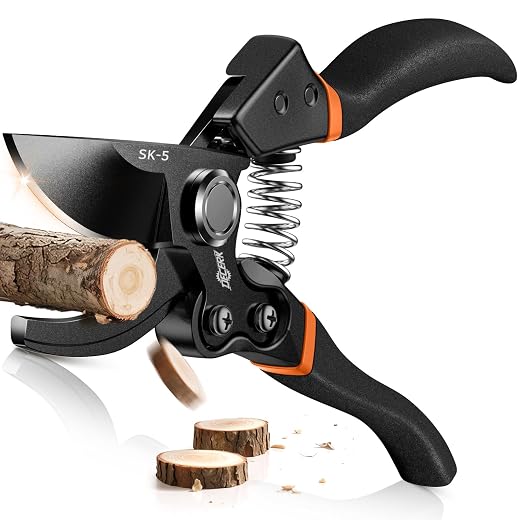
Sharp Gardening Pruning Shears
Clean pruning shears make it easier to remove damaged leaves. Choose a comfortable pair with sharp blades that can make clean cuts.
Pros
- Helps remove damaged leaves cleanly.
- Useful for plant maintenance and propagation.
- Reusable for other gardening tasks.
- Makes cutting easier than using blunt scissors.
Cons
- Requires cleaning between uses.
- Blades need occasional sharpening.
- Can damage leaves if used carelessly.
- Should be stored safely away from children and pets.
Buying tip: Start with a well-draining potting mix, perlite or pumice, and a suitable pot. These supplies are more important for healthy roots than buying several fertilizers or decorative accessories.
8.5" Professional Pruning Shears, Effortlessly Prunes 3/4" Branches
Whale Fin Snake Plant Propagation
You can propagate a Whale Fin Snake Plant through division or leaf cuttings. Division is usually the better choice when you want to preserve the parent plant’s leaf characteristics.
Use a healthy plant and clean tools to reduce the risk of infection. Both methods require patience because this species grows slowly.
Propagation Through Division
Division is a practical way to produce a new plant when the parent has developed separate growth points. Each division should have healthy roots and a growing point.
Follow these steps:
- Remove the plant carefully from its pot.
- Brush away some soil to expose the roots and underground rhizome.
- Identify a section with healthy roots and leaves.
- Separate the section using a clean, sharp knife.
- Allow damaged cut surfaces to dry before planting if needed.
- Place the division in a pot with fresh, well-draining soil.
- Keep it in bright, indirect light.
- Water carefully and allow the soil to dry between waterings.
Avoid damaging the roots during separation. Give the new plant time to establish itself before applying fertilizer.
Propagation Through Leaf Cuttings
Leaf cuttings offer another way to propagate the plant. However, new growth from a leaf cutting may not preserve the original variegation.
To try this method:
- Select a healthy, mature leaf.
- Cut it into sections using a clean knife.
- Mark the bottom of each section so you remember its original direction.
- Allow the cut surfaces to dry.
- Place the lower end of each section in a suitable propagation mix.
- Keep the mix lightly moist, not wet.
- Place the cuttings in a warm spot with indirect light.
Rooting and new growth can take time. Avoid pulling the cuttings out repeatedly to check for roots.
For general propagation techniques and plant-growing guidance, you can also consult the North Carolina Extension guide to Dracaena masoniana.
Whale Fin Snake Plant Benefits
The Whale Fin Snake Plant offers several benefits as an indoor decorative plant. Its broad leaves create a bold look without requiring complicated care.
Here are some reasons people choose this plant:
- Distinctive appearance: Its large leaves add structure and visual interest to indoor spaces.
- Low maintenance: It does not require frequent watering or regular pruning.
- Adaptable growth: It can tolerate lower light, although bright, indirect light is better.
- Suitable for collections: Its unusual leaf shape makes it different from many common houseplants.
- Long-lasting display: With suitable care, an established plant can remain attractive for years.
The plant is sometimes described as an air-purifying houseplant. However, there is not enough evidence to claim that keeping one in an ordinary room meaningfully improves indoor air quality.
Is Whale Fin Snake Plant Lucky?
Some people believe the Whale Fin Snake Plant brings good luck, protection, or positive energy into a home. These beliefs are connected to cultural traditions and the appearance of snake plants.
There is no scientific evidence that the plant attracts wealth or changes a home’s energy. Its value is mainly ornamental.
If you enjoy these traditions, you can keep the plant in a living room, office, or near an entrance. Choose a location that also provides suitable light and temperature.
Why Are Whale Fin Plants So Expensive?
Whale Fin Snake Plants can cost more than many common houseplants. Their price often depends on their size, appearance, availability, and growing time.
Several factors can affect their cost:
- Slow growth: The plant takes time to develop large, mature leaves.
- Propagation time: Growers need patience to produce established plants.
- Leaf appearance: Healthy, broad, well-shaped leaves can make a specimen more desirable.
- Variegation: Unusual leaf patterns may increase demand.
- Plant maturity: Larger plants generally take longer to grow and establish.
- Availability: Local supply and demand can influence the price.
A mature plant may cost more because it has already spent considerable time growing. However, a higher price does not always mean better quality.
Check the roots, leaves, and growing medium before purchasing. A healthy, smaller plant may be a better choice than an expensive specimen with damaged leaves or signs of root rot.
Variegated Whale Fin Snake Plant
A Variegated Whale Fin Snake Plant has noticeable differences in leaf color or pattern. These markings make each specimen look distinctive and can increase its appeal to collectors.
The usual Whale Fin Snake Plant has dark green leaves with lighter green mottling. Variegated specimens may display more noticeable color differences, depending on the plant.
When choosing one, inspect the leaf pattern and overall health. Avoid plants with soft leaves, widespread yellowing, or damaged roots.
Keep in mind that leaf-cutting propagation may not preserve the original variegation. Division is generally a better option when you want to retain the parent plant’s characteristics.
Whale Fin Snake Plant Mature Size
A mature Whale Fin Snake Plant can reach around 3–5 feet in height and 1–2 feet in width. Its broad leaves can grow up to 3–4 feet long and 8–10 inches wide.
Growth depends on light, watering, soil, and the plant’s growing environment. Indoor plants may take several years to reach their mature size because this species grows slowly.
Give it enough room to develop without placing it in direct, harsh sunlight. A stable location can also help prevent accidental damage to its large leaves.
Do not worry if a young plant has only one leaf. New leaves develop from the underground rhizome as the plant establishes itself.
Whale Fin Snake Plant Yellowing: Causes and Solutions
Yellowing leaves can indicate a problem with watering, soil, or the plant’s growing conditions. Check the soil and roots before deciding what needs to change.
The table below covers common symptoms and practical ways to address them.
| Problem | Possible cause | What to do |
|---|---|---|
| Yellow leaves | Overwatering or root stress | Check soil moisture and drainage |
| Soft leaves | Root rot or excess moisture | Inspect roots and remove damaged sections |
| Brown leaf tips | Environmental stress or inconsistent care | Review watering and growing conditions |
| Drooping leaves | Root damage or poor growing conditions | Check roots, soil, and light |
| Slow growth | Low light or natural growth habit | Provide brighter indirect light |
| Dark or soft patches | Possible tissue damage or rot | Inspect the affected area and growing conditions |
Overwatering
Overwatering is a common cause of yellow leaves. When the soil stays wet for too long, the roots may become damaged and unable to function properly.
Remove the plant from its pot if you suspect root rot. Cut away soft, damaged roots with clean tools and repot the plant in fresh, well-draining soil.
Do not water again until the growing medium has started to dry appropriately.
Brown Leaf Tips
Brown tips can develop because of inconsistent watering, dry conditions, or other environmental stress. They may also occur when salts build up in the growing medium.
Check the soil before watering. Keep the plant away from strong drafts and avoid applying too much fertilizer.
Trim only the damaged portion if you want to improve the plant’s appearance. Do not cut into healthy leaf tissue unnecessarily.
Drooping Leaves
Drooping leaves may indicate root problems, physical damage, or unsuitable growing conditions. Check whether the soil is staying wet and inspect the roots if the plant continues to decline.
Keep the plant in a stable location with suitable light and temperature. Avoid moving it repeatedly while it is recovering.
Slow Growth
The Whale Fin Snake Plant naturally grows slowly. Limited light, poor soil, and unsuitable temperatures can slow it further.
Provide bright, indirect light and use a well-draining potting mix. Avoid adding extra fertilizer to force faster growth.
Remember that a healthy plant may still produce new leaves slowly. Patience is part of growing this species.
Whale Fin Snake Plant for Sale: What to Check Before Buying
Before buying a Whale Fin Snake Plant, inspect its leaves, roots, and overall condition. A healthy plant should have firm leaves without widespread yellowing, soft spots, or signs of pests.
Use this checklist when choosing a plant:
- Leaves: Look for firm, healthy leaves without major damage.
- Roots: Avoid plants with dark, mushy, or rotten roots.
- Rhizome: Check that the underground growth is firm and healthy if it is visible.
- Soil: Choose a plant growing in a well-draining mix.
- Size: Decide whether you want a young plant or a mature specimen.
- Variegation: Check whether the leaf pattern matches the description provided by the seller.
- Pests: Inspect both sides of the leaves for pests or signs of infestation.
- Plant photos: If buying online, ask for recent photos of the actual plant rather than relying only on stock images.
Do not choose a plant based only on its size or price. Healthy roots and leaves are more important for long-term growth.
If you are buying online, check the seller’s packaging policy and plant replacement conditions. Large leaves can be damaged during transport if the plant is not packed securely.
Is the Whale Fin Snake Plant Toxic to Pets?
The Whale Fin Snake Plant contains saponins and can be harmful if ingested. Keep it away from cats, dogs, and young children.
Pets may develop vomiting, drooling, or other signs of stomach irritation after eating the plant. Cats and dogs can react differently, so contact a veterinarian if you suspect your pet has swallowed any part of it.
Place the plant somewhere pets cannot easily reach. Do not assume that a plant is safe simply because it is commonly grown indoors.
Is the Whale Fin Snake Plant Worth Growing?
The Whale Fin Snake Plant is an excellent option if you want a bold indoor plant that does not need frequent watering. Its large leaves, slow growth, and relatively simple care make it suitable for many indoor plant collections.
Give it bright, indirect light, well-draining soil, and a pot with drainage holes. Check the soil before watering, remove damaged leaves, and repot only when the roots need more space.
If you enjoy unusual foliage and have patience for slow growth, this plant can be a rewarding addition to your home.
Frequently Asked Questions
Is the Whale Fin Snake Plant easy to care for?
Yes. It needs bright, indirect light, well-draining soil, and occasional watering when the growing medium dries out. Avoid overwatering.
How often should I water a Whale Fin Snake Plant?
Water when the soil has dried out. Check the growing medium instead of following a fixed schedule, and reduce watering during cooler months.
How do you propagate a Whale Fin Snake Plant?
You can propagate it through division or leaf cuttings. Division is generally better when you want to preserve the parent plant’s leaf characteristics.
Why are Whale Fin Snake Plant leaves turning yellow?
Yellow leaves often indicate overwatering or root stress. Check the soil and roots, improve drainage, and adjust your watering habits.
How big does a mature Whale Fin Snake Plant get?
A mature plant can reach around 3–5 feet tall and 1–2 feet wide. Its broad leaves can grow several feet long.
Is the Whale Fin Snake Plant toxic to cats and dogs?
Yes. It contains saponins and can cause stomach irritation if pets eat it. Keep the plant out of their reach.


