
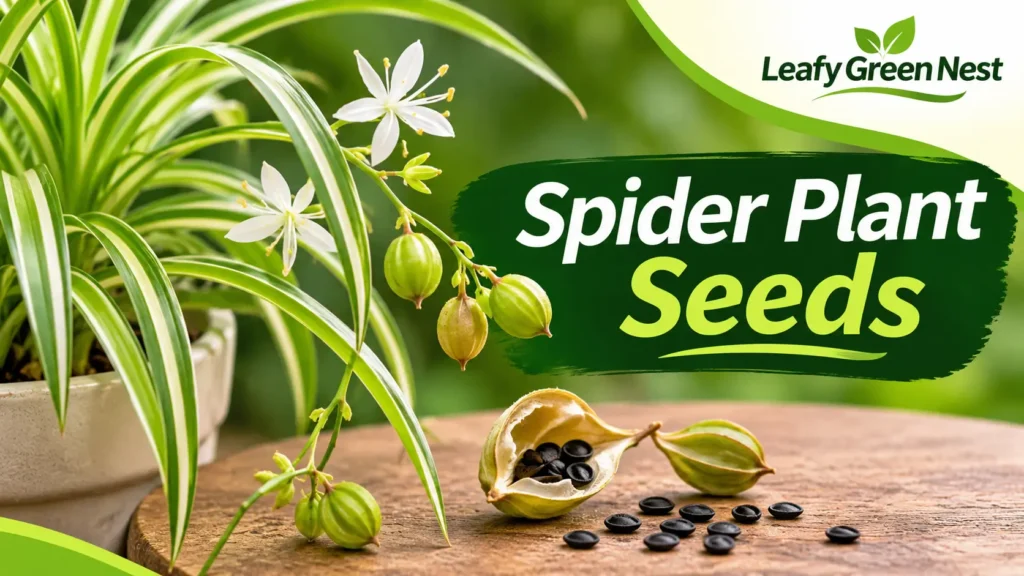
Spider plant seeds are small, flat, dark seeds that develop inside capsules after the plant’s flowers are successfully pollinated. They offer another way to grow Chlorophytum comosum, a popular houseplant known for its long, arching leaves and baby plantlets.
Most people grow spider plants from plantlets because they are easy to root. However, growing spider plant seeds can be a rewarding option if you want to observe the plant’s full reproductive cycle or raise new plants with different characteristics.
Spider plants produce small white flowers on long, thin stalks. After flowering, some parts of the stalk may develop baby plants, while successfully pollinated flowers can form seed capsules. These capsules contain the seeds needed for propagation.
Seed-grown plants may not look exactly like their parent. This is especially worth remembering if you have a variegated spider plant and want to preserve its original leaf pattern.
Disclosure: This post contains affiliate links. If you purchase through these links, I may earn a small commission at no extra cost to you.
Table of Contents
Key Takeaways
Spider plant seeds can grow into healthy houseplants when they are mature and receive suitable growing conditions. The most important factors are seed quality, a well-draining growing medium, gentle watering, and patience.
- Botanical name: Chlorophytum comosum.
- Seed appearance: Small, flat, black, and sometimes slightly shiny.
- Seed location: Inside three-sided fruit capsules.
- Seed source: Flowers that have been successfully pollinated.
- Growing medium: Fine-textured, lightweight, well-draining seed-starting mix.
- Light: Bright, indirect light for growing seedlings.
- Moisture: Consistently moist soil during germination, never waterlogged.
- Propagation options: Seeds, baby plantlets, and division.
- Main advantage of seeds: They allow genetic variation.
- Main advantage of plantlets: They usually preserve the parent’s characteristics.
What Do Spider Plant Seeds Look Like?
Spider plant seeds are small, flat, dark seeds found inside mature fruit capsules. Their black color and flattened shape help distinguish them from the green plantlets that grow along the flower stalks.
The seeds are much smaller than baby spider plants. A plantlet already has tiny leaves and can develop roots, while a seed needs to germinate before a new plant appears.


Main Characteristics of Spider Plant Seeds
Use these features to identify spider plant seeds:
| Characteristic | Description |
|---|---|
| Color | Black or very dark brown |
| Shape | Flat and slightly rounded or irregular |
| Size | Small |
| Surface | Smooth or slightly shiny |
| Location | Inside mature capsules |
| Botanical source | Chlorophytum comosum |
Seed appearance can vary slightly. For this reason, check the capsule and parent plant as well as the seed itself when identifying a seed.
How Are Seeds Different From Spider Plant Babies?
Seeds and plantlets are two different ways spider plants reproduce. A seed contains an embryo that must germinate, while a plantlet is a small developing plant that can form roots and grow independently.
This distinction matters when buying spider plant seeds. Some sellers use general propagation terms, so read the product description carefully and confirm that you are purchasing seeds rather than baby plants.
What Is a Spider Plant Seed Pod?
A spider plant seed pod is a small, three-angled fruit capsule that forms after a flower is pollinated. The capsule protects the developing seeds until they mature.
Young capsules are usually green. As they develop, they become firmer and eventually dry. A mature capsule can contain several small, dark seeds.
How to Identify a Mature Spider Plant Seed Pod
Look for these signs before collecting a capsule:
- The capsule has reached its full size.
- Its outer covering becomes firm and begins to dry.
- The capsule changes from fresh green to a drier appearance.
- The seeds inside have developed a dark color.
Do not harvest capsules simply because they have appeared. Immature seeds may not have completed development, which can reduce the chance of successful germination.
Why Do Some Flowers Produce Plantlets Instead of Seeds?
Spider plants can produce small plantlets along their flower stalks. These plantlets are a form of vegetative reproduction and are not seed pods.
A flower that is successfully pollinated can develop into a capsule containing seeds. A stalk may also produce plantlets, depending on how the plant develops.
If your spider plant produces flowers but no visible seed capsules, that does not necessarily mean the plant is unhealthy. Pollination may not have occurred, or the flowers may have developed plantlets instead.
How to Collect Spider Plant Seeds
Collecting spider plant seeds starts with a mature plant that produces flowers and successfully develops seed capsules. Wait for the capsules to mature before harvesting so the seeds have time to develop.
You only need clean scissors, a sheet of paper, and a dry container for storage.
Choose a Healthy Spider Plant
Select a mature plant with healthy leaves and active growth. A plant that receives suitable light and regular care is a better starting point than one struggling with pests, damaged roots, or poor growing conditions.
A healthy plant is more likely to produce strong flower stalks. However, flowering does not guarantee that seeds will develop.
Wait for Flowers and Seed Capsules
Allow the plant to produce its small white flowers naturally. These flowers usually appear along long, narrow stalks that extend outward from the main plant.
Watch the stalks after flowering. Some may develop baby plantlets, while successfully pollinated flowers can form small capsules.
Leave developing capsules attached to the plant while they mature. Removing them too early can interrupt seed development.
Harvest Mature Capsules
When the capsules become dry and mature, carefully remove them with clean scissors.
Handle the stalk gently because dry capsules may open and release their seeds. You can place a sheet of paper underneath the stalk while collecting them to catch any loose seeds.
Avoid collecting wet plant material for storage. Excess moisture can encourage mold and damage the seeds.
Extract and Store the Seeds
Place the capsules on clean paper in a dry, shaded, well-ventilated area. Allow them to dry fully before opening them.
Gently break open each capsule and remove the small dark seeds. Separate the seeds from dried plant material.
Store completely dry seeds in a labeled paper envelope or suitable airtight container. Add the collection date so you can track their age.
Keep the container in a cool, dry, dark place. Avoid areas exposed to heat, direct sunlight, or moisture.
How Long Do Spider Plant Seeds Stay Viable?
Seed viability means a seed is still alive and capable of germinating. It can decline with age and poor storage, but the exact storage life of spider plant seeds can vary.
There is no dependable universal shelf-life figure for every batch. Freshly collected, mature, properly dried seeds are a sensible choice when you want to improve your chances of success.
If you have older seeds, test a small sample before planting the entire collection. This helps you avoid wasting time and growing medium on a batch that may no longer germinate well.
Spider Plant Seeds How to Grow at Home
Growing spider plant seeds at home requires a clean container, suitable seed-starting mix, gentle watering, and a warm environment. The process is simple, but small seeds need careful handling.
Start with mature seeds whenever possible. Poor-quality or immature seeds may fail even when the growing conditions are suitable.
What You Need Before Planting
Gather these basic supplies:
- Mature spider plant seeds.
- A small nursery pot or seed tray.
- Fine-textured seed-starting mix.
- Clean water.
- A spray bottle.
- A clear humidity cover, if needed.
- Plant labels.
Choose a container with drainage holes. Good drainage helps prevent excess water from collecting around the seeds.
Prepare the Growing Medium
Fill the container with a clean, lightweight seed-starting mix. The medium should hold enough moisture for germination while allowing air and excess water to move through it.
Avoid heavy garden soil. It can become compacted in small containers and may drain poorly.
Moisten the mix before sowing. It should feel evenly damp rather than soaked.
Sow the Spider Plant Seeds
Spread the seeds over the surface of the growing medium. Cover them with a very thin layer of the mix.
Small seeds generally should not be buried deeply. If they are planted too far below the surface, emerging seedlings may struggle to reach the light.
Gently mist the surface to settle the seeds into place. Avoid pouring water directly over them because the seeds may move or become buried.
Maintain Consistent Moisture
Keep the growing medium evenly moist while the seeds germinate. Do not allow it to dry out completely, but avoid leaving it saturated.
A spray bottle can help you water gently. If you use a humidity cover, check it regularly and allow some airflow to reduce excess condensation.
Provide Warmth and Indirect Light
Place the container in a warm location with bright, indirect light. Avoid intense direct sunlight, which can heat the container and dry the growing medium quickly.
Once seedlings emerge, continue providing bright, indirect light. Rotate the container occasionally if the seedlings begin leaning strongly toward one direction.
Monitor Germination and Seedling Growth
Check the container regularly for signs of germination. The time required can vary with seed freshness and growing conditions.
Do not dig up the seeds to check their progress. Disturbing them can damage developing roots.
Once seedlings appear, keep the growing medium lightly moist and provide good airflow. Remove a humidity cover gradually rather than exposing delicate seedlings to a sudden change in conditions.
Transplant Established Seedlings
Wait until seedlings have developed several true leaves and are large enough to handle safely.
Move each seedling into its own small pot containing a well-draining houseplant mix. Hold the seedling by a leaf rather than pulling on its delicate stem.
Water gently after transplanting. Keep the young plant in bright, indirect light while its roots settle into the new container.
Best Growing Conditions for Spider Plant Seedlings
Spider plant seedlings need suitable moisture, light, warmth, and drainage to develop healthy roots and leaves. Consistent conditions are more useful than frequent changes to their environment.
Use this table as a practical reference while caring for young plants.
| Growing factor | Recommended approach |
|---|---|
| Light | Bright, indirect light |
| Temperature | Warm and stable indoor conditions |
| Soil | Fine-textured, well-draining mix |
| Water | Keep the mix evenly moist during germination |
| Airflow | Gentle ventilation |
| Container | Small pot or seed tray with drainage |
| Fertilizer | Wait until seedlings are established |
Light Requirements
Young seedlings need enough light to develop strong growth. Place them near a bright window or another suitable source of indirect light.
Avoid intense sunlight on newly emerged seedlings. Their leaves are delicate, and excessive heat can dry the soil quickly.
Watering Requirements
Watering should support steady growth without keeping the roots constantly wet. During germination, maintain even moisture.
After seedlings become established, allow the upper layer of the growing medium to dry slightly before watering again. Always check the soil rather than following a rigid watering schedule.
Soil and Drainage
A light, airy growing medium helps young roots develop. It should retain some moisture without becoming compacted or waterlogged.
Containers must have drainage holes. Empty any collected water from the tray or saucer so the roots do not sit in standing water.
Fertilizer Requirements
Newly germinated seedlings do not need strong fertilizer. Their first priority is developing healthy roots and leaves.
Once the plants are established and growing actively, you can use a balanced houseplant fertilizer at a diluted strength. Follow the product instructions and avoid applying more than recommended.
Spider Plant Seeds vs. Baby Plantlets: Which Is Better?
Seeds and baby plantlets can both produce new spider plants, but they suit different goals. Seeds allow genetic variation, while plantlets usually produce plants that closely resemble the parent.
| Feature | Spider plant seeds | Baby plantlets |
|---|---|---|
| Source | Pollinated flowers | Mother plant stalks |
| Starting point | Seed | Small developing plant |
| Difficulty | More patience required | Usually easy |
| Genetic result | May differ from parent | Usually matches parent |
| Best use | Growing new variations | Producing similar plants |
| Main challenge | Germination can vary | Requires a healthy plantlet |
When Should You Grow Spider Plants From Seeds?
Choose seeds if you enjoy experimenting with propagation and want to observe the full growing process.
Seed-grown plants may show different characteristics from the parent. This can be interesting if you are curious about variation, but it is less suitable when you want an exact copy of a particular plant.
When Are Baby Plantlets the Better Choice?
Choose plantlets when you want a straightforward way to produce another spider plant.
You can place a plantlet in a small pot while it remains attached to the mother plant. Keep its base in contact with moist growing medium until roots develop, then cut the connecting stalk.
This method is especially useful when you want to preserve the appearance of a variegated spider plant.
Spider Plant Seeds for Sale: Where to Buy Them
Spider plant seeds may be available through online marketplaces, specialist seed sellers, and gardening shops. Before purchasing, confirm that the product is genuinely Chlorophytum comosum seed.
Some listings may use broad plant names or unclear photographs. Read the description carefully so you do not accidentally buy plantlets or seeds from another species.
Spider Plant Seeds Amazon
Amazon is a marketplace where you can search for spider plant seeds. Try search phrases such as:
- Spider plant seeds.
- Chlorophytum comosum seeds.
- Indoor spider plant seeds.
- Spider plant flower seeds.
Check the seller’s reviews, product photographs, botanical name, and packaging details. Be cautious when a listing makes unusual claims but provides little information about the plant.
Gardeners Basics 35 Medicinal Herb Seeds Variety Pack for Planting, Non-GMO
Outsidepride Jewel Mix Nasturtium Seeds - 1/4 lb. Annual, Easy to Grow & Versatile, Flower Seeds for Planting Vibrant Blooms, Ideal for Gardens, Borders, and...
Spider Plant Seeds Home Depot
Home Depot is another retailer you may check for houseplant seeds and gardening supplies. However, spider plant seeds may not always be available.
Review the product description and confirm the botanical name before ordering. Do not assume that a listing for a spider plant automatically means it contains seeds.
Buying Spider Plant Seeds Locally
Nearby plant nurseries, specialist seed stores, and gardening sellers may be able to help you find spider plant seeds. Contact them to ask about availability and the source of their stock.
Ask whether they sell genuine spider plant seeds rather than baby plantlets or seeds from unrelated plants. If possible, request clear photographs of the seed capsules and seeds before buying.
What to Check Before Buying
Use this checklist before placing an order:
- The botanical name Chlorophytum comosum is included.
- The seller clearly states that the product contains seeds.
- Product photographs match the description.
- Packaging or collection information is available.
- The seller has credible customer feedback.
- The listing does not confuse seeds with plantlets.
- Storage and freshness information is provided when available.
Common Problems When Growing Spider Plant Seeds
Spider plant seeds may fail to germinate or produce weak seedlings when seed quality or growing conditions are unsuitable. Identifying the likely cause helps you make a careful adjustment instead of changing everything at once.
| Problem | Possible cause | What to do |
|---|---|---|
| No germination | Poor seed viability or unsuitable conditions | Test fresh seeds and review moisture and warmth |
| Mold on soil | Excess moisture and limited airflow | Reduce watering and improve ventilation |
| Weak seedlings | Insufficient light | Provide brighter indirect light |
| Yellow leaves | Watering or root problems | Check drainage and soil moisture |
| Slow growth | Unstable conditions or poor growing medium | Keep conditions consistent |
| Seedlings collapse | Excess moisture or disease | Remove affected seedlings and improve airflow |
Why Are My Spider Plant Seeds Not Germinating?
Seeds may not germinate because they were immature, damaged, poorly stored, or exposed to unsuitable conditions.
Start with mature seeds and a clean growing medium. Maintain moisture without saturating the soil, and avoid repeatedly disturbing the container.
Why Is Mold Growing on the Soil?
Mold can develop when the growing medium stays too wet and air circulation is poor.
Reduce watering and improve ventilation. Remove visibly affected plant material and avoid keeping a humidity cover sealed for long periods.
Why Are My Seedlings Turning Yellow?
Yellow leaves can result from excess moisture, poor drainage, or root stress. Check the growing medium before adding more water or fertilizer.
If the soil remains wet for a long time, allow it to dry slightly and make sure the container drains properly.
Why Are My Seedlings Growing Slowly?
Slow growth can happen when seedlings receive too little light or experience inconsistent moisture and temperature.
Check the growing conditions before applying fertilizer. Adding extra nutrients will not solve every growth problem and may damage delicate roots.
Expert Tips for Growing Spider Plant Seeds Successfully
Successful propagation depends on good seed selection and steady care. A few simple habits can help reduce common problems and give young plants a better start.
- Choose mature seeds: Collect seeds only after their capsules have developed and dried.
- Use clean equipment: Wash reusable pots and trays before planting.
- Avoid deep sowing: Cover small seeds with only a thin layer of growing medium.
- Water gently: Mist the surface to avoid moving or burying the seeds.
- Protect young seedlings: Keep them away from harsh direct sunlight.
- Allow airflow: Prevent excessive condensation under humidity covers.
- Label each container: Record the planting date and seed source.
- Wait before transplanting: Move seedlings only when they are strong enough to handle.
- Avoid strong fertilizer: Feed established seedlings carefully and follow product directions.
- Keep realistic expectations: Not every seed will germinate, even when conditions are suitable.
A particularly useful tip is to grow a small test batch before planting all your seeds. This lets you check seed quality and adjust your method without risking the entire collection.
Are Spider Plant Seeds Worth Growing at Home?
Spider plant seeds are worth trying if you enjoy growing houseplants from the beginning and want to explore a different propagation method. Mature seeds, clean growing medium, steady moisture, and suitable light give seedlings a better chance to develop.
However, seeds are not always the easiest way to multiply a spider plant. Baby plantlets are generally more convenient when you want a new plant that resembles the parent.
If your plant produces flowers, watch for developing capsules and allow them to mature before collecting seeds. With careful storage and patient growing, you can turn those tiny seeds into new indoor plants.
Frequently Asked Questions About Spider Plant Seeds
These frequently asked questions address common concerns about seed identification, harvesting, germination, and propagation. The answers also help clarify when growing from seeds makes more sense than using baby plantlets.
What do spider plant seeds look like?
Spider plant seeds are small, flat, black, and slightly shiny. They develop inside mature, three-sided seed capsules.
How do you collect spider plant seeds?
Collect mature, dry seed capsules from flower stalks. Open them gently and separate the black seeds for storage.
Can you grow spider plants from seeds?
Yes. Plant mature seeds in lightweight, moist, well-draining soil and provide warmth and bright, indirect light.
How long do spider plant seeds take to germinate?
Germination depends on seed freshness, temperature, and moisture. Maintain suitable conditions and check the growing medium regularly.
Where can you buy spider plant seeds?
You can look for spider plant seeds through online marketplaces, specialist seed sellers, and local gardening shops.
Are spider plant seeds better than baby plantlets?
Not necessarily. Seeds offer genetic variation, while baby plantlets are easier to propagate and usually retain the parent’s characteristics.


