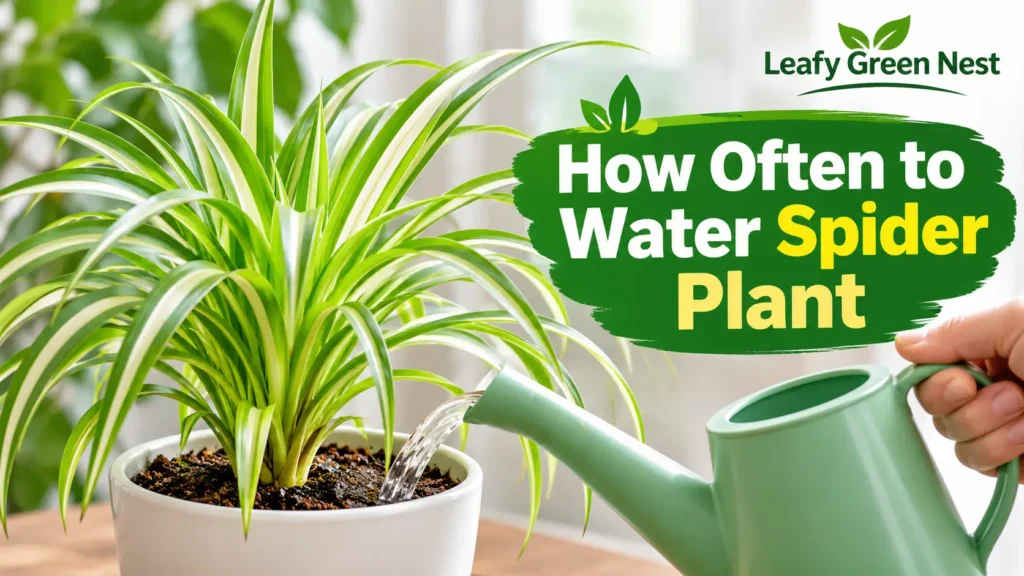
Knowing how often to water spider plant is essential for keeping its leaves green, roots healthy, and growth strong. Although spider plants are easy to maintain, giving them too much or too little water can cause yellow leaves, brown tips, and root problems.
Most mature spider plants need watering every 7–10 days during active growth and every 2–3 weeks during winter. However, these timings are only estimates. Your plant’s watering needs depend on temperature, sunlight, humidity, soil type, and pot size.
The best way to maintain a healthy spider plant is to check the soil before watering. Once you understand how quickly your plant’s soil dries, you can create a routine that works throughout the year.
Table of Contents
What Is the Right Watering Schedule for a Spider Plant?
A spider plant (Chlorophytum comosum) is a popular houseplant known for its long, arching leaves and small baby plants called spiderettes. It prefers evenly moist but well-draining soil and does not grow well when its roots remain constantly wet.
Here is a general watering schedule for different seasons and growing conditions.
| Season or condition | Approximate watering frequency |
|---|---|
| Spring | Every 7–10 days |
| Summer | Every 5–7 days |
| Fall | Every 10–14 days |
| Winter | Every 2–3 weeks |
| Newly planted spider babies | When the top inch dries |
| Outdoor plants in hot weather | Every 3–7 days, depending on conditions |
These estimates are starting points, not strict rules. Always check the top 1–2 inches of soil before watering. If the soil still feels moist, wait before adding more water.
How Often to Water Spider Plant Indoors
Indoor spider plants generally need watering every 7–10 days during spring and summer. However, plants near bright windows may dry faster than those growing in cooler rooms with less light.
Follow these steps to check whether your indoor spider plant needs water:
- Insert your finger about 1–2 inches into the soil.
- Check whether the soil feels dry or moist.
- If it feels dry, water the plant thoroughly.
- If it still feels damp, wait a few days.
- Empty the saucer after watering.
Indoor conditions can change how quickly soil loses moisture. For example, a spider plant in an air-conditioned room may need less frequent watering than one growing near a warm window.
Expert tip: Place your spider plant near an east-facing window or another location with bright, indirect sunlight. Avoid harsh afternoon sunlight because it can scorch the leaves and increase moisture loss.
How Often to Water Spider Plant in Summer
Spider plants usually need more frequent watering during summer because warm temperatures increase evaporation. An indoor plant may need water every 5–7 days, while plants in hotter environments may dry out sooner.
Check the soil every two or three days during extreme heat, especially if your plant grows in a small container.
Follow these summer watering tips:
- Water when the top 1–2 inches of soil become dry.
- Keep the plant away from harsh afternoon sunlight.
- Use a container with drainage holes.
- Avoid leaving standing water in the saucer.
- Check hanging baskets more frequently.
- Watch for drooping leaves and unusually dry soil.
If you live in a hot climate, such as Lahore, summer temperatures can make outdoor pots dry quickly. A spider plant on a warm balcony may need more frequent attention than one growing inside an air-conditioned room.
However, do not water simply because the weather is hot. Always check the soil first.
How Often to Water Spider Plant in Winter
Spider plants generally need less water during winter because their growth slows and soil takes longer to dry. For many indoor plants, watering every 2–3 weeks is a reasonable starting point.
Follow these winter watering tips to protect the roots:
- Allow the top 1–2 inches of soil to dry before watering.
- Avoid watering when the soil is already damp.
- Keep the plant away from cold drafts.
- Avoid placing it directly beside heating vents.
- Make sure excess water drains completely.
A common mistake is continuing the summer watering schedule during winter. This can keep the soil wet for too long and increase the risk of root rot.
Remember that indoor temperatures matter. If your plant stays in a warm room and continues growing, it may need water more frequently than a plant kept in cooler conditions.
How Often to Water Spider Plant Babies
Spider plant babies, also called spiderettes or plantlets, have smaller root systems than mature plants. They can dry out more quickly, so they need consistent moisture while their roots become established.
If you have recently planted a spider plant baby in soil, follow these steps:
- Choose a small pot with drainage holes.
- Fill it with a light, well-draining potting mix.
- Cover the roots with soil without burying the leaves.
- Water gently until the soil becomes evenly moist.
- Allow excess water to drain.
- Check the top inch of soil regularly.
Keep the soil lightly moist while the roots establish themselves, but avoid keeping it constantly wet. Young roots also need oxygen to grow properly.
How Often to Water Spider Plant Babies in Water
You can grow spider plant babies in water until they develop stronger roots. Place the roots in a clean glass of water while keeping the leaves above the waterline.
Change the water regularly to keep it fresh. Once the roots have developed sufficiently, transfer the baby plant into a small pot with suitable potting mix.
After transferring it to soil, check moisture frequently because the roots need time to adjust to their new growing environment.
How Often to Water Spider Plant Outdoors
Outdoor spider plants may need more frequent watering because sunlight, wind, and heat increase evaporation. During warm weather, check the soil every day or two and water when the top 1–2 inches become dry.
Use these outdoor watering tips:
- Place the plant in partial or filtered shade.
- Check soil moisture frequently during summer.
- Water deeply when the soil becomes dry.
- Reduce watering during rainy weather.
- Protect the plant from extreme heat and frost.
- Use containers with proper drainage.
Plants growing in shaded outdoor areas generally retain moisture longer than those exposed to direct sunlight and strong winds.
Hanging baskets may dry faster because air moves around the container. Check their soil more frequently, particularly during hot and windy weather.
How Much Water Does a Spider Plant Need Per Week?
There is no exact amount of water that every spider plant needs per week. The required amount depends on plant size, pot material, soil type, temperature, humidity, and sunlight.
Instead of measuring water in cups, use the soak-and-drain method. Water slowly until excess moisture flows through the drainage holes, then allow the pot to drain completely.
Several factors affect how much water your spider plant uses.
| Factor | Effect on watering |
|---|---|
| Large plant | May use more water |
| Small pot | Usually dries faster |
| Large pot | Often holds moisture longer |
| Bright indirect light | Can increase water use |
| Low light | Usually slows soil drying |
| Hot temperatures | Increase evaporation |
| High humidity | Can slow moisture loss |
| Clay pot | Dries faster than plastic |
| Poor drainage | Increases waterlogging risk |
For example, a large spider plant in a small clay pot may need watering more frequently than a small plant growing in a larger plastic container.
Does Soil Type Affect Spider Plant Watering?
Yes, soil type directly affects how frequently you need to water your spider plant. A well-draining potting mix allows excess water to escape while retaining enough moisture for healthy roots.
Heavy garden soil is generally unsuitable for indoor containers because it can become compacted and hold too much water.
A simple potting mix for spider plants can include:
- 2 parts good-quality indoor potting mix.
- 1 part perlite.
- 1 part orchid bark or another coarse aerating material.
This combination improves drainage and airflow around the roots. You can also use a suitable commercial houseplant potting mix.
Always choose a container with drainage holes. Adding gravel or stones at the bottom does not replace proper drainage.
For additional growing advice, the Royal Horticultural Society’s spider plant growing guide explains suitable growing conditions, watering, and general care.
How to Tell If Your Spider Plant Needs Water
The easiest way to know when your spider plant needs water is to check the soil moisture. You can also look for changes in the leaves and the weight of the container.
Here are five signs that can help you understand when your plant may need watering.
The Topsoil Feels Dry
Insert your finger about 1–2 inches into the soil. If it feels dry, your spider plant may be ready for watering.
If the soil still feels damp, wait a few days and check again.
The Leaves Start Drooping
Spider plant leaves may become limp when the plant does not receive enough water. However, root damage from overwatering can also cause drooping.
Always check the soil before deciding what your plant needs.
The Leaves Look Pale or Dull
Healthy spider plants usually have bright green leaves. Prolonged dryness can affect their appearance and reduce their natural firmness.
If the leaves look dull, check the soil and growing conditions.
The Pot Feels Lightweight
Dry potting soil weighs less than wet soil. Lift your container after watering to understand its normal weight.
Check it again after several days. A noticeably lighter pot may indicate that the soil has dried.
The Soil Pulls Away From the Pot
Very dry soil can shrink and separate from the container’s edges. This usually means the plant has gone too long without water.
Water slowly so the potting mix can absorb moisture evenly.
Overwatering vs. Underwatering: What’s the Difference?
Overwatering and underwatering can cause similar symptoms, but checking the soil and roots can help you identify the problem. Overwatering usually causes constantly wet soil, while underwatering causes dry soil and crispy foliage.
| Symptoms | Overwatering | Underwatering |
|---|---|---|
| Soil | Constantly wet | Very dry |
| Leaves | Yellow and soft | Dry and crispy |
| Plant appearance | Weak or drooping | Limp or wilted |
| Roots | Brown and mushy | Dry or damaged |
| Soil smell | May smell unpleasant | Usually normal |
| Main solution | Improve drainage | Water thoroughly |
Signs of Overwatering
Common signs include yellow leaves, constantly wet soil, soft roots, and slow growth.
How to fix it:
- Stop watering until the soil begins to dry.
- Check the drainage holes.
- Inspect the roots if the plant continues declining.
- Remove damaged, mushy roots.
- Repot in fresh, well-draining soil if necessary.
Do not add more water to a plant that already has wet soil and yellowing leaves.
Signs of Underwatering
Common signs include crispy brown tips, drooping leaves, dry soil, and a lightweight pot.
How to fix it: Water the plant thoroughly and allow excess water to drain. If the soil has become extremely dry and water runs straight through, water slowly in stages to help the potting mix absorb moisture.
Why Does My Spider Plant Have Brown Tips?
Brown leaf tips are common in spider plants, but they do not always mean the plant needs more water. Water quality, fertilizer buildup, low humidity, and inconsistent watering can also cause this problem.
Here are five possible reasons:
- Inconsistent watering: Allowing the soil to become extremely dry can stress the plant.
- Fluoride in tap water: Some spider plants are sensitive to fluoride and mineral buildup.
- Low humidity: Very dry indoor air may contribute to brown leaf tips.
- Excess fertilizer: Too much fertilizer can cause salts to accumulate in the soil.
- Poor drainage: Waterlogged soil can damage roots and affect water absorption.
If brown tips continue to appear, review your watering habits and consider trying rainwater or distilled water.
You can trim damaged tips with clean scissors, following the natural shape of the leaves. However, removing brown tips will not solve the underlying problem unless you correct the growing conditions.
Common Spider Plant Watering Mistakes to Avoid
Spider plants are easy to maintain, but a few common mistakes can affect their growth. Avoiding these problems will help you maintain healthy roots and attractive foliage.
- Following a fixed schedule: Check soil moisture instead of watering automatically every week.
- Using pots without drainage: Trapped water can increase the risk of root rot.
- Giving small amounts frequently: Water thoroughly when needed rather than adding a little water every day.
- Ignoring seasonal changes: Reduce watering when growth slows in winter.
- Misreading brown tips: Brown tips can result from water quality, fertilizer, or humidity problems.
- Overwatering baby plants: Young roots need moisture but also require oxygen.
- Using heavy garden soil: Compacted soil can retain excessive moisture and restrict airflow.
A good watering routine should respond to the plant’s needs rather than follow a rigid calendar.
How Often to Water Snake Plant Compared With Spider Plant
Snake plants and spider plants have different watering requirements. Spider plants prefer slightly moist soil, while snake plants tolerate longer periods of dryness.
Understanding this difference helps prevent overwatering when you grow both plants indoors.
| Feature | Spider plant | Snake plant |
|---|---|---|
| Botanical name | Chlorophytum comosum | Dracaena trifasciata |
| Water preference | Slightly moist soil | Drier soil |
| Soil drying | Top 1–2 inches | Allow soil to dry thoroughly |
| Drought tolerance | Moderate | High |
| Overwatering risk | High | Very high |
Do not use the same watering schedule for both plants. Snake plants store water in their thick leaves and are more drought-tolerant than spider plants.
Expert Tips for Growing Healthy Spider Plants
Healthy spider plants need more than regular watering. The right light, suitable soil, and proper drainage also help them produce strong leaves and healthy plantlets.
Follow these practical care tips:
- Choose bright, indirect light: An east-facing window is often a suitable location.
- Avoid harsh afternoon sunlight: Strong direct sunlight can scorch the leaves.
- Use a suitable container: Choose a pot with drainage holes.
- Check water quality: Try rainwater or distilled water if brown tips persist.
- Clean dusty leaves: Wipe the leaves gently with a damp cloth.
- Repot when necessary: Move the plant into a slightly larger pot when roots become crowded.
- Avoid excessive fertilizer: Follow the product instructions and do not overfeed.
- Inspect the roots: Healthy roots should be firm rather than mushy.
A balanced care routine is better than frequent watering. Once you understand how quickly your plant’s soil dries, maintaining it becomes much easier.
Keep Your Spider Plant Healthy With the Right Watering Routine
Spider plants generally need watering every 7–10 days during active growth and every 2–3 weeks in winter. However, the best schedule depends on soil moisture, temperature, humidity, and growing conditions.
Check the top 1–2 inches of soil before watering, provide enough water to reach the roots, and allow excess moisture to drain completely.
Pay extra attention during hot summer weather and reduce watering when growth slows in winter. With consistent care, good drainage, and suitable light, your spider plant can produce beautiful green leaves and plenty of healthy baby plants.
Frequently Asked Questions About Spider Plant Watering
Spider plant owners often have questions about watering frequency, winter care, brown tips, and young plantlets. These answers address six common concerns.
Can Spider Plants Survive Without Water for Two Weeks?
Yes, mature spider plants can often tolerate two weeks without watering because their thick roots store some moisture. However, prolonged dryness can damage the foliage, especially in hot conditions.
Should I Mist My Spider Plant Every Day?
No, daily misting is generally unnecessary. Spider plants grow well in average household humidity. If your indoor air is particularly dry, a humidifier can provide more consistent humidity.
Why Is My Spider Plant Turning Yellow Even After Watering?
Yellow leaves can result from overwatering, poor drainage, low light, or damaged roots. Check the soil before adding more water because constantly wet soil can make the problem worse.
Does a Spider Plant Need More Water in a Hanging Basket?
It can. Hanging baskets are exposed to moving air and may dry faster than regular pots. Check the soil more frequently, especially during warm and windy weather.
When Should I Stop Watering My Spider Plant in Winter?
You should not stop watering completely. Reduce the frequency as growth slows, but provide water whenever the soil reaches the appropriate dryness.
Can I Use Tap Water for My Spider Plant?
Yes, but water quality matters. If your plant develops persistent brown tips, try rainwater or distilled water because some spider plants are sensitive to fluoride and mineral buildup.