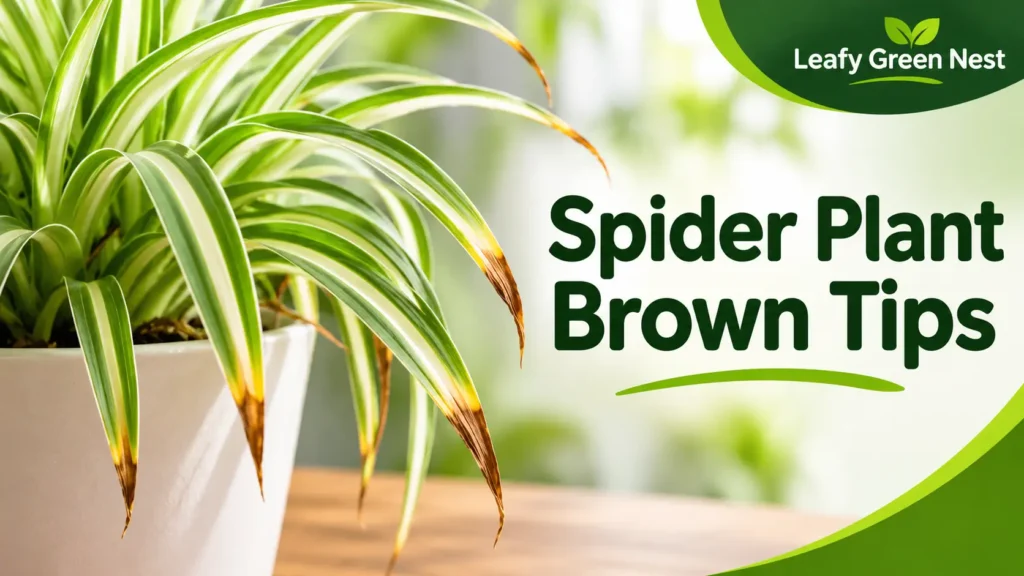
Spider plant brown tips are one of the most common problems indoor plant owners experience. They usually appear when the plant struggles with water quality, inconsistent watering, low humidity, excessive fertilizer, or unsuitable lighting.
Although brown leaf tips can make your plant look unhealthy, they do not always indicate a serious problem. Spider plants are generally resilient and can recover when you identify the cause and improve their growing conditions.
The key is to understand why the damage is happening instead of simply cutting off the brown parts. This guide explains the common causes, practical solutions, and simple care habits that help prevent brown tips from returning.
Table of Contents
Key Takeaways
- Fluoride and dissolved minerals in tap water can contribute to brown leaf tips.
- Overwatering and underwatering can both damage spider plant foliage.
- Low humidity and excessive direct sunlight may cause dry, crispy leaves.
- Too much fertilizer can create salt buildup around the roots.
- Brown leaf tissue cannot turn green again, even after correcting the problem.
- Trimming damaged tips improves appearance but does not treat the underlying cause.
- Healthy new growth is the clearest sign that your spider plant is recovering.
What Causes Spider Plant Brown Tips?
Spider plant brown tips usually develop when environmental conditions interfere with healthy water movement or damage the leaf tissue. The pattern of discoloration, soil condition, and overall appearance of the plant can help you identify the cause.
Here are seven common reasons your spider plant may develop brown, dry, or crispy leaf ends.
Tap Water and Fluoride Buildup
Water quality is one of the first things to investigate when spider plant leaves develop brown tips. Some municipal water supplies contain fluoride and dissolved minerals that sensitive plants may struggle to tolerate.
As water evaporates and the plant absorbs moisture, certain minerals and salts can accumulate in the potting mix. Over time, this buildup may damage the roots and contribute to brown leaf tips.
You may notice:
- Brown, crispy ends on otherwise green leaves.
- Similar damage appearing on several leaves.
- White mineral deposits on the soil surface or pot.
- Brown tips that continue appearing despite a reasonable watering routine.
How to fix it:
- Use clean rainwater when available.
- Try distilled water if your tap water contains excessive minerals.
- Consider reverse osmosis water.
- Use a filter that removes the specific substances causing concern.
- Flush accumulated fertilizer salts from the soil when necessary.
Leaving tap water overnight may allow some free chlorine to dissipate, but it does not reliably remove fluoride or dissolved minerals.
Underwatering and Inconsistent Watering
Spider plants have thick, fleshy roots that store water. However, these storage roots do not mean the plant can remain dry indefinitely.
When the soil becomes too dry, the leaves may lose moisture and develop brown, crispy tips. Repeated cycles of severe dryness followed by heavy watering can also stress the plant.
Signs of underwatering include:
- Dry soil that pulls away from the pot.
- Limp or slightly curled leaves.
- Crispy brown tips and edges.
- A lightweight container.
- Soil that becomes difficult to rehydrate.
How to fix it:
- Check the top inch of soil with your finger.
- If it feels dry, water the plant thoroughly.
- Allow excess water to drain through the bottom.
- Empty the saucer after watering.
- Check the soil again before watering next time.
Avoid watering according to a fixed weekly schedule. Your plant may need more frequent watering during warm weather and less during cooler months.
Overwatering and Poor Drainage
Overwatering is another common reason spider plant leaves turn yellow, develop brown edges, and eventually fall off.
When soil remains wet for too long, roots receive less oxygen. This can encourage root damage and root rot, making it difficult for the plant to absorb water and nutrients.
Watch for these warning signs:
- Soil remains wet for several days.
- Leaves become yellow and soft.
- The plant looks weak despite moist soil.
- Roots become dark, mushy, or unpleasant-smelling.
- The pot has no drainage holes.
How to fix it:
Check the roots if you suspect root rot. Healthy roots are generally firm, while rotten roots may appear dark, soft, and mushy.
Remove clearly damaged roots with clean scissors. Replace soggy soil with fresh, well-draining potting mix and use a container with drainage holes.
Do not water again until the soil has started drying appropriately.
Low Humidity Indoors
Dry indoor air can contribute to brown, crispy spider plant tips. This problem is more common in rooms with air conditioners, heaters, or strong airflow.
Spider plants tolerate average household humidity, but very dry conditions can increase moisture loss from their leaves.
To improve indoor humidity:
- Place a humidifier near the plant.
- Group several houseplants together.
- Keep the plant away from heating and cooling vents.
- Avoid placing it beside appliances that produce hot, dry air.
Misting is not a reliable long-term solution because the moisture evaporates quickly. A humidifier is generally more effective when the air remains consistently dry.
Too Much Direct Sunlight
Spider plants prefer bright, indirect sunlight rather than harsh direct exposure. Strong afternoon sunlight can scorch their narrow leaves and create brown patches or crispy edges.
If your plant sits beside a sunny window, especially one receiving intense afternoon light, move it slightly farther away or use a light curtain.
Suitable locations include:
- Near an east-facing window.
- In a bright room with filtered sunlight.
- A few feet away from a sunny south-facing window.
- Near a window that receives gentle morning light.
Avoid moving the plant suddenly from a dark corner into strong sunlight. Introduce brighter conditions gradually to reduce stress.
Excess Fertilizer and Salt Buildup
Too much fertilizer can cause soluble salts to accumulate in the potting mix. These salts can interfere with root function and contribute to brown leaf tips.
Spider plants are not heavy feeders, so frequent fertilizing is unnecessary.
Follow these guidelines:
- Use a balanced houseplant fertilizer.
- Follow the recommended dilution rate.
- Fertilize mainly during active growth in spring and summer.
- Reduce feeding during winter.
- Avoid fertilizing an already stressed plant.
If you suspect fertilizer buildup, flush the potting mix with suitable water and allow it to drain completely. For severe buildup, replacing the old soil may be a better option.
Root Crowding and Old Potting Soil
Spider plants develop thick roots that store water. As the plant grows, these roots may fill the container and leave very little space for potting mix.
Severe root crowding can make watering difficult and cause the soil to dry unusually quickly.
Look for these signs:
- Roots growing through drainage holes.
- Roots pushing the plant upward.
- Water running straight through the container.
- Very little soil remaining around the root ball.
- The plant drying out much faster than before.
If your plant is severely root-bound, move it into a pot slightly larger than its current container. Avoid choosing an excessively large pot because unused wet soil can increase the risk of root problems.
How to Get Rid of Brown Tips on Spider Plants
The best way to get rid of brown tips on spider plants is to correct the underlying cause and improve the growing conditions. Trimming damaged tissue can make the plant look better, but preventing new damage requires consistent care.
Follow this practical recovery routine:
- Check your water source: Try rainwater, distilled water, or suitable reverse osmosis water if mineral buildup is suspected.
- Inspect the soil: Make sure it is not constantly wet or completely dry.
- Improve drainage: Use a pot with drainage holes and loose potting mix.
- Adjust lighting: Place the plant in bright, indirect sunlight.
- Control humidity: Use a humidifier if your indoor air is very dry.
- Reduce fertilizer: Avoid unnecessary feeding and investigate possible salt buildup.
- Monitor new leaves: Look for healthy growth without brown tips.
Make changes based on the symptoms rather than changing everything unnecessarily.
For additional growing advice, see the University of Florida’s Spider Plant Care Guide. It provides useful information about growing conditions and general spider plant maintenance.
Should You Cut Off Brown Tips on Spider Plant?
Yes, you can cut off brown tips on spider plant leaves to improve their appearance. However, trimming does not repair damaged tissue or stop new brown tips from developing.
Use this simple method:
- Clean a pair of sharp scissors with rubbing alcohol.
- Find the dry, brown portion of the leaf.
- Trim along the natural pointed shape of the leaf.
- Leave a very thin brown edge instead of cutting into healthy green tissue.
- Remove completely dead leaves near the base when necessary.
Avoid cutting off an entire leaf when only its tip is damaged. Healthy green foliage still helps the plant produce energy through photosynthesis.
Remember that trimmed leaves will not grow back from the cut point. New leaves emerge from the center of the plant.
Spider Plant Brown Tips Turning Yellow: What Does It Mean?
Spider plant brown tips turning yellow may indicate watering problems, mineral buildup, root damage, or environmental stress. The location and texture of the discoloration can help you narrow down the cause.
Use this table to understand what your plant may be telling you.
| Leaf appearance | Possible cause | Recommended action |
|---|---|---|
| Brown, crispy tips | Mineral buildup or dry air | Check water quality and humidity |
| Yellow leaves with brown edges | Watering stress | Review soil moisture |
| Yellow lower leaves | Natural aging or root stress | Inspect roots and soil |
| Brown patches in the middle | Sun scorch | Reduce direct sunlight |
| Yellow and soft leaves | Overwatering | Improve drainage |
| Brown tips on several leaves | Fertilizer or mineral buildup | Review water and feeding habits |
Look at the entire plant before making changes. One symptom can have several possible causes, so avoid relying on leaf color alone.
Spider Plant Leaves Turning Brown at Base: Causes and Fixes
Spider plant leaves turning brown at base can indicate aging foliage, physical damage, or problems affecting the roots and crown. Soft, dark, or mushy tissue near the center requires closer inspection.
Common causes include:
- Naturally aging outer leaves.
- Excessive soil moisture.
- Poor drainage.
- Root or crown rot.
- Cold drafts or sudden temperature changes.
Healthy older leaves may gradually turn yellow and brown before drying out. This is usually normal when the rest of the plant continues producing new growth.
However, if the base becomes soft, dark, or unpleasant-smelling, inspect the roots and crown. Remove clearly rotten roots and replace wet soil with fresh, well-draining potting mix.
Avoid removing healthy leaves simply because some older foliage has changed color.
Spider Plant Leaves Turning Brown and Falling Off
Spider plant leaves turning brown and falling off can indicate more serious stress than a few dry tips. Losing an occasional older leaf is normal, but widespread leaf loss deserves attention.
Here are five possible causes:
- Overwatering: Damaged roots may cause yellowing, browning, and leaf loss.
- Severe underwatering: Extended dryness can cause leaves to wilt and eventually die.
- Temperature changes: Cold drafts and sudden temperature fluctuations can damage foliage.
- Root problems: Crowded or rotten roots may struggle to support healthy leaves.
- Pests: Spider mites and scale insects can weaken the plant.
Inspect the undersides of leaves for tiny insects, fine webbing, sticky residue, or unusual marks.
Check the soil before watering again. Adding water to an already wet pot can make root problems worse.
Spider Plant Brown Tips Indoors: How to Prevent Them
Preventing brown tips indoors is easier than repeatedly trimming damaged leaves. A consistent care routine helps spider plants maintain healthy foliage and produce fresh growth.
Use these recommended growing conditions.
| Care requirement | Recommended condition |
|---|---|
| Light | Bright, indirect sunlight |
| Watering | When the top inch of soil dries |
| Humidity | Average household humidity or higher |
| Soil | Loose, well-draining potting mix |
| Pot | Container with drainage holes |
| Fertilizer | Light feeding during active growth |
| Water quality | Suitable low-mineral water |
| Temperature | Comfortable, stable indoor conditions |
Weekly Spider Plant Care Checklist
- Check whether the top layer of soil is dry.
- Look for new brown or yellow areas.
- Check that drainage holes are clear.
- Remove fallen leaves from the soil.
- Inspect the leaves for pests.
- Keep the plant away from harsh direct sunlight.
- Make sure air vents are not blowing directly onto the foliage.
You do not need to perform every task on the same day. Regular observation is more useful than unnecessary watering or frequent repotting.
Common Mistakes That Make Spider Plant Brown Tips Worse
Some everyday plant care habits can make brown tips worse, even when the intention is to help the plant recover. Avoid these mistakes to prevent additional stress.
| Common mistake | Why it causes problems | Better approach |
|---|---|---|
| Watering too frequently | Can damage roots | Check soil before watering |
| Using unsuitable tap water | May increase mineral buildup | Try suitable low-mineral water |
| Adding extra fertilizer | Can increase salt accumulation | Follow feeding instructions |
| Keeping the plant in harsh sunlight | Can scorch leaves | Provide indirect light |
| Repeated misting | Does not maintain stable humidity | Use a humidifier |
| Cutting healthy leaves | Reduces useful foliage | Trim only damaged tissue |
| Repotting unnecessarily | Can create additional stress | Repot only when needed |
If brown tips continue appearing, investigate water quality, soil moisture, and root health before making major changes.
How Long Does It Take for Spider Plants to Recover?
A spider plant may begin producing healthier new leaves within a few weeks after you correct its growing conditions. However, recovery time depends on the severity of the damage and the condition of the roots.
Look for these signs of improvement:
- New leaves emerge without brown tips.
- Existing leaves remain firm and green.
- Yellowing and leaf drop become less frequent.
- The plant produces fresh growth from its center.
- The soil dries normally between watering sessions.
Remember that damaged leaf tissue will not become green again. Focus on the condition of new foliage rather than expecting old leaves to repair themselves.
How to Choose the Best Water for Spider Plants
Choosing suitable water can help prevent mineral buildup and recurring brown tips. The best option depends on your local tap water quality and what is available.
| Water type | Benefits | Limitations |
|---|---|---|
| Rainwater | Naturally low in many dissolved minerals | Requires safe collection and storage |
| Distilled water | Contains very few dissolved minerals | May require regular purchasing |
| Reverse osmosis water | Removes many dissolved substances | Requires filtration equipment |
| Filtered water | Convenient for regular use | Depends on the filter |
| Tap water | Affordable and accessible | May contain fluoride and mineral salts |
If your spider plant repeatedly develops brown tips despite proper care, try rainwater or distilled water. These options can help when fluoride or dissolved minerals are contributing to the problem.
How to Keep Your Spider Plant Healthy and Free of Brown Tips
Spider plant brown tips are usually manageable with consistent care and a suitable growing environment. Paying attention to water quality, drainage, sunlight, and fertilizer can prevent many recurring problems.
Start with these simple habits:
- Water only when the top inch of soil begins to dry.
- Use suitable low-mineral water when necessary.
- Keep the plant in bright, indirect light.
- Avoid excessive fertilizer.
- Use well-draining soil.
- Keep the plant away from cold drafts and heating vents.
- Remove completely dead leaves when needed.
- Monitor new growth for signs of improvement.
You do not need an expensive plant care routine to keep a spider plant healthy. Small, consistent adjustments are usually enough to support strong roots and attractive green foliage.
Keep Your Spider Plant Green With Simple Care
Spider plant brown tips are usually a sign of environmental stress rather than a serious disease. Water quality, inconsistent watering, low humidity, excessive fertilizer, and strong direct sunlight are among the most common contributing factors.
Start by checking your water source and soil moisture. Give your plant bright, indirect light, use well-draining soil, and avoid unnecessary fertilizer.
You can trim brown tips with clean scissors to improve the plant’s appearance, but remember that damaged tissue will not turn green again.
Most importantly, pay attention to new growth. If fresh leaves emerge healthy and green, your spider plant is likely responding well to the changes.
Frequently Asked Questions About Spider Plant Brown Tips
What Is the Fastest Way to Fix Brown Tips on a Spider Plant?
Check soil moisture, improve water quality, and move the plant into bright indirect light. Trim existing brown tissue with clean scissors, but correct the underlying problem to prevent further damage.
Is It Normal for Spider Plants to Have Brown Tips?
Yes. Brown tips are common in spider plants, even when the rest of the plant looks healthy. Water quality, inconsistent watering, low humidity, and fertilizer buildup are frequent contributing factors.
Can Brown Spider Plant Tips Turn Green Again?
No. Once leaf tissue becomes dry and brown, it cannot recover. However, correcting the growing conditions can help new leaves develop without brown tips.
Should I Repot My Spider Plant When Its Leaves Turn Brown?
Not necessarily. Repotting is helpful when the plant is severely root-bound, the potting soil has deteriorated, or root rot is present. Unnecessary repotting can create additional stress.
Why Do Spider Plant Tips Turn Brown After Watering?
Brown tips after watering may indicate mineral buildup, unsuitable water quality, or damaged roots. Check whether the water contains excessive minerals and make sure the pot drains properly.
Does Misting Help Prevent Brown Tips on Spider Plants?
Misting provides temporary moisture but does not reliably maintain humidity around the plant. A humidifier or grouping several houseplants together is generally more effective for maintaining stable humidity.