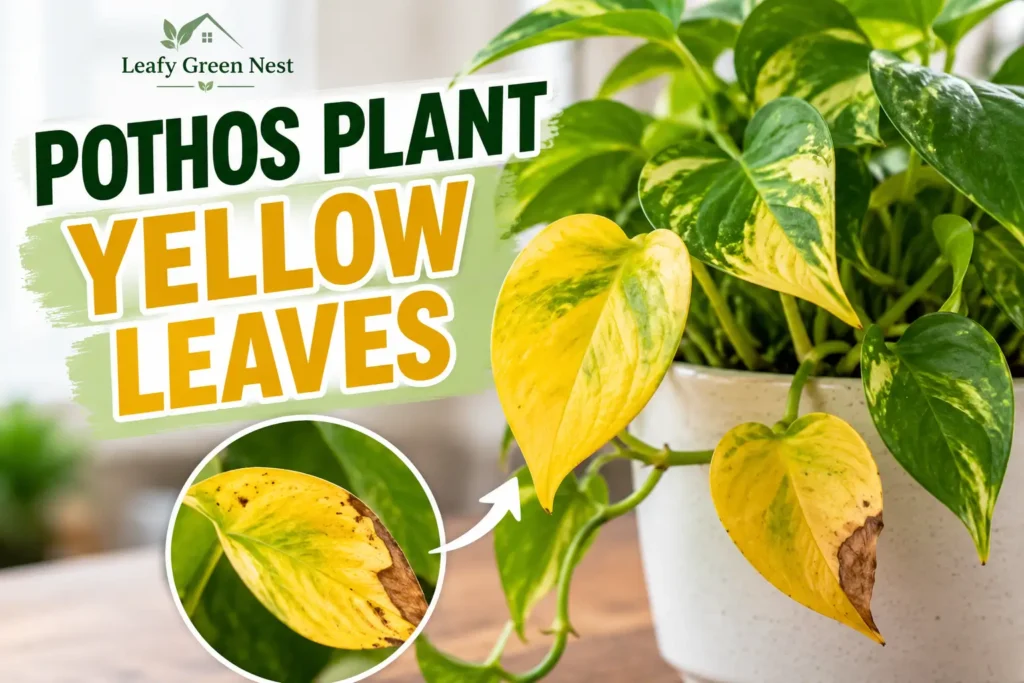
Have you noticed your plant’s green leaves slowly turning yellow? If you are wondering why are my plant leaves turning yellow, the cause could be overwatering, poor drainage, insufficient sunlight, or a lack of essential nutrients.
Yellow leaves are one of the most common signs of plant stress. However, not every yellow leaf means your plant is dying. Sometimes, it is simply part of the plant’s natural growth cycle.
The important thing is to identify the pattern of yellowing and understand what your plant needs. A few simple changes to watering, lighting, or soil conditions can often help a struggling plant recover.
Table of Contents
What Is Leaf Yellowing in Plants?
Leaf yellowing, also called chlorosis, occurs when leaves lose some or most of their natural green color because chlorophyll levels decrease. Chlorophyll is the green pigment plants use to absorb sunlight and produce energy through photosynthesis.
Yellowing can affect older leaves, new growth, leaf edges, or the entire plant. Its appearance can provide useful clues about the underlying problem.
Common causes include:
- Too much or too little water.
- Nitrogen, iron, or magnesium deficiency.
- Poor soil drainage.
- Insufficient or excessive sunlight.
- Pest infestations.
- Temperature changes.
- Natural leaf aging.
For example, yellow older leaves may indicate nitrogen deficiency, while young leaves with green veins can suggest iron deficiency. However, similar symptoms can also result from damaged roots.
Why Are My Plant Leaves Turning Yellow? Common Causes
Plant leaves turn yellow when their growing conditions prevent them from maintaining healthy leaf tissue. Watering problems, nutrient deficiencies, and environmental stress are among the most common causes.
Understanding the differences between these problems will help you choose the right treatment instead of making unnecessary changes to your plant care routine.
Overwatering Your Plant
Overwatering is one of the leading reasons for yellow leaves, especially in indoor plants. When soil remains wet for too long, roots receive less oxygen and may begin to rot.
Damaged roots struggle to absorb water and nutrients. As a result, leaves can become yellow, soft, and eventually fall off.
Signs of overwatering:
- Yellow leaves that feel soft or limp.
- Soil that remains wet for several days.
- Dark, mushy roots.
- Unpleasant smells coming from the soil.
- Several leaves turning yellow together.
How to fix it:
- Check soil moisture before watering again.
- Allow the growing medium to dry according to the plant’s needs.
- Make sure the pot has drainage holes.
- Empty excess water from the saucer.
- Inspect roots if yellowing continues.
If root rot has developed, remove severely damaged roots with clean scissors and repot the plant in fresh, well-draining soil.
Expert tip: Do not water every plant on the same schedule. A pothos, peace lily, and snake plant have different moisture requirements.
Underwatering Your Plant
Underwatering can also explain why plant leaves turn yellow. When a plant does not receive enough water, its roots cannot supply sufficient moisture to the leaves.
The leaves may become yellow, wilted, dry, and crispy. Unlike overwatered plants, underwatered plants usually have dry soil and brittle foliage.
Signs of underwatering:
- Soil feels dry several centimeters below the surface.
- Leaves develop crispy brown edges.
- Stems and foliage begin drooping.
- Soil pulls away from the sides of the pot.
- Leaves become dry and brittle.
How to fix it:
Water the plant thoroughly and allow excess water to drain. If the soil has become extremely dry, water slowly in several passes so the growing medium can absorb moisture.
Check the soil again before watering next time. Remember that both overwatering and underwatering can cause yellow leaves, so always inspect the soil before changing your routine.
Nutrient Deficiency and Yellowing of Leaves
Yellowing of leaves is due to deficiency of essential nutrients in some cases. Plants need nitrogen, iron, magnesium, potassium, and other nutrients to maintain healthy foliage and normal growth.
When nutrients are unavailable or roots cannot absorb them properly, leaves may become pale or develop yellow patches.
| Nutrient | Common symptoms |
|---|---|
| Nitrogen | Older leaves turn uniformly yellow |
| Iron | Young leaves turn yellow while veins remain green |
| Magnesium | Yellow patches develop between veins on older leaves |
| Potassium | Leaf edges become yellow and may turn brown |
| Manganese | Yellow areas develop between veins, often on younger growth |
Nitrogen deficiency: Nitrogen supports healthy foliage and chlorophyll production. When it is limited, older leaves often turn uniformly yellow and plant growth slows.
Iron deficiency: Iron helps plants produce chlorophyll. A shortage often causes young leaves to turn yellow while their veins remain green. High soil pH and unhealthy roots can make iron harder for plants to absorb.
Magnesium deficiency: Magnesium is part of the chlorophyll molecule. A deficiency often creates yellow areas between the veins of older leaves.
How to fix nutrient deficiencies:
- Check the plant’s growing conditions.
- Use a suitable fertilizer when a deficiency is likely.
- Check soil pH if iron deficiency is suspected.
- Improve drainage and root health.
- Avoid excessive fertilizer applications.
Do not automatically fertilize a plant whenever its leaves turn yellow. Too much fertilizer can damage roots and increase salt buildup in the soil.
Insufficient Sunlight and Yellow Plant Leaves
Plants need sufficient light to carry out photosynthesis and produce energy. When a plant receives less light than it needs, growth may slow down and foliage can become pale or yellow.
This problem is common with indoor plants placed in dark corners or rooms with limited natural light.
Common signs include:
- Pale green or yellow leaves.
- Slow growth.
- Long, weak stems.
- Smaller new leaves.
- Lower leaves gradually dropping off.
Move the plant to a brighter location that matches its lighting requirements. Some plants prefer bright, indirect light, while others can tolerate direct sunlight.
If natural light is limited, consider using a suitable grow light.
Excessive Direct Sunlight
Too much direct sunlight can damage sensitive plant leaves. Strong afternoon sunlight may cause yellow patches, dry edges, and brown, scorched areas.
This often happens when indoor plants are suddenly moved outdoors or placed beside a hot window.
How to fix it:
- Move sensitive plants away from harsh afternoon sunlight.
- Use a sheer curtain to filter strong sunlight.
- Choose a location with suitable indirect light.
- Introduce plants to stronger sunlight gradually.
Remember that more sunlight is not always better. Match light exposure to the specific plant species.
Poor Soil Drainage and Root Problems
Poor drainage can cause yellow leaves even when you follow a reasonable watering routine. When water becomes trapped around the roots, oxygen levels decrease and root rot may develop.
Damaged roots cannot absorb enough water and nutrients, which affects the entire plant.
Signs of root problems:
- Yellow leaves across the plant.
- Persistent wilting.
- Slow or stunted growth.
- Soil that stays wet for too long.
- Dark, soft, or unpleasant-smelling roots.
Check the roots if the plant continues to decline. Remove severely rotten sections and repot using fresh soil suitable for the plant species.
Choose a pot with drainage holes and avoid leaving the plant sitting in excess water.
Indoor Plant Leaves Turning Yellow: Common Problems
Indoor plant leaves turning yellow is often related to watering mistakes, poor lighting, limited airflow, or nutrient problems. Indoor growing conditions can change throughout the year, affecting how quickly soil dries.
Some common problems include:
- Limited natural light: Plants placed far from windows may not receive enough light.
- Excessive watering: Indoor pots may take longer to dry because of limited airflow.
- Low humidity: Dry indoor air can cause brown or yellow leaf tips.
- Mineral buildup: Mineral-rich water can leave salts in the growing medium.
- Root-bound plants: Crowded roots may struggle to absorb water and nutrients.
For example, a peace lily may develop yellow leaves when its watering conditions are unsuitable. A snake plant may develop similar symptoms when its soil remains wet for too long.
To keep indoor plants healthy, choose suitable locations, check soil moisture regularly, and use containers with proper drainage.
Plant Leaves Turning Yellow at Tips: What It Means
Plant leaves turning yellow at tips can indicate inconsistent watering, low humidity, excessive fertilizer, or mineral buildup in the soil. The appearance of the tips can help you narrow down the possible cause.
| Leaf appearance | Possible cause |
|---|---|
| Yellow tips with soft leaves | Root stress or overwatering |
| Yellow and crispy tips | Underwatering or low humidity |
| Brown tips with white soil deposits | Mineral or fertilizer salt buildup |
| Yellow tips with pale foliage | Possible nutrient deficiency |
| Damaged tips after outdoor exposure | Sun or temperature stress |
Start by checking soil moisture. If it stays wet, review your watering habits. If it is extremely dry, water the plant thoroughly.
Also inspect the soil for white deposits and avoid applying extra fertilizer without identifying the problem.
For additional practical advice, the University of California Agriculture and Natural Resources provides a useful guide to common houseplant problems, including watering, root health, pests, and environmental stress.
Why Are My Plant Leaves Turning Yellow and Brown?
Yellow and brown leaves usually indicate that the plant is experiencing stress that affects healthy leaf tissue. Yellow areas often show chlorophyll loss, while brown areas usually represent damaged or dead tissue.
Common causes include:
- Overwatering and root rot.
- Underwatering and dehydration.
- Excessive direct sunlight.
- Fertilizer burn.
- Poor water quality.
- Low humidity.
- Pest damage.
For example, yellow leaves with crispy brown edges and dry soil may indicate underwatering. However, yellow, soft leaves with constantly wet soil may suggest overwatering or root damage.
Look at the entire plant rather than focusing on one symptom. The combination of soil moisture, leaf texture, and growing conditions provides a better diagnosis.
Plant Leaves Turning Yellow and Dropping Off
Plant leaves turning yellow and dropping off can happen because of watering problems, temperature changes, low light, pests, or natural aging. A few older leaves falling off is usually normal.
However, sudden or widespread leaf drop deserves attention.
Look for these warning signs:
- Wet soil and soft leaves may indicate overwatering.
- Dry soil and drooping leaves may indicate underwatering.
- Sudden leaf drop after moving may indicate environmental stress.
- Yellow lower leaves may indicate natural aging or insufficient light.
- Yellow leaves with tiny spots may indicate pest damage.
For example, a pothos may lose older lower leaves naturally as it grows. However, if several leaves turn yellow within a short period, check its soil moisture and root health.
My Plant Leaves Are Turning Yellow: What Should I Do?
If your plant leaves are turning yellow, start by identifying the underlying cause before changing your care routine. A few simple checks can help you avoid unnecessary treatments and further damage.
Check the soil moisture
Insert your finger into the soil to determine whether it is wet, slightly moist, or dry. A moisture meter can also help if you find it difficult to judge soil moisture.
Inspect the roots
If the plant continues to decline, carefully remove it from its pot. Healthy roots are generally firm, while rotten roots are often dark, soft, and unpleasant-smelling.
Check the lighting
Make sure the plant receives the correct amount of sunlight. Move it gradually if its current location is unsuitable.
Look for nutrient deficiencies
Examine which leaves are turning yellow. Older leaves turning uniformly yellow may suggest nitrogen deficiency, while young leaves with green veins may indicate iron deficiency.
Inspect for pests
Check the undersides of leaves, stems, and new growth for spider mites, aphids, mealybugs, and other insects.
Check drainage
Make sure the container has drainage holes and that water does not remain trapped at the bottom.
Monitor new growth
After correcting the problem, watch for healthy new leaves. Existing yellow leaves may not turn green again, even when the plant starts recovering.
Common Mistakes to Avoid When Treating Yellow Leaves
Many plant owners accidentally make yellowing worse by trying too many solutions at once. Avoid these common mistakes when caring for an unhealthy plant.
- Watering more frequently: Yellow leaves do not always mean the plant needs more water.
- Adding fertilizer immediately: Nutrient deficiency is only one possible cause.
- Moving the plant repeatedly: Frequent environmental changes can create additional stress.
- Removing every yellow leaf: A few older leaves may be part of natural aging.
- Ignoring drainage: Excess water needs a way to escape.
- Using random home remedies: Unverified treatments can damage leaves and roots.
- Expecting instant recovery: A plant may need several weeks to show healthy new growth.
Finding and correcting the underlying cause is more effective than treating symptoms alone.
How to Prevent Yellow Leaves on Plants
Preventing yellow leaves is easier than trying to revive a severely damaged plant. Consistent care, suitable growing conditions, and regular inspections can help keep plants healthy.
Follow these simple plant care practices:
- Choose plants that suit your indoor or outdoor environment.
- Learn each plant’s sunlight requirements.
- Check soil moisture before watering.
- Use containers with drainage holes.
- Select suitable potting soil.
- Avoid excessive fertilizer.
- Inspect leaves regularly for pests.
- Keep sensitive plants away from harsh drafts.
- Repot when roots become severely crowded or the growing medium deteriorates.
- Remove fully dead leaves when necessary.
Remember that watering, sunlight, and nutrient requirements change with the seasons. Adjust your plant care routine as growing conditions change.
Expert Tips for Diagnosing Yellow Leaves
Understanding the pattern of yellowing can help you identify plant problems more accurately. Instead of treating every yellow leaf the same way, consider these practical observations.
- Check which leaves turn yellow first: Older and younger leaves can show different nutrient deficiency patterns.
- Look at the soil: Soil moisture often provides better clues than leaf color alone.
- Examine the pattern: Yellow edges, yellow tips, and yellow areas between veins can suggest different problems.
- Inspect the roots: Root damage can cause several symptoms at once.
- Consider recent changes: Think about whether you moved the plant, changed its watering routine, repotted it, or applied fertilizer.
- Observe new growth: Healthy new leaves are a useful sign that growing conditions are improving.
Avoid treating symptoms without identifying the cause. Your plant is more likely to recover when you correct the conditions responsible for the damage.
Keep Plant Leaves Healthy Through Consistent, Informed Care
Yellow leaves are a symptom rather than a problem itself. Overwatering, underwatering, nutrient deficiencies, poor drainage, insufficient sunlight, and pests are common causes.
Start by checking the soil moisture, examining the roots, and looking for changes in lighting or temperature. Avoid adding fertilizer or changing your watering routine without identifying the likely cause.
With proper diagnosis and consistent care, many plants can recover and produce healthy new leaves. A few yellow leaves are not always a sign of trouble, so pay attention to the overall health of your plant.
Frequently Asked Questions About Yellow Plant Leaves
Why are my plant leaves turning yellow all of a sudden?
Sudden yellowing can result from overwatering, temperature changes, root damage, excessive sunlight, or pest infestations. Check soil moisture first.
Is yellowing of leaves due to deficiency of water?
Yes. Underwatering can cause yellow leaves, wilting, and crispy edges. However, overwatering can produce similar symptoms, so check the soil.
Can yellow plant leaves turn green again?
Completely yellow leaves usually do not turn green again. Correct the underlying problem to encourage healthy new leaves.
Should I remove yellow leaves from my plant?
Remove completely yellow, dead, or damaged leaves using clean scissors. Leave partially green leaves unless they show signs of disease.
Why are my indoor plant leaves turning yellow and brown?
Indoor plant leaves may turn yellow and brown because of overwatering, underwatering, low humidity, excessive sunlight, or nutrient deficiencies.
Does overwatering cause plant leaves to turn yellow and fall off?
Yes. Excess water reduces oxygen around the roots and can cause root rot, yellow leaves, wilting, and eventual leaf drop.