
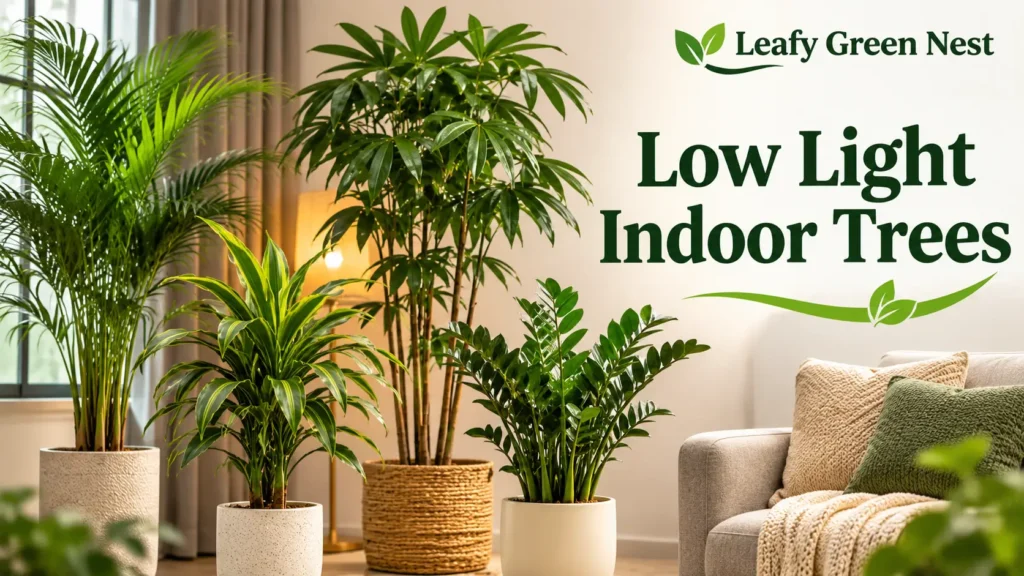
Low light indoor trees are houseplants with tree-like shapes that can grow in rooms with limited natural sunlight. They are ideal for apartments, offices, bedrooms, and living rooms that receive indirect light rather than strong direct sunshine.
These plants come in different sizes, shapes, and colors. Some grow into tall indoor trees with woody stems, while others feature attractive palm-like leaves that bring a tropical feel to your home.
Popular choices include lady palms, parlor palms, cast iron plants, and certain dracaena varieties. They are generally easier to maintain in shaded spaces than plants that require several hours of direct sunlight.
However, low light does not mean complete darkness. Every living plant needs some natural or artificial light to produce energy and maintain healthy growth.
Table of Contents
Key Takeaways
Choosing the right indoor tree depends on your room’s lighting, available space, and maintenance preferences. These recommendations can help you find a plant that suits your home.
- Best overall: Lady palm for tall, elegant greenery.
- Best for beginners: Cast iron plant for its excellent shade tolerance.
- Best small indoor tree: Parlor palm for apartments and compact rooms.
- Best tall option: Kentia palm for spacious living areas.
- Best pet-friendly choices: Lady palm, parlor palm, and cast iron plant.
- Best low-maintenance option: ZZ plant, provided pets cannot reach it.
- Best for dark rooms: Cast iron plant and parlor palm.
- Important care tip: Check soil moisture before watering because low-light plants often use less water.
Best Low Light Indoor Trees for Your Home
The best low light indoor trees combine attractive foliage with the ability to tolerate limited natural sunlight. The following plants offer different sizes and appearances, making it easier to find the right match for your space.
Lady Palm (Rhapis excelsa)
The lady palm is one of the best choices for people who want a tall indoor tree that tolerates shaded conditions. Its upright stems and fan-shaped leaves create an elegant tropical appearance.
It grows slowly and adapts well to indoor environments with filtered light. Its mature size makes it suitable for living rooms, offices, and empty corners.
Care requirements:
- Light: Low to medium indirect light.
- Water: Water when the upper soil begins to dry.
- Height: Approximately 6–10 feet indoors.
- Maintenance: Low to moderate.
- Pet safety: Generally considered non-toxic to dogs and cats.
Expert tip: Choose solid-green varieties for darker rooms. They are generally better suited to lower light than heavily variegated varieties.
Parlor Palm (Chamaedorea elegans)
The parlor palm is one of the most popular low light indoor plants for apartments and smaller rooms. Its delicate, feather-like leaves and slender stems create a soft, natural appearance.
Unlike many tropical palms, it tolerates lower indoor light and does not require direct sunlight. It is also a good option for beginners who want attractive greenery without complicated care.
Care requirements:
- Light: Low to medium indirect light.
- Water: Allow the upper soil layer to begin drying.
- Height: Approximately 2–5 feet indoors.
- Maintenance: Low.
- Pet safety: Non-toxic to dogs and cats.
Expert tip: Keep the plant away from heating systems, air conditioners, and cold drafts.
Cast Iron Plant (Aspidistra elatior)
The cast iron plant is one of the toughest indoor plants for shaded locations. Its long, dark-green leaves grow directly from the soil and create a full, structured appearance.
Although it does not resemble a traditional tree, its upright foliage makes it an excellent alternative for rooms with limited sunlight. It is especially suitable for beginners and people who prefer low-maintenance plants.
Care requirements:
- Light: Low to medium indirect light.
- Water: Allow the soil to partially dry.
- Height: Approximately 1–3 feet.
- Maintenance: Very low.
- Pet safety: Generally considered non-toxic to dogs and cats.
Expert tip: Avoid frequent watering. The cast iron plant handles slightly dry soil better than constantly wet roots.
Corn Plant (Dracaena fragrans)
The corn plant is a popular indoor tree with a thick, woody stem and long, arching leaves. It can add height and greenery to living rooms, offices, and larger bedrooms.
Some varieties have yellow or cream-colored stripes, while others feature solid-green foliage. Green varieties are generally a better choice for lower-light rooms.
Care requirements:
- Light: Low to medium indirect light.
- Water: Allow the upper soil to dry between watering.
- Height: Approximately 4–8 feet indoors.
- Maintenance: Low.
- Pet safety: Toxic to dogs and cats.
Expert tip: Provide some indirect light to prevent weak growth. Avoid placing the plant in a completely dark corner.
Kentia Palm (Howea forsteriana)
The Kentia palm is an excellent choice for people who want a large indoor tree with graceful, arching leaves. Its elegant appearance makes it suitable for spacious living rooms, offices, and entryways.
It grows slowly and can tolerate lower indoor light better than many other large palms. However, it generally performs best with moderate indirect sunlight.
Care requirements:
- Light: Low to medium indirect light.
- Water: Water when the upper soil begins to dry.
- Height: Approximately 6–10 feet or more indoors.
- Maintenance: Moderate.
- Pet safety: Generally considered non-toxic to dogs and cats.
Expert tip: Give the leaves enough room to spread naturally and avoid placing the plant in narrow spaces.
Janet Craig Dracaena (Dracaena fragrans ‘Janet Craig’)
Janet Craig dracaena is a beautiful indoor plant with thick stems and glossy, dark-green leaves. Its upright growth makes it suitable for modern homes and professional spaces.
It tolerates lower light better than many decorative foliage plants. However, it still needs some natural or artificial light to maintain healthy growth.
Care requirements:
- Light: Low to medium indirect light.
- Water: Allow the upper soil to dry slightly.
- Height: Approximately 3–6 feet, depending on the variety.
- Maintenance: Low.
- Pet safety: Toxic to dogs and cats.
Expert tip: Avoid overwatering because constantly wet soil can cause root problems.
Bamboo Palm (Chamaedorea seifrizii)
The bamboo palm is a good option for adding tropical greenery to shaded indoor spaces. Its multiple slender stems resemble bamboo canes, while its soft leaves create a full appearance.
It works well in larger bedrooms, living rooms, and offices. It can tolerate lower light but generally grows better with moderate indirect sunlight.
Care requirements:
- Light: Low to medium indirect light.
- Water: Keep the soil lightly moist without waterlogging.
- Height: Approximately 4–8 feet indoors.
- Maintenance: Moderate.
- Pet safety: Generally considered non-toxic to dogs and cats.
Expert tip: Maintain moderate humidity and protect the plant from dry indoor drafts.
ZZ Plant (Zamioculcas zamiifolia)
The ZZ plant is one of the easiest low-light houseplants to maintain. Its thick stems and glossy leaves create an attractive, upright appearance.
It stores water in underground rhizomes, allowing it to tolerate periods without watering. Although it is not a traditional indoor tree, a mature ZZ plant can create a similar decorative effect.
Care requirements:
- Light: Low to bright indirect light.
- Water: Allow the soil to dry substantially before watering.
- Height: Approximately 2–4 feet.
- Maintenance: Very low.
- Pet safety: Toxic if ingested by dogs and cats.
Expert tip: Never water automatically every week. Check the soil first, especially during cooler months.
Tall Indoor Trees Low Light: Best Choices for Large Spaces
Tall indoor trees low light conditions can transform empty corners into attractive green spaces. However, not every large houseplant can maintain healthy growth in a shaded room.
Lady palms and Kentia palms are excellent choices for larger spaces. Corn plants and Janet Craig dracaena can also work when some indirect light is available.
| Plant | Approximate height | Light requirements |
|---|---|---|
| Lady palm | 6–10 feet | Low to medium |
| Kentia palm | 6–10 feet or more | Low to medium |
| Corn plant | 4–8 feet | Low to medium |
| Bamboo palm | 4–8 feet | Low to medium |
| Money tree | 4–8 feet | Medium to bright |
| Rubber plant | 4–8 feet | Medium to bright |
Choose a plant based on its light requirements and mature size rather than appearance alone.
Low Light Indoor Trees Safe for Dogs
Pet safety should be a priority when choosing indoor plants. Some popular houseplants contain substances that can cause vomiting, irritation, or other symptoms if dogs chew their leaves.
The following plants are generally considered non-toxic to dogs and cats:
- Lady palm.
- Parlor palm.
- Cast iron plant.
- Bamboo palm.
- Kentia palm.
- Ponytail palm.
- Money tree.
Avoid placing dracaena, ZZ plants, snake plants, and rubber plants where pets can chew them.
Remember that non-toxic does not mean edible. Eating large amounts of plant material can still cause digestive discomfort.
Always confirm the botanical name before purchasing because common plant names can refer to different species.
Low Light Indoor Trees No Light: Can They Survive?
Low light indoor trees no light conditions are a common concern for people decorating windowless offices, bathrooms, and interior rooms. The important difference is that low light means limited sunlight, while no light means complete darkness.
No living indoor tree can survive permanently without light because plants need it for photosynthesis. However, you can grow indoor trees in windowless rooms by using suitable artificial lighting.
Consider these practical tips:
- Choose a full-spectrum LED grow light designed for indoor plants.
- Position the light according to the manufacturer’s instructions.
- Use a timer to maintain consistent daily exposure.
- Monitor leaves for pale color and weak, stretched growth.
- Adjust lighting according to the plant species.
For more information, read this related guide from the University of Minnesota Extension: Lighting for Indoor Plants.
Medium Light Indoor Trees: Which Plants Should You Choose?
Medium light indoor trees offer more choices for people whose rooms receive filtered daylight or indirect sunlight for several hours. These plants generally grow better near windows without exposure to harsh direct sunlight.
Good options include:
- Money tree.
- Rubber plant.
- Ponytail palm.
- Corn plant.
- Bamboo palm.
- Kentia palm.
If your room receives moderate natural light, you can choose from a wider range of large indoor trees and decorative foliage plants.
Large Indoor Trees for Living Rooms and Offices
Large indoor trees add height, texture, and visual interest to spacious rooms. They can make plain interiors feel more welcoming while creating a natural focal point.
Lady palms and Kentia palms are suitable for shaded living rooms. Rubber plants and money trees are better choices for brighter areas.
Before purchasing, consider mature height, leaf spread, pot size, and watering needs. A plant that looks small in a nursery may eventually require considerable floor space.
Low Light Indoor Trees for Sale: What to Check Before Buying
Finding low light indoor trees for sale is easy at garden centers, local nurseries, and online plant stores. However, checking the plant’s actual condition and botanical name is more important than choosing the cheapest option.
Before purchasing, check:
- Plant identification: Confirm the botanical name.
- Foliage condition: Look for healthy leaves without widespread yellowing or brown patches.
- Root health: Avoid plants with rotten or unpleasant-smelling roots.
- Plant size: Check the actual height and mature growth potential.
- Light requirements: Confirm that the variety suits your room.
- Pet safety: Verify whether the plant is toxic to household animals.
For buyers in Pakistan, local nurseries can be useful because you can inspect plants before purchasing. Ask whether the plant was grown in shade or bright sunlight, as sudden changes in lighting can cause stress.
How to Care for Low Light Indoor Trees
Low-light plants usually grow more slowly and use less water than plants receiving bright sunlight. Their care routine should reflect these differences.
Water carefully: Check soil moisture before watering. Avoid keeping the roots constantly wet.
Choose suitable pots: Use containers with drainage holes to prevent water buildup.
Clean the leaves: Remove dust with a soft, damp cloth so foliage can receive available light.
Rotate the plants: Turn pots occasionally to encourage balanced growth.
Fertilize lightly: Use balanced houseplant fertilizer during active growth and avoid excessive feeding.
Maintain stable temperatures: Keep plants away from heaters, air conditioners, and cold drafts.
Watch for pests: Inspect leaves regularly for spider mites, scale insects, and other common indoor pests.
Common Mistakes When Growing Low Light Indoor Trees
Even shade-tolerant plants can struggle when their growing conditions are unsuitable. Avoiding these common mistakes can help maintain healthy foliage and prevent unnecessary plant damage.
| Common mistake | Why it causes problems | Better solution |
|---|---|---|
| Keeping plants in complete darkness | Plants cannot photosynthesize | Use grow lights |
| Watering too frequently | Soil stays wet for longer | Check soil moisture |
| Choosing plants based only on appearance | Some need brighter conditions | Check light requirements |
| Using pots without drainage | Excess water damages roots | Choose pots with drainage |
| Ignoring yellow leaves | May indicate plant stress | Check soil and lighting |
| Overfertilizing | Can damage roots | Feed appropriately |
Which Low Light Indoor Trees Are Best for Your Home?
The best low light indoor trees depend on your room’s lighting, available space, and maintenance preferences. Lady palms and Kentia palms are excellent choices for tall greenery, while parlor palms and cast iron plants work well in smaller or more shaded spaces.
If you have pets, prioritize plants generally considered non-toxic to dogs and cats, and verify their botanical names before purchasing. Remember that low light does not mean no light, so provide suitable natural or artificial lighting, avoid overwatering, and choose plants that match your home’s conditions.
Frequently Asked Questions About Low Light Indoor Trees
What are the best low light indoor trees?
Lady palms, parlor palms, Kentia palms, and Janet Craig dracaenas are good choices. They can tolerate lower indoor light better than many other tree-like plants.
Can low light indoor trees survive without sunlight?
Some can survive in rooms with limited natural light, but no plant can grow well with absolutely no light. Use a suitable grow light in windowless rooms.
Are low light indoor trees safe for dogs?
Some are pet-friendly, including parlor palms, lady palms, and bamboo palms. Avoid toxic options such as dracaenas and ZZ plants if pets may chew them.
How often should I water low light indoor trees?
Watering needs depend on the plant, pot, and room conditions. Check the soil first and water when the top layer has dried to the level recommended for that species.
Which tall indoor trees grow well in low light?
Kentia palms, lady palms, and some dracaena varieties can work in lower-light rooms. Their growth may be slower than it would be in brighter conditions.
Can I grow large indoor trees in medium light?
Yes. Some large indoor plants can grow in medium indirect light. Choose a species suited to your space and rotate the pot occasionally for even growth.


