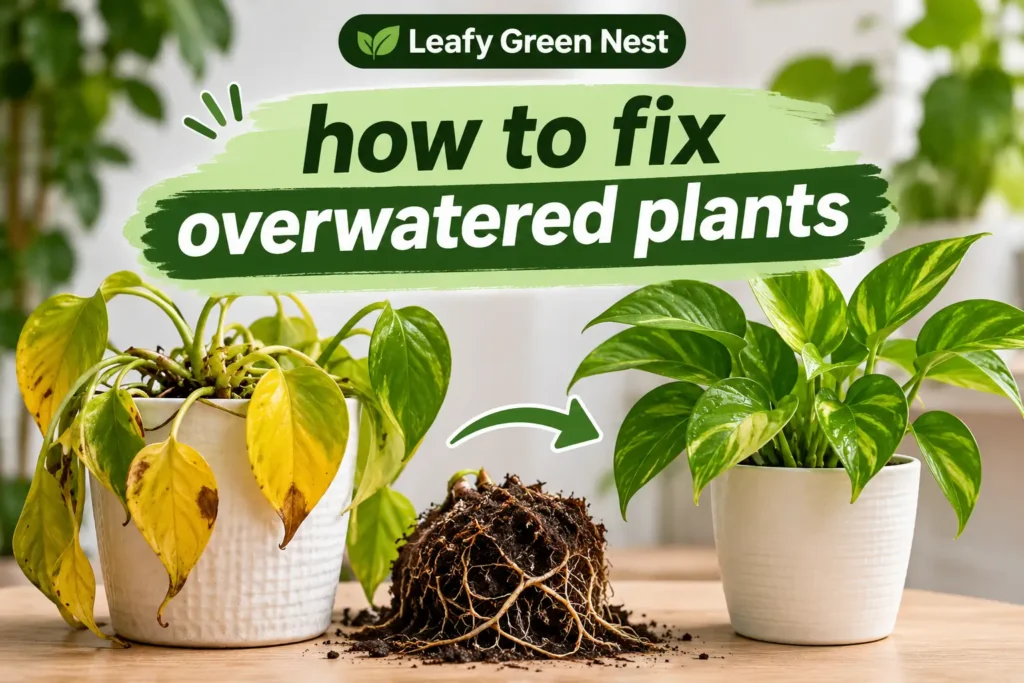
Overwatering is one of the most common reasons houseplants develop yellow leaves, drooping stems, and damaged roots. Learning how to fix overwatered plants can help you save struggling greenery before the damage becomes severe.
The good news is that many overwatered plants can recover with the right treatment. You need to understand why the roots are struggling, remove excess moisture, and create better growing conditions.
Table of Contents
What Is an Overwatered Plant?
An overwatered plant receives more water than its roots can use or its growing environment can drain. When soil stays saturated, water replaces the air spaces that roots need to absorb oxygen.
Without enough oxygen, roots become weak and may start to rot. Damaged roots cannot absorb water and nutrients properly, which explains why an overwatered plant can look thirsty even when its soil is wet.
Overwatering can affect almost any plant, including:
- Indoor houseplants such as pothos and peace lilies.
- Succulents and cacti.
- Outdoor flowers and garden vegetables.
- Tropical plants grown in containers.
- Plants growing in water under unsuitable conditions.
The main problem is not simply the amount of water you give a plant. It is how long the roots remain exposed to excessive moisture.
What Does an Overwatered Plant Look Like?
An overwatered plant often develops yellow leaves, soft stems, drooping foliage, and unhealthy roots. These symptoms can appear gradually or become noticeable after several days of excessive watering.
Look for these common warning signs before deciding how to treat your plant.
- Yellow leaves: Leaves may turn yellow because damaged roots struggle to supply nutrients and moisture.
- Drooping foliage: The plant may wilt even though the soil feels wet.
- Soft leaves: Some leaves become unusually soft, swollen, or mushy.
- Brown or black roots: Rotten roots may become dark, slimy, and unpleasant-smelling.
- Fungus gnats: Small black flies around the soil can indicate consistently damp growing conditions.
- Leaf drop: Healthy-looking leaves may begin falling as root damage progresses.
- Slow growth: The plant may stop producing new leaves or show very little development.
Not every yellow leaf means overwatering. Natural aging, insufficient light, pests, and nutrient problems can produce similar symptoms.
Check the soil and roots before making changes to your watering routine.
How to Tell If a Plant Is Overwatered or Underwatered
Overwatered and underwatered plants can both develop yellow leaves and drooping foliage. The easiest way to distinguish them is to examine soil moisture, leaf texture, and root condition.
| Signs | Overwatered Plant | Underwatered Plant |
|---|---|---|
| Soil | Wet or soggy | Dry |
| Leaves | Soft or yellow | Dry or crispy |
| Stems | May become soft | Often dry or limp |
| Roots | May be mushy | Often dry or shriveled |
| Pot weight | Usually heavy | Usually light |
| Soil smell | May smell sour | Usually normal |
| Recovery | Needs better drainage | Needs appropriate watering |
Use the finger test to check the soil. Push your finger about one or two inches below the surface and feel for moisture.
For larger containers, use a wooden stick to check deeper into the root zone. You can also lift the pot to understand how heavy it feels when wet compared with when it dries.
Remember that different plants have different watering requirements. A succulent should dry out more between waterings than many tropical houseplants.
How to Fix Overwatered Plants in Pots
Potted plants are especially vulnerable to overwatering because excess moisture can become trapped inside containers. The best treatment depends on whether the roots are healthy or already showing signs of rot.
Stop Watering Immediately
Stop adding water as soon as you suspect overwatering. Allow the existing moisture to decrease before watering again.
Do not follow your regular watering schedule while the soil remains wet. Check the growing medium instead.
A plant that needs water today may not need it tomorrow, especially during cooler weather or slower growth periods.
Remove Standing Water
Check the saucer beneath the pot and remove any collected water. If your plant sits inside a decorative outer container, take out the nursery pot and let it drain separately.
Roots should never remain submerged in standing water unless the plant is specifically adapted to aquatic conditions.
Check the Drainage Holes
Look underneath the container to make sure the drainage holes are open. Compacted soil, roots, and debris can sometimes block them.
Clear any blockage carefully without damaging the root system. If your container has no drainage holes, consider transferring the plant into a suitable pot.
Allow the Soil to Dry Naturally
If the roots are healthy and the plant is not severely damaged, you may be able to save it without repotting.
Place the plant in an area with suitable light and gentle air circulation. Avoid intense direct sunlight because it can add stress to an already struggling plant.
Allow the growing medium to dry to the moisture level preferred by that particular species.
Inspect the Roots for Damage
If the plant continues to decline, or the soil smells sour or rotten, inspect the roots.
Carefully remove the plant from its container and examine the root ball.
Healthy roots are generally firm, although their color varies by species. Rotten roots are often:
- Soft and mushy.
- Dark brown or black.
- Slimy or easy to pull apart.
- Unpleasant-smelling.
Do not remove roots just because they look darker than expected. Focus on their texture, smell, and overall condition.
Remove Rotten Roots and Repot
Use clean, sharp scissors to remove roots that are clearly rotten. Avoid cutting healthy roots because the plant needs them to recover.
Choose a clean container with drainage holes and fresh potting mix suitable for the plant. For many tropical houseplants, a mixture containing potting soil, perlite, and orchid bark provides useful airflow.
Succulents and cacti need a grittier growing medium that drains quickly.
After repotting, follow the watering needs of the species. Do not automatically soak the soil or apply fertilizer while the plant is stressed.
How to Save an Overwatered Plant Without Repotting
You do not always need to replace the soil to save an overwatered plant. If the roots are healthy and the container drains properly, reducing excess moisture may be enough.
Try these simple adjustments:
- Stop watering until the soil reaches the appropriate moisture level.
- Empty the saucer and remove the pot from standing water.
- Clear blocked drainage holes.
- Remove decorative containers that trap moisture.
- Improve gentle air circulation around the plant.
- Keep the plant in suitable lighting conditions.
- Monitor the soil before watering again.
Avoid digging around the root ball or repeatedly disturbing the soil. These actions can damage delicate roots and make recovery more difficult.
Repotting is a better option when the growing medium is compacted, drainage is poor, or root rot has developed.
How to Fix Overwatered Plants in the Ground
Garden plants can suffer from overwatering after heavy rainfall, excessive irrigation, or planting in poorly drained soil. Unlike potted plants, they cannot easily be moved away from excess moisture.
Start by stopping irrigation and checking the soil around the root zone. The surface may look dry while deeper layers remain saturated.
Look for standing water, compacted soil, and areas where rainwater collects. These conditions can prevent oxygen from reaching plant roots.
Useful solutions include:
- Redirecting excess surface runoff.
- Improving compacted soil structure.
- Creating raised planting beds.
- Adding suitable organic matter where appropriate.
- Improving drainage around waterlogged areas.
- Moving sensitive plants to better-drained locations when necessary.
Avoid digging deeply around established plants because this can damage their roots.
For additional advice on managing saturated garden soil, read the Royal Horticultural Society’s related guide to waterlogging and flooding.
How to Fix Overwatered Plants in Water
Plants growing directly in water have different moisture requirements from plants growing in soil. However, poor water quality, decaying roots, and unsuitable growing conditions can still damage them.
If your water-grown plant looks unhealthy, examine its roots for soft or rotten sections.
Remove damaged roots using clean scissors and wash the growing container. Replace dirty or foul-smelling water with fresh water suitable for the plant.
Keep leaves and stems from sitting unnecessarily below the waterline. Follow the plant’s specific water-changing and nutrient requirements.
Remember that plants growing in water are not automatically overwatered. Aquatic plants and water-propagated houseplants are adapted to different growing conditions.
How Fast Can Overwatered Plants Recover on Their Own?
Overwatered plants with healthy roots may recover within several days or a few weeks. Plants with significant root damage usually need more time and additional treatment.
Recovery depends on the plant species, root condition, temperature, humidity, soil type, and growing environment.
| Plant Condition | General Recovery Estimate |
|---|---|
| Slight overwatering | Several days to two weeks |
| Moderate moisture stress | One to four weeks |
| Minor root damage | Several weeks |
| Significant root rot | Several weeks or longer |
| Severe root and stem damage | Recovery may be unlikely |
These are general estimates, not guaranteed recovery times.
Can overwatered plants recover on their own? Yes, if their roots remain healthy and the excess moisture problem is corrected.
Watch for signs of improvement, such as new leaves, stronger stems, reduced leaf drop, and healthy growth.
Do not expect yellow or dead leaves to turn green again. New growth is a better indication that your plant is recovering.
Common Mistakes When Fixing Overwatered Plants
Using the wrong treatment can make an already struggling plant worse. Avoid these common mistakes when trying to restore your plant’s health.
Adding more water to a wilting plant: Wilting does not always mean the plant needs water. Check the soil before watering.
Repotting every damaged plant: Repotting can create unnecessary stress when roots are healthy and drainage is adequate.
Using too much fertilizer: Fertilizer cannot repair rotten roots. Wait until the plant shows healthy new growth before returning to its normal feeding routine.
Placing the plant in intense sunlight: Strong sunlight can increase stress and moisture loss. Follow the plant’s normal lighting requirements.
Removing every yellow leaf: Remove completely dead or rotting foliage, but leave partially green leaves whenever possible.
Following a fixed watering schedule: Watering needs change with temperature, humidity, season, container size, and plant growth.
How to Prevent Overwatering in the Future
Preventing overwatering is easier than treating root rot. A few simple watering habits can help protect your plants and maintain healthy roots.
Use these practical plant-care habits:
- Check soil moisture before watering.
- Choose pots with suitable drainage holes.
- Empty saucers after watering.
- Use growing medium suited to each plant.
- Reduce watering when plants grow more slowly.
- Account for natural rainfall before irrigating garden plants.
- Monitor pot weight to understand moisture levels.
- Learn the watering requirements of individual species.
A useful trick is to compare the weight of your pot immediately after watering with its weight as the soil dries.
Over time, you will learn how the container feels when the plant needs water. This is often more reliable than following a strict watering calendar.
Troubleshooting: Why Is My Plant Still Dying After Treatment?
Sometimes an overwatered plant continues to decline even after you stop watering. This usually means another problem is affecting its recovery or the original damage was more severe than expected.
Check these possible causes before changing your treatment again.
| Problem | Possible Cause | What to Do |
|---|---|---|
| Soil stays wet | Poor drainage or compacted mix | Check drainage and consider repotting |
| Leaves keep turning yellow | Continued root stress | Inspect roots and growing conditions |
| Stem becomes soft | Possible stem rot | Remove affected tissue if appropriate |
| Plant remains wilted | Severe root damage | Check for remaining healthy roots |
| Soil smells rotten | Decaying roots or organic matter | Inspect roots and replace unsuitable soil |
| New growth is weak | Ongoing environmental stress | Review light, temperature, and watering |
Consider plant-specific problems too. For example, succulents are particularly sensitive to prolonged wet soil, while some tropical plants naturally prefer consistently moist growing conditions.
Avoid changing several things at once. Make the necessary correction, observe the plant, and give it time to respond.
How to Fix Overwatered Plants and Keep Them Healthy for Good
Learning how to fix overwatered plants can help you rescue struggling houseplants and garden plants before serious damage occurs. The most important step is to stop adding water and identify whether the roots are healthy or rotten.
Improve drainage, remove damaged roots when necessary, and allow the growing medium to reach the appropriate moisture level before watering again.
Not every overwatered plant needs repotting, and not every wilting plant needs more water. Pay attention to soil moisture, root condition, and the needs of individual plant species.
With better watering habits and regular observation, you can prevent future problems and keep your plants healthy for years.
Frequently Asked Questions
What are the first signs of an overwatered plant?
Yellow leaves, drooping stems, soggy soil, and soft foliage are common early signs. Rotten roots may also develop a dark color and unpleasant smell.
How to fix overwatered plants quickly?
Stop watering, remove standing water, check drainage holes, and inspect the roots. Remove rotten roots and repot if necessary.
Can an overwatered plant recover on its own?
Yes. Plants with healthy roots can often recover when excess moisture is removed and proper drainage is restored.
How long does it take an overwatered plant to recover?
Mild cases may improve within several days to two weeks. Plants with root damage can take several weeks or longer to recover.
Should I repot an overwatered plant immediately?
No. Repot only when the soil has poor drainage, remains saturated, or the roots show signs of rot. Healthy roots may recover without repotting.
Why are my plant leaves turning yellow even though the soil is wet?
Excess water can deprive roots of oxygen, making it difficult for them to absorb nutrients and moisture. This can cause yellow leaves and wilting.