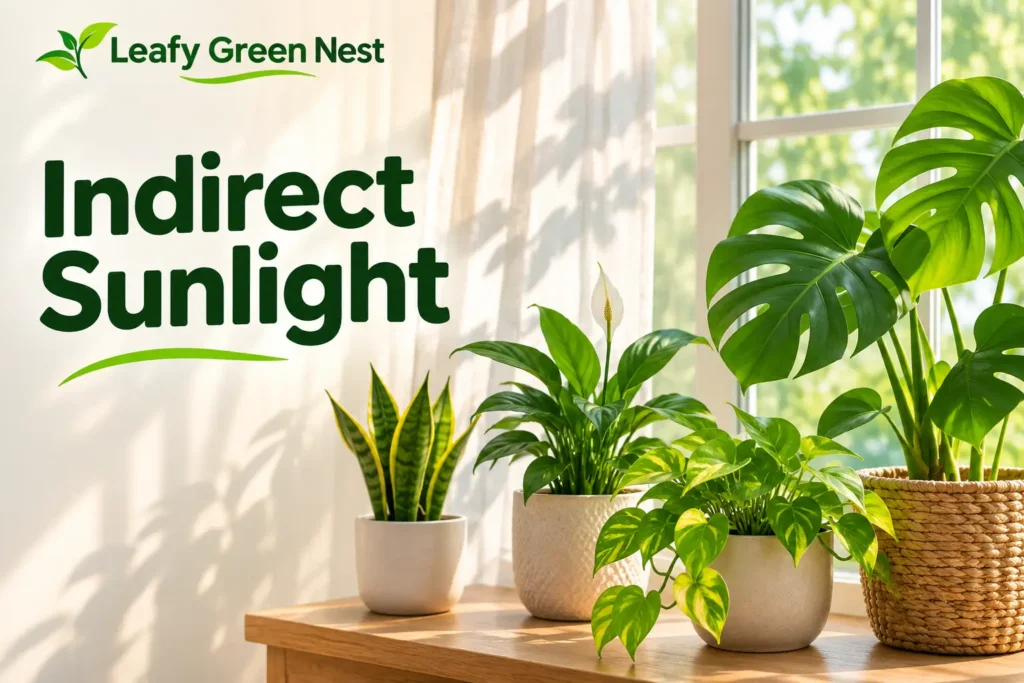
Indirect sunlight is one of the most important lighting conditions for indoor plants. It provides natural daylight for healthy growth without exposing sensitive leaves to harsh, direct sunshine.
Understanding indirect sunlight can help you choose the right window, identify suitable indoor plants, prevent leaf damage, and create better growing conditions. Whether you are caring for a monstera, pothos, peace lily, or snake plant, knowing how light works can make plant care much easier.
Table of Contents
Key Takeaways About Indirect Sunlight
Indirect sunlight provides plants with natural daylight without exposing their leaves to direct sunbeams. The right brightness depends on the plant species, window direction, season, and surrounding environment.
- Indirect sunlight is filtered, reflected, or scattered natural daylight.
- Bright indirect sunlight is stronger than ordinary shade.
- Many tropical indoor plants prefer bright indirect light.
- Indirect sunlight is not the same as low light.
- Sheer curtains can soften strong sunlight.
- Light intensity decreases as the distance from a window increases.
- Some plants, including cacti and succulents, need direct sunlight.
- Seasonal changes can affect indoor lighting conditions.
- Plant growth and leaf appearance can help identify lighting problems.


Indirect Sunlight Meaning: A Simple Explanation
The meaning of indirect sunlight is natural daylight that reaches a surface without direct sunbeams shining on it. This happens when sunlight is reflected from another surface or filtered through curtains, trees, or other objects.
For example, imagine placing a houseplant beside a bright window. The room receives plenty of daylight, but the sun’s rays do not directly touch the plant’s leaves. This is a common example of indirect sunlight.
Common sources of indirect sunlight include:
- Daylight passing through sheer curtains.
- Sunlight reflecting from white walls.
- Light entering through a nearby window.
- Daylight filtering through tree branches.
- Natural light reaching a covered balcony.
- Sunlight scattered throughout a bright room.
Indirect sunlight does not mean darkness. A room can receive plenty of natural daylight without having direct sunshine on every surface.
Bright Indirect Sunlight Meaning and Light Intensity
Bright indirect sunlight means strong natural daylight reaches a plant without direct sunbeams falling on its leaves. It provides more brightness than ordinary shade while avoiding the intensity of unfiltered sunshine.
This lighting condition is particularly useful for tropical houseplants that need plenty of light but have sensitive foliage.
How Bright Should Indirect Sunlight Be?
The brightness required depends on the plant species and its growing environment. Indoor light is often measured in foot-candles, a unit used to describe the intensity of light reaching a surface.
The following measurements are general indoor lighting guidelines.
| Light category | Approximate brightness | Typical location |
|---|---|---|
| Low light | 25–100 foot-candles | Dim corners and shaded rooms |
| Medium light | 100–500 foot-candles | Bright areas without direct sun |
| High light | 500–1,000 foot-candles | Near bright windows |
| Direct indoor sunlight | Above 1,000 foot-candles | Sunny windowsills |
These ranges are approximate. Different horticultural references use different categories, and actual plant requirements vary.
A simple way to recognize bright indirect sunlight is to imagine a room where you can comfortably read during the day without switching on a lamp, but direct sunbeams do not fall on the plant.
What Is Indirect Sunlight for Plants?
Indirect sunlight for plants is natural daylight that reaches their leaves after being filtered, reflected, or scattered. Plants use this light for photosynthesis, the process that converts light energy into chemical energy for growth.
During photosynthesis, plants use light, water, and carbon dioxide to produce sugars. These sugars support new leaves, stems, roots, and other essential functions.
Many tropical plants naturally grow beneath taller trees. The tree canopy filters strong sunlight and allows softer daylight to reach the plants below.
This explains why many popular indoor plants prefer bright indirect sunlight.
However, not every plant grows best in these conditions. Cacti, many succulents, and some flowering plants need stronger sunlight to maintain healthy growth and produce flowers.
Indirect Sunlight Examples Around Your Home
Indirect sunlight is available in many everyday places, so you do not need a greenhouse or expensive gardening equipment to create suitable lighting. You simply need to understand how sunlight enters and moves around your home.
Common examples include the following locations.
Near a Bright Window
A plant placed beside a window may receive indirect sunlight if it sits outside the path of direct sunbeams.
For example, a plant on a table beside an east-facing window may receive plenty of morning daylight without direct sunshine touching its leaves.
Behind a Sheer Curtain
Sheer curtains soften incoming sunlight by scattering it throughout the room.
They are useful for protecting sensitive plants from intense sunshine while allowing natural daylight to enter.
Near a White Wall
White and light-colored walls reflect some natural light around a room.
A plant positioned near a bright wall may receive reflected daylight even if it does not directly face the window.
Under a Covered Balcony
A covered balcony can provide bright shade because the roof blocks direct overhead sunlight while daylight enters through the open sides.
This arrangement can work well for tropical plants that prefer filtered light.
Under a Tree
Plants growing beneath trees often receive dappled sunlight. Tree leaves and branches block some direct rays while allowing scattered light to pass through.
This is a natural example of indirect sunlight outdoors.
What Is Direct and Indirect Sunlight for Plants?
Direct sunlight reaches plant leaves without significant filtering, while indirect sunlight reaches them after being reflected, scattered, or filtered. Both types provide energy for photosynthesis, but they differ in intensity and heat exposure.
Understanding this difference helps you select the right lighting conditions for your plants.
| Feature | Direct sunlight | Indirect sunlight |
|---|---|---|
| Light exposure | Unfiltered sunbeams | Filtered or reflected daylight |
| Intensity | Usually stronger | Usually softer |
| Heat exposure | Often higher | Generally lower |
| Shadows | Sharp and defined | Softer or less defined |
| Common location | Sunny windowsill | Bright area beside a window |
| Suitable plants | Many cacti and sun-loving plants | Many tropical foliage plants |
What Is Direct Sunlight for Plants?
Direct sunlight occurs when unfiltered sunbeams fall directly onto a plant’s leaves.
A cactus sitting on a sunny windowsill is a common example. It receives strong sunlight that supports its growth.
However, excessive direct sunlight can damage plants that are sensitive to heat or intense light.
What Is Indirect Sunlight for Plants?
Indirect sunlight reaches plant leaves without direct sunbeams touching them.
For example, a monstera placed near a bright window but outside the direct path of sunlight receives indirect light.
Many indoor foliage plants prefer this lighting because it provides useful daylight without excessive direct exposure.
Indirect Sunlight vs Direct Sunlight: Which Is Better?
Neither direct nor indirect sunlight is automatically better because different plants have different lighting requirements. The best option depends on the plant’s natural habitat, leaf structure, and ability to tolerate strong sunshine.
Choose lighting according to these general guidelines:
- Direct sunlight: Suitable for many cacti, succulents, and sun-loving plants.
- Bright indirect sunlight: Suitable for many tropical foliage plants.
- Medium indirect light: Suitable for several adaptable houseplants.
- Low light: Suitable for shade-tolerant plants, although low light does not mean no light.
For example, a cactus may grow poorly in a dark room, while a calathea may develop scorched leaves when exposed to strong afternoon sunshine.
Matching the plant to its preferred lighting conditions is more effective than assuming every indoor plant needs the same amount of sunlight.
Indirect Sunlight Indoor Plants: Which Grow Best?
Many popular houseplants thrive in indirect sunlight because it provides enough brightness for photosynthesis without exposing sensitive leaves to harsh sunshine. Choosing plants that match your home’s natural lighting can make indoor gardening easier.
Here are some popular options.
Monstera
Monstera grows well in bright indirect sunlight. Its large leaves can develop brown or scorched patches when exposed to intense direct sunshine for extended periods.
30" Moss Pole Monstera Plant Support, Plant Stakes for Indoor Plants
Peace Lily
Peace lilies tolerate lower light but generally grow and flower better in bright indirect light. They are popular indoor plants because they adapt to different home environments.
Nearly Natural 42 in Artificial Spathiphyllum Peace Lily Real Touch Plant
Snake Plant
Snake plants tolerate a range of lighting conditions, including low and indirect light. They can also grow in brighter locations when gradually acclimated.
3FT 2-Pack Artificial Snake Plants, Fake Sansevieria Indoor Outdoor
Pothos
Pothos grows well in medium to bright indirect sunlight. Variegated varieties often need brighter conditions to maintain their attractive leaf patterns.
Trailing Artificial Pothos Plant with Ceramic Pot, Potted Faux Greenery with Adjustable Drooping Vines,Fake Houseplant for Home Office High Shelf, Cabinet...
ZZ Plant
ZZ plants tolerate low light and require relatively little maintenance. However, medium to bright indirect sunlight generally supports more active growth.
Nearly Natural 28 in Artificial ZZ Plant with Planter for Home Office Decor
Calathea
Calatheas prefer bright, indirect light and are sensitive to harsh sunshine. Excessive direct sunlight can fade their colorful patterns and damage their leaves.
Fake Plants,1PCS Fake Calathea Plant of Plastic Fake Tree for Room Décor
Other indoor plants that can grow in indirect sunlight include:
- Philodendron
- Chinese evergreen
- Spider plant
- Boston fern
- Rubber plant
- Dracaena
- Anthurium
Remember that different varieties may have different light requirements. Always check the growing needs of your particular plant.
Indirect Sunlight Window: Which Direction Is Best?
The direction of your window affects how much natural sunlight enters your home and how long plants receive it. Understanding window direction helps you find suitable locations for plants that prefer indirect sunlight.
North-Facing Windows
North-facing windows generally receive softer daylight in the Northern Hemisphere. They can be suitable for plants that prefer low to medium indirect light.
However, plants with higher light requirements may struggle if the window is small or blocked by nearby buildings.
South-Facing Windows
South-facing windows generally receive strong sunlight throughout much of the day in the Northern Hemisphere.
They can provide excellent bright indirect sunlight when plants are positioned outside the direct path of sunbeams or behind sheer curtains.
East-Facing Windows
East-facing windows usually receive gentle morning sunshine. They are often suitable for tropical plants that enjoy bright daylight and can tolerate some mild morning sun.
West-Facing Windows
West-facing windows usually receive stronger afternoon sunshine. This light can become intense during summer, so sensitive plants may need to be placed farther from the glass.
| Window direction | Typical light conditions | Placement advice |
|---|---|---|
| North | Soft daylight | Near the window |
| South | Strong daylight | Away from direct sunbeams |
| East | Gentle morning sun | Near the window |
| West | Strong afternoon sun | Use filtered light |
These guidelines apply to the Northern Hemisphere. Window exposure works differently in the Southern Hemisphere.
How to Give Indoor Plants the Right Amount of Indirect Sunlight
Providing indirect sunlight does not require complicated gardening techniques or expensive equipment. The goal is to find a location with enough natural daylight while protecting sensitive plants from excessive direct sunshine.
Use these practical methods to improve your indoor lighting conditions.
Understand Your Plant’s Light Requirements
Start by identifying whether your plant needs low, medium, or bright indirect sunlight.
Do not assume that every indoor plant requires the same amount of light. For example, pothos can tolerate medium light, while monstera generally benefits from brighter conditions.
Choose the Right Window
Observe how sunlight enters your home throughout the day.
An east-facing window may provide gentle morning light, while a west-facing window can produce stronger afternoon sunshine. Choose a position that matches your plant’s growing requirements.
Check for Direct Sunbeams
Watch your plant’s leaves during different times of the day.
If direct sunbeams fall on them, the plant is receiving direct sunlight during that period. Move it slightly to the side or use a sheer curtain if it needs indirect light.
Use Sheer Curtains
Sheer curtains soften strong sunlight while allowing natural daylight to enter the room.
They are particularly helpful for tropical plants with delicate foliage. Avoid heavy curtains that block most of the available light.
Observe Your Plant’s Growth
Healthy leaves, strong stems, and steady new growth can indicate suitable lighting conditions.
If your plant develops weak stems, pale leaves, or unusually long spaces between leaves, it may need more light.
Adjust Its Position Gradually
Avoid moving a plant suddenly from a dark corner into strong sunlight.
Gradually introduce it to brighter conditions to reduce stress and the risk of leaf damage.
For additional practical information, see the University of Minnesota Extension guide to lighting for indoor plants. It explains indoor light levels, plant requirements, and the use of supplemental lighting.
How to Test If Your Plant Is Getting Indirect Sunlight
You can estimate indoor light conditions without buying expensive gardening equipment. A few simple observations can help you decide whether a location receives enough indirect sunlight.
The Shadow Test
Place your hand between the light source and a flat surface, such as a wall or table.
Observe the shadow:
- Sharp, dark shadow: Usually indicates strong direct light.
- Soft, slightly blurry shadow: Often indicates filtered or indirect light.
- Very faint shadow: May indicate low light.
This is a general guide rather than a precise measurement because shadows change with sunlight intensity, window direction, and distance.
The Reading Test
Try reading a book in the location where you want to place your plant.
If you can read comfortably without switching on a lamp during daylight hours, the area may receive useful natural light.
However, being bright enough for reading does not guarantee that every plant will receive sufficient light.
Use a Light Meter
A light meter measures the brightness of an area and can help you compare different locations inside your home.
Some smartphone applications also estimate light intensity, although their readings may be less accurate than those from dedicated equipment.
Take measurements near the plant’s leaves at different times of the day for a better understanding of its lighting conditions.
One important detail is that human eyes adjust to different brightness levels. A room that looks bright to you may still provide too little light for a plant that needs strong natural daylight.
Signs Your Plant Is Getting Too Much or Too Little Sunlight
Plants often show visible signs when their lighting conditions are unsuitable. Recognizing these symptoms can help you make changes before the problem becomes serious.
| Plant symptoms | Possible problem | Suggested action |
|---|---|---|
| Brown, crispy patches | Excessive direct sunlight | Move away from harsh sun |
| Pale or faded leaves | Excessive light or other stress | Review lighting conditions |
| Long, weak stems | Insufficient light | Move closer to a suitable window |
| Small new leaves | Possibly insufficient light | Check brightness and growing conditions |
| Slow growth | Insufficient light or another care issue | Review overall plant care |
| Leaves leaning toward a window | Uneven light exposure | Rotate the pot occasionally |
Signs of Too Much Direct Sunlight
Excessive direct sunlight can cause brown leaf edges, bleached patches, dry foliage, and scorched leaves.
If you notice these symptoms, move the plant away from the strongest sunlight. Damaged leaves may not recover, but healthy new growth can indicate that conditions are improving.
Signs of Insufficient Indirect Sunlight
A plant receiving too little light may develop weak stems, pale leaves, slow growth, and smaller new leaves.
Some plants may also lose their variegated patterns or stop producing flowers.
Move the plant to a brighter location that matches its requirements. Avoid using extra fertilizer or water as a replacement for adequate light.
Common Mistakes When Providing Indirect Sunlight
Even experienced plant owners sometimes misunderstand indoor lighting requirements. Avoiding these common mistakes can help you maintain healthier plants.
Confusing Indirect Sunlight With Low Light
Indirect sunlight does not always mean dim lighting. Bright indirect sunlight can be quite strong, even though direct sunbeams do not touch the plant.
A bright room with filtered daylight can provide much more useful light than a dark corner.
Placing Plants Too Far From Windows
A room may look bright to human eyes but still provide insufficient light for plants.
Light intensity decreases as you move farther away from a window. Moving a plant closer to a suitable window can make a noticeable difference.
Assuming All Plants Prefer Shade
Some indoor plants tolerate shade, but that does not mean they grow best without sunlight.
Many plants need bright indirect light to maintain healthy leaves, produce new growth, and preserve their natural colors.
Ignoring Seasonal Changes
Sunlight changes throughout the year because of differences in day length and the sun’s position.
A location that provides gentle indirect sunlight during winter may receive strong direct sunshine during summer. Check your plants’ exposure as the seasons change.
Using Ordinary Room Lighting as a Replacement
Ordinary ceiling lights and decorative lamps usually do not provide enough suitable light for healthy plant growth.
Purpose-built LED grow lights can help when natural daylight is limited. Their brightness, distance, and daily operating time should match the plant’s requirements.
Expert Tips for Maintaining Healthy Indoor Plants
Good lighting is only one part of successful indoor gardening. Regular observation and simple maintenance can help plants grow well in indirect sunlight.
- Rotate your plants: Turn pots occasionally so different sides receive more even light.
- Clean dusty leaves: Dust can reduce the amount of light reaching leaf surfaces.
- Keep windows clean: Dirty glass can reduce incoming daylight.
- Check seasonal changes: Reassess plant placement during summer and winter.
- Avoid sudden changes: Gradually introduce plants to brighter conditions.
- Watch new growth: Healthy leaves and steady growth can indicate suitable lighting.
- Consider plant varieties: Variegated plants may need brighter conditions than solid-green varieties.
- Use grow lights when needed: Choose suitable artificial lighting if natural daylight is insufficient.
Is Indirect Sunlight the Best Choice for Indoor Plants?
Indirect sunlight is an excellent lighting option for many indoor plants because it provides natural light without exposing sensitive leaves to excessive sunshine. However, the best lighting condition always depends on the plant species, its natural habitat, and its growing requirements.
Understanding indirect sunlight, choosing a suitable window, and observing your plant’s growth can help you create a healthier indoor environment.
Remember that indirect light should still be bright enough to support photosynthesis. A well-lit location with filtered daylight is often a better choice than a dark corner.
Frequently Asked Questions About Indirect Sunlight
These frequently asked questions cover the most common concerns about indirect sunlight and indoor plant care. They explain how to recognize indirect light, choose suitable locations, and maintain healthy growing conditions.
What Is the Meaning of Indirect Sunlight?
Indirect sunlight is natural daylight that reaches a plant without direct sunbeams shining on its leaves. It may be reflected from walls, filtered through curtains, or scattered through the environment.
Is Indirect Sunlight Enough for Indoor Plants?
Yes. Many indoor plants grow well in indirect sunlight. However, the required brightness varies by species. Tropical foliage plants often prefer bright indirect light, while some shade-tolerant plants can survive in lower light.
Can Plants Grow Without Direct Sunlight?
Yes. Many plants can grow without direct sunlight if they receive sufficient indirect natural light or suitable artificial grow light. However, plants still need an adequate source of light for photosynthesis.
Should I Put My Indoor Plants Near a Window?
Generally, yes. Most indoor plants benefit from being near a window because natural light becomes weaker farther inside a room. Choose the distance based on the plant’s requirements and sunlight intensity.
Why Do Some Plants Prefer Indirect Sunlight?
Some plants naturally grow beneath tree canopies, where taller plants filter strong sunlight. Their leaves are adapted to lower or scattered light conditions, so intense direct sunshine may cause damage.
Does Indirect Sunlight Change During Winter?
Yes. Day length, sun angle, and sunlight intensity change throughout the year. A plant that receives bright indirect light in summer may receive much less light in winter, so you may need to move it closer to a window.