
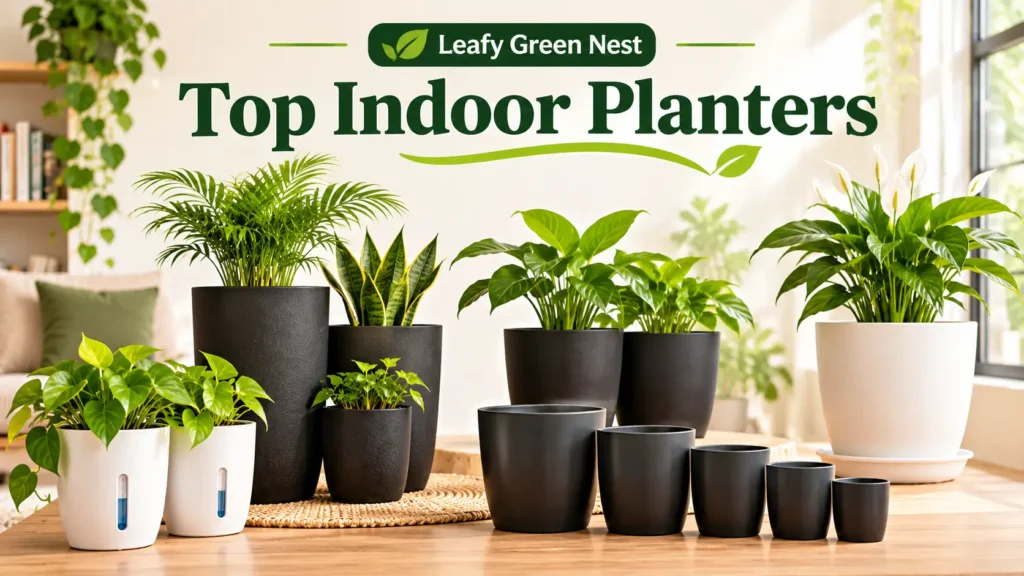
A beautiful planter can make an ordinary houseplant look like a special part of your home. But a pretty pot isn’t always a good pot. When choosing the top indoor planters, your plant also needs enough room for its roots, proper drainage, and the right amount of moisture.
Whether you’re growing pothos on a bookshelf, keeping a snake plant beside your sofa, or decorating an empty corner with a tall rubber plant, choosing the right container matters. We’ve selected five indoor planters with different sizes, materials, and features to help you find the right match.
Disclosure: This post contains affiliate links. If you purchase through these links, I may earn a small commission at no extra cost to you.
Table of Contents
Best Indoor Planters at a Glance
Not every planter suits every plant or home. Some make watering easier, while others offer more room for large plants or add a decorative touch.
Here are our five picks and what makes each one worth considering.
- Best Overall: Fielda 2-Pack 8-Inch Self-Watering Planters
- Best for Large Plants: Beuta Large Poly Planters Set of 3
- Best for Everyday Use: Greendigs 10-Inch Black Plastic Planters
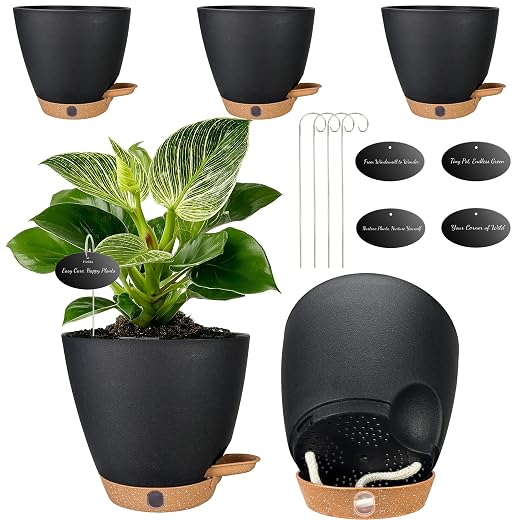
- Best for Plant Collections: 5-Pack Self-Watering Indoor Planters
- Best for Home Decor: D’vine Dev 12-Inch White Planter with Saucer



Top Indoor Planters for Your Houseplants
A good planter should make your plants feel at home while fitting nicely into your space. We considered pot size, material, watering features, and design when selecting these options.
Fielda 2-Pack 8-Inch Self-Watering Planters
Best for: People who want an easier watering routine.
Ever come home after a busy day and realize you’ve forgotten to water your plants? The Fielda self-watering planters may help make that routine easier.
This set includes two 8-inch plastic pots with drainage holes, a self-watering design, and a water level indicator. The indicator works like a fuel gauge in your car. It helps you check the water supply without guessing.
The two matching pots can look neat on a windowsill, desk, or living room shelf. Their simple design also makes them easy to pair with different home styles.
I particularly like the idea of using these pots for two matching pothos plants. You could place one near your desk and another on a bookshelf to create a connected look.
They may also suit peace lilies and other houseplants that enjoy slightly moist soil. However, think twice before using them for cacti and succulents. These plants generally prefer their growing mix to dry between waterings.
One more thing: a self-watering feature doesn’t mean you can ignore your plants. Check the water reservoir and soil regularly to make sure everything is working as it should.
2 Pack 8 Inch Pots for Plants Indoor, Plastic Self Watering Planters
Beuta Large Poly Planters Set of 3
Best for: Large houseplants and empty floor spaces.
Have a tall indoor plant that looks cramped in a small pot? The Beuta set offers three larger containers to give your plant display a more balanced look.
The set includes planters measuring 15.5, 18, and 20 inches. Their black finish gives them a clean, modern appearance that works well in living rooms, entryways, and other open spaces.
These large indoor planters are made from poly material and designed for indoor and outdoor use. Compared with heavy stone or ceramic containers, poly planters can be easier to move around.
Imagine placing the largest pot beside your sofa with a tall leafy plant inside. You could use the other two to create a matching display near an entryway or window.
The three sizes also give you more freedom when arranging your plants. Instead of placing every pot at the same height, you can create a layered display that looks more natural.
Before buying, measure the space where you want to place them. These are large containers, so they may feel overwhelming in a small room.
Also, check whether the individual pots have drainage holes before planting directly into them. A decorative outer pot can still be useful if you place a separate nursery pot with drainage inside.
Large Poly Planters for Outdoor Plants - Set of 3, 15.5/18/20 Inches Outdoor Planters for Porch - Tall Planter for Outdoor & Indoor Plants | Large Indoor...
Greendigs 10-Inch Black Plastic Planters
Best for: Simple plant displays and everyday houseplants.
Sometimes, you don’t need a fancy planter to make your plants look good. A simple black pot can do the job, and that’s where Greendigs stands out.
This set includes two 10-inch plastic planters. Each pot holds around two gallons of soil, giving medium-sized houseplants room to grow.
Their black finish is easy to match with wooden furniture, white walls, and colorful home decor. You can place them on the floor, near a bright window, or in a corner that needs a little greenery.
I would consider these for snake plants, small rubber plants, and dracaenas. Their simple appearance lets the leaves take center stage instead of competing with the plant.
Another useful feature is their lightweight plastic construction. Moving a plant for cleaning or rearranging your room becomes much easier than lifting a heavy ceramic pot.
The main thing to check is drainage. The supplied product information confirms the size and material but doesn’t clearly establish the drainage design. Check the base before adding soil.
If you prefer simple, matching pots without extra features, Greendigs is a practical option.
Greendigs 10" Black Plastic Planter, 2 pack
Five-Pack Self-Watering Indoor Planters
Best for: People with several houseplants.
Got a growing collection of houseplants? Buying different pots one at a time can become a hassle. This five-pack gives you several sizes in one set.
It includes planters measuring 6.5, 7, 8, 9, and 10 inches. Each has a self-watering design and drainage holes.
You can use the smaller containers for young plants and save the larger ones for established houseplants. The different sizes also make it easier to create a varied display on shelves, tables, and windowsills.
The black plastic finish keeps the look simple. You won’t have to worry about matching several different colors when arranging your plants.
I like this option for anyone starting an indoor garden. You can grow a small collection without hunting for individual pots every time you bring home a new plant.
However, don’t choose a pot just because it’s the largest one in the pack. A tiny plant sitting in a huge container may have trouble using all the moisture in the extra soil.
Match each pot to the plant’s root ball. Also, check the reservoir and soil regularly because self-watering systems still need attention.
6" Self Watering Pots for Indoor Plants(5-Pack), Small Plastic Planters
D’vine Dev 12-Inch White Planter with Saucer
Best for: Modern home decor and medium-sized plants.
Want a planter that looks clean and stylish without taking over your room? The D’vine Dev 12-inch white planter is worth considering.
It features a lightweight plastic body, a matte white finish, and a simple cylinder shape. The design works especially well with modern furniture and neutral home colors.
The included saucer is another useful detail. It catches excess water that drains from the planter and helps protect your floors and furniture.
Picture this pot beside a reading chair with a leafy green plant growing inside. The white surface creates a lovely contrast against the green leaves.
You could also place it near a bright window or on a plant stand. Its 12-inch size gives many medium-sized houseplants room to grow, provided the dimensions suit their roots.
One thing to remember is that white planters can show dirt and water marks. A quick wipe with a damp cloth can help keep the finish looking fresh.
Before planting, check the drainage arrangement. If you use the saucer to collect extra water, empty it regularly rather than allowing the pot to sit in standing water.
D'vine Dev Plastic Planter Pot with Saucer, 12 in, White, 74-X-A-3
How to Choose the Best Indoor Planters
A planter may look perfect on a shopping page, but will it suit your plant? The right choice depends on the plant’s roots, watering needs, and the space available in your home.
Here are four things I would check before buying any indoor plant container.
Choose the Right Pot Size
Your plant needs enough room for its roots, but buying the biggest pot isn’t always a smart move. Too much extra soil can hold moisture longer than the roots need.
For most houseplants, choose a new pot about 1–2 inches wider than the current root ball. The University of Illinois Extension recommends moving up one pot size when repotting rather than jumping to a much larger container.
For example, a small pothos doesn’t need a huge 20-inch pot. A mature rubber plant, on the other hand, may need a larger container as its roots grow.
Look at the roots before buying a new planter. If they are growing through the drainage holes or circling tightly around the inside, your plant may need more space.
You can follow the University of Illinois Extension guide to choosing houseplant containers for more advice.
Indoor Planters with Drainage Holes
Drainage holes allow extra water to escape from the bottom of a planter. Without them, water can collect around the roots and increase the risk of root rot.
Think about leaving a wet sponge inside a plastic bag. It stays damp because the water has nowhere to go. Plant roots can face a similar problem in waterlogged soil.
The University of Wisconsin-Madison Division of Extension explains that healthy roots need oxygen, which is why proper drainage matters.
When shopping, look for planter drainage holes and a suitable saucer. The holes let extra water escape, while the saucer catches it before it reaches your floor.
What if you fall in love with a decorative pot that has no drainage holes? You can use it as an outer cover and keep your plant in a smaller nursery pot with drainage.
Just remove the inner pot when watering and empty any collected water from the outer container.
For more information, read the University of Wisconsin guide to healthy houseplant roots.
Decorative Indoor Planters and Material Choices
The material of your planter affects its weight, appearance, and how quickly the soil dries. Think about your plant’s needs as well as the look you want in your room.
Here are four common choices:
- Plastic: Lightweight, affordable, and easy to move. It holds moisture longer than unglazed terracotta.
- Ceramic: Decorative and often heavier. It comes in many colors, shapes, and finishes.
- Terracotta: Made from porous clay that allows moisture to escape through its walls.
- Metal: Offers a modern look but may need a separate inner pot to protect the plant.
For example, plastic pots can work well for plants that prefer slightly moist soil. Terracotta may suit plants that need their growing mix to dry faster.
Mississippi State University Extension explains that clay pots lose moisture through their sides, while plastic and glazed containers retain more moisture.
This is why material matters. A beautiful pot should support your plant’s needs, not make watering more difficult.
If you move plants around often, lightweight plant pots are a handy choice. If appearance matters most, decorative indoor planters can help tie your greenery into the rest of your home.
You can also explore the Mississippi State University guide to indoor plant containers.
Self-Watering Indoor Planters: Are They Worth It?
Self-watering planters can make plant care easier, especially if you have a busy routine. They hold water in a separate reservoir and allow moisture to reach the growing mix as needed.
Some models also have a water level indicator. You can check the water supply without lifting the pot or guessing when to refill it.
But here’s something important: self-watering doesn’t mean worry-free watering. Different plants have different moisture needs.
A peace lily may enjoy consistently moist soil, while a cactus prefers its growing mix to dry between waterings. Choosing the wrong watering system can cause problems even when the pot itself looks great.
Virginia Cooperative Extension explains that different container types affect how much water the growing mix holds. It also advises checking soil moisture rather than relying only on a watering routine.
My suggestion is to start with your plant’s needs. If it enjoys steady moisture, a self-watering planter may be useful. If it prefers dry soil, a regular pot with good drainage may be a better choice.
Read the Virginia Cooperative Extension guide to watering container houseplants for more details.
Which Indoor Planters Are Best for Your Needs?
The best planter depends on the plants you own, the space available, and how much care you want to give them. You don’t need an expensive pot to create a beautiful indoor garden.
Here’s how I would match the five options with different needs:
| Your needs | Recommended planter | Why it stands out |
|---|---|---|
| Everyday houseplants | Fielda 2-Pack | Self-watering design and water level indicator |
| Large floor plants | Beuta Set of 3 | Three large planter sizes |
| Simple plant displays | Greendigs 2-Pack | Lightweight black plastic design |
| Several houseplants | Five-Pack Self-Watering Set | Five different sizes |
| Modern home decor | D’vine Dev | White matte finish and saucer |
If you’re decorating a small apartment, start with the smaller planters. They won’t take up much floor space and can fit neatly on shelves or tables.
For larger rooms, mix different pot heights and sizes. A tall planter beside a smaller one creates a more interesting display than placing every plant in an identical container.
We also recommend checking the drainage arrangement and exact dimensions before ordering. These small details can save you from buying a planter that doesn’t suit your plant.
Are These Top Indoor Planters Worth Buying?
Yes, these five options offer useful choices for different homes, plant sizes, and decorating styles. The right one depends on what you want from your planter.
The Fielda set is a practical pick for everyday houseplants. Beuta works better for large floor displays, while Greendigs offers a simple option for medium-sized plants.
If you have several houseplants, the five-pack gives you more flexibility. For a clean decorative look, D’vine Dev is worth considering.
My advice is simple: check the size, drainage, and material before choosing a planter based on its appearance. Your plants need a healthy place to grow first. The good looks are a bonus.
Frequently Asked Questions
Still unsure which planter to choose? These answers cover some common questions about indoor plant pots, drainage, and watering.
What are the best top indoor planters for houseplants?
The best indoor planters have enough room for roots, proper drainage, and a size that suits your plant. Choose a style that also fits your home.
Do indoor planters need drainage holes?
Yes. Drainage holes let extra water escape and help prevent soggy soil. If you use a decorative pot without holes, place a draining nursery pot inside it.
What size planter should I buy for my indoor plant?
Choose a planter about 1–2 inches wider than the plant’s current pot. Avoid using a pot that is much larger because the extra soil can hold too much moisture.
Are self-watering planters good for indoor plants?
Yes. Self-watering planters can help keep soil moisture more steady. They are useful for people who sometimes forget to water, but you still need to check each plant’s needs.
Are plastic or ceramic planters better for indoor plants?
Both can work well. Plastic planters are lightweight and hold moisture longer. Ceramic planters offer a decorative look, but check that they have drainage holes.
How often should I replace an indoor planter?
You do not need to replace a planter on a fixed schedule. Move your plant to a larger pot when its roots become crowded, growth slows, or water runs through too quickly.


