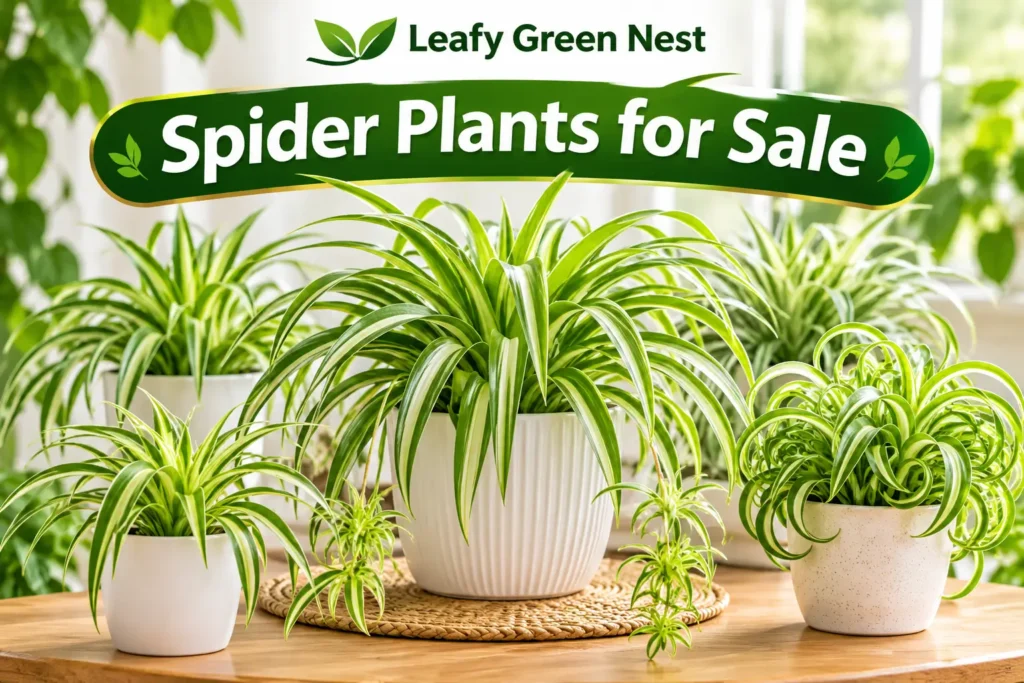
Finding healthy spider plants for sale is easier when you know which variety and plant size you want. Online plant sellers offer individual pots, rooted plants, multi-plant packages, and different foliage styles.
Spider plants are popular indoor houseplants because of their arching leaves, easy propagation, and ability to adapt to different indoor conditions. You can choose a traditional variegated plant, a curly Bonnie variety, or a collection containing several types.
Before ordering, check the plant’s condition, root development, pot size, seller information, and shipping policy. These details can help you avoid receiving a plant that does not match your expectations.
Table of Contents
Live Spider Plants for Sale: Options to Explore
Different spider plant listings suit different indoor gardening needs. The following options include individual plants, variety collections, and an artificial alternative.
Three-Pack Spider Plant Live Indoor Houseplants
Product type: Three live, rooted spider plants.
Listing features: Established plants rather than unrooted cuttings.
Best suited for: Indoor gardeners who want several plants for hanging baskets, shelves, or different rooms.
The three-pack listing describes its plants as fully rooted and variegated. It may suit buyers who want to start an indoor collection without ordering several individual plants. Check the seller’s photographs, plant sizes, and shipping details before purchasing.

3 Pack Spider Plant Live Indoor Houseplants, Fully Rooted Well-Established Plants (Not Cuttings), Air- Purifying Airplane Plant for Hanging Baskets, Home &...
Spider Plant Variety Pack: Four Live Plants
Product type: Four live spider plants.
Varieties listed: Ocean, Hawaiian, Green, and Bonnie.
Best suited for: Plant collectors who enjoy different foliage styles.
This variety pack offers four named selections in one package. It can be an interesting option if you want to compare different spider plant appearances or grow several plants in separate locations. Confirm the included varieties and their sizes with the seller before ordering.

Spider Plant Variety Pack 4 Live Plants Ocean Hawaiian Green Bonnie
Variegated Spider Plant Airplane
Product type: Individual live variegated spider plant.
Listing features: Airplane spider plant supplied in potting soil.
Best suited for: Buyers who prefer traditional green-and-white foliage.
The traditional variegated spider plant has narrow leaves with contrasting green and white stripes. Its arching growth makes it suitable for hanging baskets, plant stands, and indoor shelves. This listing may appeal to buyers who prefer one established-looking plant instead of a multi-plant package.

Variegated Spider Plant 'Airplane' - Air-Purifying, Low Maintenance, Thrives in Home & Office - Perfect for Plant Enthusiasts - Live houseplant in Potting Soil
Artificial Spider Plant, Three-Pack
Product type: Three artificial spider plants.
Listing features: Silk-style faux foliage for indoor and outdoor decoration.
Best suited for: People who want decorative greenery without plant maintenance.
Artificial spider plants offer a convenient option for decorating offices, shelves, and other spaces where maintaining live plants may be difficult. They do not require watering, sunlight, fertilizer, or pruning.
However, these are decorative products rather than living houseplants. They will not produce new leaves, flowers, or baby plantlets.
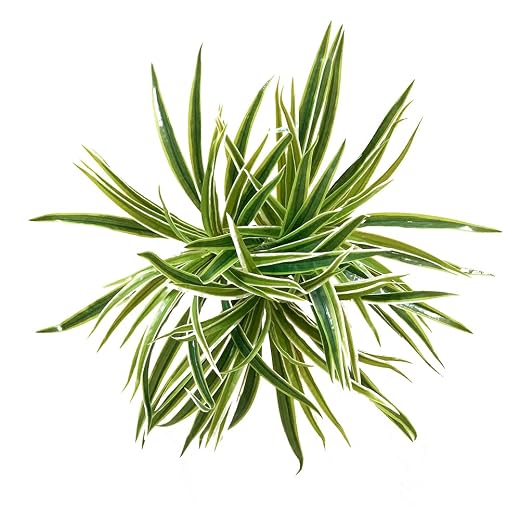
3 PCS Artificial Spider Leaves Plant Simulation Greenery Grass Faux Chlorophytum Orchid Bush Indoor Outdoor Home Garden Office Decoration, Green With White
Bonnie Curly Spider Plant
Product type: Individual live Bonnie spider plant.
Listing features: Variegated curly leaves in a 4-inch pot.
Best suited for: Buyers who prefer unusual foliage and compact indoor plants.
Bonnie is a curly form of Chlorophytum comosum. Its leaves twist and curl, creating a fuller appearance than traditional spider plants. This makes it an attractive option for desks, shelves, and small indoor plant collections.
The listing identifies the plant as a variegated selection in a 4-inch pot. Check the seller’s photographs to understand its size and foliage condition before ordering.

Bonnie Curly Spider Plant, Variegated Curly Leaves, Pet-Friendly, Air Purifying, Easy to Care and Grow Attractive Plant in 4 inch Pot - Hopewind Plants Shop
Live Spider Plant in a 4-Inch Pot
Product type: Individual live spider plant.
Listing features: Variegated trailing houseplant supplied in a 4-inch pot.
Best suited for: Beginners and buyers who want one potted plant.
An individual potted spider plant is a practical starting point if you have limited space or want to learn basic plant care before expanding your collection. Its trailing foliage can add greenery to a windowsill, desk, or plant shelf.
Check whether the listing includes the nursery pot, the plant’s current size, and any special shipping instructions.

Live Spider Plant in 4 Inch Pot, Variegated Trailing Houseplant, Easy Care Indoor Plant
Spider Plant Product Comparison: Live and Artificial Options
Comparing product formats helps you understand what each listing offers. Consider the number of plants, foliage style, and whether you want living greenery or decorative foliage.
| Product | Type | Main feature | Suitable for |
|---|---|---|---|
| Three-Pack Spider Plant | Live | Three rooted plants | Multiple spaces |
| Four-Plant Variety Pack | Live | Four named varieties | Plant collectors |
| Airplane Spider Plant | Live | Traditional variegated foliage | Classic indoor displays |
| Artificial Spider Plant | Artificial | Three decorative plants | Low-maintenance decor |
| Bonnie Curly Spider Plant | Live | Curly variegated leaves | Small spaces |
| Individual Spider Plant | Live | 4-inch potted plant | Beginners |
The five live-plant listings are suitable for people interested in growing real houseplants. The artificial option serves a different purpose and should not be compared with living plants for growth or care.
Spider Plant Varieties: Understanding Their Differences
Spider plants belong to the species Chlorophytum comosum. Their foliage can vary in color, shape, and growth habit, depending on the cultivar.
Understanding these differences helps you choose a plant that suits your preferred indoor display.
Traditional Variegated Spider Plant
Traditional variegated spider plants have long, narrow leaves with green and white or cream stripes. Their arching foliage looks attractive in hanging baskets and elevated planters.
Solid Green Spider Plant
Solid green spider plants have leaves without the prominent white stripes found on variegated types. Their simple foliage creates a different look in indoor plant arrangements.
Bonnie Curly Spider Plant
Bonnie has curled leaves that grow in twisting shapes. Its compact appearance makes it suitable for plant shelves, desks, and smaller decorative spaces.
Ocean and Hawaiian Spider Plants
Ocean and Hawaiian are names used in commercial spider plant listings. Their appearance can differ from other selections, so check the seller’s photographs and cultivar descriptions before purchasing.
Do not assume that every listing using these variety names contains identical plants. Confirm the botanical identity and exact cultivar with the seller.
Buy Spider Plants Online: What to Check Before Ordering
Buying live plants online requires more attention than purchasing ordinary home decorations. Packaging, transportation, plant health, and growing conditions can all affect the condition of your order.
Check these details before choosing a seller.
Examine the Leaves
Healthy spider plants generally have firm leaves with their expected green or variegated coloring.
Look for:
- Firm, healthy-looking foliage
- Clear leaf patterns
- No extensive yellowing
- No widespread brown or damaged areas
- No visible signs of pests
A few brown tips do not always mean a plant is unhealthy. However, extensive damage may indicate poor growing conditions or transportation stress.
Check Whether the Plant Is Rooted
A rooted plant is generally easier to establish than an unrooted cutting.
Read the product description carefully to understand whether the seller provides an established plant, a rooted starter, or a newly propagated cutting. This distinction matters when comparing multi-plant packages.
Confirm the Pot Size and Plant Dimensions
Product photographs can make small plants appear much larger than they are.
Check the pot diameter, plant height, and whether the container is included. If the seller provides photographs of the actual plant rather than representative images, use them to assess its condition.
Review Shipping and Packaging
Live plants can experience stress during transportation, especially when exposed to extreme temperatures or delays.
Check the following details:
- Estimated delivery time
- Protective packaging
- Shipping restrictions
- Live arrival policy
- Replacement or refund conditions
- Recent customer photographs
Also check whether the seller ships to your location and whether weather-related restrictions apply.
Match the Plant to Your Space
Think about where you intend to display the spider plant.
- Traditional variegated plants suit hanging baskets.
- Bonnie offers a curly foliage appearance.
- Multi-plant packages suit larger collections.
- Individual potted plants work well on desks and shelves.
- Artificial plants suit spaces where live plant care is not practical.
Choosing according to your available space can make plant maintenance easier.
Spider Plants for Indoor Use: Care After Purchase
A newly delivered spider plant needs suitable light, water, and growing conditions to settle into its new environment. Give it time to adjust before making unnecessary changes to its pot or growing medium.
Light Requirements
Spider plants grow best in bright, indirect light. They can tolerate lower-light conditions, but growth may become slower and variegated leaves may lose some of their contrast.
Place the plant near a bright window where it receives filtered sunlight. Avoid prolonged exposure to strong afternoon sun because it can scorch the foliage.
Watering Requirements
Spider plants prefer evenly moist but well-draining soil. Allow the upper layer of the potting mix to dry slightly before watering again.
Follow these steps:
- Check the soil with your finger.
- Water when the upper layer feels slightly dry.
- Apply enough water to moisten the root area.
- Let excess water drain through the pot.
- Empty the saucer or outer container.
Avoid leaving the roots in standing water. Water requirements can change with light, temperature, pot size, and season.
Soil and Potting Requirements
A general-purpose indoor potting mix with good drainage is suitable for spider plants. The growing medium should hold some moisture while allowing excess water to escape.
Choose a pot with drainage holes. This helps prevent water from collecting around the roots and reduces the risk of waterlogged soil.
Temperature and Humidity
Spider plants generally grow well in normal indoor temperatures. Protect them from cold drafts, sudden temperature changes, and direct heat from radiators.
Average household humidity is usually sufficient. A special humidifier is not normally necessary for healthy spider plant growth.
Fertilizing Requirements
Spider plants do not need heavy feeding. Use a balanced houseplant fertilizer during active growth and follow the manufacturer’s dilution instructions.
Excessive fertilizer can cause salt buildup in the growing medium and contribute to brown leaf tips. If the plant has recently been repotted in fresh, fertilized soil, additional feeding may not be necessary immediately.
Spider Plant Propagation
Spider plants produce long stems with small baby plants called plantlets. These plantlets can develop roots and grow into separate plants.
You can propagate them in two common ways:
- In soil: Place the base of a plantlet in a small pot of moist potting mix while it remains attached to the mother plant.
- In water: Place the plantlet in a clean container of water until roots begin developing.
Once the roots are established, separate the young plant from the mother plant if it is still attached.
For additional growing and propagation advice, consult the Royal Horticultural Society’s spider plant growing guide.
Are Spider Plants Safe for Cats and Dogs?
The ASPCA lists Chlorophytum comosum as non-toxic to cats and dogs. This makes correctly identified spider plants an option for households with pets.
However, non-toxic does not mean pets should eat the foliage freely. Eating large amounts of plant material may still cause digestive discomfort. Keep plants away from pets that repeatedly chew or damage their leaves.
Do Spider Plants Really Purify Indoor Air?
Spider plants are frequently marketed as air-purifying houseplants. Although laboratory research has examined how plants interact with certain airborne chemicals, ordinary houseplants should not be treated as a replacement for proper indoor ventilation.
Their strongest practical appeal is their attractive foliage, adaptability, and ability to produce new plantlets. Grow them for their decorative value and enjoy having living greenery indoors without expecting them to replace an air filtration system.
Choosing the Right Spider Plant for Your Home and Space
The best spider plant depends on your available space, preferred foliage style, and gardening experience. Consider whether you want one established plant, several varieties, or an artificial decorative option.
The three-plant and four-variety packages offer choices for people building an indoor collection. Traditional variegated plants suit classic displays, while Bonnie is worth considering if you prefer curled leaves.
Individual potted plants are practical for beginners and smaller spaces. Artificial spider plants are an alternative for decoration, but they cannot provide the experience of growing and propagating a living plant.
Before ordering, compare the seller’s photographs, plant descriptions, pot dimensions, and shipping policies. Choosing a healthy, correctly identified plant is more important than selecting a package simply because it contains more plants.
Frequently Asked Questions About Spider Plants for Sale
Where can I buy spider plants online?
You can find spider plants through online plant retailers and marketplaces. Check seller reviews, plant sizes, and shipping policies.
Which spider plant variety is best for beginners?
Traditional variegated spider plants are a popular beginner-friendly choice. They need bright, indirect light and well-draining soil.
Are spider plants available in multi-plant packs?
Yes. Some sellers offer three-plant packages and four-variety collections for indoor gardening.
What is the difference between Bonnie and traditional spider plants?
Bonnie has curled, twisting leaves, while traditional spider plants have straighter, arching foliage.
Are live spider plants better than artificial ones?
Live plants grow and produce baby plantlets but need regular care. Artificial plants provide decoration without watering or pruning.
What should I check before buying spider plants online?
Check root development, leaf condition, pot size, seller reviews, packaging, and delivery policies.