
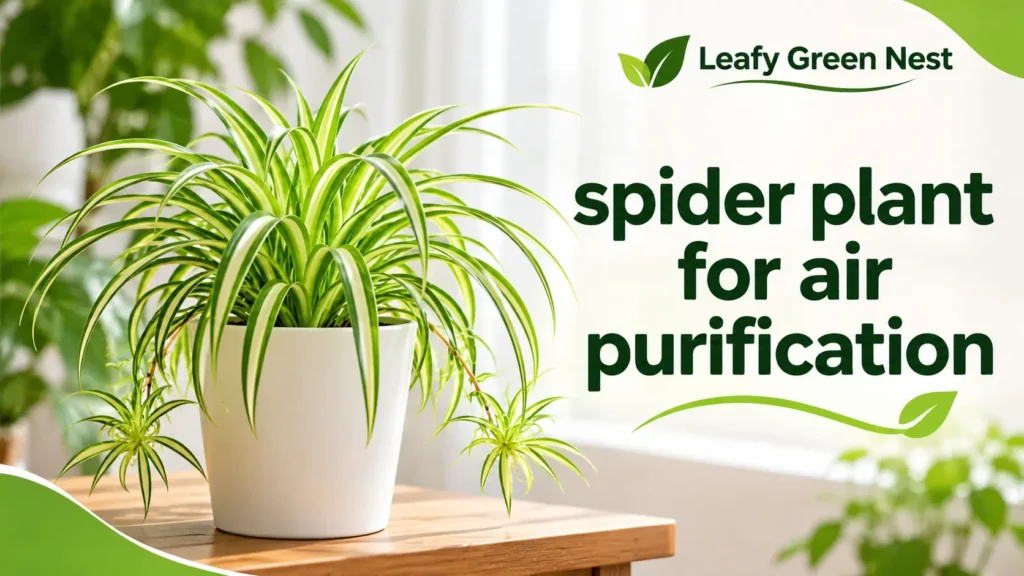
A spider plant for air purification is a popular choice for homes, bedrooms, and offices. It is attractive, easy to grow, and does not need much attention. Many people also believe it can remove harmful chemicals from indoor air.
But does a spider plant really clean the air in your home?
The answer is more complicated than many plant sellers suggest. Research shows that spider plants can absorb certain airborne chemicals in controlled laboratory conditions. However, ordinary houseplants do not remove enough pollution to make a meaningful difference to indoor air quality in most homes.
That does not make spider plants a poor choice. They offer attractive foliage, simple care requirements, and a pet-friendly option for many households. The key is understanding what they can and cannot do.
This article explains the science behind spider plants and air purification, compares them with snake plants, covers mold-related claims, and reviews six indoor plant products worth considering.
Table of Contents
What Is a Spider Plant for Air Purification?
A spider plant is a popular indoor plant known for its long, narrow, arching leaves. Its botanical name is Chlorophytum comosum. Many varieties have green leaves with white or cream-colored stripes.
Spider plants are often called natural air purifiers because laboratory research has shown that they can absorb certain airborne chemicals, including formaldehyde.
Formaldehyde is a volatile organic compound (VOC). It can enter indoor air from some furniture, building materials, adhesives, paints, and household products.
However, removing a small amount of a chemical inside a laboratory chamber is different from cleaning the air in a normal home. Real rooms have changing airflow, open doors, windows, furniture, people, and continuous sources of pollution.
A spider plant is best understood as an attractive, easy-care indoor plant that can absorb small amounts of certain chemicals under controlled conditions. It is not a replacement for ventilation or air filtration.


Quick Answer: Do Spider Plants Purify the Air?
Spider plants can absorb some airborne chemicals in laboratory tests, but there is little evidence that a few plants can meaningfully clean the air in an ordinary home.
If your goal is better indoor air quality, focus on:
- Opening windows when outdoor air quality is suitable.
- Using kitchen and bathroom exhaust fans.
- Reducing indoor smoke, dust, and chemical sources.
- Fixing leaks and damp areas to prevent mold.
- Using a suitable HEPA air purifier when airborne particles are a concern.
You can still enjoy spider plants for their appearance and easy care. Just do not depend on them as your main air-cleaning solution.
Key Takeaways
- Spider plants are easy-care indoor plants with long, striped leaves.
- Laboratory studies show that spider plants can absorb certain airborne chemicals.
- Normal household numbers of plants are unlikely to clean indoor air effectively.
- Spider plants do not remove mold growing on walls, ceilings, or furniture.
- Snake plants are also marketed as air purifiers, but they are not proven room air cleaners.
- Spider plants are generally considered non-toxic to cats and dogs.
- Snake plants and pothos can be harmful to pets if eaten.
- Ventilation, pollution control, and suitable filtration are more reliable ways to improve indoor air quality.
- The best spider plant is one that suits your available light, space, and care routine.
Spider Plant for Air Purification Benefits
Spider plants offer several benefits for indoor spaces. Some relate to their appearance and growth, while others come from their performance in laboratory studies.
They Can Absorb Certain Airborne Chemicals in Laboratory Tests
Spider plants have been studied for their ability to remove certain volatile organic compounds from enclosed environments.
VOCs are chemicals that can enter indoor air from everyday products and materials, including:
- Paints and varnishes
- Cleaning products
- Adhesives
- Furniture and building materials
- Some air fresheners and fragrances
Formaldehyde is one commonly discussed VOC. It may be released by certain pressed-wood products, furniture, and building materials.
Laboratory findings suggest that plants can absorb some of these chemicals. However, these results do not prove that a spider plant can clean an entire bedroom or living room.
The amount of pollution removed depends on the plant, pollutant, airflow, exposure time, and test conditions.
They Are Easy to Grow Indoors
Spider plants are popular because they are adaptable and forgiving.
They generally grow well in bright, indirect light. They can also tolerate some lower-light conditions, although their growth may slow.
Their basic care needs include:
- Watering when the top layer of soil begins to dry.
- Using a pot with drainage holes.
- Avoiding waterlogged soil.
- Keeping the plant away from harsh direct sunlight.
- Removing dry or damaged leaves when needed.
These simple requirements make spider plants suitable for beginners.
They Produce Small Offshoots
Mature spider plants can produce long stems with small plantlets, commonly called spiderettes.
These baby plants can develop roots when placed in water or planted in soil. Once established, they can grow into new spider plants.
This makes it easy to expand your indoor plant collection without buying additional mature plants.
They Add Natural Decoration
Spider plants are attractive and versatile. Their long leaves create a soft, flowing appearance that works well in different rooms.
You can place them on:
- Living room shelves
- Office desks
- Bedroom plant stands
- Kitchen counters with suitable light
- Hanging baskets
- Covered balconies
Variegated varieties add contrast with their green and white leaves.
They Are Generally Pet-Friendly
Spider plants are listed by the ASPCA as non-toxic to cats and dogs.
This makes them a useful option for households with pets. However, eating large amounts of any plant material may cause mild stomach upset in some animals.
If your pet regularly chews houseplants, it is still sensible to keep the plant out of reach.
What Does Science Say About Spider Plants and Indoor Air?
The popularity of houseplants as natural air purifiers grew after research associated with NASA examined how plants interact with airborne chemicals in enclosed environments.
These early experiments showed that certain plants could remove some chemicals from sealed test chambers. Spider plants were among the plants studied.
The important detail is that these tests took place under controlled conditions.
A sealed laboratory chamber is very different from a bedroom or living room. A normal home has people moving around, doors opening, windows, ventilation systems, and ongoing sources of indoor pollution.
A 2019 research review by Bryan Cummings and Michael Waring examined the ability of indoor plants to remove volatile organic compounds. The researchers found that ordinary potted plants removed VOCs too slowly to compete with typical building air exchange.
Their analysis estimated that approximately 10 to 1,000 plants per square meter of floor space could be needed to match the VOC removal rate of typical outdoor-to-indoor air exchange, depending on the conditions studied.
That is not practical for most homes.
Why Laboratory Results Can Be Misleading
Laboratory studies are useful because they help researchers understand how plants interact with pollutants. However, they do not always reflect real-world conditions.
Several factors affect the results:
Room size: A small test chamber contains much less air than a normal bedroom or living room.
Air movement: Real homes have changing airflow. Open windows, fans, doors, and ventilation systems affect how pollutants move.
Pollution sources: Indoor pollutants can be released continuously by furniture, cleaning products, cooking, and other activities.
Plant size: A small plant has less leaf surface area than a large, mature plant.
Exposure time: A plant may need a long time to absorb a measurable amount of a chemical.
The practical conclusion is simple: enjoy spider plants for their beauty and easy care, but use ventilation and suitable filtration when you want cleaner indoor air.
How to Care for a Spider Plant Indoors
A healthy spider plant needs suitable light, well-draining soil, and careful watering. It does not require special equipment or complicated care.
Choose the Right Light
Spider plants grow best in bright, indirect light. A location near a window with filtered sunlight is often suitable.
They can tolerate lower light, but their growth may become slower. Strong direct sunlight can scorch the leaves and cause brown patches.
Good locations include:
- A bright living room away from harsh midday sunlight.
- A bedroom with filtered window light.
- An office with natural indirect light.
- A covered balcony protected from intense direct sunlight.
Water When the Soil Starts to Dry
Spider plants prefer lightly moist soil, but their roots should not sit in standing water.
Check the top layer of soil with your finger. If it feels dry, water the plant thoroughly and allow excess water to drain.
Watering needs change with temperature, light, pot size, and season. Avoid following a strict daily watering schedule.
Use a Pot With Drainage
A pot with drainage holes helps prevent water from collecting around the roots.
A standard indoor potting mix is usually suitable. If the soil stays wet for several days, consider using a lighter, better-draining mix.
Trim Brown Leaf Tips
Brown tips can develop because of inconsistent watering, dry air, fertilizer buildup, or minerals in tap water.
Trim damaged tips with clean scissors. Follow the natural shape of the leaf and avoid cutting healthy green sections.
Repot When Needed
A spider plant may need a larger pot when its roots fill the container or begin growing through the drainage holes.
Choose a pot only slightly larger than the current one. An oversized container can hold too much moisture and increase the risk of root problems.
Best Spider Plant for Air Purification
The best spider plant for air purification is usually the variety that suits your room and care routine.
No spider plant variety has been proven to clean an ordinary home more effectively than another.
Here are some common varieties to consider.
| Spider plant variety | Appearance | Best for |
|---|---|---|
| Variegated spider plant | Green leaves with white or cream stripes | Bright indoor displays |
| Green spider plant | Solid green leaves | Simple, low-maintenance decoration |
| Curly spider plant | Curved or twisted leaves | Small shelves and decorative pots |
| Bonnie spider plant | Curled, striped foliage | Compact indoor arrangements |
What Should You Look for When Buying a Spider Plant?
Choose a plant with:
- Firm green leaves.
- No widespread yellowing or black patches.
- Healthy roots without a sour smell.
- No visible pests or webbing.
- Soil that is moist but not waterlogged.
- A pot with drainage holes.
A plant with a few brown tips may still be healthy. Look at its overall condition rather than expecting every leaf to look perfect.
Indoor Plants for Air Purification: Products Worth Considering
If you want to add greenery to your home, the following products offer different plant types and styles. Some are spider plants, while others are decorative alternatives.
The product details below are based on the listings supplied for this article. Ratings and review counts may change over time.
Product descriptions sometimes use phrases such as “air purifying.” These are marketing claims and should not be treated as proof that a plant can clean the air in a normal room.
2 Pack Variegated Spider Plant ‘Airplane’
Best for: Beginners, desks, shelves, and indoor plant displays
This two-plant set includes variegated spider plants with green and white striped leaves.
Key features:
- Includes two live spider plants.
- Has decorative striped foliage.
- Suitable for homes and offices.
- Generally easy to care for.
- Can produce small offshoots as the plants mature.
This is the most direct choice if you specifically want spider plants. You can grow the plants separately or place them in different rooms.
2 Pack Variegated Spider Plant 'Airplane' - Air-Purifying, Low Maintenance, Thrives in Home & Office - Perfect for Plant Enthusiasts - Live houseplant in...
Plants for Pets Easy-to-Grow Live Houseplants 6-Pack
Best for: People who want several types of indoor plants
This assortment includes six small houseplants. The exact selection can vary.
Possible varieties listed include spider plant, peperomia, prayer plant, pothos, philodendron, English ivy, rubber plant, and other foliage plants.
Key features:
- Includes six assorted live plants.
- Comes in small pots.
- Offers a mix of leaf shapes and colors.
- Suitable for creating a varied indoor plant display.
- Supplied listing rating: 4.1 out of 5 from 3,579 reviews.
Pet safety note: The product name does not guarantee that every plant in the assortment is safe for pets. Some possible varieties, including pothos, philodendron, and English ivy, can be toxic to cats or dogs.
Identify each plant before placing it where pets can reach it.
Easy to Grow Live Houseplants (6 Pack), Deluxe Collection of Assorted Air Purifying Indoor Plants, Peperomia, Spider Plants, No Duplicates, Pothos, Easy...
Hopewind Lemon Lime Maranta Prayer Plant
Best for: Bright indoor spaces and decorative plant collections
The lemon lime maranta is known for its bright green and yellow-green leaves. It adds color to a room without needing direct sunlight.
Key features:
- Supplied in a four-inch pot.
- Prefers bright, indirect light.
- Likes warm and humid conditions.
- Should be watered when the upper portion of the soil begins to dry.
- Should be protected from strong direct sunlight.
- Supplied listing rating: 4.4 out of 5 from 1,029 reviews.
This plant is a good decorative choice if you enjoy colorful foliage. Its air-purifying marketing should not be taken as evidence of meaningful air cleaning in a typical home.
Hopewind Plnats Shop - Philodendron hederaceum Neon Cordatum, Rare Variety, Easy to Care Live Indoor Plant, 4 inch Pot
CTS Air Plants Pink Splash Hypoestes (Polka Dot Plant)
Best for: Small indoor plant arrangements
The polka dot plant is grown for its colorful leaves, which have pink markings against a green background.
Key features:
- Supplied in a small pot.
- Has pink and green foliage.
- Can grow indoors or outdoors in suitable conditions.
- Prefers partial shade and protection from harsh sunlight.
- Supplied listing rating: 3.4 out of 5 from 1,628 reviews.
This plant is mainly a decorative option. There is no strong evidence that it meaningfully purifies air in a normal home.
Live Polka Dot Collection (4 Pack) Red White Hypoestes
Which Indoor Plant Product Should You Choose?
| Product | Main reason to choose it | Important consideration |
|---|---|---|
| Variegated Spider Plant 2-Pack | You specifically want spider plants | Needs indirect light and moderate watering |
| Easy-to-Grow Houseplants 6-Pack | You want a mix of plants | Check every plant for pet safety |
| Lemon Lime Maranta | You want colorful foliage | Prefers humidity and consistent care |
| Costa Farms Snake Plant | You want a hardy, upright plant | Toxic to cats and dogs if eaten |
| Golden Pothos 2-Pack | You want trailing greenery | Toxic to cats and dogs if eaten |
| Pink Splash Hypoestes | You want pink decorative leaves | Needs suitable light and watering |
Our practical recommendation: Choose the variegated spider plant set if your main goal is to grow spider plants. Choose the snake plant if you want an upright, low-maintenance look and do not have pets that may chew it.
If you have cats or dogs, check the safety of every plant before buying.
Spider Plant vs Snake Plant Air Purifier
Spider plants and snake plants are two popular choices for indoor greenery. Both are often described as natural air purifiers, but neither has been shown to clean room air effectively when grown in ordinary household quantities.
Their main differences are their appearance, care needs, and pet safety.
| Feature | Spider plant | Snake plant |
|---|---|---|
| Botanical name | Chlorophytum comosum | Dracaena trifasciata |
| Appearance | Long, arching leaves | Upright, sword-shaped leaves |
| Light | Bright, indirect light; tolerates some shade | Tolerates low to bright indirect light |
| Watering | Water when the top soil begins to dry | Allow soil to dry well between watering |
| Growth | Produces baby plantlets | Grows in upright clusters |
| Pet safety | Generally non-toxic to cats and dogs | Toxic to cats and dogs if eaten |
| Air-cleaning evidence | Laboratory findings, limited real-home impact | No convincing evidence of meaningful room cleaning |
Which One Is Better?
Choose a spider plant if you want:
- A pet-friendly indoor plant.
- Arching leaves for a hanging basket.
- A plant that produces baby offshoots.
- A simple plant for a bright room.
Choose a snake plant if you want:
- Upright, architectural leaves.
- A plant that needs less frequent watering.
- A plant that can tolerate lower light.
- A compact option for a floor corner or desk.
Neither should be selected as a substitute for a proper air purifier.
Do Spider Plants Purify the Air From Mold?
No. Spider plants do not remove mold growing on walls, ceilings, carpets, furniture, or other surfaces.
Mold develops when moisture allows it to grow. A houseplant cannot fix a leaking pipe, dry a damp wall, or remove an established mold colony.
Mold can also release tiny spores into the air. A suitable air filter may capture some airborne particles, but it will not solve the moisture problem that allows mold to grow.
How to Deal With Indoor Mold
If you notice mold or a persistent musty smell:
- Find the source of moisture, such as a leak, condensation, or damp wall.
- Repair the leak or moisture problem.
- Dry wet materials promptly.
- Clean or remove mold-contaminated materials using appropriate safety measures.
- Improve ventilation in bathrooms, kitchens, and other damp areas.
- Keep indoor humidity under control.
The US Environmental Protection Agency recommends controlling moisture and keeping indoor relative humidity below 60%, ideally between 30% and 50%.
How Many Spider Plants to Clean Air?
There is no proven number of spider plants that will reliably clean the air in a bedroom, living room, or office.
The number would depend on room size, airflow, pollutant type, plant size, and other conditions. More importantly, research suggests that ordinary potted plants remove VOCs too slowly to compete with normal ventilation.
The 2020 review by Cummings and Waring examined 12 studies and 196 experimental results. It estimated that roughly 10 to 1,000 plants per square meter could be needed to match the VOC removal rate of typical building air exchange.
That is not a practical number for most homes.
Should You Put Several Spider Plants in One Room?
You can grow several spider plants together if you enjoy the look. They can create a pleasant indoor display and make a room feel greener.
However, adding more plants should not be treated as an air-cleaning strategy.
If you are concerned about pollution, focus on the source and use appropriate ventilation or filtration.
Are Snake Plants Air Purifiers?
Snake plants are often marketed as air-purifying plants. Some plant studies have explored how they interact with gases in enclosed environments.
However, there is no strong evidence that a typical number of snake plants can meaningfully improve the air in an occupied home.
Snake plants are still worth growing for their appearance and low-maintenance care. Their ability to tolerate periods of dry soil makes them a convenient choice for many indoor spaces.
Do not buy one expecting it to remove dust, smoke, mold, or harmful gases from an entire room.
Spider Plants and Other Ways to Improve Indoor Air
Houseplants and air-cleaning equipment serve different purposes. Plants add natural decoration, while ventilation and filtration can directly reduce certain indoor pollutants.
| Method | What it can help with | Main limitation |
|---|---|---|
| Spider plants | Absorb some VOCs in controlled studies | Too little removal to clean normal room air |
| Opening windows | Dilute indoor pollutants when outdoor air is cleaner | Outdoor pollution, heat, humidity, and weather can limit use |
| Kitchen and bathroom exhaust fans | Remove moisture and pollutants near their source | Must vent appropriately |
| HEPA air purifier | Capture airborne particles such as dust, pollen, and some mold spores | Does not remove most gases |
| Activated carbon filter | Reduce certain gases and odors | Effect depends on the amount and type of carbon |
| Source control | Prevent or reduce pollution at its source | Requires identifying and changing the source |
What Is the Best Way to Clean Indoor Air?
For most homes, a practical approach combines several steps.
Reduce pollution at the source.
Avoid indoor smoking, limit unnecessary fragrance sprays, and follow instructions when using cleaning products.
Improve ventilation.
Open windows when outdoor air quality is suitable. Use exhaust fans when cooking or showering.
Use filtration when needed.
Choose a portable air cleaner with a clean air delivery rate (CADR) suitable for the room. A HEPA filter can capture particles, while activated carbon may help with certain gases and odors.
Control moisture.
Repair leaks, dry damp areas, and address mold rather than trying to cover the problem with plants or fragrance.
The EPA explains the differences between particle filters and gas filters in its Guide to Air Cleaners in the Home.
Common Spider Plant Problems and How to Fix Them
Spider plants are generally easy to grow, but they can develop problems when their light, water, or soil conditions are unsuitable.
Brown Leaf Tips
Possible causes:
- Inconsistent watering.
- Mineral buildup from tap water.
- Fertilizer buildup.
- Very dry indoor air.
What to do: Check your watering routine, avoid over-fertilizing, and consider using filtered or rainwater if your tap water leaves mineral deposits.
Yellow Leaves
Yellow leaves can develop from overwatering, poor drainage, or natural aging.
What to do: Check the soil before watering. If it stays wet for several days, make sure the pot drains properly and inspect the roots for signs of rot.
Slow Growth
A spider plant may grow slowly when it receives too little light, has limited root space, or is not actively growing because of seasonal conditions.
What to do: Move it to a brighter spot with indirect light and check whether it needs repotting.
No Baby Plantlets
Mature spider plants often produce plantlets, but this can depend on growing conditions and the plant’s maturity.
What to do: Give the plant suitable light, avoid excessive fertilizer, and allow it time to mature.
Drooping Leaves
Drooping can happen when the soil is too dry or too wet.
What to do: Check the soil before adding water. If it is dry, water thoroughly and let the excess drain. If it is wet, allow it to dry and check the roots if the problem continues.
Expert Tips for Growing Healthy Indoor Plants
A healthy plant is easier to maintain and more attractive in your home. These habits can help:
- Match the plant to the room: Choose plants based on available light, temperature, and humidity.
- Avoid overwatering: Excessive watering is a common cause of houseplant problems.
- Clean dusty leaves: Wipe leaves gently with a damp cloth so dust does not build up.
- Check for pests: Look under leaves and around stems for small insects or webbing.
- Use drainage holes: This helps prevent water from collecting around the roots.
- Keep plants away from extreme temperatures: Avoid placing them next to hot appliances or cold drafts.
- Check pet safety: Verify the exact plant species before bringing it into a home with cats or dogs.
Final Verdict: Are Spider Plants Worth Growing?
Spider plants are worth growing because they are attractive, adaptable, and relatively easy to care for. They can absorb certain chemicals in laboratory conditions, but they cannot replace proper ventilation or an air purifier.
If you want a low-maintenance plant for your home, a variegated spider plant is a sensible choice. It is also generally considered safe for cats and dogs.
If your main goal is cleaner indoor air, focus on reducing pollution sources, improving ventilation, controlling moisture, and using suitable filtration.
Think of spider plants as a natural way to decorate your space, not as a complete air-cleaning solution.
Frequently Asked Questions
What Is the Best Spider Plant for Air Purification?
A healthy spider plant such as the variegated or green Chlorophytum comosum is a good indoor choice. No variety has been proven to clean ordinary household air more effectively than another.
Is a Spider Plant Better Than a Snake Plant for Air Purification?
Neither has been shown to meaningfully clean air in a typical home. Spider plants are generally safer for pets, while snake plants need less frequent watering.
Can Spider Plants Remove Formaldehyde?
Spider plants have removed formaldehyde in controlled laboratory studies. However, the effect is too limited to rely on a few household plants for meaningful formaldehyde removal.
Should I Keep Spider Plants in My Bedroom?
Yes. Spider plants can grow in bedrooms if they receive suitable indirect light and proper care. They are generally considered non-toxic to cats and dogs.
Why Are Spider Plants Called Natural Air Purifiers?
The name comes from laboratory studies showing that some houseplants can absorb certain airborne chemicals. The results are often overstated when applied to normal homes.
Does a Spider Plant Remove Dust and Mold Spores?
A spider plant is not a reliable dust or mold-spore filter. A properly sized HEPA air purifier can capture many airborne particles, but mold growth still requires moisture control and cleanup.


