
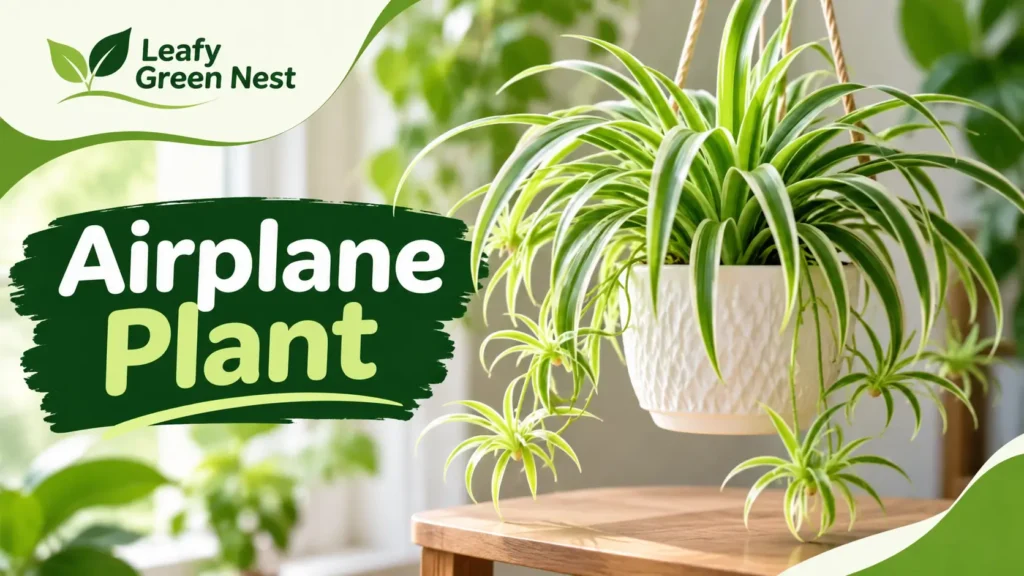
The airplane plant is a popular indoor houseplant known for its long, arching leaves, attractive green-and-white patterns, and small baby plants that grow from trailing stems. It is easy to maintain, adapts to different indoor environments, and makes a beautiful addition to homes and offices.
Scientifically known as Chlorophytum comosum, the airplane plant is also called a spider plant, ribbon plant, or spider ivy. Its attractive foliage and simple propagation make it a favorite among beginner and experienced gardeners.
Whether you want to grow an airplane plant indoors, learn about its benefits, or find a healthy plant for your collection, understanding its basic requirements will help you make the right choice.
Disclosure: This post contains affiliate links. If you purchase through these links, I may earn a small commission at no extra cost to you.
Table of Contents
What Is an Airplane Plant?
An airplane plant is an evergreen perennial houseplant belonging to the Asparagaceae family. It is native to tropical and southern Africa and is widely grown for its decorative foliage.
The plant develops narrow, grass-like leaves that grow in attractive clusters. Mature plants produce long stems with small baby plants called plantlets, which hang from the parent plant.
The name airplane plant comes from these trailing stems and baby shoots, which resemble tiny airplanes flying away from the main plant.
Airplane plant facts:
| Feature | Description |
|---|---|
| Botanical name | Chlorophytum comosum |
| Common names | Airplane plant, spider plant, ribbon plant |
| Family | Asparagaceae |
| Origin | Africa |
| Plant type | Evergreen perennial |
| Growth habit | Clumping and cascading |
| Foliage | Green or green with white stripes |
| Light requirements | Bright, indirect light |
| Water requirements | Moderate |
| Propagation | Plantlets and division |
| Maintenance | Low |


Airplane Plant vs Spider Plant: Key Differences
An airplane plant and a spider plant are two common names for the same botanical species, Chlorophytum comosum. There is no difference in their scientific classification or basic care requirements.
Both names describe the plant’s narrow leaves and long stems carrying small baby plants. Nurseries and online sellers may use either name when advertising the same houseplant.
| Feature | Airplane plant | Spider plant |
|---|---|---|
| Scientific name | Chlorophytum comosum | Chlorophytum comosum |
| Leaf shape | Long and narrow | Long and narrow |
| Growth habit | Cascading | Cascading |
| Baby plantlets | Yes | Yes |
| Indoor suitability | Excellent | Excellent |
| Care requirements | Similar | Similar |
When shopping, check the botanical name rather than relying only on the common name printed on the label. This helps you identify the correct plant regardless of what the seller calls it.
Popular Types of Airplane Plants
Airplane plants are available in several varieties with different leaf patterns, colors, and shapes. Most varieties share similar growing requirements, so you can choose one based on your preferred appearance.
Variegated Airplane Plant
The variegated airplane plant features green leaves with attractive white or cream-colored stripes. It is one of the most recognizable varieties and looks particularly beautiful in hanging baskets.
Curly Airplane Plant
The curly airplane plant, commonly sold as ‘Bonnie’, has naturally twisted leaves that create a compact, rounded appearance. It is a popular choice for shelves, desks, and smaller indoor spaces.
Solid Green Airplane Plant
This variety has completely green leaves without the white stripes found in variegated types. Its simple foliage creates a natural appearance and works well with different interior styles.
Reverse Variegated Airplane Plant
The reverse variegated variety has green centers with creamy white edges. Its contrasting foliage makes it an attractive option for decorative containers and indoor plant collections.
Airplane Plant Indoor: Best Growing Conditions
An airplane plant grows well indoors when it receives suitable lighting, moderate moisture, and warm temperatures. It can adapt to different rooms, making it a practical choice for apartments, houses, and offices.
Light Requirements
Bright, indirect sunlight is ideal for airplane plants. An east-facing window is often a good location because it provides gentle morning sunlight without exposing the leaves to intense afternoon heat.
Although the plant tolerates lower light, growth may become slower and variegated leaves may lose some of their attractive patterns.
If natural sunlight is limited, a grow light can help maintain healthy foliage.
Watering Requirements
Water your airplane plant when the upper layer of soil begins to dry. Avoid keeping the roots constantly wet because excessive moisture can cause root rot.
Follow these simple watering practices:
- Check the upper inch of soil.
- Water when the soil feels slightly dry.
- Apply water evenly around the plant.
- Allow excess water to drain through the bottom.
- Empty the saucer to prevent standing water.
Watering frequency depends on the season, temperature, pot size, and available light. During hot weather, the soil may dry faster than it does during cooler months.
Best Soil for Airplane Plants
Choose a loose, well-draining potting mix that holds some moisture without becoming soggy. A standard indoor houseplant mix with added perlite is usually suitable.
Avoid heavy garden soil because it can become compacted and restrict airflow around the roots.
Temperature and Humidity
Airplane plants prefer warm indoor conditions and average household humidity. Protect them from cold drafts, freezing temperatures, and sudden environmental changes.
If the air becomes very dry, grouping houseplants together or using a humidifier can help. Constant misting is generally unnecessary.
Fertilizer Requirements
Feed your airplane plant lightly during spring and summer when active growth takes place. A balanced liquid houseplant fertilizer diluted according to its instructions is generally sufficient.
Avoid excessive feeding because fertilizer salts can accumulate in the soil and contribute to brown leaf tips.
Airplane Plant Care: A Simple Maintenance Routine
Airplane plant care is straightforward because this houseplant does not require constant attention. Consistent watering, suitable lighting, and occasional pruning are usually enough to maintain healthy growth.
| Maintenance task | Recommended routine |
|---|---|
| Check soil | Before watering |
| Water | When the upper soil dries |
| Clean leaves | When dusty |
| Prune | Remove damaged foliage |
| Fertilize | During active growth |
| Inspect for pests | Every few weeks |
| Rotate pot | Occasionally |
| Repot | When roots become crowded |
Avoid cutting healthy leaves unnecessarily. Remove only damaged foliage and allow the remaining leaves to continue supporting the plant.
Airplane Plant Propagation: How to Grow New Plants
Airplane plant propagation is easy because mature plants naturally produce baby shoots called plantlets. These small plants develop along long stems and can eventually grow into independent houseplants.
You can propagate an airplane plant through several simple methods.
Propagation Through Baby Plantlets
This is the easiest method for beginners because the baby plants already develop on the parent plant.
- Select a healthy plantlet with visible roots.
- Cut its connecting stem using clean scissors.
- Prepare a small pot with moist potting mix.
- Place the plantlet into the soil.
- Keep the soil lightly moist.
- Position the pot in bright, indirect light.
New leaf growth is a useful sign that the young plant is establishing itself.
Propagation in Water
Water propagation allows you to observe root development before transferring the plant into soil.
Cut a healthy plantlet and place its base in a clean glass of water. Keep the leaves above the water and replace the water regularly.
Once the roots become established, transfer the plant into a small container filled with well-draining potting mix.
Propagation Through Division
Division works well when a mature airplane plant becomes large and crowded.
Remove the plant carefully from its container and gently separate the root system into smaller sections. Each section should have healthy roots and leaves.
Plant the sections in individual containers with fresh potting mix and water lightly.
Best time for propagation: Spring and early summer are generally suitable because the plant is actively growing.
For additional information about spider plant growing conditions, read the Royal Horticultural Society’s spider plant growing guide.
Airplane Plant Succulent: Is It a True Succulent?
No, an airplane plant is not a true succulent. It is a tropical perennial with fleshy roots that store some water, which can make it appear similar to certain succulent plants.
However, its long, narrow leaves and growing requirements are different from those of typical desert succulents.
| Feature | Airplane plant | Typical succulent |
|---|---|---|
| Plant type | Tropical perennial | Water-storing plant |
| Leaves | Long and narrow | Usually thick and fleshy |
| Water storage | Mainly in roots | Often in leaves or stems |
| Light | Bright, indirect | Often bright light |
| Soil | Well-draining potting mix | Porous succulent mix |
| Watering | Moderate | Usually less frequent |
You can use succulent soil for an airplane plant, but some mixes may dry too quickly. A regular houseplant mix improved with perlite is generally a better starting point.
Airplane Plant Benefits: Why Grow This Houseplant?
Airplane plants offer several decorative and practical benefits. Their attractive foliage, easy maintenance, and natural propagation make them suitable for different indoor environments.
Attractive Indoor Decoration
The long, arching leaves create a cascading appearance that looks beautiful in hanging baskets, decorative pots, and plant stands.
Easy Maintenance
Airplane plants are suitable for beginners because they tolerate different indoor conditions and do not require complicated gardening routines.
Simple Propagation
Mature plants produce baby plantlets that can be separated and grown in new containers. This makes it easy to expand your indoor garden or share plants with friends.
Pet-Friendly Option
The ASPCA lists Chlorophytum comosum as non-toxic to cats and dogs. However, pets should not eat large quantities of any houseplant because chewing plant material can still cause digestive discomfort.
Educational Value
The plant’s baby shoots provide an interesting way to observe plant growth and reproduction. Children and beginner gardeners can watch how small plantlets develop into independent plants.
Does an Airplane Plant Purify Indoor Air?
Airplane plants are often described as natural air purifiers. Some laboratory studies have demonstrated that houseplants can remove certain airborne chemicals under controlled conditions.
However, a few indoor plants cannot replace proper ventilation or air filtration in an ordinary home. Their main benefits are decorative value, easy maintenance, and the enjoyment of growing plants.
Common Airplane Plant Problems and Their Solutions
Airplane plants are generally resilient, but unsuitable growing conditions can cause yellow leaves, brown tips, slow growth, and root damage. Identifying the cause early makes problems easier to manage.
| Problem | Possible cause | Practical solution |
|---|---|---|
| Brown leaf tips | Mineral buildup or dry conditions | Try filtered water |
| Yellow leaves | Overwatering or natural aging | Check soil moisture |
| Drooping leaves | Water stress | Adjust watering |
| Slow growth | Insufficient light | Improve indirect lighting |
| Root rot | Poor drainage | Remove damaged roots |
| Pest infestation | Spider mites or mealybugs | Isolate and treat the plant |
Why Does an Airplane Plant Develop Brown Tips?
Brown tips are common and can result from mineral buildup, excessive fertilizer, dry soil, or low humidity.
Try filtered or rainwater if tap water appears to contribute to the problem. Remove damaged tips with clean scissors and avoid overfertilizing.
How Can You Prevent Root Rot?
Root rot develops when roots remain in wet soil for extended periods. Use a container with drainage holes and avoid watering before the upper soil begins to dry.
If roots become soft or mushy, remove damaged sections and repot the healthy plant in fresh soil.
How Do You Control Houseplant Pests?
Spider mites, aphids, scale insects, and mealybugs can occasionally affect airplane plants.
Inspect leaves and stems regularly. Isolate affected plants and use an appropriate insecticidal soap according to its label instructions.
Airplane Plant for Sale: Best Products to Consider
If you are looking for an airplane plant for sale, consider the plant’s size, variety, condition, and growing requirements before purchasing. Variegated spider plants are popular choices for indoor decoration, while true air plants offer a different soil-free growing experience.
The following products are based on the Amazon listing details supplied.
AUGUST BREEZE FARM Variegated Spider Plant: One Plant
The AUGUST BREEZE FARM Variegated Spider Plant features attractive green-and-white striped leaves that brighten any indoor space.
It is easy to maintain and grows best in bright, indirect light with well-draining soil.
Product features:
- Green and white variegated foliage.
- Suitable for indoor growing.
- Supplied in potting soil.
- Low-maintenance houseplant.
- Bright, indirect light recommended.
- Water when the top inch of soil feels dry.
This single-plant option is suitable if you want to add one attractive houseplant to your collection. Its striped leaves create a cascading appearance that works well in hanging baskets and decorative containers.
Variegated Spider Plant 'Airplane' - Air-Purifying, Low Maintenance, Thrives in Home & Office - Perfect for Plant Enthusiasts - Live houseplant in Potting Soil
AUGUST BREEZE FARM Variegated Airplane Plants: Two-Pack
This two-pack includes two variegated airplane plants with attractive green-and-white leaves, perfect for brightening up your home or office.
They are easy to care for and grow well indoors with bright, indirect sunlight and well-draining soil.
Product features:
- Two variegated spider plants.
- Green and white foliage.
- Suitable for home and office.
- Supplied in potting soil.
- Useful for decorating multiple spaces.
The two-pack is a practical option if you want to decorate different rooms or create a matching indoor plant arrangement. You can place the plants in separate decorative pots or use them in different areas with suitable indirect light.
2 Pack Variegated Spider Plant 'Airplane' - Air-Purifying, Low Maintenance, Thrives in Home & Office - Perfect for Plant Enthusiasts - Live houseplant in...
AUGUST BREEZE FARM Extra-Large Variegated Airplane Plants: Three-Pack
This three-pack includes extra-large variegated airplane plants with attractive green-and-white leaves, making them ideal for adding a fresh, natural touch to your home or office.
Each plant is suitable for indoor growing and thrives in bright, indirect light with well-draining potting soil.
Product features:
- Three variegated plants.
- Extra-large option.
- Green and white foliage.
- Suitable for indoor decoration.
- Supplied in potting soil.
This option may suit plant enthusiasts who want several airplane plants for their home or office. Before purchasing, confirm the actual plant dimensions and whether each plant arrives in an individual pot.
3 Pack Variegated Spider Plant 'Airplane' Extra-Large - Air-Purifying, Low Maintenance, Thrives in Home & Office - Perfect for Plant Enthusiasts - Live...
The Air Plant Shop Large Xerographica Air Plant
The Air Plant Shop Large Xerographica is a striking air plant with silvery-green, naturally curling leaves and a size of approximately 5–7 inches. It grows without soil, making it a beautiful, low-maintenance decorative option for indoor spaces and suitable outdoor settings.
Product features:
- Silvery-green curling leaves.
- Large variety measuring 5–7 inches wide.
- Soil-free growing.
- Suitable for indoor and outdoor decoration.
- Available in different sizes and quantities.
The Xerographica is an attractive option for people who enjoy unusual decorative plants. However, it is not an airplane spider plant.
It belongs to the genus Tillandsia and grows without traditional potting soil. Its care requirements are different from those of Chlorophytum comosum.
Large Xerographica Air Plants 5 to 7 Inch Wide - Air Plants Live Tillandsia Succulent House Plants Holders - Available in Wholesale/Bulk - Home and Garden...
Airplane Plant and Air Plant Product Comparison
| Product | Brand | Best for |
|---|---|---|
| Variegated airplane plant, one plant | AUGUST BREEZE FARM | Individual growing |
| Variegated airplane plant, two-pack | AUGUST BREEZE FARM | Multiple rooms |
| Extra-large airplane plant, three-pack | AUGUST BREEZE FARM | Larger plant collections |
| Xerographica air plant | The Air Plant Shop | Soil-free decoration |
Which product should you choose?
- Choose the single variegated airplane plant if you want one indoor houseplant.
- Choose the two-pack if you want to decorate two spaces.
- Choose the three-pack if you want several plants for your collection.
- Choose Xerographica if you prefer a different type of decorative air plant.
If your main goal is to grow an airplane plant, look for Chlorophytum comosum. Do not confuse it with Tillandsia air plants.
How to Repot an Airplane Plant Successfully
Repot your airplane plant when its roots become crowded or start growing through the drainage holes. A slightly larger container gives the roots more space without allowing excessive soil to remain wet.
Follow these simple repotting practices:
- Select a pot slightly larger than the existing container.
- Make sure it has drainage holes.
- Remove the plant carefully.
- Gently loosen tightly packed roots.
- Add fresh, well-draining potting mix.
- Position the plant at the same depth.
- Water lightly and allow excess moisture to drain.
Avoid oversized containers because unused soil can stay wet for longer and increase the risk of root problems.
Best Places to Grow an Airplane Plant Indoors
Airplane plants can grow in different indoor locations as long as they receive suitable indirect light. Their cascading leaves make them particularly attractive in elevated containers.
Consider these placement ideas:
- Living room: Place the plant near a bright window.
- Bedroom: Use a decorative pot on a shelf.
- Home office: Choose a compact curly variety.
- Kitchen: Keep it away from hot appliances.
- Covered balcony: Protect it from harsh afternoon sunlight.
- Hanging basket: Allow the leaves and baby shoots to cascade naturally.
Is an Airplane Plant a Good Choice for Indoor Growing?
An airplane plant is an excellent choice for anyone who wants an attractive, low-maintenance houseplant. Its cascading foliage, easy propagation, and adaptability make it suitable for beginners and experienced gardeners.
Provide bright, indirect light, moderate watering, and well-draining soil to encourage healthy growth. With occasional pruning and simple maintenance, your airplane plant can remain an attractive part of your indoor garden for years.
Frequently Asked Questions About Airplane Plants
What is an airplane plant called scientifically?
An airplane plant is scientifically known as Chlorophytum comosum. It is also called a spider plant, ribbon plant, or spider ivy.
Is an airplane plant good for beginners?
Yes. It is beginner-friendly because it requires relatively little maintenance, adapts to different indoor conditions, and produces baby plants that are easy to propagate.
Can an airplane plant grow in low light?
Yes, it can tolerate lower indoor light. However, bright, indirect sunlight encourages stronger growth and more attractive foliage.
Should I remove baby plants from an airplane plant?
You do not need to remove them. Leave them attached for a cascading appearance or separate rooted plantlets to grow additional plants.
Why does my curly airplane plant have straight leaves?
Changes in lighting, growing conditions, plant maturity, and natural variation can affect leaf curling. The ‘Bonnie’ variety generally develops its characteristic twisted foliage under suitable conditions.
Does an airplane plant flower indoors?
Yes. Mature airplane plants can produce small white flowers on long stems. These flowering stems may later develop baby plantlets that can be used for propagation.


