
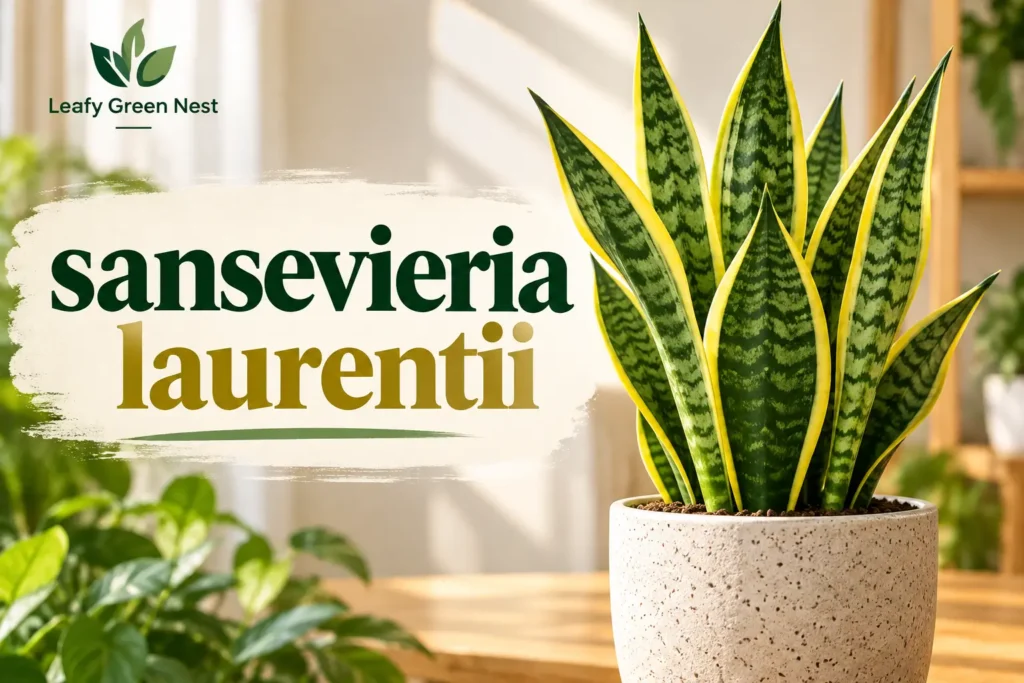
Sansevieria Laurentii is a popular indoor plant known for its upright green leaves, golden-yellow edges, and easy-care nature. Also called the golden snake plant or mother-in-law’s tongue, it is an excellent choice for beginners who want attractive greenery without frequent watering.
The plant is commonly identified as Sansevieria trifasciata ‘Laurentii’. Its accepted botanical classification is Dracaena trifasciata ‘Laurentii’, although the older name remains widely used by gardeners and plant sellers.
Unlike delicate houseplants, Sansevieria Laurentii stores water in its thick leaves and underground rhizomes. This helps it tolerate dry soil and survive in different indoor environments. With suitable light, good drainage, and careful watering, it can remain healthy for many years.
Table of Contents
Sansevieria Laurentii Care: Light, Water, and Soil
Sansevieria Laurentii care is straightforward because the plant tolerates a range of indoor conditions. Its long-term health depends mainly on suitable light, well-draining soil, and avoiding excess moisture around the roots.
Light Requirements
Bright, indirect light provides the best conditions for steady growth and attractive yellow leaf margins. The plant also tolerates lower light, although growth may slow and new leaves may appear less frequently.
- Bright, indirect light: Best for healthy growth and leaf color.
- Medium light: Suitable for most homes and offices.
- Low light: Tolerated, but growth is usually slower.
- Strong direct sunlight: Can scorch leaves, especially after sudden exposure.
Place the plant near a bright window with filtered sunlight. Gentle morning sun may be suitable, but protect it from intense afternoon rays.
Watering Requirements
Water Sansevieria Laurentii when the soil has dried completely throughout the root zone. The plant stores moisture in its leaves, so frequent watering is unnecessary and may cause root rot.
Follow this routine:
- Check the soil several centimeters below the surface.
- If it remains damp, wait before watering.
- When the soil is dry throughout the pot, water thoroughly.
- Let excess water drain through the bottom.
- Empty the saucer or decorative outer pot.
Watering frequency changes with temperature, light, soil composition, and pot size. Plants in warm, bright rooms often dry faster than those in cool, dim spaces.
Best Soil and Pot
Use a loose, well-draining cactus or succulent mix. If your potting mix retains too much moisture, add perlite or pumice to improve drainage and airflow.
Choose a pot with drainage holes and enough room for the roots and rhizomes. Terracotta pots dry faster in many conditions, while plastic and glazed ceramic pots often retain moisture longer.
Avoid dense garden soil and oversized containers. Both can keep the root zone wet for too long, particularly indoors.
Temperature and Fertilizer
Sansevieria Laurentii grows well at approximately 18–29°C. Protect it from frost, cold drafts, and prolonged exposure to temperatures below about 10°C.
During active growth, use a balanced houseplant fertilizer at the dilution recommended on the label. Occasional feeding is usually sufficient. Avoid overfertilizing because excess salts can damage roots and cause brown leaf tips.
Sansevieria Laurentii Benefits for Indoor Spaces
Sansevieria Laurentii benefits include easy maintenance, drought tolerance, and attractive foliage. It is particularly useful for people who want greenery without spending a lot of time on plant care.
1. Low-Maintenance Plant Care
This plant does not need daily attention or frequent watering. Its water-storing leaves make it a practical option for busy households, offices, and first-time plant owners.
However, low maintenance does not mean no maintenance. Check the soil, inspect the leaves, and look for pests occasionally.
2. Attractive Indoor Decoration
The upright leaves and yellow margins create a strong visual contrast. The plant works well in living rooms, bedrooms, entryways, and home offices.
Its vertical growth also makes it suitable for corners where a wide, spreading plant might take up too much space. A simple ceramic or terracotta pot can complement its architectural shape.
3. Tolerance of Dry Conditions
Sansevieria Laurentii stores water in its leaves and underground rhizomes. This allows it to tolerate dry periods better than many houseplants with thin foliage.
It is useful for people who sometimes forget to water their plants. However, prolonged neglect can still weaken the roots and leaves.
4. Indoor Air Quality: What Does the Evidence Say?
Snake plants are often described as natural air purifiers. Laboratory studies have examined whether houseplants can remove certain airborne chemicals, but results from sealed chambers do not directly show how much a single potted plant improves air quality in an ordinary home.
For healthier indoor air, prioritize ventilation, source control, and suitable air filtration when needed. Enjoy Sansevieria Laurentii for its appearance and easy care rather than relying on it to replace an air purifier.
Sansevieria Laurentii Propagation: How to Grow New Plants
Sansevieria Laurentii propagation is easiest through division or rooted offsets. These methods help preserve the parent plant’s distinctive green leaves and yellow margins.
Method 1: Propagation by Division
Division is the most reliable method when you want new plants that retain the Laurentii cultivar’s variegation.
- Carefully remove the mature plant from its pot.
- Brush away enough soil to reveal the roots and underground rhizomes.
- Identify a healthy section with roots, leaves, and a growing point.
- Separate the section carefully, using a clean knife if necessary.
- Plant it in fresh, well-draining soil.
- Place it in bright, indirect light and water sparingly while it establishes.
Each division needs healthy roots and a growing point to develop successfully. Spring and early summer are generally suitable times because warmer conditions support active growth.
Method 2: Separating Offsets or Pups
Offsets are small plants that develop around the base of the parent plant. Wait until an offset has developed its own roots before separating it.
Remove the plant from its pot, gently separate the offset, and plant it in a suitable container. This method is convenient because the new plant may already have an established root system.
Method 3: Propagation From Leaf Cuttings
Leaf cuttings can produce new snake plants, but they may not preserve Laurentii’s yellow margins. The resulting plant often develops green leaves because the original variegation is not maintained through this type of propagation.
If you want to retain the golden edges, choose division or rooted offsets rather than leaf cuttings.
Sansevieria Laurentii vs. Snake Plant: Key Differences
Sansevieria Laurentii is a type of snake plant, not a completely separate category. The name Laurentii identifies a particular cultivar known for its green leaves with golden-yellow margins.
Other snake plants can have plain green, striped, silver-toned, or differently shaped leaves. Their appearance varies by species and cultivar, although many share similar low-maintenance growing requirements.
| Feature | Sansevieria Laurentii | Sansevieria Zeylanica | Other Snake Plants |
|---|---|---|---|
| Leaf color | Green with yellow margins | Usually green with darker banding | Varies by cultivar |
| Main feature | Golden edges | Striped green foliage | Different shapes and patterns |
| Light needs | Indirect light preferred | Indirect light preferred | Depends on variety |
| Water needs | Allow soil to dry fully | Allow soil to dry fully | Usually low to moderate |
| Best use | Colorful vertical accent | Green foliage display | Varied indoor designs |
Sansevieria Zeylanica
Sansevieria Zeylanica is commonly sold as a green snake plant with patterned foliage. Unlike Laurentii, it generally lacks the broad golden-yellow margins.
Plant names can vary between sellers, so check the botanical name when purchasing a particular variety.
Sansevieria Laurentii Superba
Sansevieria Laurentii Superba appears in some retail listings for Laurentii-type plants. However, nursery trade names are not always consistent.
If you want a particular leaf shape or growth habit, inspect the plant carefully and ask the seller to confirm its identity.
Sansevieria Laurentii Common Name and Botanical Identity
Sansevieria Laurentii is commonly called the golden snake plant, variegated snake plant, and mother-in-law’s tongue. These names refer to its upright leaves and distinctive green-and-yellow appearance.
The name Sansevieria trifasciata ‘Laurentii’ remains widely used in gardening and retail listings. Modern botanical classification places the cultivar under Dracaena trifasciata.
Both names may appear in plant-care information. Knowing the older and accepted botanical names makes it easier to find reliable advice and identify the correct plant.
Sansevieria Laurentii Problems: Causes and Solutions
Most Sansevieria Laurentii problems result from overwatering, poor drainage, unsuitable light, or pests. Check both the leaves and the soil before changing your care routine.
| Problem | Likely cause | Recommended solution |
|---|---|---|
| Yellow, soft leaves | Overwatering or root rot | Inspect roots and replace soggy soil |
| Brown leaf tips | Damage, salts, or environmental stress | Review watering and fertilizer use |
| Wrinkled leaves | Dry soil or damaged roots | Check moisture before watering |
| Pale or scorched patches | Excess direct sunlight | Move to filtered light |
| White cottony spots | Mealybugs | Isolate and treat the plant |
| Slow growth | Low light or normal seasonal slowdown | Improve light and inspect roots |
Why Is My Sansevieria Laurentii Not Growing?
Snake plants naturally grow slowly, especially in low light or during cooler periods. Slow growth alone does not mean the plant is unhealthy.
If growth stops for an extended period, check the light level, soil moisture, drainage, and roots. A plant in wet soil may struggle to absorb water properly because its roots have been damaged.
Avoid adding extra fertilizer until you have ruled out problems with light and drainage. More fertilizer will not solve root rot or insufficient light.
Sansevieria Laurentii Repotting: When and How
Repot Sansevieria Laurentii when its roots and rhizomes become crowded, the pot cracks, or the plant becomes unstable. It does not need repotting every year.
Choose a container with drainage holes that is only slightly larger than the existing root system. Remove the plant carefully, inspect the roots, and trim any rotten sections with a clean tool.
Place the plant in fresh, well-draining soil at the same general depth as before. Avoid watering heavily if the roots have been cut or damaged. Allow any fresh cuts to dry before resuming careful watering.
For additional growing advice, see the Royal Horticultural Society’s guide to growing Sansevieria.
Is Sansevieria Laurentii Safe for Pets?
Sansevieria Laurentii is harmful if eaten by cats or dogs. Chewing the leaves may cause vomiting, diarrhea, or other digestive irritation.
Keep the plant away from pets that tend to chew houseplants. If an animal eats part of the plant and develops symptoms, contact a veterinarian.
The leaves can also have sharp tips and edges, so handle them carefully during pruning, repotting, and propagation.
Sansevieria Laurentii Care Checklist
A simple maintenance routine can prevent many common problems. Check the following items regularly to keep your plant healthy.
- Provide bright, indirect light.
- Check the soil before every watering.
- Use a pot with drainage holes.
- Remove dead or badly damaged leaves.
- Inspect leaf bases for pests.
- Rotate the pot occasionally for balanced growth.
- Repot when roots or rhizomes become crowded.
- Keep the plant away from pets that may chew it.
Is Sansevieria Laurentii Right for Your Home and Your Space?
Sansevieria Laurentii is an excellent choice for anyone who wants attractive foliage without demanding daily care. Its golden margins, upright leaves, and tolerance of dry conditions make it suitable for beginners and experienced plant owners.
For the best results, provide bright, indirect light, well-draining soil, and careful watering. If you want more plants with the same yellow-edged appearance, use division or rooted offsets instead of leaf cuttings.
With these simple habits, your golden snake plant can remain a healthy and attractive part of your home for many years.
Frequently Asked Questions About Sansevieria Laurentii
What is the common name of Sansevieria Laurentii?
Its common names include golden snake plant, variegated snake plant, and mother-in-law’s tongue. These names describe its upright leaves and distinctive yellow margins.
Is Sansevieria Laurentii good for bedrooms?
Yes. It is a suitable bedroom plant because it tolerates typical indoor conditions and requires little maintenance. It should not, however, replace proper ventilation or air filtration.
Can Sansevieria Laurentii grow in water?
Leaf cuttings may develop roots in water, but long-term growth is generally more reliable in well-draining soil. Avoid leaving the roots in conditions that encourage rot.
Should you mist Sansevieria Laurentii?
No. Regular misting is unnecessary because the plant tolerates average indoor humidity. Focus on correct soil moisture instead of spraying the leaves.
Why are the yellow edges turning green?
Low light can affect growth and leaf appearance, but established yellow margins should remain part of the plant’s variegation. Leaf-cutting propagation may also produce green offspring.
Does Sansevieria Laurentii flower indoors?
Yes. Mature plants occasionally produce tall stalks with small, fragrant, greenish-white flowers. Indoor flowering is uncommon and cannot be guaranteed, even with good care.


