
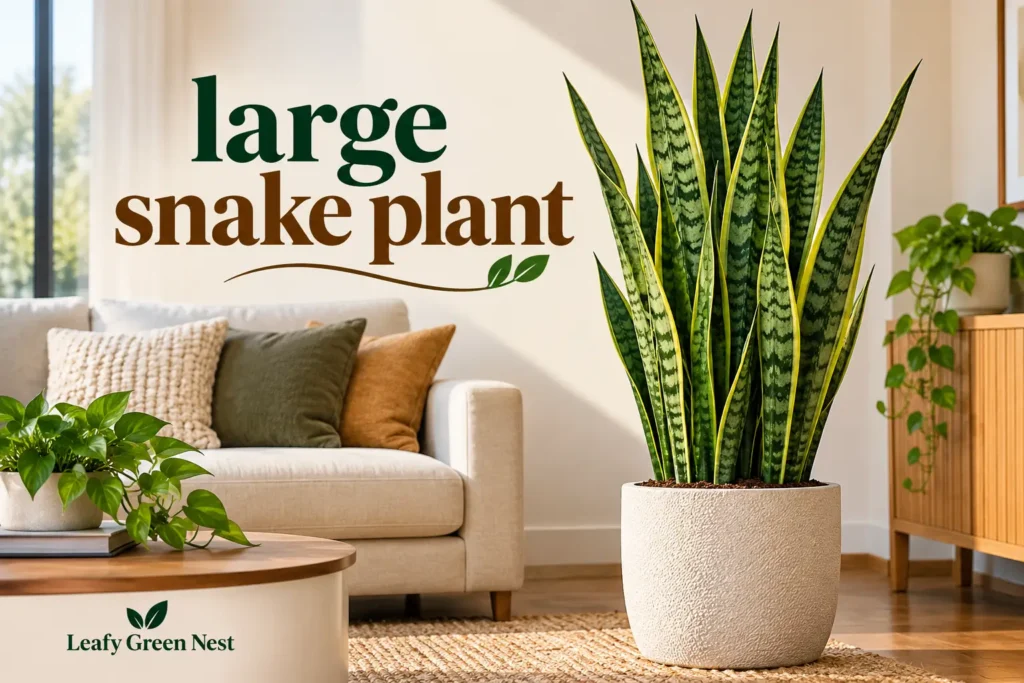
A large snake plant can transform an empty corner into a beautiful green focal point. Its tall, sword-shaped leaves add height without taking up much floor space. This makes it a practical choice for living rooms, bedrooms, offices, and entryways.
Whether you want a large snake plant indoor display or an extra large snake plant for a spacious room, choosing the right variety and pot matters. Some plants have broad, yellow-edged leaves, while others feature narrow, dark green foliage. With the right care, these plants can remain attractive for years.
Disclosure: This post contains affiliate links. If you purchase through these links, I may earn a small commission at no extra cost to you.
Table of Contents
What Is a Large Snake Plant?
A large snake plant is a mature or tall-growing snake plant, commonly known as mother-in-law’s tongue. Its botanical name is Dracaena trifasciata, although many plant labels still use the older name Sansevieria trifasciata.
The plant grows in a clump, with firm leaves emerging from the base. Depending on the variety and growing conditions, mature leaves can reach several feet in height.
Here are the main features that make this houseplant popular:
- Upright growth: Its leaves grow mostly upward rather than spreading across the floor.
- Distinctive foliage: Leaves may feature dark green bands, silvery patterns, or yellow edges.
- Low maintenance: The plant stores water in its thick leaves and tolerates dry periods.
- Flexible placement: It can suit living rooms, offices, bedrooms, and other indoor spaces with suitable light.
Snake plants tolerate low light, but they generally grow better with brighter indirect light. Overwatering is a common cause of problems.


Types of Large Snake Plants With Pictures
Different snake plant varieties have different leaf shapes, colors, and growth habits. Choosing a suitable type helps you find a plant that fits your room and design preferences.
Laurentii Snake Plant
The Laurentii variety has tall, green leaves with golden-yellow edges and darker green markings. Its upright shape works well beside furniture or in an empty corner.
Best for: Bright, architectural greenery indoors.
Pros
- Distinctive yellow leaf edges.
- Tall, upright growth.
- Works well as a floor plant.
Cons
- Yellow edges may lose some color in poor light.
- Requires enough space for mature leaves.
Altman Plants Sansevieria Laurentii Snake Plants, White Planter, Variegated Snake Plant Decor, Easy Plant Gift & Desk Plant, Live Snake Plant Live Indoor...
Zeylanica Snake Plant
Zeylanica has long, green leaves with lighter gray-green markings. Its mostly green appearance suits simple, natural, and modern interiors.
Best for: A leafy look without prominent yellow edges.
Pros
- Attractive striped foliage.
- Suits many interior styles.
- Tolerates periods of low light.
Cons
- Growth may slow in very dim rooms.
- Its mature size depends on growing conditions.
PLANTVERS Sansevieria Zeylanica Snake Plant in a 3 Inch Nursery Pot - Live Green Snake Plant - Mother-in-Law Tongue - Low Light Houseplant - Air Purifier...
Moonshine Snake Plant
Moonshine has broad, upright leaves with a pale silvery-green color. Its lighter foliage creates a different look from the darker, striped varieties.
Best for: Light, neutral interior designs.
Pros
- Pale foliage creates a subtle contrast.
- Upright leaves suit small floor spaces.
- Distinctive appearance.
Cons
- New growth may appear greener than mature foliage.
- Needs suitable light to maintain healthy growth.
Moonshine Snake Plant – Sansevieria Moonshine – Rare Silvery Foliage – Easy Care Air Purifying Plant – Live Plant in 4” Pots
Black Gold Snake Plant
Black Gold varieties feature dark green foliage with contrasting yellow margins. Their strong leaf colors create a bold vertical accent in larger rooms.
Best for: A dramatic indoor plant display.
Pros
- Strong contrast between green and yellow.
- Upright growth habit.
- Suitable for living rooms and offices.
Cons
- A mature plant can become top-heavy.
- Damaged leaves may affect its appearance.
These varieties differ in appearance, and not every cultivar reaches the same height. Check the plant’s mature size before selecting one for your home.
BubbleBlooms Black Gold Snake Plant 2 inch Set of 3 Green Yellow Albomarginata Dwarf Rosette Sansevieria Tiny Mini Pixie Plants
How Tall Does a Large Snake Plant Grow?
A large snake plant can reach around 3 to 4 feet indoors, while some varieties and growing conditions allow taller growth. The exact height depends on the cultivar, maturity, light, and general care.
A 5 ft tall snake plant is a possible option to look for if you want a dramatic floor plant. However, confirm the actual height of the individual plant rather than relying only on the variety name.
When comparing plant sizes, check these details:
- Plant height: Measure from the soil surface to the tallest leaf tip.
- Plant width: A broad clump may need more floor space than a narrow one.
- Leaf condition: Look for firm leaves without extensive damage or soft, discolored areas.
- Root and pot stability: A tall plant needs a container that can support its upright leaves.
An extra large snake plant can be a good fit for a spacious living room or office. For a smaller room, a medium-sized plant may offer the same style without overwhelming the space.
Large Snake Plant Indoor Care
A large snake plant does not need a complicated care routine. The most important factors are light, watering, soil drainage, and a stable container.
Light Requirements
Snake plants adapt to different indoor light levels. However, bright, indirect light is a good choice for steady, healthy growth.
Place your plant near a bright window where sunlight is filtered or does not strike the leaves harshly for long periods. It can tolerate lower light, but growth may be slower.
If the leaves become weak or the plant produces little new growth, assess its light conditions before adding fertilizer. Avoid moving a plant from a dim room into strong direct sunlight suddenly.
How Often Should You Water a Large Snake Plant?
Water your snake plant when its potting mix has dried out thoroughly. Do not follow a rigid weekly schedule because drying time changes with room temperature, light, pot material, and season.
Follow these steps:
- Check the soil several inches below the surface.
- If the mix is still damp, wait before watering.
- Once it is dry, water thoroughly until excess water drains from the bottom.
- Empty any water collected in the saucer or decorative outer pot.
Reduce watering during cooler months when growth slows and soil takes longer to dry. Yellow, soft leaves and persistently wet soil can signal overwatering.
For more detailed growing advice, read the Royal Horticultural Society’s snake plant growing guide.
Best Soil for a Large Snake Plant
Large snake plants need a potting mix that allows excess water to escape. Dense, waterlogged soil can damage their roots.
A cactus or succulent potting mix is a useful starting point. You can also use a suitable houseplant mix amended with perlite to improve drainage and airflow.
Always use a pot with drainage holes. A decorative planter without holes can work as an outer cover, but the plant should remain in a draining nursery pot inside it.
Choosing a Stable Pot
Tall leaves can make a mature snake plant top-heavy. A stable pot helps prevent the plant from tipping over.
Look for a container with:
- Drainage holes at the bottom.
- Enough room for the root system.
- A broad, stable base.
- A suitable weight for the plant’s size.
Avoid moving directly into an oversized pot. Excess soil can stay wet longer than the roots can use the moisture.
Temperature and Humidity
Snake plants generally do well in typical warm indoor conditions. They also tolerate the relatively low humidity found in many homes.
Keep the plant away from cold drafts and sudden temperature changes. You usually do not need a humidifier just for a snake plant.
Fertilizing and Pruning
Feed your plant sparingly during active growth, following the fertilizer label. Too much fertilizer is unnecessary and may harm the roots.
To tidy a large snake plant, remove damaged or dead leaves by cutting them near the soil line with clean tools. Do not trim healthy leaves simply to make the plant taller. Cut leaf tips do not grow back into their original shape.
Repotting a Mature Snake Plant
Snake plants can stay in the same pot for a long time. Repot when the plant becomes unstable, the roots crowd the container, or the pot becomes damaged.
Choose a container only moderately larger than the existing root ball. After repotting, use a well-draining mix and avoid keeping it constantly wet.
Large Snake Plant Outdoor Care
A large snake plant can grow outdoors in a suitable warm climate, provided it receives appropriate light and protection from cold weather. If you move an indoor plant outside, introduce it to outdoor conditions gradually.
Keep these points in mind:
- Choose a sheltered location with filtered sunlight or partial shade.
- Protect the plant from cold temperatures and frost.
- Use a pot with drainage holes, especially during rainy weather.
- Check the soil more often in hot weather, but water only when it has dried sufficiently.
- Avoid leaving the pot in standing water.
Snake plants can also be grown in outdoor landscapes in suitable climates. However, some types may spread beyond their intended area, so container growing is often easier to manage.
Large Snake Plant for Sale: What to Check Before Buying
If you are searching for a large snake plant for sale, compare the plant’s actual size, condition, variety, and growing requirements. A large listing photo does not always show the plant’s true height or fullness.
Before ordering online or visiting a nursery, check the following.
| What to check | Why it matters |
|---|---|
| Actual plant height | Confirms whether it suits your available space. |
| Variety name | Helps you understand its likely appearance and mature size. |
| Number of leaves | Helps you assess the plant’s fullness. |
| Leaf condition | Firm, upright leaves are generally preferable to soft or badly damaged foliage. |
| Soil moisture | Constantly wet soil may indicate poor watering practices. |
| Pot and drainage | Helps prevent waterlogging and makes the plant easier to support. |
| Delivery details | A large plant needs suitable packaging to reduce leaf damage during shipping. |
Should You Buy a 5 Ft Tall Snake Plant?
A 5 ft tall snake plant can make a strong visual statement, but height alone should not determine your choice.
Measure the available space from the floor to the ceiling, leaving room for the plant’s tallest leaves. Also consider the width of the foliage, the weight of the container, and how easily you can water it.
If you cannot find a plant at the exact size you want, consider a younger, tall-growing variety. It may eventually develop the look you want, although growth speed and final size are not guaranteed.
Is an Extra Large Snake Plant Worth Choosing?
An extra large snake plant is worth considering when you want an established plant that creates an immediate focal point. It can also save you the wait involved in growing a smaller plant to a similar size.
However, a mature plant may be harder to move, more difficult to fit through narrow doorways, and heavier when watered. Check the container dimensions and delivery arrangements before ordering.
Common Problems With Large Snake Plants
Large snake plants are generally easy to maintain, but poor growing conditions can still cause problems.
| Problem | Possible cause | What to do |
|---|---|---|
| Yellow, soft leaves | Overwatering or root damage | Check soil moisture and inspect roots if the problem continues. |
| Wrinkled or limp leaves | Prolonged dryness or root problems | Check the soil and roots before watering. |
| Brown patches | Sun scorch, physical damage, or other stress | Review recent light changes and inspect the affected area. |
| Slow growth | Low light, seasonal slowdown, or normal growth habits | Check light and growing conditions before changing the care routine. |
| Leaning or falling over | Top-heavy growth or an unstable pot | Move to a stable container and check the root system. |
| Pests on leaves | Possible mealybugs or spider mites | Inspect the foliage and use a suitable treatment according to its label. |
Snake plants can tolerate dry periods, so adding more water is not always the answer when a plant looks unhealthy. Check the roots, soil, and light conditions first.
Are Large Snake Plants Safe for Pets?
Snake plants are toxic to cats and dogs if eaten. Keep the plant away from pets that chew leaves, and contact a veterinarian if your pet ingests part of the plant and develops symptoms or if you are concerned about exposure.
This is especially important when placing a large plant on the floor. Choose a stable location that pets cannot easily access.
How to Choose the Right Large Snake Plant for Your Home
A large snake plant is a practical choice for anyone who wants an attractive, low-maintenance indoor plant. Its upright leaves suit living rooms, offices, and empty corners, while its drought tolerance makes routine care relatively simple.
Choose a variety that fits your space, use a stable pot with drainage holes, and avoid overwatering. If you want an extra large snake plant or a 5 ft tall snake plant, check its actual dimensions before buying. A healthy plant that suits your home’s light and space is a better choice than one selected by size alone.
Frequently Asked Questions
How tall can a large snake plant grow indoors?
Many common snake plants reach around 3 to 4 feet indoors, although some varieties can grow taller. Check the specific cultivar and actual plant height before buying.
Can I keep a large snake plant in a bedroom?
Yes. A bedroom can suit a snake plant if it receives enough natural or supplemental light. Keep it away from pets that may chew its leaves.
How often should I water a large snake plant?
Water when the potting mix has dried thoroughly. The interval varies with light, temperature, pot size, and season, so check the soil rather than following a fixed schedule.
Can a large snake plant survive in low light?
Yes, snake plants tolerate low light, but they generally grow better in brighter indirect light. Very dim conditions can slow growth and reduce plant vigor.
Can I grow a large snake plant outdoors?
Yes, in suitable warm conditions. Protect it from frost, introduce it to outdoor sunlight gradually, and use well-draining soil in a container with drainage holes.
How can I make my snake plant grow taller?
Provide suitable light, allow the soil to dry between waterings, and avoid root damage from poor drainage. Growth depends on the variety and maturity, so a taller plant may take time to develop.


