
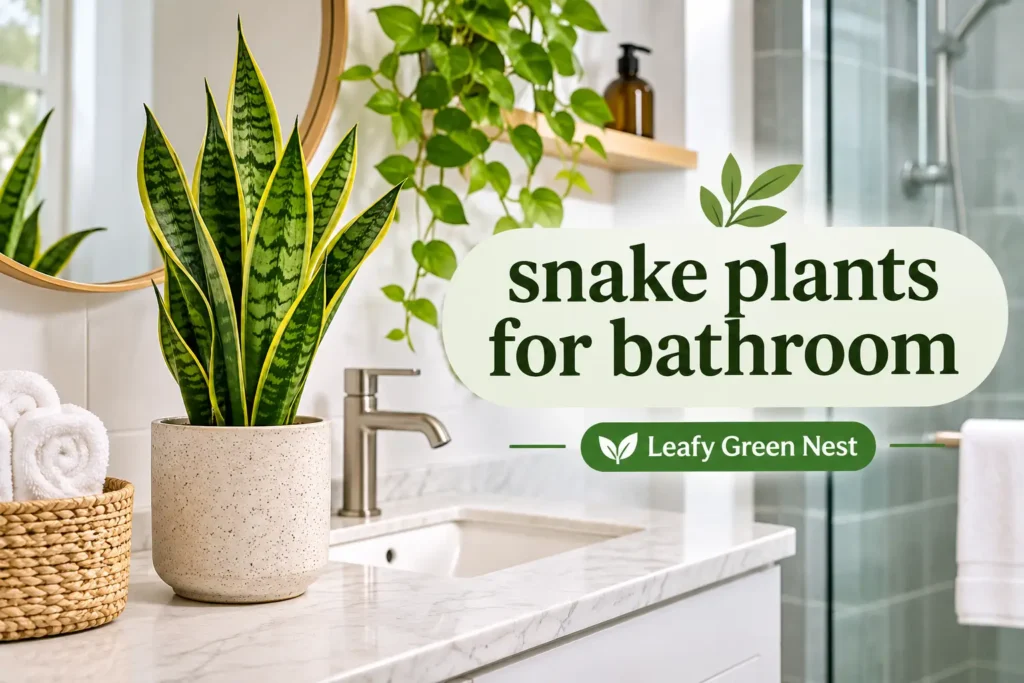
Snake plants for bathroom spaces add greenery without demanding much attention. Their upright leaves suit small rooms, and they can handle normal indoor humidity. They are a good choice for bathrooms that receive some natural light.
The main thing to remember is that snake plants still need light to grow. If your bathroom has no window, you will need a grow light or artificial greenery instead.
This article covers the best snake plant varieties, bathroom care, low-light conditions, Feng Shui and Vastu ideas, and artificial plant options for rooms where real plants cannot thrive.
Disclosure: This post contains affiliate links. If you purchase through these links, I may earn a small commission at no extra cost to you.
Table of Contents
TL;DR: Snake Plants for Bathroom
Snake plants are a great choice for bathrooms with natural or low indirect light because they need little care, grow well in small spaces, and add a fresh touch of greenery.
Choose a variety that fits your bathroom, use well-draining soil, and water only when the soil is completely dry. Keep the plant away from constantly wet areas and make sure the room has good ventilation. If your bathroom has no natural light, use a grow light or choose artificial plants instead.



What Are Snake Plants for Bathroom Spaces?
Snake plants are indoor plants with thick, upright leaves that store water. Their botanical name is Dracaena trifasciata, though many people still know them as Sansevieria trifasciata or mother-in-law’s tongue.
Their sturdy leaves and slow growth make them suitable for indoor spaces. They do not need frequent watering, but they do need well-draining soil and a place with enough light.
Some varieties grow tall and suit empty corners, while compact types fit on vanities and shelves.
Snake Plant in Bathroom Benefits
A snake plant can make a bathroom feel more inviting without adding a demanding care routine. It is most useful in a bathroom that has some daylight and enough space for a suitable pot.
Adds Color and Texture
The upright leaves bring a clear shape to bathroom decor. Green and yellow varieties stand out against white tiles, while silvery-green types suit neutral or modern interiors.
Handles Normal Indoor Humidity
Snake plants can tolerate the humidity that builds up after a shower. They do not need extra misting or a humidifier in a typical bathroom.
However, humid air does not mean the soil should stay wet. Roots can rot if water collects around them.
Needs Less Frequent Watering
The leaves store water, so snake plants can go longer between waterings than many leafy houseplants. This makes them practical if you do not want a daily plant-care routine.
Works in Small Spaces
Many varieties grow upward rather than spreading across the floor. A compact plant can sit on a vanity, while a taller one can fill an unused corner.
Makes the Room Feel More Welcoming
A healthy plant adds a natural touch to a room filled with hard surfaces such as tile, glass, and stone. It can improve the look of the space, but it should not be treated as a way to remove mold, control humidity, or replace ventilation.
Best Snake Plants for Bathroom Indoors
The right variety depends on the size of your bathroom and the look you want. Check the plant’s mature size before buying, especially if you plan to keep it on a narrow shelf.
Laurentii Snake Plant
Laurentii has dark green leaves with yellow edges. It grows upright and is a good choice for a floor planter or an empty bathroom corner.
Moonshine Snake Plant
Moonshine has pale, silvery-green leaves. Its soft color works well with white, gray, and minimalist bathroom designs.
Bird’s Nest Snake Plant
Bird’s Nest, also called Hahnii, grows in a compact rosette. Its shorter leaves make it suitable for a vanity, countertop, or sturdy shelf.
Black Gold Snake Plant
Black Gold has deep green leaves edged in yellow. It adds contrast to light-colored bathrooms and works well in a simple decorative pot.
Bantel’s Sensation Snake Plant
Bantel’s Sensation has narrow leaves with pale vertical stripes. Its upright shape suits narrow spaces where a wider plant would get in the way.
Which Variety Fits Your Bathroom?
| Bathroom space or style | Suitable variety |
|---|---|
| Small vanity | Bird’s Nest |
| Empty floor corner | Laurentii |
| Modern, light-colored room | Moonshine |
| Strong color contrast | Black Gold |
| Narrow floor space | Bantel’s Sensation |
Snake Plants for Bathroom Low Light
Snake plants tolerate lower light better than many houseplants, but they grow best in bright, indirect light. In a dim bathroom, growth may slow and the soil will take longer to dry.
A frosted window may provide enough daylight, depending on its size and how much light reaches it. Try placing the plant near the window rather than in the darkest corner.
Tips for Growing Snake Plants in Low Light
- Choose a spot with filtered daylight.
- Keep the plant away from harsh, direct sun for long periods.
- Do not assume a dark corner is suitable just because the plant tolerates low light.
- Water less often when the soil dries slowly.
- Consider an LED grow light if natural light is weak.
Snake Plants for Bathroom No Light: Can They Survive?
A snake plant cannot live indefinitely in a completely dark bathroom. It needs light for photosynthesis, the process plants use to make energy.
If your bathroom has no window, there are three practical choices.
Use an LED Grow Light
A suitable full-spectrum LED grow light can provide the light a living plant needs. Follow the manufacturer’s guidance for the distance and daily lighting period.
Move the Plant Between Rooms
You can use a snake plant as temporary bathroom decor and move it to a brighter room regularly. This is less convenient than keeping it in one place, but it can work if you are willing to move it.
Choose Artificial Greenery
Artificial plants need no sunlight, soil, or watering. They are the simplest option for a bathroom that stays dark throughout the day.
Snake Plants for Bathroom Feng Shui
Some Feng Shui traditions associate snake plants with protection and strength because of their upright, pointed leaves. People who follow these ideas may use the plant to add a sense of balance to a bathroom.
Feng Shui is a traditional design practice, not a scientifically proven way to change energy or attract good fortune. You can still use its ideas as a guide when arranging your space.
Where to Place a Snake Plant
- In an open corner: Add greenery without blocking the walkway.
- Near the vanity: Use a small variety to soften the look of the counter.
- In a tidy area: Keep the plant away from clutter and crowded surfaces.
- Near natural light: Choose a position that also supports healthy growth.
Keep pointed leaves away from places where people may brush against them.
Snake Plant in Bathroom Vastu
Vastu Shastra is a traditional Indian approach to arranging buildings and living spaces. Some Vastu interpretations connect plants with growth and a sense of balance, but advice about the best direction for a snake plant varies.
If you follow Vastu, you may come across suggestions to use directions such as east or southeast. There is no single scientifically established placement rule for snake plants in bathrooms.
For practical placement, choose a clean area with enough light. Keep the pot out of the way, protect it from constant shower splashes, and remove damaged leaves when needed.
How to Care for Snake Plants in the Bathroom
Good drainage, suitable light, and careful watering are the basics of snake plant care. Most problems begin when the soil stays wet for too long.
Give It Suitable Light
Place the plant near a window that provides filtered daylight. If the bathroom is dim, use a grow light or move the plant to a brighter room.
Check the Soil Before Watering
Do not water on a fixed weekly schedule. Check whether the soil has dried through most of the pot before watering.
When it is dry, water thoroughly and let the excess drain away. Empty any water left in the saucer or outer container.
Use Well-Draining Potting Mix
A cactus or succulent mix is a good option. You can also improve a suitable houseplant mix with perlite or pumice to help excess water drain.
Avoid heavy garden soil, which can hold too much moisture around the roots.
Pick a Pot With Drainage Holes
A living snake plant should be in a pot with drainage holes. If you prefer a decorative pot without holes, keep the plant in a removable nursery pot inside it.
Keep Air Moving
Run the bathroom exhaust fan or open a window after showers when possible. Good ventilation helps the room dry out and keeps the space more comfortable.
Wipe Dust From the Leaves
Use a soft, damp cloth to remove dust or water marks. Avoid harsh cleaners and leaf-shine products.
Growing tip: A plant in a dim bathroom usually needs less water than one near a bright window. Check the soil each time rather than relying on a calendar.
For more growing advice, read Penn State Extension’s Snake Plant: A Forgiving, Low-Maintenance Houseplant.
Common Snake Plant Problems in Bathrooms
A change in leaf color or texture can point to a care problem. Check the soil and roots before changing your watering routine.
| What you notice | Possible cause | What to check |
|---|---|---|
| Yellow leaves | Too much water | Soil moisture and drainage |
| Soft leaves | Excess moisture or root rot | Roots and potting mix |
| Brown tips | Damage or growing stress | Leaf condition and surroundings |
| Drooping leaves | Root or watering problems | Soil and root health |
| Slow growth | Not enough light | Window or grow-light access |
| Pale leaves | Poor light or other stress | Overall growing conditions |
Why Are the Leaves Turning Yellow?
Overwatering is a common cause of yellow leaves. If the soil stays wet, check the roots for soft or damaged areas.
Remove rotten roots with clean tools and repot the plant in fresh, well-draining mix if needed.
Does Bathroom Humidity Cause Root Rot?
Humidity in the air does not automatically cause root rot. The bigger risk is soil that stays waterlogged because of frequent watering or poor drainage.
Use a pot with drainage holes and let the soil dry before watering again.
Real Snake Plants vs. Artificial Plants for Bathrooms
Real plants need light and occasional care, while artificial plants work in spaces where living plants cannot grow. Your choice depends on the bathroom’s light and how much maintenance you want.
| Feature | Real snake plant | Artificial plant |
|---|---|---|
| Light | Needed | Not needed |
| Water | Needed occasionally | Not needed |
| Soil | Needed | Not needed |
| Growth | Yes | No |
| Care | Low | Very little |
| Windowless bathroom | Needs a grow light | Suitable |
Artificial Plant Options for Bathroom Decor
If your bathroom has no natural light, artificial greenery can add color without plant care. The following options are based on the product details provided.
Der Rose 4 Pack 7-Inch Mini Fake Plants
This set has four small artificial plants in white square pots. Each is about 7 inches tall.
Pros
- Four different greenery styles.
- Compact size for counters and shelves.
- Easy to move around.
- No watering or sunlight needed.
Cons
- White plastic pots may not suit every decor style.
- Small plants may be hard to notice in a large bathroom.
- Leaves may need shaping after unpacking.
Best for: Small bathrooms and vanity shelves.
Der Rose 4 Pack 7" Mini Fake Plants, Artificial Plants for Bathroom Decor
Der Rose 4 Pack Mini Fake Plants in Black Pots
This set includes four artificial plants in matte black pots. The different leaf shapes give the group a varied look.
Pros
- Black pots suit modern interiors.
- Four styles offer decorating flexibility.
- Small enough for narrow surfaces.
- Easy to rearrange.
Cons
- Black pots may look too dark in some rooms.
- Plants are too small to fill a large corner.
- Leaves need occasional dusting.
Best for: Modern bathrooms and dark accessories.
Der Rose 4 Pack Mini Fake Plants in Black Pots, 7" Bathroom & Desk Decor
FAVOWREATH 4 Pack Mini Artificial Greenery
This set includes four artificial plants in gray decorative pots. Its neutral colors suit farmhouse and rustic interiors.
Pros
- Four plants for different surfaces.
- Gray pots work with neutral colors.
- Different leaf shapes add variety.
- Compact tabletop size.
Cons
- The pulp-based pots should not be soaked.
- Leaves may arrive compressed.
- Not suitable for large floor displays.
Best for: Farmhouse-style bathrooms.
4 Pack Fake Plants Mini Artificial Greenery Potted Plants Bathroom Decor
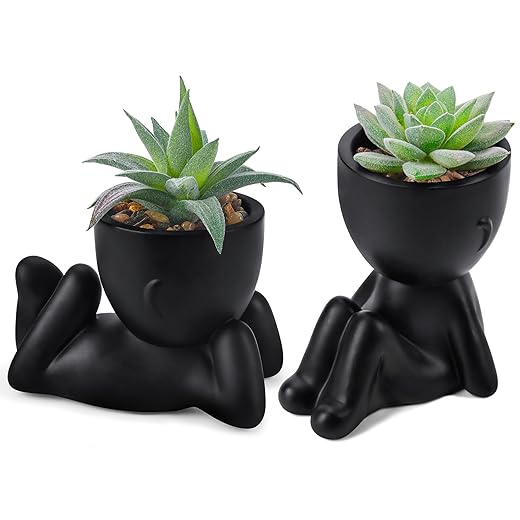
Der Rose 2 Pack Fake Succulents in Black Human Pots
These two artificial succulents come in sculptural black planters shaped like human figures. They offer a playful alternative to standard plant pots.
Pros
- Unusual design adds character.
- Small enough for narrow shelves.
- No soil or watering mess.
- Easy to move.
Cons
- The design may not suit traditional decor.
- Small size limits their impact.
- Black planters may contrast strongly with light interiors.
Best for: Small shelves and statement decor.
Der Rose 2 Pack Fake Succulents in Black Human Pots for Bathroom Decor
MIXROSE 2 Pack Fake Eucalyptus Plants
This pair has sage-green artificial eucalyptus leaves with a frosted finish. Each plant is about 9.5 inches tall and 6 inches wide.
Pros
- Taller than the mini plant sets.
- Soft green color suits spa-style decor.
- Adjustable leaves can be spread out.
- No watering or sunlight needed.
Cons
- Needs more shelf or counter space.
- The pots should not be soaked or exposed to rain.
- May be too large for narrow bathroom surfaces.
Best for: Farmhouse, rustic, and spa-inspired bathrooms.
2 Pack Fake Plants Eucalyptus Potted for Home Office Bathroom Decor | Sage Green Frosted Artificial Plants, Pet and Kids Safe, Maintenance - Free Farmhouse...
Product Comparison
| Product | Pack size | Approx. height | Pot style |
|---|---|---|---|
| Der Rose mini plants | 4 | 7 inches | White square |
| Der Rose mini plants | 4 | 7.1 inches | Matte black |
| FAVOWREATH greenery | 4 | 7.2 inches | Gray |
| Der Rose fake succulents | 2 | 4.3–5.1 inches | Sculptural black |
| MIXROSE eucalyptus | 2 | 9.5 inches | Decorative |
Choose the white-pot set for a simple display, the black pots for a modern look, or the MIXROSE eucalyptus pair if you want taller greenery. These are artificial plants, not real snake plants.
Where to Place Snake Plants in a Bathroom
The best spot gives the plant enough light and keeps it clear of splashes and busy walkways. Choose a location that suits the plant’s size.
Beside the Bathtub
A tall Laurentii can fill an empty corner beside the bathtub. Keep it away from regular splashes and standing water.
On the Vanity
A compact Bird’s Nest variety can sit beside a soap dispenser or small tray. Leave enough counter space for everyday use.
In an Empty Corner
Use a sturdy floor pot for a taller variety. Make sure the plant does not block doors or narrow walking areas.
On a Floating Shelf
A small plant can add greenery to a shelf, provided the shelf can safely support the pot. Keep it away from edges where it could fall.
Common Mistakes to Avoid
A few simple habits can prevent most snake plant problems.
- Watering too often: Check the soil first.
- Leaving it in darkness: Low-light tolerance is not the same as no-light tolerance.
- Using a pot without drainage: Excess water needs somewhere to go.
- Placing it in the shower’s splash zone: Keep the soil from becoming constantly wet.
- Using dense soil: Choose a mix that drains well.
- Ignoring pests: Check leaves for mealybugs and spider mites.
- Forgetting pet safety: Snake plants can be harmful if eaten by cats or dogs.
Snake plants contain saponins and may cause stomach upset if pets chew or eat them. Keep living plants out of reach of pets.
Choose the Right Greenery for Your Bathroom Space
Snake plants suit bathrooms that receive natural or artificial light and have room for a pot with good drainage. Choose a variety based on the available space: Bird’s Nest for a vanity, Laurentii for a corner, or Moonshine for a modern look.
For a bathroom with no window, use a grow light or choose artificial greenery. The right option is the one that fits your room and the amount of care you can provide.
Frequently Asked Questions
Are snake plants good for bathrooms?
Yes. Snake plants are suitable for bathrooms with adequate natural or artificial light. They tolerate normal indoor humidity, require little watering, and have an attractive upright shape.
Can I keep a snake plant in a bathroom without a window?
Yes, but you must provide artificial grow lighting or move the plant to a brighter room regularly. A completely dark bathroom cannot support healthy long-term plant growth.
Does a snake plant absorb bathroom moisture?
Snake plants are not effective bathroom dehumidifiers. Use proper ventilation or a dehumidifier when needed to control excess bathroom humidity.
Should I put a snake plant near my bathroom shower?
You can place one near a shower if it stays protected from constant water splashes. Keep the pot in a well-draining location and avoid leaving the soil wet.
Is a snake plant in the bathroom good according to Feng Shui and Vastu?
Some Feng Shui and Vastu traditions associate snake plants with protection, strength, and positive energy. However, specific placement recommendations vary, and these traditional beliefs are not scientifically established.
When should I water a snake plant kept in the bathroom?
Water it when the soil has dried out completely or nearly completely throughout the pot. Bathrooms with limited light may require less frequent watering because the soil dries more slowly.


