
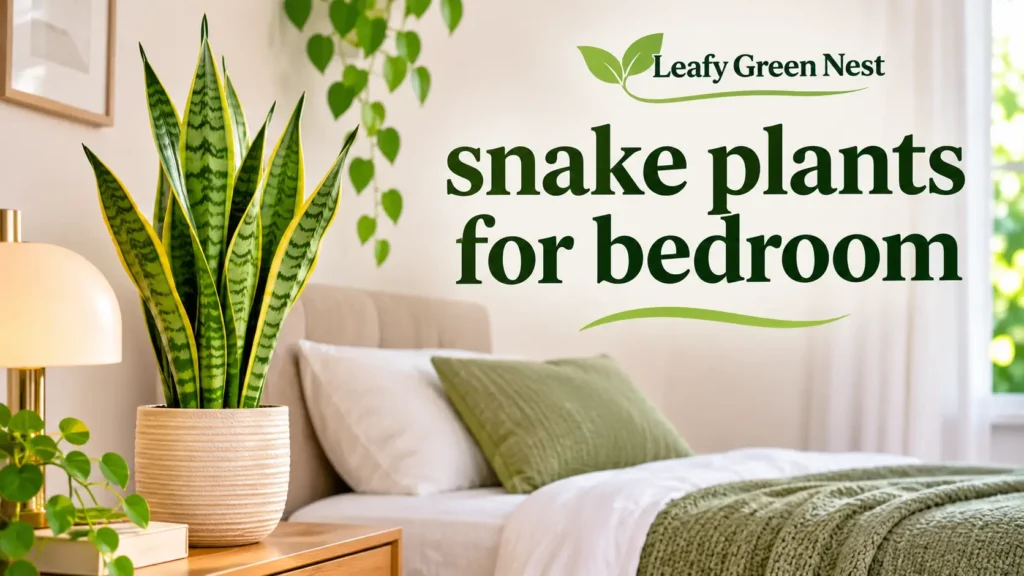
Snake plants for bedroom spaces are a popular choice for people who want attractive greenery without a demanding care routine. Their upright leaves add height, fit into small corners, and need less frequent watering than many tropical houseplants.
But are snake plants good for bedrooms? Do they release oxygen at night? Where should you place them according to Feng Shui or Vastu? And what if you want bedroom greenery without looking after a live plant?
This guide explains the real benefits, disadvantages, best varieties, care needs, and placement ideas. It also compares five live and artificial plant products for bedroom decoration.
Disclosure: This post contains affiliate links. If you purchase through these links, I may earn a small commission at no extra cost to you.
Table of Contents
TL;DR
Snake plants for bedroom spaces are a great choice if you want attractive, low-maintenance greenery. They tolerate low light, need infrequent watering, and grow upright, making them suitable for small bedrooms and empty corners.
Key points to remember:
- Benefits: Easy care, attractive leaves, and space-saving growth.
- Best varieties: Laurentii, Zeylanica, Moonshine, Bird’s Nest, and Black Gold.
- Placement: Choose a spot with bright, indirect light and enough room for growth.
- Feng Shui and Vastu: Traditional placement beliefs vary and are not scientifically proven.
- Disadvantages: Snake plants can develop root rot from overwatering and are toxic to cats and dogs if eaten.
- Air quality: They absorb carbon dioxide at night, but do not significantly purify ordinary bedroom air.
- Care: Use well-draining soil and water only when the soil has dried completely.
- Decor alternatives: Artificial plants, eucalyptus arrangements, Calathea, and hanging vines can add greenery without the same care requirements.
Bottom line: Choose a live snake plant if you want natural, easy-care greenery. Choose artificial plants if your main goal is bedroom decoration without watering or maintenance.


What Are Snake Plants for Bedroom Spaces?
Snake plants are upright indoor plants with firm, sword-shaped leaves and attractive green patterns. Their botanical name is Dracaena trifasciata. They were previously known as Sansevieria trifasciata.
People often choose them for bedrooms because they grow vertically, tolerate some low-light conditions, and do not need frequent watering. Depending on the variety, their leaves may have yellow edges, silver-green tones, or dark wavy markings.
Key facts at a glance
| Feature | What to know |
|---|---|
| Botanical name | Dracaena trifasciata |
| Common names | Snake plant, mother-in-law’s tongue |
| Plant type | Evergreen succulent |
| Light | Low to bright indirect light |
| Watering | Allow soil to dry fully before watering |
| Soil | Well-draining cactus or succulent mix |
| Growth habit | Upright, clumping leaves |
| Pet safety | Toxic to cats and dogs if eaten |
| Care level | Generally low maintenance |
Snake Plant Bedroom Benefits: 7 Reasons to Keep One
Snake plant bedroom benefits include easy care, attractive foliage, flexible placement, and tolerance for dry soil. They can make a bedroom feel greener without taking up much floor space.
1. Easy to Maintain
Snake plants are suitable for people who have busy routines or sometimes forget to water their plants. Their thick leaves store water, helping them tolerate dry conditions.
They do not need daily watering, regular misting, or frequent pruning. This makes them a practical choice for beginners.
2. Takes in Carbon Dioxide at Night
Snake plants use a process called Crassulacean Acid Metabolism, or CAM photosynthesis. This allows them to take in carbon dioxide at night as part of their natural growth process.
However, one or two bedroom plants do not produce enough oxygen to meaningfully change the air you breathe. Enjoy this feature as part of the plant’s biology, not as a reason to expect better sleep or improved bedroom air.
3. Adds Natural Beauty
The upright leaves add height and texture to a room. They look attractive beside wooden furniture, neutral bedding, cream walls, and simple bedroom decorations.
Snake plants also work well with modern, minimalist, Scandinavian, and bohemian interiors.
4. Tolerates Lower Light
Snake plants can survive in lower-light rooms better than many houseplants. This makes them useful for apartments and bedrooms with smaller windows.
Still, low-light tolerance does not mean they can grow in complete darkness. Bright, indirect light usually supports healthier growth.
5. Makes Small Bedrooms Feel More Complete
Most snake plants grow upward rather than spreading widely. A compact variety can sit on a shelf, while a taller one can fill an empty corner.
This vertical growth makes them useful when floor space is limited.
6. Needs Less Frequent Watering
Snake plants prefer their soil to dry between waterings. Their water-storing leaves help them cope with periods of dry soil.
This is useful if you want a living plant but do not want a strict watering schedule.
7. Brings a Natural Touch to Your Space
Green foliage can make a bedroom feel more connected to nature. A healthy plant beside a dresser or near a window can add color and soften a room with lots of hard surfaces.
A plant is not a treatment for stress or insomnia, but it can make your surroundings more pleasant.
Best Snake Plants for Bedroom Spaces
The best snake plant variety depends on your available space, preferred appearance, and lighting. Some types grow tall, while others stay compact enough for shelves and bedside tables.
Laurentii
Laurentii has tall green leaves with yellow edges. It is a popular choice for floor pots and empty bedroom corners.
Zeylanica
Zeylanica has green leaves with darker, wavy markings. Its more subtle appearance suits simple interiors and neutral color schemes.
Moonshine
Moonshine has broad, silvery-green leaves. It pairs well with light furniture and minimalist bedroom decor.
Bird’s Nest
Bird’s Nest snake plants grow in a compact rosette shape. They are useful for bedside tables, shelves, and smaller bedrooms.
Black Gold
Black Gold has dark green leaves with yellow edges. Its strong contrast makes it a noticeable decorative plant.
Cylindrical Snake Plant
This variety has rounded, upright leaves instead of the usual flat shape. It adds a different texture to a plant collection and suits modern interiors.
Snake Plants for Bedroom Indoors: Where to Place Them
The best place for a snake plant indoors is somewhere with suitable light, enough room, and good drainage. Placement should also keep the plant away from busy walkways and areas where people may knock it over.
Try these locations:
- Near a window: Bright, indirect light is ideal. An east-facing window can provide gentle morning light.
- In an empty corner: A tall Laurentii or Zeylanica can fill unused space.
- Beside a dresser: A medium-sized plant can add height beside bedroom furniture.
- On a shelf: Choose a compact variety and make sure the shelf can support the pot.
- Near a bedside table: A small Bird’s Nest variety can work if it does not crowd your everyday items.
Avoid placing a large plant where its pointed leaves block a doorway, drawer, or narrow walkway.
Snake Plants for Bedroom Feng Shui
In Feng Shui, plants are often associated with growth, vitality, and the wood element. Snake plants have upright, pointed leaves, which some traditional interpretations connect with strength and protection.
Advice about their placement varies between practitioners. There is no scientific evidence that a snake plant changes energy, luck, or sleep quality.
If you follow Feng Shui principles, consider keeping the plant in a tidy corner or near the entrance. Some people prefer softer, rounded-leaf plants close to the bed because they create a gentler appearance.
Choose a location that also provides suitable light and allows you to move around comfortably.
Snake Plant in Bedroom Vastu: What to Consider
Vastu Shastra is a traditional system of design and spatial arrangement. Some Vastu recommendations discuss plant placement and directions, but advice can vary between sources and practitioners.
There is no scientific proof that placing a snake plant in a particular direction changes health, sleep, or luck.
If you follow Vastu guidance, use the recommendations that fit your own tradition. Also make sure the plant receives enough indirect light, has good drainage, and does not obstruct movement.
Do not place a plant in a dark or unsuitable spot simply to follow a directional recommendation.
Snake Plant Disadvantages: What to Know Before Buying
Snake plants are low maintenance, but they are not right for every home. Their main drawbacks involve pet safety, overwatering, slow growth in poor light, and pointed leaves.
Toxicity to Cats and Dogs
Snake plants contain saponins. If a cat or dog chews or swallows the leaves, it may develop nausea, vomiting, or diarrhea. Keep the plant away from pets and contact a veterinarian if your pet eats part of it. ASPCA+1
Root Rot From Too Much Water
Overwatering is one of the most common snake plant problems. Soil that stays wet for too long can damage the roots and cause leaves to turn yellow or soft.
Use a pot with drainage holes and allow the soil to dry fully before watering again.
Slow Growth in Very Low Light
Snake plants tolerate low light, but growth may become slow when they receive very little natural light. Complete darkness is not suitable for healthy long-term growth.
Pointed Leaves
Some varieties have sharp leaf tips. Keep larger plants away from narrow paths, especially if children or people with limited mobility share the room.
How to Care for Snake Plants Indoors
Snake plants need the right balance of light, dry soil, and drainage to stay healthy. They are forgiving plants, but too much water can cause serious problems.
Give the Plant Suitable Light
Place your snake plant near a window with bright, indirect light. It can tolerate lower light, but avoid keeping it in complete darkness.
If the leaves start losing their strong appearance or growth becomes very slow, try moving the plant to a brighter location.
Water Only When the Soil Is Dry
Do not water your snake plant just because a certain number of days has passed. Check the soil first.
Follow these steps:
- Check the soil several inches below the surface.
- Wait until the soil has dried throughout the pot.
- Water thoroughly until excess water drains from the bottom.
- Empty the drainage tray.
- Wait for the soil to dry fully before watering again.
The time between waterings depends on light, temperature, pot size, and season. The plant usually needs less water during cooler, darker months.
Use Well-Draining Soil
Choose a cactus or succulent potting mix. A little perlite or pumice can improve drainage if the mix holds too much water.
Always use a pot with drainage holes. Do not let the plant sit in a saucer full of water.
Keep It Away From Cold Drafts
Snake plants prefer normal, warm indoor conditions. Keep them away from freezing temperatures, cold drafts, and direct heat from heaters.
Clean the Leaves
Dust can collect on the broad leaves and make them look dull. Wipe them gently with a soft, damp cloth when needed.
Remove damaged leaves with clean scissors and check the plant for pests while you do it.
Common Snake Plant Problems and Solutions
Most snake plant problems come from watering mistakes, poor drainage, or unsuitable light. Checking the soil and leaves can help you identify the cause before the damage gets worse.
| Problem | Possible cause | What to do |
|---|---|---|
| Yellow, soft leaves | Overwatering | Let soil dry and inspect roots |
| Mushy base | Root rot | Remove damaged roots and repot |
| Wrinkled leaves | Soil too dry or root damage | Check soil and root condition |
| Brown tips | Stress or physical damage | Review care and trim damaged tips |
| Slow growth | Low light | Move to brighter indirect light |
| Drooping leaves | Root or watering problems | Check drainage and soil moisture |
Expert tip: If you suspect root rot, remove the plant from its pot and inspect the roots. Cut away rotten sections with clean scissors and repot the healthy plant in fresh, well-draining soil.
Bedroom Plant Decor: Live and Artificial Options
Snake plants are not the only way to add greenery to a bedroom. Small artificial plants, eucalyptus arrangements, live tropical plants, and hanging vines can also create a natural look.
The five products below are alternatives for bedroom decoration. They are not all snake plants, so consider their materials and care needs before choosing one.
Mkono Small Fake Plants, 3-Pack
Best for bedside tables, shelves, and small spaces
The Mkono three-pack includes small artificial plants in galvanized metal pots. The farmhouse-style design works with rustic, country, and simple bedroom interiors.
Each pot is about 3 inches wide, making the set suitable for small surfaces where a large plant would take up too much room.
Product details supplied:
| Feature | Details |
|---|---|
| Brand | Mkono |
| Quantity | 3 artificial plants |
| Pot material | Galvanized metal |
| Pot colors | Grey, black, and white |
| Pot size | About 3 inches |
| Customer rating | 4.7 out of 5 |
| Customer reviews | 2,001 |
| Listed price | $16.99 |
| Approximate price per plant | $5.66 |
Why consider it?
- Three pieces provide a coordinated look.
- Small pots fit bedside tables and narrow shelves.
- No watering, soil, or sunlight is needed.
- Different pot colors make it easier to match bedroom furniture.
These are artificial decorations. They do not release oxygen, absorb carbon dioxide, or clean indoor air. They may also need occasional dusting.
Best for: People who want compact, low-maintenance farmhouse-style greenery.
Mkono Small Fake Plants, 3 Pack Faux Plants for Farmhouse Home Decor Indoor
Mkono Fake Eucalyptus Stems in a Glass Vase
Best for dressers and decorative tabletops
This artificial eucalyptus arrangement combines green stems with a glass vase. Its simple shape can suit a bedside table, dresser, coffee table, or office desk.
The listed height is approximately 12.6 inches, so it adds some height without taking up much surface space.
Product details supplied:
| Feature | Details |
|---|---|
| Brand | Mkono |
| Plant style | Artificial eucalyptus |
| Materials | Glass and plastic |
| Dimensions | 2.7 × 2.7 × 12.6 inches |
| Customer rating | 4.3 out of 5 |
| Customer reviews | 36 |
| Small size price | $14.99 |
| Large size price | $16.99 |
Why consider it?
- The eucalyptus leaves create a soft, natural-looking display.
- The glass vase is included.
- It works with modern and minimalist decor.
- It needs no watering, pruning, or special lighting.
The arrangement has a narrow profile, so it may look small on a large dresser. Consider the larger option if you want it to stand out more.
Best for: People who want a simple eucalyptus-style tabletop decoration.
Mkono Fake Plants, Artificial Eucalyptus Stems in Glass Vase for Home Decor
Rattlesnake Calathea Live Plant
Best for real foliage and patterned leaves
The rattlesnake Calathea is a live tropical houseplant with long, wavy leaves and dark green markings. Its accepted botanical name is Goeppertia insignis. It is also known by older names such as Calathea lancifolia.
It is not a snake plant. It has different light and watering needs, so it is better for people who enjoy caring for live houseplants.
Product details supplied:
| Feature | Details |
|---|---|
| Plant name | Rattlesnake Calathea |
| Botanical name | Goeppertia insignis |
| Brand | Generic |
| Plant type | Live indoor plant |
| Light | Partial shade or bright indirect light |
| Listed weight | Approximately 8 ounces |
| Quantity | 1 plant |
| Rating and price | Not provided |
Why consider it?
- Its patterned leaves add color and texture.
- It brings real foliage into the bedroom.
- It suits tropical and nature-inspired interiors.
- Its leaves move in response to changing light conditions, a behavior known as nyctinasty.
Basic care needs:
- Provide bright, indirect light.
- Keep the potting mix lightly moist but not waterlogged.
- Give it a warm location away from cold drafts.
- Provide higher humidity where possible.
- Avoid strong direct sunlight.
The Calathea needs more consistent care than a snake plant. The Royal Horticultural Society explains its light, moisture, and humidity needs in its Calathea growing guide.
Best for: People who want a real decorative plant and are comfortable with more regular care.
Rattlesnake Calathea Live Plant - Air Purifier, Colorful House Plant, Ideal for Home Decor and Room Decor - Rattlesnake for Indoor Plants, Calathea...
Freyalife Fake Vines, 12-Pack, 84 Feet
Best for large wall displays and hanging greenery
The Freyalife artificial vine set includes 12 ivy-style garlands with a combined length of about 84 feet. It can be used to decorate bedroom walls, shelves, mirrors, headboards, and other open areas.
Product details supplied:
| Feature | Details |
|---|---|
| Brand | Freyalife |
| Quantity | 12 artificial vines |
| Total length | About 84 feet |
| Style | Artificial ivy |
| Customer reviews | 3,819 |
| Recent purchases | 20K+ in the past month, according to the supplied listing |
| Rating | Not provided |
Why consider it?
- The combined length offers broad decorating coverage.
- The vines can be arranged around shelves or a headboard.
- They can create a decorative green backdrop.
- They do not need water, sunlight, or pruning.
You will need to arrange and secure the vines yourself. They can also collect dust, so occasional cleaning may be needed. Check the hanging method and make sure decorations above the bed are firmly secured.
Best for: People who want extensive artificial greenery for walls and decorative backdrops.
Freyalife Fake Vines for Room Decor(12 Pack 84 Feet) Aesthetic Artificial Plant Ivy Leaves Hanging Greenery Garlands for Home Bedroom Wall Wedding Christmas...
Freyalife Fake Hanging Plants Vines, 2-Piece Set
Best for small hanging displays
This two-piece artificial vine set is a smaller option for bedrooms, bookshelves, walls, and office spaces. The listing says flowerpots are not included, so you will need your own container or hanging method.
Product details supplied:
| Feature | Details |
|---|---|
| Brand | Freyalife |
| Quantity | 2 artificial vines |
| Style | Artificial ivy |
| Flowerpot | Not included |
| Customer reviews | 2,025 |
| Recent purchases | 2K+ in the past month, according to the supplied listing |
| Rating and price | Not provided |
Why consider it?
- It adds a small amount of hanging greenery.
- You can arrange the two pieces separately or together.
- It suits shelves and smaller wall spaces.
- It needs no watering or sunlight.
Remember to buy or provide suitable hooks, clips, or containers if your preferred arrangement requires them.
Best for: People who want a simple hanging display without decorating an entire wall.
Fake Hanging Plants Vines(2pcs)for Room Decor, Artificial Ivy Greenery Garlands for Home Bedroom Living Aesthetic Kitchen Office Wall Patio...
Which Bedroom Plant or Decor Product Should You Choose?
The right choice depends on whether you want a living plant, a small tabletop decoration, or greenery for a larger area. Use this comparison to match each product to its main purpose.
| Product | Main advantage | Best location | Type |
|---|---|---|---|
| Mkono 3-pack | Compact farmhouse look | Shelves and bedside tables | Artificial |
| Mkono eucalyptus vase | Simple glass vase display | Dressers and tabletops | Artificial |
| Rattlesnake Calathea | Real patterned foliage | Plant stand or bright corner | Live |
| Freyalife 12-pack | Large coverage | Walls and headboards | Artificial |
| Freyalife 2-piece | Small hanging display | Shelves and small walls | Artificial |
Choose the Mkono three-pack for small surfaces, the eucalyptus vase for a simple tabletop arrangement, and the 12-pack vines for a larger decorating project. Choose the Calathea if you want a living plant and can provide the care it needs.
Remember that artificial plants are decorative only. They do not provide the biological functions of living plants.
Do Snake Plants Really Purify Bedroom Air?
Snake plants can take in carbon dioxide and exchange gases, but they should not be treated as natural air purifiers. One or two potted plants cannot remove enough indoor pollutants to make a meaningful difference in an ordinary bedroom.
A 2019 review published in the Journal of Exposure Science & Environmental Epidemiology examined research on potted plants and indoor air pollution. It found that ordinary houseplants have limited practical effects on indoor air quality compared with normal ventilation. PubMed+1
Here is how common claims compare with the evidence:
| Common claim | What the evidence supports |
|---|---|
| Snake plants absorb carbon dioxide at night | Yes, through CAM photosynthesis |
| One plant significantly increases bedroom oxygen | No meaningful effect |
| Snake plants remove all indoor toxins | Not supported |
| Houseplants replace air purifiers | No |
| Plants add natural decoration | Yes |
| Plants directly improve sleep | Not established |
For healthier bedroom air, focus on regular ventilation, reducing dust, avoiding indoor smoke, and controlling dampness or mold. A suitable air purifier may also help when indoor particles are a concern.
Large Snake Plants for Bedroom Decoration
Large snake plants can make an empty bedroom corner look more complete. Their upright leaves add height without spreading as widely as many other indoor plants.
Laurentii, Zeylanica, and Black Gold are good varieties to consider for larger floor pots. Their appearance works well beside wardrobes, dressers, and other tall furniture.
Try these decorating ideas:
- Use a ceramic planter: White, beige, and gray pots work well with neutral bedroom colors.
- Place the plant beside a wardrobe: This can make an unused corner feel more balanced.
- Pair it with wooden furniture: Green leaves create a natural contrast with wood.
- Use a decorative basket: Keep the plant in a draining inner pot rather than planting directly into a basket without drainage.
- Leave enough walking space: Make sure leaves do not block doors or narrow paths.
For small bedrooms, choose Bird’s Nest or another compact variety instead of a large floor plant.
How to Choose the Best Snake Plant for Your Bedroom
The best snake plant is one that fits your available space, light conditions, and daily routine. Check the plant carefully before buying it, especially if you are shopping online.
Use this checklist:
- Measure the available space.
- Check how much natural light the room receives.
- Decide whether you need a compact or tall variety.
- Look for firm, healthy leaves.
- Avoid plants with soft, mushy, or badly damaged leaves.
- Check that the pot has drainage holes.
- Inspect the soil for excessive moisture.
- Look for signs of pests.
- Consider whether pets can reach the plant.
- Choose a planter that suits your bedroom decor.
You can look for snake plants at local nurseries, garden centers, indoor plant shops, and online retailers. If possible, inspect the leaves and soil before purchasing.
Are Snake Plants Right for Your Bedroom?
Snake plants are a practical choice if you want attractive greenery without a demanding care routine. They tolerate lower light, need less frequent watering, and suit bedrooms of different sizes.
Choose Laurentii or Zeylanica for larger corners, Moonshine for a modern look, and Bird’s Nest for smaller spaces. If you prefer decoration without plant care, artificial options such as the Mkono mini plants, eucalyptus vase, and Freyalife vines can provide a similar green appearance.
Remember to avoid overwatering, provide suitable indirect light, and keep live snake plants away from cats and dogs. They can absorb carbon dioxide at night, but they cannot replace proper ventilation or an air purifier.
The best bedroom greenery is the option that suits your space, lifestyle, and ability to care for it.
Frequently Asked Questions
Can snake plants survive in bedrooms without sunlight?
Snake plants can tolerate low-light conditions, but they cannot grow well in complete darkness. Place them near a window with indirect light or use a suitable grow light if natural light is limited.
Is it safe to sleep near a snake plant?
For most people, keeping a snake plant in the bedroom is fine. However, keep it away from pets because chewing the leaves can cause stomach upset.
How many snake plants should you keep in one bedroom?
There is no fixed number. One compact plant may suit a small bedroom, while a larger room can accommodate several. Choose based on available space, light, and decoration preferences.
Can snake plants grow in air-conditioned rooms?
Yes. Snake plants can grow in air-conditioned rooms if temperatures remain comfortable and they are not exposed to cold air blowing directly from the unit.
Should you remove dead leaves from a snake plant?
Yes. Remove completely damaged, yellow, or rotten leaves with clean scissors. This keeps the plant tidy and makes it easier to check for signs of disease.
Do snake plants attract insects?
Snake plants do not normally attract large numbers of insects, but overwatered soil can encourage fungus gnats. Allow the soil to dry properly and avoid leaving standing water in the pot.


