A snake plant is one of the easiest houseplants to grow, but good snake plant care still matters. The right amount of light, careful watering, and well-draining soil can keep its leaves firm, upright, and healthy for years.
If your snake plant has yellow leaves, soft stems, or slow growth, a small change in its care routine may solve the problem. This guide explains how to grow, water, repot, and propagate snake plants, with practical advice for indoor spaces and hot climates.
Table of Contents
What Is a Snake Plant?
A snake plant is a hardy, evergreen houseplant known for its tall, upright leaves and low watering needs. Its botanical name is Dracaena trifasciata, although many people still know it as Sansevieria trifasciata.
The plant is native to tropical parts of Africa. Its thick leaves store water, which helps it survive dry periods. This makes it a good choice for people who want attractive greenery without a demanding care routine.
Snake plants come in several varieties, including:
- Laurentii: Green leaves with yellow edges.
- Zeylanica: Dark green leaves with lighter horizontal patterns.
- Moonshine: Silvery-green leaves with a soft appearance.
- Hahnii: A compact variety with short, rosette-shaped leaves.
- Cylindrica: Round, upright leaves that grow in a fan-like shape.
Most varieties need similar care. However, their size, leaf shape, and light preferences can differ slightly.
Snake Plant Care Indoors: Best Growing Conditions
Snake plant care indoors is simple because the plant can adapt to different home environments. It grows best in bright, indirect light, warm temperatures, and soil that drains quickly.
Choose a stable location where the plant can receive natural light without sitting in harsh afternoon sun.
Ideal indoor conditions include:
| Growing factor | Recommended condition |
|---|---|
| Light | Bright, indirect light |
| Temperature | Around 15–29°C |
| Water | Only when the soil is dry |
| Soil | Loose, well-draining mix |
| Humidity | Normal household humidity |
| Fertilizer | Light feeding during active growth |
| Pot | Container with drainage holes |
A snake plant can survive in a darker corner, but its growth may slow down. If the leaves become pale or the plant stops producing new growth, move it closer to a window.
Avoid placing it directly beside a heater, air conditioner, or cold draft. Sudden temperature changes can stress the leaves.
Snake Plant Sunlight Requirements
Snake plants tolerate different light levels, but bright, indirect sunlight usually gives the best results. A little gentle morning sun can also help the plant grow well.
Place your plant near an east-facing window or a bright area with filtered sunlight. A north-facing window may work in a bright room, although growth could be slower.
Can a snake plant grow in low light?
Yes. Snake plants can survive in low-light areas, but survival does not mean ideal growth. They may produce fewer leaves and use water more slowly.
Keep these light tips in mind:
- Give the plant bright, indirect light when possible.
- Protect it from strong afternoon sunlight.
- Rotate the pot occasionally so leaves grow evenly.
- Move it gradually when changing its light conditions.
- Avoid placing it in a dark room with no natural or artificial light.
If your plant develops dry, brown patches after being moved into direct sunlight, sunburn may be the cause. Move it to a more sheltered position.
Snake Plant Care Water: How Often Should You Water?
The best snake plant care water routine is to let the soil dry completely before watering again. Overwatering is one of the most common reasons snake plants develop root problems.
Do not water the plant simply because a certain number of days has passed. Check the soil first.
How to check when your plant needs water
- Push your finger a few inches into the soil.
- Check whether the soil feels dry.
- If it still feels damp, wait before watering.
- When the soil is dry, water thoroughly.
- Let extra water drain through the bottom holes.
- Empty the saucer so the roots do not sit in water.
The time between watering sessions depends on the season, light, temperature, pot size, and soil mix.
During warm, bright months, the plant may need water more often. In cooler months or low-light rooms, it usually needs much less.
A useful rule: When unsure, wait and check the soil again. A snake plant handles dry soil better than constantly wet soil.
Avoid pouring water into the centre of the leaves. Water the soil instead, and do not leave the pot standing in collected water.
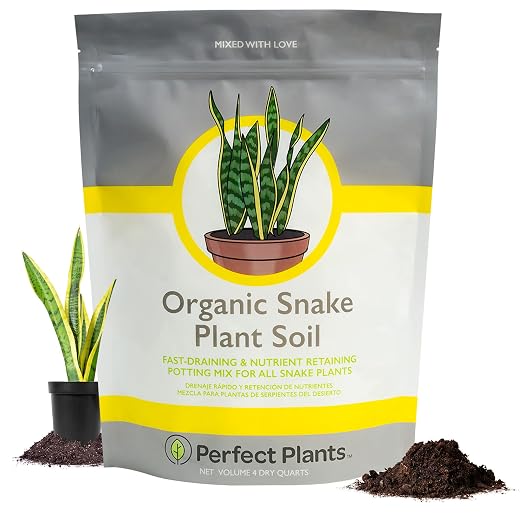
Best Soil for Snake Plants
Snake plants need loose soil that allows extra water to drain away quickly. Heavy garden soil can hold too much moisture and increase the risk of root rot.
A cactus or succulent potting mix is a practical choice. You can also improve regular potting soil by mixing in perlite or pumice.
A simple mix can include:
- Two parts good-quality potting mix.
- One part perlite or pumice.
- A small amount of coarse horticultural material, if needed.
Use a pot with drainage holes. A decorative container without drainage can trap water around the roots.
The pot should not be much larger than the root system. Too much unused soil can stay wet for longer than the plant needs.
Perfect Plants Snake Plant Soil, 4 qt, Coco Coir Potting Mix
Snake Plant Fertilizer and Maintenance
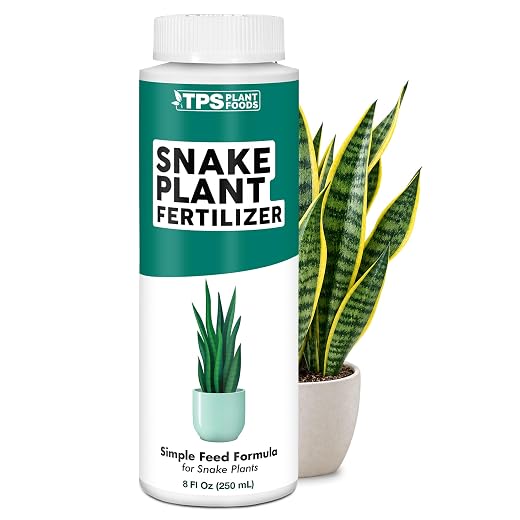
Snake plants do not need heavy feeding to stay healthy. A small amount of balanced houseplant fertilizer during active growth is usually enough.
Feed during spring and summer, following the product label. Use a diluted dose if the fertilizer instructions allow it. Avoid feeding a plant that is already stressed or has damaged roots.
Basic maintenance includes:
- Wiping dust from the leaves with a soft, damp cloth.
- Removing dead or badly damaged leaves with clean tools.
- Checking the soil before every watering.
- Turning the pot occasionally for balanced growth.
- Checking the leaves and soil for pests.
- Keeping the plant away from cold drafts.
Do not cut healthy leaves just to control the plant’s height. Removing too much healthy foliage can weaken its appearance and reduce its ability to grow.
Snake Plant Fertilizer, Liquid Plant Food for Upright Growth, 8 oz
Snake Plant Care Outdoors: How to Grow Outside
Snake plant care outdoors works well in warm, sheltered areas where the plant receives filtered light. However, strong direct sun, cold weather, and heavy rain can damage it.
If you want to move your plant outside, introduce it to outdoor conditions gradually. Start in a shaded area and increase its exposure over several days.
Good outdoor locations include:
- A covered balcony.
- A shaded patio.
- A bright porch.
- A sheltered garden corner.
- An area with gentle morning sunlight.
In hot climates, protect the plant from intense afternoon sun. A balcony that receives strong afternoon heat may be too harsh, especially if the plant has been growing indoors.
Heavy rain can also create problems. If the pot fills with water or the soil stays wet for several days, move it to a covered area.
Bring the plant indoors before cold weather arrives. Snake plants are tropical plants and can suffer when exposed to low temperatures.
Snake Plant Care Repotting: When and How to Do It
Snake plant care repotting is usually needed when the roots become crowded, the pot starts to crack, or the plant becomes unstable. Snake plants prefer a slightly snug pot, so repotting every year is rarely necessary.
A healthy plant may remain in the same container for several years.
Signs your snake plant needs repotting
- Roots are growing through the drainage holes.
- The pot is bulging or cracking.
- The plant is pushing itself out of the soil.
- Water runs through the pot unusually quickly.
- The plant has become too crowded for its container.
How to repot a snake plant
- Choose a pot with drainage holes that is only slightly larger than the old one.
- Prepare a fresh, well-draining soil mix.
- Remove the plant carefully from its container.
- Check the roots for soft, dark, or rotten sections.
- Trim damaged roots with clean scissors.
- Place the plant in the new pot at the same depth.
- Fill the gaps with fresh soil.
- Allow the plant time to settle before returning to its normal watering routine.
Avoid using a very large pot. It may look attractive, but extra soil can hold moisture for too long.
For more botanical growing advice, see the North Carolina State University Extension guide to snake plants.
Snake Plant Care Propagation: Three Easy Methods
Snake plant care propagation allows you to grow new plants from an existing one. The easiest method is division, but leaf cuttings can also work.
Spring and early summer are good times to propagate because the plant is entering its active growing period.
Propagation by division
Division is often the best option if you want new plants that look like the parent plant.
- Remove the plant from its pot.
- Find the natural sections or clusters of leaves.
- Separate a section with its own roots.
- Place it in a small pot with fresh soil.
- Water lightly and keep it in bright, indirect light.
Each new section should have healthy roots and leaves.
Propagation by leaf cuttings
Leaf cuttings are useful when you want to grow several plants from one healthy leaf.
- Cut a healthy leaf near its base.
- Divide it into smaller sections.
- Mark the bottom of each section so you know which end to plant.
- Let the cut surfaces dry before planting.
- Place the bottom end into a well-draining propagation mix.
- Keep the mix lightly moist, not wet.
New roots and shoots may take weeks or months to appear.
One important detail: some variegated varieties may lose their yellow or patterned edges when grown from leaf cuttings. Division is a better choice when you want to preserve the parent plant’s appearance.
Propagation in water
You can also root leaf cuttings in water.
Place the bottom end of a leaf cutting in a clean container with a small amount of water. Keep the upper part of the cutting dry and change the water regularly.
Once roots develop, move the cutting into a suitable potting mix. Water propagation can take time, and the cutting may need an adjustment period after planting in soil.
Snake Plant Care Problems: Common Causes and Solutions
Most snake plant care problems come from excess water, poor drainage, unsuitable light, or sudden changes in the plant’s environment. Checking the leaves and soil together can help you identify the cause.
| Problem | Possible cause | What to do |
|---|---|---|
| Yellow leaves | Overwatering or poor drainage | Check the soil and roots |
| Soft, mushy leaves | Root or leaf rot | Remove damaged parts and improve drainage |
| Brown leaf tips | Stress, damage, or watering issues | Review care conditions |
| Wrinkled leaves | Long periods without water or root damage | Check soil moisture and roots |
| Slow growth | Low light or normal seasonal slowdown | Move to brighter indirect light |
| Leaning leaves | Uneven light or weak support | Rotate the pot and check the roots |
| Small insects | Possible pest infestation | Inspect leaves and treat the affected plant |
Why are snake plant leaves turning yellow?
Yellow leaves often indicate that the roots are staying too wet. Check whether the soil is damp and whether the pot has working drainage holes.
If the roots are soft, dark, or unpleasant-smelling, root rot may be developing. Remove damaged roots and repot the plant in fresh, well-draining soil.
Why is my snake plant falling over?
A snake plant may fall over because its roots are damaged, the soil is too wet, or the plant has become crowded. Check the base of the leaves and the root system before adding more water.
Do not assume a falling leaf means the plant is thirsty. More water could make the problem worse.
Snake Plant Care Benefits: Why Grow This Plant?
Snake plant care benefits include low maintenance, attractive foliage, and the ability to grow in a range of indoor conditions. It is a useful decorative plant for homes and offices.
Some practical benefits include:
- Low watering needs: It can handle periods without water.
- Flexible placement: It tolerates a range of light conditions.
- Distinctive appearance: Its upright leaves add height and structure to a room.
- Slow growth: It usually does not need frequent pruning.
- Easy propagation: Established plants can produce new sections.
Snake plants are sometimes promoted as natural air purifiers. However, claims about their ability to clean indoor air should be treated carefully. A potted plant should not replace proper ventilation or an air purifier when indoor air quality is a concern.
Also, snake plants are considered toxic to cats and dogs if eaten. Keep them out of reach of pets and young children who may chew the leaves.
Snake Plant Near Me: How to Choose a Healthy Plant
When searching for a Snake Plant near me, look for a nursery or garden centre that sells healthy, well-rooted plants. A good plant should have firm leaves, a stable base, and no signs of rot or pests.
Before buying, check the following:
- Leaves feel firm rather than soft or mushy.
- The base of the plant is stable in the soil.
- There are no large brown or black patches.
- The soil is not constantly soaked.
- The pot has drainage holes.
- There are no visible insects or sticky marks.
Ask the seller which variety you are buying and whether it has been kept indoors or outdoors. This helps you choose a suitable location after bringing it home.
If you live in a hot area, avoid leaving a newly purchased plant in a closed vehicle or direct sunlight. Let it adjust to its new environment gradually.
Snake Plant Maintenance Checklist
A simple routine helps prevent most common growing problems. Check the plant regularly, but avoid making unnecessary changes to its environment.
| Frequency | Care task |
|---|---|
| Weekly | Check the soil before watering |
| Every two weeks | Inspect leaves for dust and pests |
| Monthly | Check drainage and the plant’s overall condition |
| Spring and summer | Feed lightly if the plant is actively growing |
| When roots become crowded | Repot into a slightly larger container |
| When new shoots appear | Divide the plant if you want more plants |
The most useful habit is to check soil moisture before watering. A fixed watering schedule may not work because indoor temperatures, light levels, and potting mixes vary.
How to Keep a Snake Plant Healthy in Hot Climates
Hot weather changes how quickly soil dries, but it does not mean your snake plant needs water every day. The plant still needs time for its soil to dry between watering sessions.
If you grow snake plants in a hot climate, use these practical tips:
- Keep indoor plants away from intense afternoon sunlight.
- Check soil moisture more often during very hot periods.
- Do not leave outdoor pots exposed to heavy rain.
- Use a potting mix that drains quickly.
- Avoid placing the plant beside a hot window or metal surface.
- Keep the plant in a shaded, airy location outdoors.
In places with hot summers and humid or rainy periods, watering needs can change quickly. Check the soil rather than following a fixed calendar.
Why Consistent Snake Plant Care Pays Off
Healthy snake plants need only a few basic conditions: suitable light, dry soil between waterings, and good drainage. Once you understand these needs, caring for the plant becomes simple.
Avoid overwatering, choose the right pot, and check the leaves regularly. These small habits can help your snake plant stay attractive and healthy for many years.
Frequently Asked Questions About Snake Plant Care
What is the best place to keep a snake plant?
Keep your snake plant near a bright window where it receives indirect sunlight. It can tolerate lower light, but brighter conditions usually support better growth.
Is a snake plant suitable for beginners?
Yes. Snake plants are suitable for beginners because they tolerate missed watering and different light conditions. The main thing to avoid is keeping the soil wet for long periods.
Can snake plants grow in water permanently?
Snake plant cuttings can develop roots in water, but long-term growth is usually easier to manage in a well-draining potting mix. Water-grown plants may need time to adjust when moved into soil.
Should I cut brown tips off my snake plant?
You can trim brown tips with clean scissors if they bother you. Follow the natural leaf shape, but avoid cutting into healthy green tissue more than necessary.
Why is my snake plant not growing new leaves?
Slow growth is normal, especially during cooler months or in low light. If growth remains poor during the growing season, check the light, soil drainage, and root health.
Does a snake plant need fertilizer every month?
No. Snake plants are light feeders and do not need frequent fertilizer. A diluted houseplant fertilizer during active growth is usually enough. Avoid feeding during winter or when the plant is stressed.