
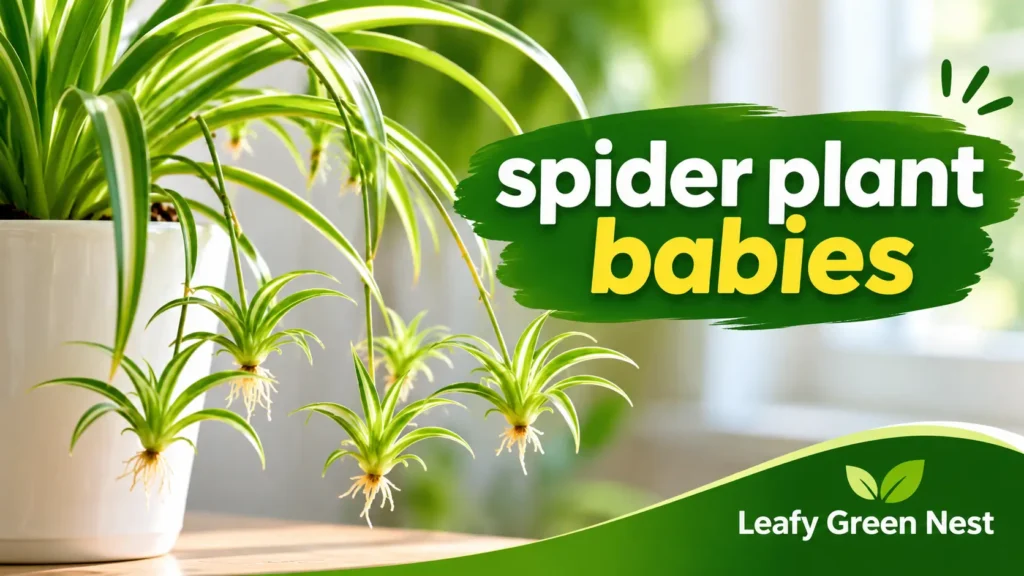
Spider plant babies are an easy way to grow new houseplants without spending money on additional plants. These tiny offshoots grow from a mature spider plant and can develop into healthy, independent plants with the right care.
You can grow spider plant babies in water, plant them directly in soil, or allow them to develop roots while attached to the mother plant. The secret to successful propagation is knowing when to separate them, where to cut, and how to encourage healthy root development.
Table of Contents
What Are Spider Plant Babies Called?
Spider plant babies are commonly called spiderettes, plantlets, or pups. They are miniature versions of the mother plant that grow on long stems extending from the main plant.
The botanical name of the spider plant is Chlorophytum comosum. It is a popular indoor plant known for its long, arching leaves and cascading growth habit.
Spider plant babies develop on thin stems called runners or stolons. These stems grow outward from the mother plant and produce small white flowers before or alongside the development of plantlets.
As the babies mature, they may develop tiny white roots at their base. These roots help them establish themselves when they come into contact with water or soil.
A healthy, mature spider plant can produce several babies on multiple runners. Each healthy plantlet can eventually become a separate plant with its own leaves and root system.
Spider Plant Babies Propagation: Easy Methods
Spider plant babies propagation involves encouraging a plantlet to develop its own roots and grow independently. You can use water propagation, direct soil planting, or natural layering to achieve this.
All these methods work well when you start with healthy plantlets and provide suitable growing conditions. Choose the method that best suits your plant’s size and root development.
Spider Plant Babies in Water
Growing spider plant babies in water is a simple propagation method that allows you to watch new roots develop. It is particularly useful for beginners and plantlets that have little or no root growth.
What you need:
- A healthy spider plant baby
- A clean glass or small jar
- Fresh, room-temperature water
- Clean, sharp scissors
- A bright location away from direct sunlight
Steps to follow:
- Choose a healthy baby growing on a runner.
- Use clean scissors to separate it from the mother plant.
- Fill a small glass with fresh water.
- Place the bottom of the baby plant in the water.
- Keep the leaves and central crown above the water.
- Place the glass somewhere with bright, indirect light.
- Replace the water every few days or whenever it becomes cloudy.
- Check the base regularly for new root development.
Small white roots should gradually appear at the bottom of the plantlet. Once they reach approximately 1 to 2 inches, you can transfer the baby into a small pot containing well-draining potting soil.
Important tip: Do not submerge the entire baby plant. Only its base should touch the water. Keeping the leaves underwater increases the risk of rot.
Spider Plant Babies Propagation in Soil
Soil propagation allows spider plant babies to develop roots directly in the growing medium where they will continue living. This method also avoids the additional step of transferring water-grown roots into potting soil.
What you need:
- A healthy spider plant baby
- A small pot with drainage holes
- Lightweight indoor potting mix
- A bent paper clip or small garden pin
- Clean scissors
Steps to follow:
- Fill a small pot with lightly moist potting soil.
- Choose a healthy baby growing on the mother plant.
- Position its base against the soil surface.
- Gently press the base into contact with the growing medium.
- Use a bent paper clip to hold the baby in place.
- Keep the soil lightly moist without making it soggy.
- Place the pot in bright, indirect light.
- Allow the baby to develop its own roots.
- Cut the connecting runner once the plantlet is established.
Do not bury the entire baby plant. Keep its leaves and crown above the soil to prevent unnecessary moisture around the growing point.
Root Spider Plant Babies While Attached to the Mother Plant
Natural layering is one of the easiest propagation techniques because the baby remains connected to the mother plant while developing its own roots. It is particularly useful for small plantlets that have not developed visible roots.
Follow these steps:
- Place a small pot filled with moist soil beside the mother plant.
- Choose a healthy baby growing on a runner.
- Position the baby over the prepared soil.
- Gently press its base against the soil surface.
- Secure it with a paper clip if necessary.
- Water the soil when the upper layer begins to dry.
- Wait for the plantlet to develop its own roots.
- Gently check whether the baby has established itself.
- Cut the connecting runner once the roots are developed.
The main advantage is that the baby continues receiving water and nutrients through its connection to the mother plant. This gives a small or rootless plantlet additional support during the early stages of propagation.
Where to Cut Spider Plant Babies for Successful Propagation
Knowing where to cut spider plant babies helps you separate plantlets without damaging their growing points. The correct cutting location is the thin runner connecting the baby to the mother plant.
Follow these simple steps:
- Find a healthy baby growing along a runner.
- Locate the thin stem connecting it to the mother plant.
- Position your scissors a short distance away from the baby.
- Make a clean cut through the connecting runner.
- Keep the baby plant and its base intact.
- Place it in water or prepare it for soil propagation.
If several babies grow along one runner, you can separate them individually. Always use clean, sharp scissors to reduce the risk of spreading plant diseases.
You can also remove an entire runner by cutting it close to the mother plant. However, if you want to grow new plants, separate individual plantlets carefully.
Spider Plant Babies Without Roots: How to Grow Them
Spider plant babies without roots can still develop into healthy, independent plants. You do not always need to wait for visible roots before separating a mature, healthy plantlet.
However, babies with small existing roots generally establish themselves more easily. If your plantlet has no roots, you can encourage development using either water or soil.
Water propagation:
- Separate the healthy baby from its runner.
- Place its base in clean water.
- Keep the leaves above the water.
- Provide bright, indirect light.
- Replace the water regularly.
- Wait for new roots to appear.
Soil propagation:
- Fill a small pot with moist potting mix.
- Position the baby against the soil.
- Secure it gently with a paper clip.
- Maintain light moisture.
- Keep it in a warm location with indirect sunlight.
- Allow roots to develop before cutting the runner if it remains attached.
If the baby is particularly small, natural layering is usually a better choice because it can continue receiving support from the mother plant.
Small white bumps at the bottom of a plantlet are generally developing aerial roots. These are a positive sign that the baby is preparing to establish itself.
How Long Do Spider Plant Babies Take to Root?
Spider plant babies can begin developing roots within a few weeks, although the exact time depends on their maturity, temperature, light, and growing conditions. Some plantlets already have tiny aerial roots before separation and may establish more quickly.
Here is a general guide to what you may notice:
| Growth stage | What to expect |
|---|---|
| First few days | Plantlet adjusts to its new growing environment |
| First 1–2 weeks | Early root development may become visible |
| Following weeks | Roots gradually become longer and stronger |
| Around 1–2 inches of root growth | Water-rooted plantlets can be transferred into soil |
| After establishment | New leaves and more noticeable growth may appear |
These are approximate stages, not guaranteed deadlines. A healthy plantlet may take longer if the environment is cool or light levels are low.
Avoid repeatedly pulling the baby out of its growing medium to check for roots. This can disturb delicate new growth.
When to Separate Spider Plant Babies
The best time to separate spider plant babies is when they have a healthy base and, ideally, small visible roots. Spring and summer are generally favorable because plants are actively growing.
Look for these signs before cutting:
- The baby has several healthy green leaves.
- Its base is firm rather than soft.
- Small white roots are visible.
- The plantlet is large enough to handle easily.
- There are no signs of rot or disease.
You do not have to remove every baby immediately. Leaving some attached to the mother plant creates an attractive cascading appearance.
If you are unsure, allow the plantlet to grow a little longer while remaining attached. There is usually no need to rush the process.
How to Treat Spider Plant Babies After Propagation
Newly propagated spider plant babies need suitable light, moisture, and warmth while their roots become established. Consistent care helps prevent transplant stress and encourages healthy new growth.
Provide Bright, Indirect Light
Place the new plant near a bright window where it receives filtered sunlight. Avoid strong afternoon sunlight because it can scorch delicate leaves.
Water Carefully
Keep newly planted babies in lightly moist soil while their roots develop. Avoid waterlogging because excess moisture can cause root rot.
Check the upper layer of soil before watering. If it feels dry, water gently and allow excess water to drain away.
Choose the Right Pot
A small pot with drainage holes is ideal for a young spider plant. Oversized containers can hold too much moisture around developing roots.
Use Well-Draining Soil
Choose a lightweight indoor potting mix. Adding perlite can improve drainage and airflow around the roots.
Avoid Fertilizing Too Early
Newly propagated babies do not need heavy feeding. Wait until the plant establishes itself and begins producing new growth before applying a mild houseplant fertilizer.
Maintain Comfortable Temperatures
Spider plants prefer comfortable indoor temperatures. Keep young plantlets away from cold drafts, sudden temperature changes, and direct heat from heaters.
Common Problems With Spider Plant Babies and Their Solutions
Spider plant babies are generally easy to grow, but problems can occur during root development and early growth. Identifying the cause early can help you protect the plantlet and improve its chances of survival.
| Problem | Possible cause | Recommended solution |
|---|---|---|
| Wilting leaves | Transplant stress or insufficient moisture | Check soil moisture and provide indirect light |
| Brown leaf tips | Mineral buildup or inconsistent watering | Use suitable water and avoid excess fertilizer |
| Yellow leaves | Overwatering or poor drainage | Allow the upper soil to dry before watering |
| No roots developing | Immature plantlet or unsuitable conditions | Maintain warmth and give it more time |
| Soft or black base | Excess moisture and rot | Remove damaged tissue and restart with a healthy plantlet |
| Slow growth | Low light or weak root development | Provide brighter indirect light |
| Pale leaves | Excessive sunlight or growing stress | Move the plant away from harsh sunlight |
Why Are My Spider Plant Babies Not Growing?
Spider plant babies may grow slowly because of insufficient light, excessive watering, poor drainage, or transplant stress. Young plantlets also spend time developing roots before producing noticeable new leaves.
Check the growing conditions first. Make sure the soil is not constantly wet and that the plant receives enough indirect light.
Why Are My Spider Plant Babies Turning Brown?
Brown leaf tips can result from inconsistent watering, dry conditions, fertilizer buildup, or minerals in tap water. These problems are common in spider plants and do not always mean the plant is dying.
Check the moisture level, avoid excessive fertilizer, and consider using filtered or low-mineral water if your tap water repeatedly causes brown tips.
How to Fix Transplant Shock in Spider Plant Babies
Transplant shock can happen when a baby moves from water into soil or is separated from the mother plant. The plant may temporarily wilt, develop brown tips, or stop producing new leaves.
To help it recover:
- Use fresh, lightly moist potting mix.
- Keep the plant in bright, indirect light.
- Avoid fertilizing immediately after transplanting.
- Do not disturb the roots unnecessarily.
- Maintain comfortable indoor temperatures.
- Give the plant time to adjust before making further changes.
A little temporary wilting does not automatically mean propagation has failed. Watch for healthy new growth rather than expecting immediate results.
Why Is My Spider Plant Not Producing Babies?
A mature spider plant may sometimes grow plenty of leaves without producing runners or plantlets. This does not automatically mean something is wrong with the plant.
Common reasons include:
- The plant is still young.
- It receives insufficient light.
- Seasonal lighting conditions are unsuitable.
- It receives too much fertilizer.
- Growing conditions are stressful.
Spider plants can respond to shorter days and longer uninterrupted nights by producing runners and plantlets. Excessive fertilizer may also discourage flowering and baby production.
Provide bright, indirect light, avoid overfertilizing, and maintain consistent care. Some mature plants produce babies more readily than others.
For additional information about spider plant growing conditions and natural plantlet formation, read the University of Illinois Extension’s spider plant care guide.
Expert Tips for Successful Spider Plant Propagation
Small changes in your propagation routine can make a difference to root development and plant health. Use these practical tips to give your spider plant babies a better start.
- Choose healthy plantlets: Select babies with firm bases and several healthy leaves.
- Avoid premature separation: Allow very small plantlets to grow before removing them.
- Keep propagation water clean: Replace cloudy water regularly.
- Protect the crown: Never bury the entire baby plant in soil.
- Use suitable containers: Small pots with drainage holes are ideal.
- Avoid harsh sunlight: Young leaves can suffer from strong direct sunlight.
- Maintain consistent moisture: Do not allow the growing medium to become waterlogged.
- Give roots time: Avoid disturbing plantlets while they establish themselves.
- Check for pests: Inspect new plants for spider mites, aphids, and other common houseplant pests.
- Feed carefully: Wait for active growth before applying mild fertilizer.
Water vs. Soil: Which Spider Plant Propagation Method Is Better?
Both methods can produce healthy spider plants, but they offer different advantages. Your choice depends on whether you prefer to monitor root development or grow the plant directly in its permanent medium.
| Feature | Water propagation | Soil propagation |
|---|---|---|
| Ease of use | Very easy | Very easy |
| Root visibility | Easy to monitor | Roots remain hidden |
| Growing medium | Clean water | Potting soil |
| Transplanting | Requires transfer into soil | No additional transfer |
| Main risk | Rot from poor water management | Rot from soggy soil |
| Best for | Monitoring root development | Long-term soil growth |
Advantages of Water Propagation
- Roots are easy to observe.
- Requires very few supplies.
- Works well for babies without roots.
- Makes an attractive temporary display.
Disadvantages:
- Requires regular water changes.
- Water-grown roots need to adjust to soil.
- Poor water management can cause rot.
Advantages of Soil Propagation
- Roots develop directly in potting mix.
- No water-to-soil transfer is required.
- Natural layering allows the baby to remain attached to the mother plant.
- Suitable for long-term growing.
Disadvantages:
- Root development is difficult to observe.
- Soil moisture needs careful monitoring.
- Poor drainage can damage young roots.
Which method should you choose? Water propagation is useful when you want to watch roots develop. Soil propagation is a practical choice if you want to avoid transplanting the baby twice.
For beginners, both methods are worth trying. You can experiment with different plantlets and discover which technique works best in your home.
Grow Healthy Spider Plant Babies With Simple Care
Spider plant babies make it easy to multiply your indoor plants without buying new ones. With water propagation, soil propagation, or natural layering, you can turn tiny plantlets into healthy, independent spider plants.
Focus on choosing healthy babies, making clean cuts, providing bright indirect light, and maintaining suitable moisture. Give the roots enough time to develop, and avoid rushing the transplanting process.
With patience and consistent care, those tiny spiderettes can become beautiful plants that you can keep, display, or share with friends and family.
Frequently Asked Questions About Spider Plant Babies
What Are Spider Plant Babies Called?
Spider plant babies are called spiderettes or plantlets. They grow on long runners extending from the mature mother plant and can develop into independent plants with their own roots and leaves.
Can You Grow Spider Plant Babies in Water Permanently?
Yes, spider plant babies can grow in water for extended periods with suitable light and nutrient support. However, growing them in well-draining potting soil is generally easier for long-term care.
Is It Better to Cut Spider Plant Babies Before They Develop Roots?
You can cut rootless spider plant babies, but allowing them to develop small roots first often improves establishment. Rootless plantlets can also be propagated successfully in water or soil.
Why Do Spider Plant Babies Fall Off?
Spider plant babies may fall off when their connecting runners weaken, become damaged, or naturally break. Healthy plantlets can often survive independently when given suitable growing conditions.
When Should You Put Spider Plant Babies in Soil After Water Propagation?
Transfer spider plant babies into soil when their roots are approximately 1 to 2 inches long. Use a small pot with drainage holes and lightly moist potting mix.
Does Every Spider Plant Produce Babies?
No. Spider plants generally need to reach maturity before producing runners and plantlets. Light conditions, seasonal changes, plant health, and fertilizer use can also influence baby production.


