
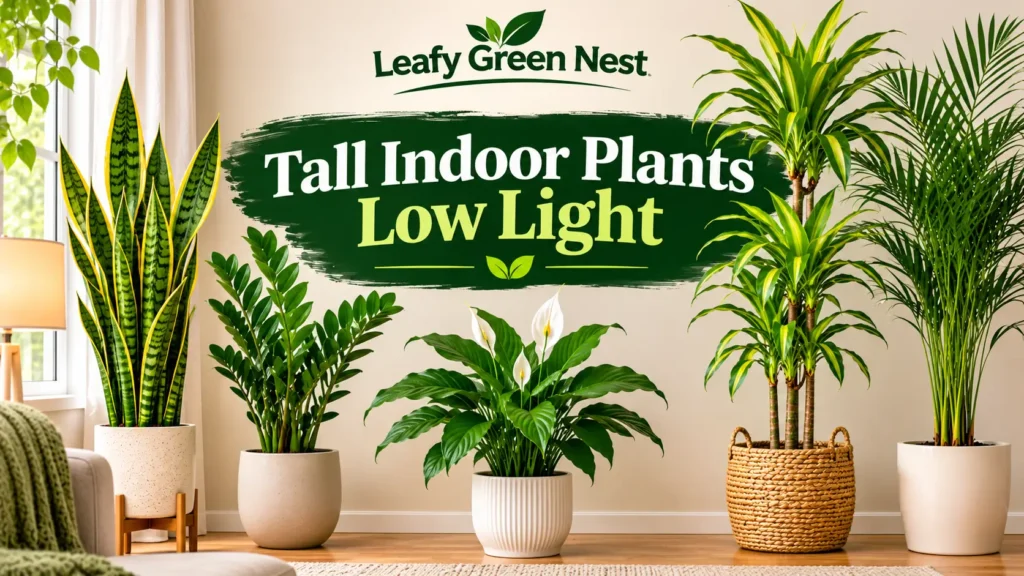
Tall indoor plants low light are houseplants that can grow in spaces with limited natural sunlight. They add height, greenery, and a natural feel to rooms with small windows, shaded corners, or areas that receive little direct sunlight.
The best tall indoor plants for low light do not need direct sunlight to survive. Many prefer bright, indirect light, while some can tolerate lower light levels once established. Choosing the right tall indoor plants low light option depends on your room, available space, and plant care routine.
Table of Contents
Key Takeaways
Tall indoor plants can make a room feel fuller without taking up too much floor space. The best results come from matching each plant to the light and conditions in your home.
- Snake plants, ZZ plants, and cast iron plants are among the toughest choices for dim spaces.
- Low light does not mean complete darkness. Every living plant needs some light.
- Parlor palms and some dracaena varieties can add height without direct sun.
- Pet owners should check plant toxicity before buying.
- Watering needs often decrease when a plant receives less light.
- Rotating a plant occasionally can help it grow more evenly.
Best Tall Indoor Plants Low Light: Top Choices to Consider
The best tall indoor plants for low-light rooms tolerate indirect light and do not need constant attention. Some grow upright, while others develop wide leaves that fill an empty corner.
Snake Plant
The snake plant is one of the easiest houseplants to care for. Its stiff, upright leaves add height without spreading too far across the floor.
It can tolerate low light, although growth may slow in a dark room. Let the soil dry out between waterings because wet soil can cause root rot.
Best for: Bedrooms, offices, narrow corners, and beginners.
Care tip: Choose a taller variety if you want a strong vertical shape.

3FT 2-Pack Artificial Snake Plants, Fake Sansevieria Indoor Outdoor
ZZ Plant
The ZZ plant has glossy, dark green leaves that grow from thick stems. It handles lower-light conditions and can cope with occasional missed watering.
It grows slowly, so do not expect it to become a large indoor tree overnight. Its compact growth makes it suitable for rooms where floor space is limited.
Best for: Offices, shaded living rooms, and people with busy schedules.
Care tip: Water only when the soil has dried well. Too much water is a common problem.

Nearly Natural 28 in Artificial ZZ Plant with Planter for Home Office Decor
Cast Iron Plant
The cast iron plant earns its name because it can handle conditions that challenge many other houseplants. Its broad, dark green leaves create a full appearance near the floor.
It grows slowly and usually stays lower than some indoor trees. However, its strong leaves and tolerance for shade make it a useful choice for dim corners.
Best for: Hallways, shaded rooms, and low-maintenance plant owners.
Care tip: Avoid placing it in direct afternoon sunlight, which can scorch its leaves.

2 Pcs Heavy Duty Cast Iron Plant Holder Stand,Black
Dracaena
Dracaena plants have long stems and narrow leaves that create a tree-like shape. Some varieties can reach several feet indoors when growing conditions are suitable.
They can tolerate moderate to lower indirect light, but growth may slow in darker spaces. Allow the top layer of soil to dry before watering again.
Best for: Living rooms, offices, and spaces with high ceilings.
Care tip: Check the plant label because different dracaena varieties have different growth habits. Dracaena is toxic to cats and dogs if eaten.

Artificial Plant 5FT Dracaena Fake Tree with Black Tall Planter
Parlor Palm
The parlor palm brings a soft, tropical look to indoor spaces. Its slim stems and delicate leaves make it feel lighter than broad-leaf plants.
It can adapt to lower indoor light, although it grows best with bright, indirect light. Keep its soil slightly moist but never waterlogged.
Best for: Living rooms, bedrooms, and shaded spaces.
Care tip: Protect it from cold drafts and very dry air.

Parlor Palm: Prodigy Petal, Plant Guide
Kentia Palm
The Kentia palm is known for its arching leaves and graceful shape. It can grow into a large floor plant and works well in rooms with indirect light.
It is usually more expensive than smaller houseplants. It also needs enough room for its leaves to spread.
Best for: Large living rooms, reception areas, and spacious offices.
Care tip: Avoid placing it beside a strong air-conditioning vent.

Larksilk 7' Artificial Kentia Palm with 248 Leaves in Pot - Realistic Indoor Greenery for Home & Office Decor
Rubber Plant
The rubber plant has thick stems and large, glossy leaves. It can become a striking indoor feature when it receives enough light.
It prefers bright, indirect light but can sometimes adjust to moderate indoor light. Very dim conditions may cause weak growth and leaf loss.
Best for: Living rooms with filtered daylight.
Care tip: Wipe dust from its leaves so they can make better use of available light. Rubber plants are toxic to pets if chewed.

17" Artificial Rubber Plant in Black Pot, Faux Ficus Plant Potted with Cream White Edge Foliages, Fake Greenery Plant for Home Office Tropical Decor
Peace Lily
The peace lily has broad green leaves and can produce white flowers in suitable conditions. It tolerates lower light better than many flowering houseplants.
However, it may produce fewer flowers in a dim room. Keep the soil lightly moist and avoid letting the roots sit in standing water.
Best for: Bedrooms, living rooms, and shaded indoor areas.
Care tip: Peace lilies are toxic to cats and dogs, so keep them away from pets that chew plants.

Nearly Natural 42 in Artificial Spathiphyllum Peace Lily Real Touch Plant
Corn Plant
The corn plant has a strong upright stem and long leaves that form a leafy crown. It can add height without needing a wide planter.
It prefers bright, indirect light but can tolerate lower light. Avoid overwatering, especially when the room receives little sunlight.
Best for: Empty corners and rooms with limited floor space.
Care tip: It is a type of dracaena and is toxic to cats and dogs.

Nearly Natural 3 ft Artificial Corn Stalk Dracaena Real-Touch Floor Plant
Chinese Evergreen
Chinese evergreen plants are popular because they can adapt to indoor conditions. Their leaves may be green, silver, or patterned, depending on the variety.
Many varieties tolerate lower light, but colorful types may need brighter indirect light to maintain their patterns. They usually stay shorter than large indoor trees.
Best for: Side corners, offices, and rooms that need extra foliage.
Care tip: Check the mature height before buying because not every variety grows tall.

Lindagary Red Berries Flower Basket Chinese New Year Spring Festivals Flower Bouquet Chinese Spring Festival Ornaments Artificial Potted Flower for Chinese...
Lady Palm
The lady palm has several upright stems and fan-shaped leaves. It can create a dense, elegant look in a large indoor pot.
It tolerates moderate indoor light and can adapt to some shaded spaces. It grows slowly, so buy a mature plant if you want an immediate tall effect.
Best for: Large rooms, covered indoor areas, and office entrances.
Care tip: Keep the soil evenly moist but allow excess water to drain.

Briful Fake Plant 15’’ Artificial Palm Plant in Matte Black Pot Realistic Faux Tropical Palm Tree Houseplant for Home Indoor Living Room Tabletop Bedroom...
Fiddle-Leaf Fig
The fiddle-leaf fig is known for its large, violin-shaped leaves. It can grow into a tall indoor tree, but it is not the best choice for a genuinely dim room.
It needs bright, indirect light to grow well. Consider it only if your room has a bright window or a suitable grow light.
Best for: Bright living rooms and open spaces.
Care tip: Avoid moving it often because sudden changes in light and location can cause leaf drop.

Fiddle Leaf Fig Tree Artificial 5FT - Faux Fiddle Leaf Fig Tree with White Tall Planter - Fake Ficus Lyrata Floor Plant Potted - Artificial Fig Tree for Home...
Tall Indoor Plants for Living Room Corners
Tall plants can make a living room feel more balanced by filling empty vertical space. Choose a plant based on the room’s light, furniture layout, and available floor area.
A snake plant or dracaena works well in a narrow corner. A Kentia palm can suit a larger room where its leaves have space to spread. A rubber plant may be a better fit near a bright window.
Before choosing a plant, consider:
- Room size: Large plants can overwhelm a small room.
- Leaf spread: Palms need more side space than upright snake plants.
- Furniture placement: Keep leaves away from doors and walkways.
- Light direction: A plant near a north-facing window may receive less light than one near an unobstructed south-facing window.
- Pets and children: Choose a non-toxic plant when leaves may be chewed.
Tall Indoor Plants Low Light Non Toxic for Pets
Some tall indoor plants are safer choices for homes with cats and dogs. However, non-toxic does not mean pets should eat them freely.
Parlor palms, Kentia palms, and cast iron plants are commonly listed as non-toxic to cats and dogs. They can be useful alternatives to plants such as dracaena, peace lily, and rubber plant, which can cause problems if eaten.
Check the botanical name before purchasing. Common names can refer to different species, and similar-looking plants may have different safety profiles.
Keep these points in mind:
- Ask the seller for the botanical name.
- Check the plant against a trusted pet-safety reference.
- Place even non-toxic plants where pets cannot damage them.
- Contact a veterinarian if your pet eats an unknown plant and shows symptoms.
Tall Indoor Plants Low Light No Light: What Really Works?
No living plant can grow in complete darkness. Plants need light to make food through a process called photosynthesis.
Some plants can survive in low-light rooms for longer than others, but survival is not the same as healthy growth. A plant placed in a windowless room may slowly weaken even if it looks fine at first.
If your room has almost no natural light, consider these options:
- Add a grow light designed for indoor plants.
- Move the plant closer to a window for part of the day.
- Rotate plants between brighter and darker rooms.
- Use a high-quality artificial plant if the space receives no usable light.
For a better understanding of indoor light, see the University of Minnesota Extension’s related guide on lighting for indoor plants.
Tall Indoor Plants Low Light Outdoor Growing Tips
Some indoor plants can also grow outdoors in warm, shaded areas, but not every low-light houseplant is suitable for outdoor conditions. Temperature, wind, rain, and direct sunlight can affect their health.
Parlor palms, cast iron plants, and some dracaena varieties may work in sheltered outdoor areas where the climate is suitable. They should not be exposed suddenly to strong sunlight.
In hot climates, protect plants from intense afternoon sun and drying winds. Move them gradually when changing their location from indoors to outdoors.
Remember:
- Check the plant’s temperature range.
- Use a sheltered area with filtered light.
- Make sure the pot has drainage holes.
- Watch for pests after moving plants outside.
- Bring sensitive plants indoors when temperatures become unsuitable.
Tall Indoor Plants Low Light Home Depot and Local Buying Tips
You can find tall indoor plants at large garden retailers, local nurseries, and online plant stores. Home Depot may carry common houseplants, but its selection depends on the store, season, and local stock.
When searching for tall indoor plants at Home Depot, check the plant label for its botanical name, mature height, and light requirements. Do not choose a plant based only on its size or appearance.
Local nurseries can be useful because staff may help you select a plant for your room’s conditions. Compare the plant’s health and price before buying.
Look for:
- Firm stems and healthy leaves.
- No visible insects or sticky residue.
- Soil that is not constantly soaked.
- No strong smell of rotting soil.
- A plant label with care information.
- A pot with working drainage.
Tall Indoor Plants Low Light Near Me: How to Find the Right Plant
Searching for tall indoor plants near you can help you compare local prices and find plants that are already suited to your climate. Start with nearby nurseries and garden centers rather than relying only on online pictures.
Call before visiting if you want a specific plant. Ask whether it is currently available, how tall it is, and whether it has been grown indoors or outdoors.
Inspect the plant in person when possible. A smaller, healthy plant is often a better purchase than a tall plant with damaged leaves or weak stems.
How to Care for Tall Indoor Plants in Low Light
Low-light plants often use water more slowly than plants in bright locations. This means watering on a fixed weekly schedule can lead to overwatering.
Check the soil before adding water. For many foliage plants, the top layer should dry before the next watering, although the exact requirement depends on the species.
Light: Give plants the brightest indirect light available. Low light should not mean a completely dark corner.
Water: Check soil moisture rather than following a strict calendar. Reduce watering when growth slows.
Drainage: Use pots with drainage holes. Empty excess water from the saucer.
Dust: Clean leaves gently with a damp cloth when dust builds up.
Fertilizer: Feed during active growth according to the plant’s needs. Avoid heavy feeding when growth is slow.
Pruning: Remove dead or damaged leaves with clean tools. Prune only when needed to manage size or shape.
Common Mistakes to Avoid
Many indoor plant problems come from choosing the wrong location or giving a plant more water than it needs. A little planning can prevent most of these issues.
- Assuming low light means no light: Plants still need usable light to grow.
- Watering too often: Soil may stay wet longer in a shaded room.
- Ignoring mature size: A small plant can become too wide or tall for its location.
- Buying without checking toxicity: Some attractive plants are unsafe for pets.
- Moving plants suddenly: A quick change in light can stress leaves.
- Ignoring pests: Check leaf undersides and stems when watering or cleaning.
Choose Tall Indoor Plants for Your Space and Light Needs
The best tall indoor plant is one that fits your room’s light, available space, and care routine. A plant that suits your conditions will usually look better and need less attention over time.
For darker rooms, start with a snake plant, ZZ plant, cast iron plant, or parlor palm. For a larger space with better indirect light, consider a Kentia palm, dracaena, or rubber plant. If you have pets, check plant safety before bringing anything home.
Frequently Asked Questions
What are the best tall indoor plants for low light?
Snake plants, ZZ plants, cast iron plants, parlor palms, and some dracaena varieties are good choices because they tolerate lower indoor light.
Can tall indoor plants survive without direct sunlight?
Yes. Many indoor plants grow without direct sunlight, but they still need some natural or artificial light to stay healthy.
Which tall indoor plants are safe for cats and dogs?
Parlor palms, Kentia palms, and cast iron plants are commonly considered non-toxic to cats and dogs. Always confirm the botanical name before buying.
How often should I water tall indoor plants in low light?
Watering depends on the plant type and soil moisture. Check the soil before watering because plants in low-light rooms often use water more slowly.
Are tall indoor plants suitable for living rooms?
Yes. Snake plants, dracaena, Kentia palms, and rubber plants can add height and greenery to living rooms when their light requirements are met.
Where can I buy tall indoor plants for low-light spaces?
You can find them at local nurseries, garden centers, and online plant shops. Check the plant’s mature size, light needs, and overall health before purchasing.


