
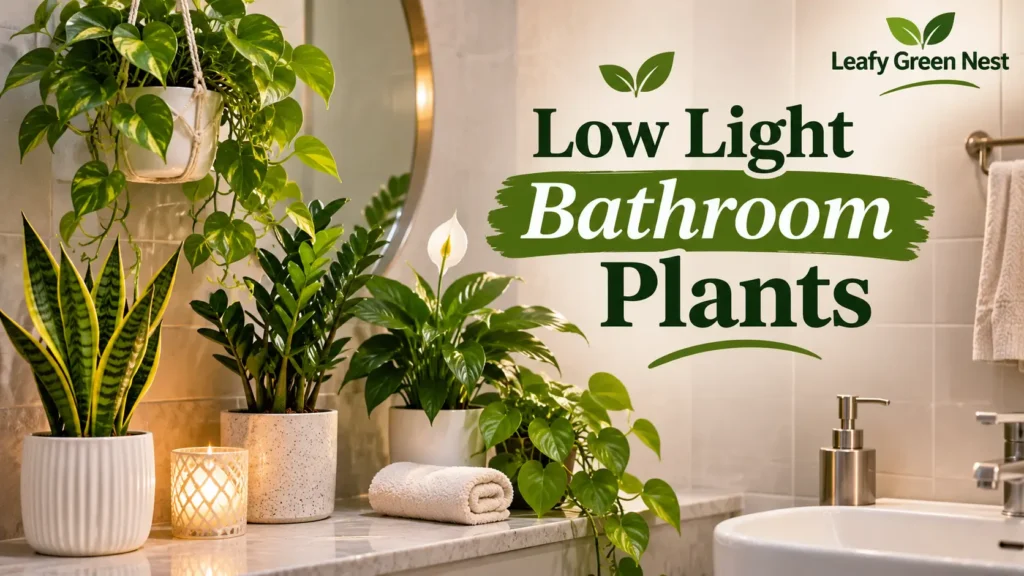
Low light bathroom plants can transform a dark, humid bathroom into a beautiful, relaxing space without requiring hours of plant care. The right indoor plants can tolerate limited sunlight, handle changing humidity, and bring natural greenery to even the smallest bathrooms.
You do not need a large window or a bright room to enjoy indoor plants. Snake plants, ZZ plants, pothos, cast iron plants, and Chinese evergreens are popular choices for bathrooms with limited natural light.
However, there is one important difference between low light and no light. Living plants need light to produce energy, so a completely windowless bathroom requires artificial grow lighting or regular plant rotation.
Table of Contents
What Are Low Light Bathroom Plants?
Low light bathroom plants are indoor plants that tolerate limited natural sunlight and grow under indirect lighting conditions. Many also adapt to the humidity and temperature changes commonly found in bathrooms.
These plants are useful for small bathrooms, rooms with frosted windows, shaded corners, and spaces where direct sunlight is limited. The best varieties are generally easy to maintain and do not require frequent watering.
A suitable bathroom plant should have several qualities:
- Tolerates low or indirect light.
- Adapts to normal indoor humidity.
- Does not require constant watering.
- Grows comfortably in a small pot.
- Handles ordinary indoor temperature changes.
- Matches the available space and maintenance routine.
Remember that a plant that tolerates shade may grow more slowly than one receiving brighter indirect light.
Key Takeaways
Low light bathroom plants are best selected according to available sunlight, humidity, and maintenance requirements. A suitable plant can improve the appearance of your bathroom without creating unnecessary care responsibilities.
- Best overall: ZZ plant and snake plant.
- Best hanging plant: Green pothos.
- Best for humid bathrooms: Boston fern.
- Best for small spaces: Heartleaf philodendron.
- Best for beginners: Cast iron plant.
- Best for windowless bathrooms: ZZ plant with artificial grow lighting.
- Best decorative option: Peace lily.
- Important care tip: Check soil moisture before watering.
Best Low Light Bathroom Plants for Small Spaces
The best low light bathroom plants combine attractive foliage with the ability to tolerate indirect sunlight. These varieties are suitable for bathrooms where space is limited and natural light is not always available.
Snake Plant
The snake plant is one of the most reliable choices for a bathroom with limited sunlight. Its tall, upright leaves create a modern appearance while taking up very little floor space.
It tolerates low light and stores water in its thick leaves. This makes it suitable for people who prefer plants that do not need frequent watering.
- Light: Low to bright indirect light.
- Water: Allow the soil to dry completely.
- Humidity: Tolerates average indoor humidity.
- Placement: Bathroom corners and floor spaces.
- Maintenance: Very easy.

Snake Plant 2-Pack Sansevieria Zeylanica and Laurentii Live Indoor Plants in 4-Inch Decorative Pots Houseplants for Office and Home Decor by United Nursery
ZZ Plant
The ZZ plant is an excellent choice for dark bathrooms because it tolerates low-light conditions better than many common houseplants. Its glossy green leaves add a fresh appearance to shelves, countertops, and empty corners.
It stores water in underground rhizomes, which helps it survive periods without watering. Avoid keeping its soil constantly wet because excessive moisture can damage its roots.
- Light: Low to medium indirect light.
- Water: Water when the soil has dried.
- Humidity: Tolerates average humidity.
- Placement: Countertops and bathroom shelves.
- Maintenance: Very easy.

ZZ Plant 2-Pack Green ZZ in 4-Inch Decorative Pots Live Indoor Plants Houseplants for Office and Home Decor by United Nursery
Pothos
Pothos is a popular trailing plant with attractive, heart-shaped leaves. Its cascading vines make it particularly useful for bathroom shelves, hanging baskets, and wall-mounted planters.
Green pothos varieties generally tolerate lower light better than highly variegated varieties. Growth may slow in darker bathrooms, but the plant can still maintain attractive foliage when its basic needs are met.
- Light: Low to bright indirect light.
- Water: Allow the top layer of soil to dry.
- Humidity: Adapts well to bathroom humidity.
- Placement: Hanging baskets and floating shelves.
- Maintenance: Easy.
Pothos is toxic to cats and dogs if chewed or swallowed.

Pothos 2-Pack Neon Pothos and N'Joy Pothos in 4-Inch Decorative Pots Live Indoor Plants Easy-Care Trailing Houseplants for Home Decor by United Nursery
Peace Lily
Peace lilies are attractive flowering plants with dark green leaves and elegant white blooms. They tolerate lower light than many flowering houseplants and appreciate moderate to high humidity.
They need more consistent moisture than snake plants and ZZ plants. Keep their soil lightly moist, but avoid allowing water to collect around the roots.
- Light: Low to medium indirect light.
- Water: Keep soil lightly moist.
- Humidity: Prefers moderate to high humidity.
- Placement: Bathroom corners and wide countertops.
- Maintenance: Easy to moderate.
Peace lilies are toxic to pets if ingested.

Live Peace Lily Plant, Spathiphyllum, Low Light, Easy to Grow, 4" Pot
Chinese Evergreen
Chinese evergreen is a decorative foliage plant that tolerates lower light and offers attractive leaf patterns. Depending on the variety, its foliage may feature shades of green, silver, pink, or red.
For darker bathrooms, choose varieties with mostly green leaves. Colorful varieties generally need brighter indirect light to maintain their patterns.
- Light: Low to medium indirect light.
- Water: Water when the upper soil begins to dry.
- Humidity: Enjoys moderate humidity.
- Placement: Shelves and countertops.
- Maintenance: Easy.

2-Pack Aglaonema Beauty Live Indoor Plants in 4-Inch Decorative Pots Colorful Chinese Evergreen Houseplants for Office and Home Decor by United Nursery
Heartleaf Philodendron
Heartleaf philodendron is a low-maintenance trailing plant with soft, heart-shaped leaves. It is particularly useful in compact bathrooms because its vines can grow downward from shelves and hanging planters.
It tolerates lower light, although its stems may become longer and its foliage less dense in very dark conditions.
- Light: Low to bright indirect light.
- Water: Allow the upper soil to dry slightly.
- Humidity: Prefers moderate humidity.
- Placement: Hanging baskets and bathroom shelves.
- Maintenance: Easy.

Shop Succulents Brasil Philodenron Heartleaf Hanging Plant, Live Indoor Plant, Easy Care Hanging Ivy Houseplant in Nursery Pot, Air Purifying Plant in Soil,...
Cast Iron Plant
The cast iron plant is known for surviving conditions that many other houseplants struggle with. Its broad, dark green leaves create a simple, elegant appearance.
It tolerates shade, occasional missed watering, and ordinary household humidity. This makes it a particularly useful option for bathrooms with small windows.
- Light: Low to medium indirect light.
- Water: Allow the upper soil to dry.
- Humidity: Tolerates average humidity.
- Placement: Bathroom floors and corners.
- Maintenance: Very easy.

2 Pcs Heavy Duty Cast Iron Plant Holder Stand,Black
Spider Plant
Spider plants feature long, arching leaves that look attractive in decorative pots and hanging baskets. They also produce small baby plants that grow from their stems.
They tolerate some shade but generally grow better with moderate indirect sunlight. They are also considered non-toxic to cats and dogs by the ASPCA.
- Light: Medium indirect light.
- Water: Water when the topsoil dries.
- Humidity: Adapts to average indoor humidity.
- Placement: Hanging baskets and shelves.
- Maintenance: Easy.

3 Pack Spider Plant Live Indoor Houseplants, Fully Rooted Well-Established Plants (Not Cuttings), Air- Purifying Airplane Plant for Hanging Baskets, Home &...
Boston Fern
Boston ferns are beautiful plants for bathrooms with higher humidity. Their soft, feathery leaves create a tropical appearance that works especially well in bathrooms with natural daylight.
They need more consistent moisture and better lighting than snake plants or ZZ plants. Avoid choosing a Boston fern for a completely dark bathroom unless you can provide suitable grow lighting.
- Light: Medium to bright indirect light.
- Water: Keep soil consistently moist.
- Humidity: Prefers high humidity.
- Placement: Near bathroom windows or hanging planters.
- Maintenance: Moderate.

9" Small Artificial Boston Fern in White Embossed Pot for Shelves & Desks
Parlor Palm
Parlor palm is a compact indoor palm that adds a tropical appearance without taking up too much room. Its delicate green leaves create a soft, natural look in small bathrooms.
It tolerates lower light and prefers protection from harsh direct sunlight. Avoid allowing its roots to remain constantly wet.
- Light: Low to medium indirect light.
- Water: Water when the upper soil begins to dry.
- Humidity: Appreciates moderate humidity.
- Placement: Bathroom floors and corners.
- Maintenance: Easy.

Live Parlor Palm Plant, Neanthe Bella Palm, Pet Safe, 4" Pot
Lucky Bamboo
Lucky bamboo is a decorative plant that can grow in water or suitable potting media. Its upright stalks look attractive on bathroom countertops and minimalist shelves.
It tolerates lower indirect light, but still needs usable light for healthy growth. If you grow it in water, change the water regularly and keep its roots submerged.
- Light: Low to medium indirect light.
- Water: Maintain clean water or lightly moist soil.
- Humidity: Adapts to ordinary bathroom humidity.
- Placement: Countertops and shelves.
- Maintenance: Easy.

3 Stalks Lucky Bamboo Plants Indoor Live - Multi-Height Set (2x4 & 1x6) for Good Luck & Prosperity - Easy Care Houseplant, Home Office Decor Gift Ready
English Ivy
English ivy is a trailing plant that adds natural greenery to bathroom shelves and hanging baskets. It tolerates some shade and looks attractive in bathrooms with filtered daylight.
Good airflow is helpful because dense foliage and constantly damp conditions can encourage fungal problems.
- Light: Medium indirect light.
- Water: Keep soil lightly moist.
- Humidity: Prefers moderate humidity.
- Placement: Hanging baskets and shelves.
- Maintenance: Moderate.
English ivy is toxic to pets if ingested.

English Ivy Plants, 2 Inch Pots, Set of 8, Live Indoor House Plants
Bird’s Nest Fern
Bird’s nest fern has broad, wavy leaves that grow from a central rosette. Its tropical appearance makes it an attractive choice for bathrooms with windows and naturally humid conditions.
Keep its soil lightly moist and avoid pouring water directly into its central growing crown because trapped moisture can cause rot.
- Light: Medium indirect light.
- Water: Keep soil lightly moist.
- Humidity: Prefers high humidity.
- Placement: Shelves near bathroom windows.
- Maintenance: Moderate.

Costa Farms Bird's Nest Fern, Live Indoor Plant, Easy Care, Home Decor
Dracaena
Dracaena plants are popular indoor plants with upright growth and attractive foliage. Some varieties, especially those with dark green leaves, tolerate lower light better than colorful varieties.
They work well in bathrooms with enough floor space and do not need frequent watering.
- Light: Low to medium indirect light.
- Water: Allow the upper soil to dry.
- Humidity: Tolerates average humidity.
- Placement: Bathroom floors and corners.
- Maintenance: Easy.
Dracaena is toxic to cats and dogs.

Easy to Grow Dracaena Janet Craig - 2 Potted Houseplants in Grower Pots, Compact Low Maintenance
Philodendron Brasil
Philodendron Brasil is a trailing plant with attractive green and yellow leaf markings. Its vines look beautiful in hanging planters and on floating bathroom shelves.
It can tolerate some lower light, but its colorful patterns may become less noticeable in darker conditions.
- Light: Medium to bright indirect light.
- Water: Allow the top layer of soil to dry slightly.
- Humidity: Appreciates moderate humidity.
- Placement: Hanging baskets and shelves.
- Maintenance: Easy.
Philodendron Brasil is toxic to pets if swallowed.

Set 2 Philodendron Brasil Live Plants, Trailing Perennial Plants with Variegated Foliage for Indoor Outdoor - No in CA
Best Plants for Bathroom No Light
Bathrooms without windows can still feature living plants, but they need artificial lighting to survive long term. ZZ plants, snake plants, cast iron plants, and green pothos are practical choices because they tolerate lower light better than many other houseplants.
However, no living plant can grow indefinitely in complete darkness. Even shade-tolerant plants need light for photosynthesis.
A full-spectrum LED grow light can provide the energy they need. Start with approximately 10–12 hours of artificial light daily, then adjust according to the plant’s response and the manufacturer’s instructions.
If installing a grow light is not practical, consider rotating plants between the bathroom and a brighter room. Another option is using artificial or preserved greenery for decoration.
Best choices for windowless bathrooms:
- ZZ plant for very low-maintenance care.
- Snake plant for upright, compact greenery.
- Cast iron plant for broad, attractive foliage.
- Green pothos for trailing decoration.
Bathroom Plants No Light No Window: What to Choose
Choosing bathroom plants no light no window conditions requires understanding the difference between low-light tolerance and complete darkness. The best approach is to select hardy plants and provide a reliable artificial light source.
Consider these factors before buying:
- Available lighting: Decide whether you can install a grow light.
- Bathroom humidity: Choose plants that tolerate your room’s moisture levels.
- Available space: Use compact pots for countertops and trailing plants for shelves.
- Watering routine: Select drought-tolerant plants if you prefer less maintenance.
- Pet safety: Check toxicity before bringing plants into your home.
The University of Maryland Extension provides additional advice about selecting suitable houseplants and matching them to indoor growing conditions in its guide to selecting indoor plants.
Bathroom Plants That Absorb Moisture No Light
Many people search for bathroom plants that absorb moisture no light because they want to reduce condensation and prevent mold. However, houseplants cannot remove enough moisture from a room to act as effective dehumidifiers.
Some plants enjoy humid conditions, but this does not mean they absorb excess bathroom moisture. Plants also release water vapor through their leaves in a natural process called transpiration.
Consider these plants if your bathroom is naturally humid:
| Plant | Humidity preference | Light preference |
|---|---|---|
| Boston fern | High | Medium indirect |
| Bird’s nest fern | High | Medium indirect |
| Peace lily | Moderate to high | Low to medium indirect |
| Pothos | Moderate | Low to bright indirect |
| Parlor palm | Moderate | Low to medium indirect |
To reduce bathroom moisture, use an exhaust fan, repair leaks, dry wet surfaces, and improve ventilation. A dehumidifier may also help if the room remains damp.
Plants should be treated as decorative additions, not mold prevention solutions.
Best Hanging Plants for Bathroom No Light
Hanging plants are ideal for small bathrooms because they create a natural appearance without taking up valuable floor or countertop space. If your bathroom has no windows, however, these plants still need artificial lighting or regular rotation into brighter rooms.
Good hanging options include:
- Pothos: Produces attractive trailing vines and tolerates lower light.
- Heartleaf philodendron: Features soft, heart-shaped green leaves.
- Boston fern: Creates a tropical appearance in humid bathrooms with windows.
- English ivy: Adds cascading greenery to shelves and hanging baskets.
- Philodendron Brasil: Provides colorful foliage in bathrooms with better lighting.
Green pothos and heartleaf philodendron are practical choices for lower-light conditions. Boston ferns and colorful trailing varieties are better suited to brighter spaces.
Best Plants for Bathroom for Mold
Plants cannot prevent bathroom mold or replace proper moisture control. Even plants that enjoy humidity do not remove enough water from the air to stop mold growth.
The best way to control mold is to reduce excess moisture and maintain good ventilation.
Follow these simple practices:
- Run an exhaust fan during and after showers.
- Open windows when weather and privacy allow.
- Repair leaking taps, pipes, and shower fittings.
- Dry wet floors and shower surfaces.
- Avoid leaving damp towels in enclosed spaces.
- Check bathroom ceilings, grout, and corners regularly.
The US Environmental Protection Agency recommends keeping indoor relative humidity below 60%, ideally between 30% and 50%, where practical.
Use bathroom plants to improve the appearance of your space, not as a substitute for proper mold prevention.
Best Plants for Bathroom With Lots of Light
Bathrooms with large windows or plenty of indirect sunlight offer more choices than darker spaces. You can grow flowering plants, tropical foliage varieties, and traditional low-light houseplants.
Consider these options:
| Plant | Why it works |
|---|---|
| Moth orchid | Attractive flowers and preference for bright indirect light |
| Boston fern | Enjoys humidity and filtered daylight |
| Calathea | Decorative patterned leaves and preference for humid conditions |
| Hoya | Attractive trailing growth and bright indirect light preference |
| Bird’s nest fern | Tropical foliage suited to humid environments |
Avoid placing delicate plants in harsh afternoon sunlight. Filtered daylight is usually a better choice for these varieties.
How to Care for Low Light Bathroom Plants
Good plant care starts with understanding the bathroom’s lighting, humidity, and watering conditions. A few simple habits can help prevent yellow leaves, root rot, and slow growth.
Check the lighting: Observe how much daylight enters your bathroom during the day. If there is no natural light, use a suitable grow light rather than relying on an ordinary ceiling bulb.
Avoid overwatering: Humid bathrooms can slow soil drying. Check the soil before watering and use pots with drainage holes.
Choose suitable pots: Terracotta pots allow soil to dry faster, while ceramic and plastic pots may retain more moisture. Make sure excess water can escape.
Maintain air circulation: Keep plants away from direct shower spray and maintain proper ventilation. Constantly wet foliage and stagnant air can encourage fungal problems.
Clean plant leaves: Wipe broad leaves gently with a damp cloth to remove dust, soap residue, and mineral deposits.
Watch for plant problems: Yellow leaves may indicate overwatering or environmental stress. Brown tips can result from water quality or inconsistent watering. Weak, stretched stems often suggest insufficient light.
Before changing your watering routine, check the soil. Drooping leaves can result from both underwatering and root problems, so adding more water without checking can make the situation worse.
Final Thoughts on Choosing the Best Bathroom Plants
Low light bathroom plants can bring natural beauty to small, humid spaces without requiring complicated maintenance. Snake plants, ZZ plants, pothos, and cast iron plants are particularly useful choices for beginners.
Choose trailing philodendrons and pothos for hanging displays, or consider Boston ferns and bird’s nest ferns for bathrooms with windows. Match each plant to the actual lighting and moisture conditions in your bathroom.
Most importantly, remember that low-light plants still need light. If your bathroom has no windows, provide artificial grow lighting to keep living plants healthy.
Frequently Asked Questions
These common questions cover plant selection, lighting, watering, and bathroom humidity. The answers also address common misconceptions about growing plants in dark bathrooms.
What is the easiest plant to keep in a bathroom?
The ZZ plant and snake plant are among the easiest bathroom plants to maintain. Both tolerate lower light, require infrequent watering, and adapt to ordinary indoor humidity.
Is a bathroom suitable for indoor plants?
Yes, bathrooms can be suitable for indoor plants because many varieties enjoy humid conditions. However, adequate lighting, drainage, and ventilation are still necessary for healthy growth.
Can plants survive in a bathroom without windows?
Yes, if you provide suitable artificial grow lighting or regularly rotate plants into brighter rooms. No living plant can survive indefinitely in complete darkness.
Should bathroom plants receive direct sunlight?
Most bathroom plants prefer indirect sunlight rather than harsh direct sunlight. Place them near a window with filtered daylight to reduce the risk of leaf scorching.
Why do bathroom plants develop mold on their soil?
Excessive watering, poor drainage, and limited airflow can encourage mold growth on potting soil. Allow the soil to dry appropriately and improve ventilation.
Does a bathroom plant help reduce humidity?
No bathroom plant can meaningfully control indoor humidity. Some plants enjoy humid air, but proper ventilation and dehumidification are much more effective for reducing excess moisture.


