
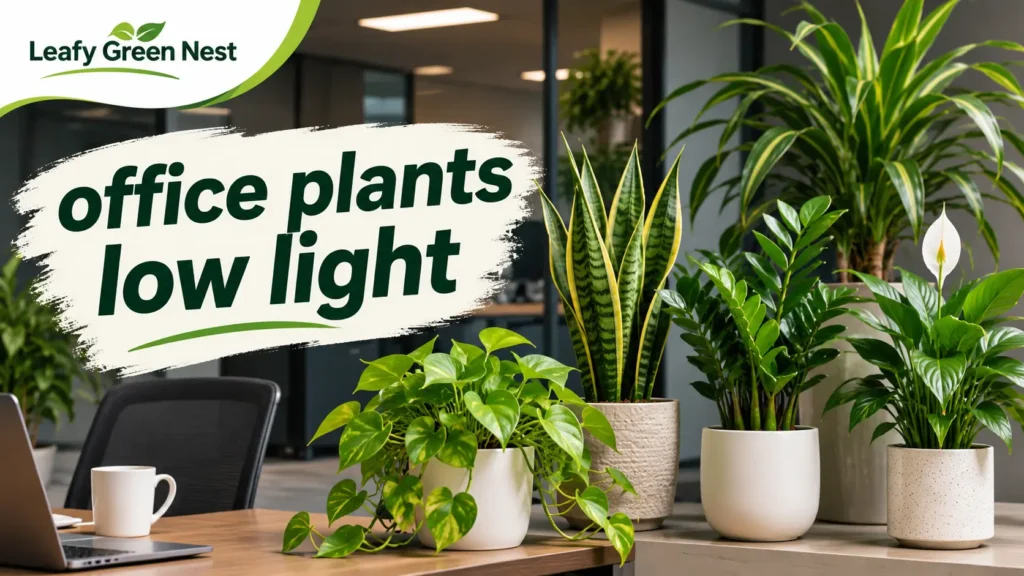
Office plants low light spaces can support make a workplace feel more comfortable, attractive, and welcoming. Even if your office has small windows, shaded corners, or fluorescent lighting, you can find indoor plants that thrive with limited sunlight and need little maintenance.
The best choices include snake plants, ZZ plants, pothos, cast iron plants, and Chinese evergreens. For larger spaces, Kentia palms and dracaenas provide attractive greenery without taking up valuable desk space.
The secret is choosing plants according to your actual office conditions. A plant that tolerates shade may still struggle in complete darkness, so understanding its light, water, and space requirements is essential.
Table of Contents
What Are Office Plants Low Light?
Office plants low light are indoor plants that tolerate limited natural sunlight and can grow in shaded areas with suitable ambient or artificial lighting. They are useful for workplaces with small windows, indirect sunlight, and areas far from natural light sources.
These plants are often easier to maintain than sun-loving varieties because many grow slowly and use water at a slower rate in dim conditions.
However, low light does not mean no light. Every living plant needs light for photosynthesis. If your office has no windows, suitable artificial grow lighting may be necessary.
Key Takeaways
Choosing suitable office greenery becomes easier when you understand the differences between plant varieties and their growing requirements.
- Snake plants and ZZ plants are excellent choices for beginners.
- Pothos and heartleaf philodendrons work well on shelves and hanging planters.
- Kentia palms and dracaenas suit larger office interiors.
- Cast iron plants tolerate shaded indoor locations.
- Most low-light plants need less frequent watering than plants in brighter locations.
- Full-spectrum LED grow lights can support plants in offices without natural sunlight.
- Plant toxicity should be considered in pet-friendly workplaces.
Best Office Plants Low Light Spaces Can Support
The best office plants low light spaces can support combine attractive foliage, shade tolerance, and manageable care requirements. These varieties offer practical options for desks, meeting rooms, reception areas, and larger office interiors.
Snake Plant
Scientific name: Dracaena trifasciata
The snake plant is one of the most dependable choices for office environments. Its tall, upright leaves create a clean appearance and fit comfortably into narrow spaces.
It tolerates lower light and does not need frequent watering. Green varieties are generally better choices for darker rooms than heavily variegated cultivars.
- Light: Low to bright indirect light.
- Water: Allow the soil to dry completely between watering.
- Maintenance: Very low.
- Best placement: Office corners, desks, and reception areas.
Care tip: Avoid leaving water in the bottom of the pot. Excess moisture can cause root rot.
ZZ Plant
Scientific name: Zamioculcas zamiifolia
The ZZ plant is ideal for busy offices because it tolerates shade and irregular watering. Its thick stems and underground rhizomes store water, helping it survive periods of dryness.
Its glossy green leaves also provide a polished appearance that works well with modern office furniture.
- Light: Low to bright indirect light.
- Water: Water when the soil has dried out.
- Maintenance: Very low.
- Best placement: Desks, side tables, and shaded corners.
Care tip: Choose a pot with drainage holes and avoid watering simply because the soil surface looks dry.
Pothos
Scientific name: Epipremnum aureum
Pothos is a popular trailing plant with attractive green leaves and flexible stems. It works particularly well in offices where desk space is limited.
Place it on a bookshelf, cabinet, or hanging planter to introduce greenery without occupying floor space.
- Light: Low to medium indirect light.
- Water: Allow the upper soil to dry between watering.
- Maintenance: Low.
- Best placement: Shelves, cabinets, and hanging baskets.
Care tip: Green varieties generally tolerate lower light better than highly variegated varieties.
Peace Lily
Scientific name: Spathiphyllum
Peace lilies have dark green foliage and elegant white flowers. They tolerate lower light, although they usually flower more successfully with brighter indirect light.
Their attractive appearance makes them suitable for reception counters and meeting rooms.
- Light: Low to medium indirect light.
- Water: Keep the soil lightly moist.
- Maintenance: Moderate.
- Best placement: Reception areas and meeting rooms.
Care tip: Check soil moisture before watering. Constantly wet soil can damage the roots.
Cast Iron Plant
Scientific name: Aspidistra elatior
The cast iron plant is famous for tolerating shade and less-than-perfect indoor conditions. Its broad green leaves provide a natural appearance without demanding much attention.
It is particularly useful for offices where plants may receive limited care during weekends and holidays.
- Light: Low to moderate indirect light.
- Water: Allow the upper soil to dry before watering.
- Maintenance: Very low.
- Best placement: Shaded corners and hallways.
Care tip: Avoid placing it in direct sunlight after keeping it in a shaded location.
Chinese Evergreen
Scientific name: Aglaonema
Chinese evergreen is a decorative foliage plant available in several shades of green, silver, pink, and red.
Green varieties are generally more suitable for lower-light offices, while colorful varieties often need brighter indirect light to maintain their patterns.
- Light: Low to medium indirect light.
- Water: Water when the upper soil begins to dry.
- Maintenance: Low.
- Best placement: Desks, reception areas, and side tables.
Care tip: Choose darker green varieties if your office receives very little sunlight.
Heartleaf Philodendron
Scientific name: Philodendron hederaceum
Heartleaf philodendron is a trailing plant with attractive heart-shaped leaves. It is a practical choice for small workspaces because its stems can grow downward from shelves and cabinets.
- Light: Low to medium indirect light.
- Water: Allow the top layer of soil to dry slightly.
- Maintenance: Low.
- Best placement: Hanging baskets and shelves.
Care tip: Trim long stems occasionally to encourage a fuller appearance.
Parlor Palm
Scientific name: Chamaedorea elegans
Parlor palms bring a soft tropical appearance to office interiors. Their narrow, arching leaves make them suitable for spaces that need greenery without bulky foliage.
They tolerate lower indoor light but grow more successfully with moderate indirect light.
- Light: Low to medium indirect light.
- Water: Keep soil lightly moist but well-drained.
- Maintenance: Low to moderate.
- Best placement: Waiting areas and office corners.
Care tip: Keep the plant away from strong air-conditioning drafts.
Dracaena
Scientific name: Dracaena species
Dracaena varieties are popular indoor plants with upright stems and long decorative leaves. Some varieties tolerate lower light better than others.
Their vertical growth makes them useful for filling empty office corners and adding height to reception areas.
- Light: Low to medium indirect light.
- Water: Allow the upper soil to dry.
- Maintenance: Low.
- Best placement: Reception areas and large corners.
Care tip: Avoid placing dracaena directly beside heating or cooling vents.
Spider Plant
Scientific name: Chlorophytum comosum
Spider plants have long, arching leaves and produce small baby plants called spiderettes. They are relatively easy to maintain and suit desks, shelves, and hanging containers.
- Light: Low to medium indirect light.
- Water: Water when the upper soil begins drying.
- Maintenance: Low.
- Best placement: Desks and hanging baskets.
Care tip: Spider plants are considered non-toxic to cats and dogs by the ASPCA, making them a useful option for pet-friendly offices.
Rubber Plant
Scientific name: Ficus elastica
Rubber plants have large, glossy leaves that create a bold decorative effect. They are attractive choices for spacious offices but need brighter conditions than many other plants on this list.
They are not recommended for very dark office corners.
- Light: Medium to bright indirect light.
- Water: Let the upper soil dry before watering.
- Maintenance: Moderate.
- Best placement: Brighter office areas.
Care tip: Place the plant near a window with filtered sunlight rather than in a dark corner.
Lucky Bamboo
Scientific name: Dracaena sanderiana
Lucky bamboo is a compact decorative plant that works well on office desks and reception counters. Despite its name, it is not a true bamboo.
It can grow in water or suitable potting soil and tolerates lower indoor light.
- Light: Low to medium indirect light.
- Water: Refresh clean water regularly if grown hydroponically.
- Maintenance: Low.
- Best placement: Desks and reception counters.
Care tip: Keep it away from direct sunlight, which can scorch its leaves.
English Ivy
Scientific name: Hedera helix
English ivy is a trailing plant that adds greenery to office shelves and hanging containers. It tolerates some shade but needs attention to airflow and pests.
- Light: Low to medium indirect light.
- Water: Keep soil lightly moist without waterlogging.
- Maintenance: Moderate.
- Best placement: Shelves and hanging planters.
Care tip: Inspect the undersides of leaves for spider mites, particularly in dry indoor environments.
Bird’s Nest Fern
Scientific name: Asplenium nidus
Bird’s nest fern has broad, wavy leaves that grow from a central rosette. It creates a fresh, tropical appearance in shaded indoor spaces.
It prefers consistent moisture and higher humidity, so it may need additional attention in offices with constant air conditioning.
- Light: Low to medium indirect light.
- Water: Keep soil lightly moist.
- Maintenance: Moderate.
- Best placement: Shaded desks and seating areas.
Care tip: Avoid pouring water directly into the central crown.
Kentia Palm
Scientific name: Howea forsteriana
Kentia palm is an elegant floor plant with long, arching fronds. It tolerates lower light better than many other large palms and makes an attractive addition to spacious offices.
Its graceful foliage works particularly well in reception areas and executive offices.
- Light: Low to medium indirect light.
- Water: Water when the upper soil begins to dry.
- Maintenance: Low to moderate.
- Best placement: Reception areas and spacious corners.
Care tip: Give the plant enough room for its fronds to spread naturally.
Large Office Plants Low Light Spaces Can Accommodate
Large office plants low light spaces can accommodate are useful for filling empty corners and creating a more welcoming atmosphere. Choose varieties that tolerate shade, suit your available floor space, and remain attractive with moderate care.
| Plant | Main advantage | Best office location |
|---|---|---|
| Kentia palm | Elegant spreading leaves | Reception |
| Dracaena | Tall, upright growth | Office corners |
| Cast iron plant | Excellent shade tolerance | Hallways |
| Snake plant | Narrow vertical shape | Small corners |
| Parlor palm | Soft tropical foliage | Waiting areas |
For a spacious reception area, a Kentia palm is a good choice. For narrow corners, tall snake plants are more practical because they occupy less floor space.
Indoor Office Plants Low Light Conditions Suit Best
Indoor office plants low light environments can support should match the room’s brightness, available space, and maintenance routine. Choosing the right variety for each location helps prevent weak growth and unnecessary plant replacement.
Consider these combinations:
| Office area | Recommended plants |
|---|---|
| Small desk | ZZ plant, lucky bamboo |
| Reception counter | Chinese evergreen, peace lily |
| Shaded corner | Cast iron plant, snake plant |
| Hanging shelf | Pothos, heartleaf philodendron |
| Large workspace | Kentia palm, parlor palm |
| Meeting room | Dracaena, Chinese evergreen |
Before purchasing, observe the room during normal working hours. A plant placed beside a window may receive considerably more light than one positioned several feet away.
Very Low Light Indoor Plants for Dark Offices
Very low light indoor plants can tolerate shaded spaces, but no living plant can grow indefinitely in complete darkness. Even hardy varieties need usable light to carry out photosynthesis.
The most suitable options include:
- ZZ plant
- Snake plant
- Cast iron plant
- Chinese evergreen
- Green pothos
These plants may survive in dimmer locations, but their growth can slow considerably. If your office has no windows, provide supplemental lighting with a suitable LED grow light.
Best Plants for Artificial Light Office Environments
The best plants for artificial light office environments include ZZ plants, snake plants, pothos, and Chinese evergreens. These varieties can adapt to suitable indoor lighting when they receive enough light for several hours each day.
Ordinary ceiling lights may not provide enough energy for healthy plant growth. A full-spectrum LED grow light is a better option when natural sunlight is unavailable.
For additional guidance, read the University of Maryland Extension’s related guide to lighting for indoor plants.
When using artificial lighting:
- Select a full-spectrum plant light.
- Follow the manufacturer’s recommended distance.
- Use a timer to maintain consistent daily lighting.
- Give plants a regular dark period.
- Watch for pale leaves, weak stems, and unusually slow growth.
The amount of light needed depends on the plant species, light intensity, and duration of exposure. Monitor your plants and adjust their placement when necessary.
Low Maintenance Office Plants for Busy Workplaces
Low maintenance office plants are ideal for employees who cannot spend much time caring for greenery. Many tolerate irregular watering and adapt well to typical indoor conditions.
| Plant | Watering needs | Care level |
|---|---|---|
| ZZ plant | Infrequent | Very low |
| Snake plant | Infrequent | Very low |
| Cast iron plant | Moderate | Very low |
| Pothos | Moderate | Low |
| Lucky bamboo | Regular water changes | Low |
| Chinese evergreen | Moderate | Low |
Avoid watering plants according to a fixed weekly schedule. Check the soil first because indoor temperatures, light levels, and plant requirements can change.
Low Light Plants: Essential Office Care Tips
Low light plants need suitable watering, drainage, and temperature conditions to remain healthy. A simple maintenance routine can prevent many common problems and keep office greenery looking attractive.
Check soil moisture: Water only when the plant’s requirements indicate it is needed.
Use drainage holes: Prevent excess water from collecting around the roots.
Clean the leaves: Remove dust with a soft, damp cloth to keep leaf surfaces clean.
Rotate containers: Turn plants occasionally to encourage balanced growth.
Avoid direct airflow: Keep plants away from strong air-conditioning and heating vents.
Use suitable soil: Choose a potting mix that matches the plant’s moisture and drainage requirements.
Inspect regularly: Look for yellow leaves, pests, damaged stems, and signs of root problems.
Adjust seasonal care: Plants often grow more slowly during cooler months and may need less frequent watering.
Tall Indoor Plants Low Light Offices Can Use
Tall indoor plants low light offices can accommodate help decorate empty corners without taking up valuable desk space. Choose upright varieties that tolerate reduced sunlight and fit comfortably around office furniture.
Good choices include:
- Snake plant: Its narrow leaves grow vertically and suit small corners.
- Dracaena: Its upright stems add height and structure.
- Kentia palm: Its arching leaves create a softer appearance.
- Parlor palm: Its tropical foliage works well in waiting areas.
- Cast iron plant: Its broad leaves provide greenery in shaded locations.
Measure your available floor space before purchasing a large plant. Consider its mature height and width rather than judging only by its appearance in the store.
Common Problems When Growing Office Plants
Office plants may develop yellow leaves, weak stems, or slow growth when their lighting and watering conditions are unsuitable. Identifying the cause early can help prevent further damage.
| Problem | Possible reason | Practical solution |
|---|---|---|
| Yellow leaves | Overwatering or poor light | Check soil and lighting |
| Brown leaf tips | Dry air or inconsistent watering | Review humidity and watering |
| Weak, stretched stems | Insufficient light | Move to a brighter location |
| Slow growth | Low light or seasonal changes | Improve lighting gradually |
| Drooping leaves | Water stress | Check soil moisture |
| Soft stems | Root damage or excess water | Inspect roots and drainage |
| Pests | Dry conditions or poor plant health | Inspect leaves and treat appropriately |
One common mistake is assuming that all low-light plants need the same care. A snake plant prefers drier soil, while a peace lily needs more consistent moisture.
Another mistake is placing plants in completely dark corners. Move them closer to a suitable light source or provide supplemental lighting.
How to Choose the Best Office Plants for Low-Light Spaces
The best plant is one that matches your office lighting, available space, and care routine. Start with hardy varieties and gradually add larger plants as you understand your workplace conditions.
Use this simple buying checklist:
- Check the amount of natural light available.
- Identify whether artificial lighting is necessary.
- Measure the available desk or floor space.
- Compare plant watering requirements.
- Check mature plant size.
- Consider pet and workplace safety.
- Choose pots with suitable drainage.
- Select plants that fit your maintenance schedule.
For most beginners, snake plants, ZZ plants, and cast iron plants are excellent starting points. For larger offices, Kentia palms and dracaenas offer attractive greenery without demanding constant maintenance.
Choosing the Best Office Plants for Low-Light Office Spaces
The best office plants are those that match your workplace lighting and require a manageable level of care. Start with hardy varieties and choose larger decorative plants when you have enough floor space.
For most offices, snake plants, ZZ plants, and cast iron plants are excellent starting points. They offer attractive greenery without requiring constant attention.
Frequently Asked Questions
What is the easiest office plant to grow in low light?
The ZZ plant is one of the easiest options because it tolerates shade, requires infrequent watering, and handles typical indoor conditions. Snake plants are another excellent beginner-friendly choice.
Can office plants survive without natural sunlight?
Yes, some office plants can survive under suitable artificial lighting. However, ordinary ceiling lights may not provide enough energy. Full-spectrum LED grow lights can support healthier growth.
Is a snake plant good for a windowless office?
A snake plant can tolerate low-light conditions, but it cannot survive indefinitely in complete darkness. Provide suitable artificial lighting to support its long-term health.
Should I water low-light office plants every day?
No. Most low-light office plants need less frequent watering because their soil dries more slowly. Check soil moisture before watering to avoid root rot and other problems.
Why are my indoor office plants turning yellow?
Yellow leaves can result from overwatering, insufficient light, poor drainage, or environmental stress. Check the soil first and adjust watering or lighting according to the plant’s needs.
Does artificial office lighting help indoor plants grow?
Yes. Suitable fluorescent lights and full-spectrum LED grow lights can support plant growth. Results depend on light intensity, distance, light quality, and daily exposure.


