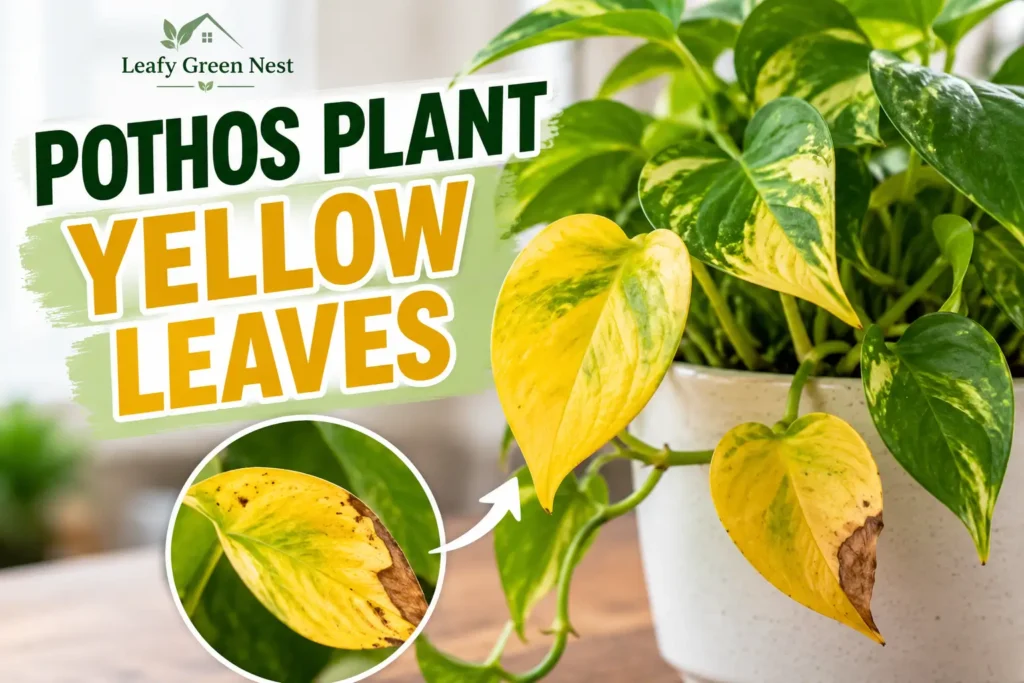
Have you noticed your pothos plant developing yellow leaves even though you water it regularly? Pothos plant yellow leaves are a common problem that can make even a healthy-looking houseplant appear weak and unhealthy. While occasional yellowing is normal as older leaves age, several yellow leaves appearing at once may signal a problem with watering, lighting, soil, or root health.
The good news is that pothos plants are hardy and can often recover with a few simple care adjustments. The key is to identify why the leaves are changing color before making changes to your routine. In this article, you will learn the common causes of yellow pothos leaves, how to fix them, and practical ways to prevent the problem from returning.
Table of Contents
Quick Answer: Why Are My Pothos Leaves Turning Yellow?
Pothos leaves usually turn yellow because the roots receive too much water or stay wet for too long. Other causes include dry soil, low light, direct sunlight, nutrient deficiencies, cold drafts, and transplant stress.
To fix yellow pothos leaves, check the soil moisture first. If the soil is soggy, let it dry and inspect the roots for rot. If the soil is completely dry, water the plant thoroughly and allow excess water to drain. Then check the light, temperature, and overall plant condition.
Key Takeaways
- Overwatering is one of the most common reasons for yellow pothos leaves.
- Yellow leaves with soft stems or a foul smell may indicate root rot.
- Yellowing leaves with dry, crispy edges can point to underwatering or excessive sunlight.
- A few yellow leaves near the bottom of the plant may be normal aging.
- Pothos leaves turning yellow after repotting may be experiencing temporary transplant stress.
- Remove fully yellow leaves, but correct the underlying problem to prevent more leaves from changing color.
7 Common Causes of Yellow Pothos Leaves and How to Fix Them
1. Overwatering
Overwatering is one of the leading causes of yellow leaves on pothos plants. When the soil stays wet for too long, the roots cannot get enough oxygen. Damaged roots struggle to absorb water and nutrients, even when the soil is full of moisture.
Signs of overwatering:
- Several leaves turn yellow at the same time.
- The soil remains wet for days.
- Leaves feel soft or limp.
- Stems near the soil become brown or mushy.
- The potting mix develops an unpleasant smell.
How to fix it: Stop watering until the upper part of the soil dries. Check that the pot has drainage holes and remove any standing water from the saucer. If the plant has root rot, remove it from the pot, trim away soft, rotten roots with clean scissors, and repot it in fresh, well-draining soil.
Do not follow a fixed watering schedule. Check the soil before adding more water.
2. Underwatering
Pothos plants can also develop yellow leaves when they remain dry for too long. Without enough water, the plant cannot maintain healthy leaf tissue. Leaves may curl, droop, develop brown edges, or eventually turn yellow.
Signs of underwatering:
- The soil feels dry several inches below the surface.
- The pot feels unusually light.
- Leaves look limp or curled.
- Leaf tips become dry and crispy.
- The soil pulls away from the sides of the pot.
How to fix it: Water the plant thoroughly until water flows from the drainage holes. Let the excess water drain completely before returning the pot to its usual place.
If the soil is so dry that water runs straight down the sides, the potting mix may have become difficult to rewet. Apply water slowly in several passes, allowing it to soak in between applications.
3. Too Much Direct Sunlight
Pothos prefers bright, indirect light. Direct afternoon sunlight, especially through a hot window, can damage its leaves.
Sun-stressed leaves may develop yellow patches, pale areas, or dry brown spots. Damage is often worse on the side facing the window.
How to fix it: Move your pothos away from harsh direct sunlight. A spot near a bright window with filtered light is usually a good choice. Avoid placing it in a dark corner simply to prevent sun damage, because the plant still needs light to grow well.
4. Insufficient Light
Pothos can tolerate low-light conditions, but tolerance does not mean low light is ideal. When light levels remain too low, growth may slow, vines may become stretched, and older leaves may turn yellow and drop.
Variegated varieties, such as Golden Pothos and Marble Queen, may also lose some of their leaf patterns in low light.
How to fix it: Move the plant closer to a window with bright, indirect light. If natural light is limited, consider a suitable grow light. Rotate the pot occasionally so all sides receive reasonably even light.
5. Nutrient Deficiency
Pothos needs nutrients to produce healthy leaves and new growth. A plant growing for a long time in depleted potting mix may develop pale foliage, yellowing, or slow growth.
Nitrogen deficiency can cause older leaves to turn pale or yellow. However, yellow leaves alone do not prove that the plant needs fertilizer. Damaged roots, poor drainage, and unsuitable soil conditions can prevent nutrient uptake.
How to fix it: If the roots are healthy and the plant is actively growing, apply a balanced houseplant fertilizer according to the product label. Use a suitable, well-draining potting mix when repotting.
Avoid adding extra fertilizer to a stressed plant with wet soil or suspected root rot. Too much fertilizer can damage roots and cause brown leaf tips or edges.
6. Temperature Changes and Cold Drafts
Pothos is a tropical plant that grows best in warm indoor conditions. Cold drafts, contact with chilly window glass, and sudden temperature changes can stress the leaves.
Yellowing may occur alongside brown patches, drooping, or leaf drop.
How to fix it: Keep your plant away from air conditioners, cold drafts, and direct blasts of hot air from heaters. Pennsylvania State University Extension recommends average room temperatures around 60°F to 80°F (16°C to 27°C) for pothos.
7. Natural Aging
Not every yellow leaf means something is wrong. Older pothos leaves eventually turn yellow and fall off as the plant grows.
This is usually harmless when one or two of the oldest leaves near the base turn yellow occasionally while the rest of the plant looks healthy.
How to fix it: No major treatment is needed. Remove the yellow leaves if you prefer a tidier appearance and continue your usual care routine.
If yellowing spreads quickly or affects new leaves, investigate watering, light, roots, and pests.
How to Diagnose Pothos Leaves Turning Yellow and Brown
Yellow and brown leaves provide useful clues about what is happening inside your plant. The pattern of damage can help you narrow down the cause.
| Leaf symptoms | Possible cause | What to do |
|---|---|---|
| Yellow, soft leaves with soggy soil | Overwatering | Let the soil dry and check drainage |
| Yellow leaves with dry, crispy edges | Underwatering or heat stress | Check soil moisture and temperature |
| Yellow patches on the window-facing side | Too much direct sun | Move to filtered light |
| Older bottom leaves turn yellow slowly | Natural aging or growing stress | Monitor the plant and check care conditions |
| Yellow leaves with soft, brown roots | Root rot | Remove rotten roots and repot |
| Yellowing with tiny speckles or webbing | Possible spider mites | Inspect leaf undersides and treat confirmed pests |
| Brown tips after frequent feeding | Possible fertilizer or salt buildup | Pause feeding and review watering practices |
Remember that these signs can overlap. For example, an overwatered plant may also have yellow leaves with brown edges. Always check the soil and roots before choosing a treatment.
How to Fix Yellow Leaves on Pothos Step by Step
Follow these steps to help your plant recover without making unnecessary changes.
- Check the soil. Push your finger about 1 to 2 inches (2.5 to 5 cm) into the potting mix. If it is still wet, wait before watering. If it is dry, assess whether the plant needs water.
- Inspect the drainage. Make sure the pot has holes at the bottom and that excess water is not collecting in an outer container.
- Check the roots if symptoms are severe. Healthy roots are generally firm. Rotten roots may look brown or black and feel soft or slimy.
- Review the light. Place the plant in bright, indirect light, away from intense midday or afternoon sun.
- Look for pests. Examine the undersides of leaves, leaf joints, and stems for webbing, tiny moving insects, cottony white patches, or scale-like bumps.
- Remove damaged leaves. Use clean scissors to cut fully yellow or badly damaged leaves near their stems.
- Wait and observe. Keep care conditions steady and monitor new growth over the next few weeks.
The most important rule is to correct the cause before adding fertilizer, changing the pot, or increasing watering. Too many changes at once can create additional stress.
Why Are Pothos Leaves Turning Yellow After Repotting?
Pothos leaves may turn yellow after repotting because the roots have been disturbed or the new potting mix holds more water than the old mix. A plant may also struggle if it has been moved into a pot that is much larger than its root system.
A little temporary stress can happen after repotting. However, widespread yellowing, persistently wet soil, or soft stems may indicate a more serious problem.
To help your plant recover:
- Use a pot only slightly larger than the root ball.
- Choose an airy, well-draining potting mix.
- Avoid breaking healthy roots unnecessarily.
- Water thoroughly after repotting, then allow the soil to dry between waterings.
- Keep the plant in stable, indirect light.
- Avoid fertilizing immediately if the roots have been disturbed or the plant is struggling.
Do not repot repeatedly just because one leaf turns yellow. Repot when the plant needs more room, the soil has deteriorated, or root problems require attention.
What If Pothos Leaves Turn Yellow but the Soil Is Dry?
When pothos leaves turn yellow but the soil is dry, underwatering is a likely cause. However, dry soil does not always mean the roots are healthy.
A severely dried-out root ball may resist water, while damaged roots may be unable to absorb moisture properly. A small pot, warm room, or bright location can also cause the soil to dry faster than expected.
Check the soil deeper than the surface. If it is dry throughout, water slowly and thoroughly. If the soil is moist near the roots but the plant continues to decline, inspect the roots and review recent changes in care.
How to Prevent Yellow Pothos Leaves
Good everyday care is the best way to prevent repeated yellowing.
- Water according to soil moisture: Let the upper layer dry before watering again.
- Use the right pot: Choose a container with drainage holes.
- Provide indirect light: Avoid both harsh direct sun and persistently dark locations.
- Choose suitable soil: Use a loose, well-draining houseplant mix.
- Feed carefully: Fertilize during active growth when needed, following label directions.
- Keep temperatures stable: Avoid cold drafts and sudden temperature swings.
- Inspect regularly: Check for pests, damaged stems, and changes in leaf color.
- Avoid unnecessary misting: Misting does not reliably increase room humidity and can leave foliage wet without solving the underlying problem.
These habits support healthy roots, steady growth, and greener leaves.
Should You Cut Off Yellow Pothos Leaves?
Yes, you can cut off fully yellow pothos leaves. Once a leaf has turned completely yellow, it will not become green again. Removing it can improve the plant’s appearance and help you monitor new symptoms.
Use clean, sharp scissors and cut the leaf stalk close to the main vine without damaging the stem.
Keep partially green leaves if they are still healthy enough to support the plant. Most importantly, remember that pruning only removes the damaged foliage. It does not fix overwatering, root rot, or other underlying problems.
Frequently Asked Questions
What is the most common cause of yellow pothos leaves?
Overwatering is one of the most common causes. Wet soil reduces oxygen around the roots and may lead to root rot. Check the soil moisture and drainage before watering again.
Is it normal for pothos leaves to turn yellow in winter?
Yes, occasional yellowing can happen in winter as growth slows and older leaves age. Lower light and cooler temperatures can also contribute. Reduce watering when the soil takes longer to dry.
Can yellow pothos leaves turn green again?
No. Once a leaf is completely yellow because its green tissue has been lost, it will not turn green again. Focus on healthy new growth rather than trying to restore damaged leaves.
Should I water my pothos when its leaves turn yellow?
Not automatically. Check the soil first. If it is dry, water thoroughly and let excess water drain. If it is wet, adding more water can worsen root damage.
Why are my pothos leaves turning yellow and curling?
Yellow, curling leaves can result from underwatering, root damage, excessive sunlight, or temperature stress. Check the soil and roots, then review the plant’s light and temperature conditions.
Does fertilizer help pothos plants with yellow leaves?
Fertilizer helps only when a nutrient shortage is contributing to the problem. If yellow leaves result from overwatering, root rot, or poor light, fertilizer will not solve the cause and may worsen root stress.
Final Verdict: How to Keep Pothos Leaves Healthy
Pothos plant yellow leaves are usually a sign that your plant needs a small change in care, not a reason to panic. Start by checking the soil because overwatering and poor drainage are common causes of yellowing.
Next, inspect the roots if the plant is declining, provide bright indirect light, and keep the plant away from sudden temperature changes. Remove fully yellow leaves and give the plant time to produce healthy new growth.
With consistent care and a little patience, most pothos plants can recover and continue growing beautiful green vines.
References:
1. Penn State Extension’s guide to pothos as a houseplant explains pothos care, growing conditions, and common plant problems.
2. University of Wisconsin Extension’s pothos care guide provides information about pothos characteristics and its growing requirements.
3. Clemson Cooperative Extension’s guide to growing pothos indoors covers indoor growing conditions, plant care, and common pothos problems.
4. University of California Integrated Pest Management’s guide to houseplant problems helps readers identify common pests and other issues affecting houseplants.