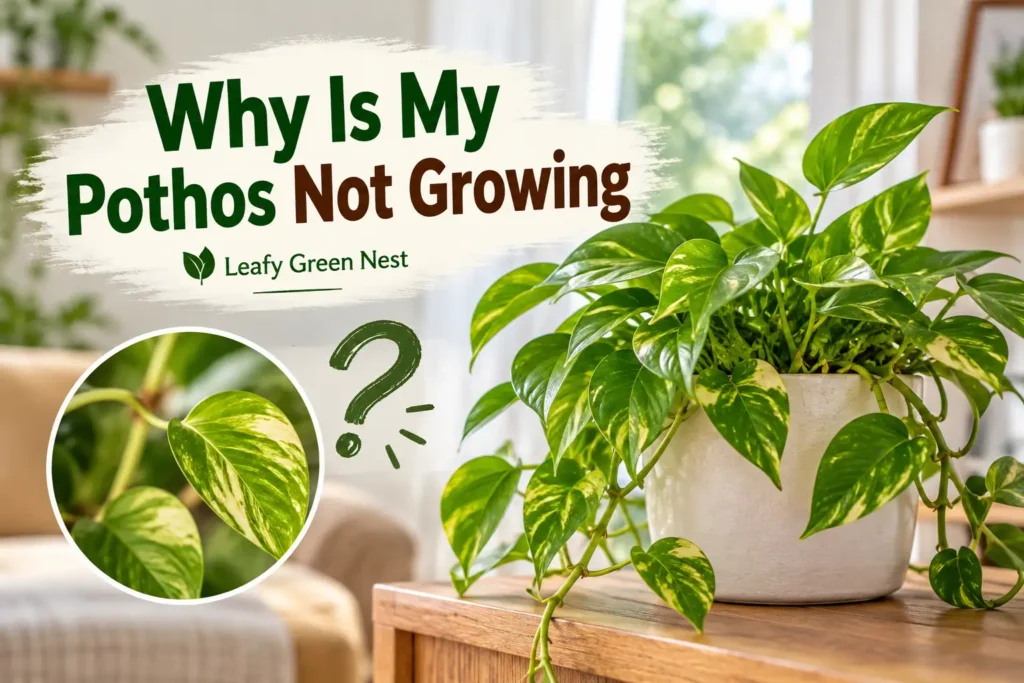
If you are wondering why is my pothos not growing, the problem usually comes down to light, watering, root health, or nutrients. Pothos is an easy-care houseplant, but poor growing conditions can slow new leaves and stop vines from getting longer.
Sometimes, the plant looks healthy but shows no new growth for weeks. It may also stop growing after repotting, pruning, or moving from soil to water. Identifying the cause helps you fix the problem without making unnecessary changes.
Table of Contents
What Is a Pothos Plant?
Pothos (Epipremnum aureum), also called devil’s ivy, is a tropical climbing plant known for its heart-shaped leaves and trailing vines. It grows indoors in soil or water when it receives suitable light, moisture, and nutrients.
Popular varieties include Golden Pothos, Marble Queen, Jade Pothos, and Neon Pothos. Satin pothos is different because it belongs to the Scindapsus genus, although its care needs are similar.
Key Takeaways
Most pothos growth problems can be traced to a few basic care issues. Check these factors before repotting your plant or adding fertilizer.
- Low light: Move the plant closer to a bright window.
- Incorrect watering: Let the upper soil dry before watering again.
- Root problems: Check for soft, dark roots and poor drainage.
- Nutrient shortages: Use balanced houseplant fertilizer during active growth.
- Recent pruning or repotting: Allow time for the plant to recover.
- Seasonal slowdown: Expect slower growth during colder, darker months.
Why Is My Pothos Not Growing? 9 Common Causes
Pothos growth depends on light, water, healthy roots, and suitable temperatures. These nine causes can help you identify why your plant has stopped producing leaves or longer vines.
1. Not Enough Light
Pothos can survive in low light, but it usually grows faster in bright, indirect light. A dark corner may keep your plant alive while limiting new leaves and vine growth.

Signs to look for:
- Long gaps between leaves.
- Slow or weak vine growth.
- Less color variation in variegated leaves.
How to fix it: Move your pothos closer to a bright window. Avoid harsh direct sunlight that can scorch the leaves. If your room is dark, use a suitable grow light.
2. Overwatering or Underwatering
Incorrect watering can damage roots and slow new growth. Pothos needs moisture, but its roots also need oxygen.
How to fix it: Check the soil with your finger before watering. If the upper inch or two feels dry, water thoroughly and allow excess water to drain. If the soil remains wet for days, check the drainage and roots.
Yellow leaves and soggy soil can indicate overwatering. Drooping leaves and very dry soil may point to underwatering.
3. Poor Root Health
Damaged roots cannot absorb water and nutrients properly. Root rot often develops when the potting mix stays wet for too long.
How to fix it: Gently inspect the roots if your plant keeps wilting or yellowing despite proper care. Remove mushy, rotten roots with clean scissors and repot in fresh, well-draining mix. Use a pot with drainage holes.
Healthy roots should feel firm rather than slimy or mushy.
4. Pothos Fertilizer Problems
A lack of nutrients can limit leaf and vine growth, especially when a pothos has been growing in the same pot for a long time. However, fertilizer will not solve problems caused by poor light or damaged roots.
How to fix it: During active growth, use a balanced liquid houseplant fertilizer according to its label. Reduce feeding when growth slows in winter, and avoid fertilizing a plant with severely damaged roots.
Too much fertilizer can cause brown leaf tips and salt buildup, so do not increase the dose to force faster growth.
5. Pothos Not Growing After Repotting
If your pothos is not growing after repotting, it may be recovering from root disturbance. The plant may need time to adjust before producing new leaves.
How to fix it: Keep the plant in bright, indirect light and avoid changing its location repeatedly. Water according to soil moisture and do not add extra fertilizer immediately.
Check the pot size, too. A container that is much larger than the root ball can hold excess moisture and increase the risk of root rot.
For more detailed care advice, read the Penn State Extension guide to growing pothos as a houseplant.
6. Pothos Stopped Growing After Cutting
Pruning removes a vine’s growing tip, so the original stem may stop extending from that point. New shoots can develop from nodes below the cut.
How to fix it: Check that the remaining stem is firm and healthy. Provide good indirect light and look for small buds near the nodes. Avoid repeatedly cutting the same stem because new growth needs time to develop.
You can also root healthy cuttings and plant them back into the pot to create a fuller appearance.
7. Pothos Not Growing Vines
If your pothos produces leaves but its vines remain short, low light, damaged growing tips, or limited root health may be responsible. The plant may also be growing slowly because of seasonal changes.
How to fix it: Improve the light, inspect the roots, and check the soil moisture. If you want longer vines, let healthy stems grow without frequent pruning. A support pole can encourage climbing growth.
Small leaves and long gaps between leaves may indicate that the plant needs better light.
8. Why Is My Devil’s Ivy Not Growing?
Devil’s ivy is another name for pothos, so the same basic care problems apply. Low light, waterlogged soil, nutrient shortages, and cold conditions can all slow its growth.
How to fix it: Keep the plant in a warm indoor location with bright, indirect light. Water only when the soil has dried sufficiently, and use a well-draining potting mix.
During winter, slower growth may be normal. Avoid adding extra water or fertilizer simply because the plant is not producing leaves as quickly as it did in summer.
9. Why Is My Satin Pothos Not Growing?
Satin pothos (Scindapsus pictus) is related to true pothos but belongs to a different plant genus. It has silvery leaf markings and can grow more slowly than common Golden Pothos.
How to fix it: Provide bright, indirect light and allow the potting mix to dry appropriately between waterings. Avoid leaving the roots in constantly wet soil.
Check for pests if the leaves become damaged or new growth remains weak. Give the plant stable conditions before making major changes to its care routine.
Why Is My Pothos Not Growing in Water?
Pothos cuttings can develop roots in water before producing new leaves. If roots are present but the plant is not growing, check light, water quality, and nutrient availability.

Follow these steps to encourage healthy growth:
- Check the node. At least one node, where leaves and aerial roots emerge, should be underwater.
- Refresh the water. Replace it about once or twice a week, or sooner if it becomes cloudy.
- Provide indirect light. Keep the jar near a bright window without intense direct sunlight.
- Watch the roots. Remove decaying material and clean the container if roots become slimy.
- Provide nutrients when needed. Plain water does not supply all the nutrients an established plant needs for long-term growth.
A cutting without a node will not develop into a new pothos plant. If the roots look healthy, give the cutting time before assuming something is wrong.
Why Is My Pothos Not Growing? Reddit Questions and Common Concerns
Pothos owners often worry when a healthy-looking plant stops growing for several weeks. Slow growth alone does not necessarily mean the plant is dying.
Before changing your care routine, consider these common concerns:
- No new leaves: Check light and root health first.
- Yellow leaves: Review watering and drainage.
- Long, bare vines: Improve light and consider pruning.
- No growth after repotting: Keep conditions stable while the roots recover.
- No growth in winter: Reduced daylight and cooler conditions may slow development.
Online discussions can provide useful experiences, but advice from another grower may not match your plant’s environment. Use the plant’s leaves, roots, soil, and growing conditions to decide what needs to change.
How to Make Pothos Grow Faster
Healthy pothos growth comes from consistent care rather than frequent interventions. Follow this checklist to give your plant the best chance of producing new leaves and longer vines.
- Place the plant in bright, indirect light.
- Water when the upper layer of soil has dried.
- Use a pot with drainage holes.
- Choose an airy, well-draining potting mix.
- Fertilize moderately during active growth.
- Prune selectively if you want a fuller plant.
- Check for pests and root damage when growth stalls.
- Allow time for recovery after repotting or pruning.
Avoid changing everything at once. Correct the most likely problem first, then monitor the plant for signs of improvement.
How to Get Your Pothos Growing Again: Final Tips
Most pothos growth problems improve when you identify the cause and correct the plant’s growing conditions. Start with light, watering, and root health before adding fertilizer or repotting.
A healthy pothos may take time to produce visible growth, especially after pruning, repotting, or during winter. Look for firm stems, healthy roots, and developing buds as signs that your plant is recovering.
Frequently Asked Questions
Why is my pothos not growing new leaves?
Your pothos may lack sufficient light, have damaged roots, or need nutrients. Check the soil moisture and light exposure first. If the plant looks healthy, seasonal slow growth may be normal.
Can pothos grow without direct sunlight?
Yes. Pothos grows well in bright, indirect light and tolerates lower light levels. However, very dim conditions can slow growth and reduce the leaf patterns of variegated varieties.
Should I cut back a pothos that is not growing?
Prune damaged or excessively long vines if needed, but cutting will not fix poor light or root problems. Correct the growing conditions first, then prune healthy stems to encourage branching.
When should I repot a pothos that has stopped growing?
Repot when roots crowd the container, emerge from drainage holes, or the potting mix no longer drains well. Choose a pot only slightly larger than the root ball.
Does pothos grow faster in soil or water?
Both methods can support pothos growth. Soil provides a practical growing medium for long-term houseplant care, while water requires regular maintenance and an appropriate nutrient supply.
Why is my pothos growing roots but no leaves?
The plant may be directing energy toward root development, especially after propagation. Ensure the cutting has a healthy node, provide indirect light, and maintain suitable moisture while new shoots develop.