
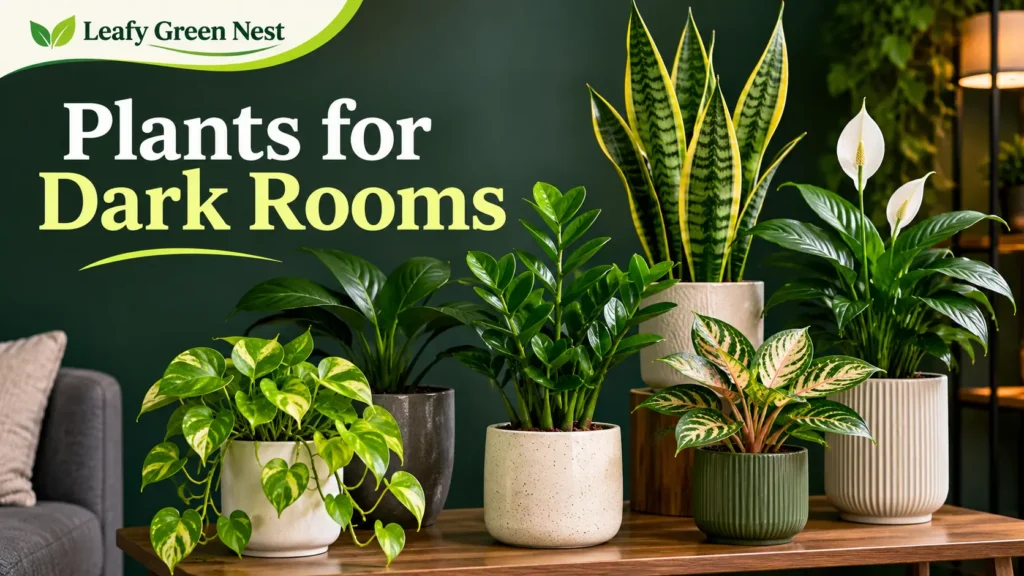
Finding beautiful plants for dark rooms can be difficult when your home receives very little natural sunlight. Many indoor plants need bright conditions, but some naturally tolerate shade and can grow in spaces with limited daylight.
The best options include ZZ plants, snake plants, cast iron plants, golden pothos, Chinese evergreens, and parlor palms. These houseplants offer attractive foliage, manageable care requirements, and different sizes for bedrooms, living rooms, offices, and shaded corners.
You do not need a sunny home to enjoy indoor greenery. The secret is choosing plants that match your room’s lighting conditions and adjusting their watering routine to suit slower growth.
Table of Contents
What Are Plants for Dark Rooms?
Plants for dark rooms are houseplants that tolerate lower light levels than most common indoor plants. Many originate from tropical forests, where they grow beneath taller trees and receive filtered sunlight.
These plants are particularly useful for:
- Bedrooms with small windows.
- North-facing rooms.
- Living rooms with shaded windows.
- Offices with limited natural daylight.
- Hallways and indoor corners.
- Apartments with restricted sunlight.
- Bathrooms with suitable natural light.
However, low light does not mean complete darkness. Every living plant needs light for photosynthesis, the process that allows it to produce energy.
If your room has no windows, you will need an artificial grow light to keep natural plants healthy over the long term.
Key Takeaways
Choosing the right shade-tolerant houseplant depends on your available space, lighting, and willingness to provide regular care.
- Best overall: ZZ plant.
- Best for very low light: Cast iron plant.
- Best upright plant: Snake plant.
- Best trailing plant: Golden pothos.
- Best large indoor plant: Parlor palm.
- Best small plant: Peperomia.
- Best colorful foliage: Chinese evergreen.
- Best low-maintenance option: ZZ plant or snake plant.
- Best for hanging baskets: Heartleaf philodendron.
- Best solution for windowless rooms: LED grow lighting.
Best Indoor Plants for Dark Rooms
The best indoor plants for dark rooms combine shade tolerance, attractive foliage, and manageable maintenance. Some grow upright, while others produce trailing stems or broad leaves that make indoor spaces feel more inviting.
Here are twelve houseplants worth considering.
ZZ Plant (Zamioculcas zamiifolia)
The ZZ plant is one of the best choices for people who want attractive greenery without complicated maintenance. Its thick stems and glossy, dark green leaves create a clean appearance that works well with modern interiors.
Why choose a ZZ plant?
- Tolerates low indirect light.
- Requires infrequent watering.
- Stores water in underground rhizomes.
- Handles occasional neglect.
- Grows well in homes and offices.
Care tips: Place it in indirect light and allow the soil to dry before watering again. Use a pot with drainage holes and avoid leaving the roots in wet soil.
Best placement: Living room corners, bedrooms, offices, and shaded entryways.
Maintenance level: Very easy.
Snake Plant (Dracaena trifasciata)
Snake plants are popular because they tolerate different indoor conditions and need relatively little attention. Their upright leaves feature attractive green patterns and sometimes yellow edges.
They are particularly useful when you want greenery without taking up much floor space.
Why choose a snake plant?
- Tolerates low-light conditions.
- Needs infrequent watering.
- Grows vertically.
- Fits small and large rooms.
- Handles occasional neglect.
Care tips: Water only when the soil has dried out. Avoid excessive moisture because it can cause root rot. Brighter indirect light generally supports better growth.
Best placement: Bedroom corners, hallways, offices, and beside furniture.
Maintenance level: Very easy.
Cast Iron Plant (Aspidistra elatior)
The cast iron plant is an excellent choice for shaded indoor spaces. It is known for its ability to tolerate conditions that many other houseplants find challenging.
Its long, deep-green leaves create a full appearance, making it useful for decorating empty corners.
Why choose a cast iron plant?
- Excellent shade tolerance.
- Handles typical indoor conditions.
- Requires relatively little maintenance.
- Produces attractive broad foliage.
- Grows slowly and maintains its shape.
Care tips: Keep it in indirect light and water when the upper soil begins to dry. Avoid waterlogged soil and extreme temperature changes.
Best placement: Shaded living rooms, hallways, bedrooms, and offices.
Maintenance level: Very easy.
Golden Pothos (Epipremnum aureum)
Golden pothos is a beautiful trailing houseplant with heart-shaped green leaves and golden patterns. Its cascading stems look attractive on bookshelves, cabinets, and hanging baskets.
It tolerates lower light, although its golden patterns may become less noticeable in very dim conditions.
Why choose golden pothos?
- Attractive trailing growth.
- Easy to propagate from cuttings.
- Suitable for hanging baskets.
- Tolerates lower light.
- Beginner-friendly.
Care tips: Allow the upper layer of soil to partially dry between watering sessions. Provide indirect light to maintain healthier foliage and stronger growth.
Best placement: Bookshelves, kitchen shelves, cabinets, and hanging planters.
Maintenance level: Easy.
Chinese Evergreen (Aglaonema)
Chinese evergreen is a decorative houseplant known for its colorful foliage. Depending on the variety, its leaves may feature green, silver, cream, or pink patterns.
Darker green varieties generally tolerate low-light conditions better than varieties with extensive pink or silver coloring.
Why choose Chinese evergreen?
- Attractive decorative leaves.
- Available in several varieties.
- Tolerates lower indirect light.
- Suitable for bedrooms and offices.
- Relatively easy to maintain.
Care tips: Keep it away from harsh direct sunlight. Water when the upper soil begins to dry and protect it from cold drafts.
Best placement: Living rooms, office desks, and shaded shelves.
Maintenance level: Easy.
Peace Lily (Spathiphyllum)
Peace lilies are known for their glossy green leaves and elegant white flowers. They can tolerate lower light conditions, making them attractive choices for indoor spaces with limited sunlight.
However, they usually produce fewer flowers when kept in very dim locations.
Why choose a peace lily?
- Beautiful white flowers.
- Attractive green foliage.
- Tolerates indirect light.
- Suitable for living rooms and bedrooms.
- Appreciates moderate humidity.
Care tips: Keep the soil lightly moist without making it waterlogged. Water when the upper surface begins to dry and remove yellow or damaged leaves.
Best placement: Living rooms, bedrooms, and naturally humid spaces.
Maintenance level: Moderate.
Heartleaf Philodendron (Philodendron hederaceum)
Heartleaf philodendron is a popular trailing houseplant with soft, heart-shaped leaves. It adapts to lower indirect light and looks beautiful in hanging baskets or on elevated shelves.
Its flexible stems make it easy to shape around indoor furniture.
Why choose heartleaf philodendron?
- Attractive heart-shaped leaves.
- Suitable for hanging baskets.
- Easy to propagate.
- Tolerates low to medium indirect light.
- Suitable for beginners.
Care tips: Water when the upper soil becomes dry. If stems become unusually long and leaves grow smaller, move the plant closer to a brighter light source.
Best placement: Bookshelves, cabinets, hanging baskets, and wall-mounted planters.
Maintenance level: Easy.
Parlor Palm (Chamaedorea elegans)
Parlor palm is an excellent option for people who prefer a tropical appearance. Its delicate, feather-like leaves add height and softness without making a room feel crowded.
It tolerates lower indoor light better than many other palm varieties.
Why choose parlor palm?
- Attractive tropical appearance.
- Tolerates indirect light.
- Adds height and texture.
- Suitable for decorative floor planters.
- Non-toxic to cats and dogs.
Care tips: Keep the soil lightly moist but never waterlogged. Protect the plant from very dry air, strong drafts, and direct heat.
Best placement: Living room corners, bedrooms, and office spaces.
Maintenance level: Easy to moderate.
Spider Plant (Chlorophytum comosum)
Spider plants have narrow, arching leaves that often feature green and white stripes. Mature plants produce small baby plants that hang from long stems.
They tolerate some shade but generally grow better in medium indirect light.
Why choose a spider plant?
- Easy to propagate.
- Attractive arching foliage.
- Suitable for hanging baskets.
- Non-toxic to cats and dogs.
- Beginner-friendly.
Care tips: Place it near filtered daylight and water when the upper soil begins to dry. Avoid extremely dark locations if you want healthy growth and baby plants.
Best placement: Kitchens, window-side shelves, and bedrooms.
Maintenance level: Easy.
Dracaena (Dracaena species)
Dracaena plants are popular decorative houseplants because of their upright growth and attractive leaves. Different varieties feature narrow, broad, or colorful foliage.
Some varieties tolerate lower indoor light, making them suitable for shaded spaces.
Why choose dracaena?
- Attractive architectural appearance.
- Available in different varieties.
- Suitable for floor planters.
- Some varieties tolerate low light.
- Does not need frequent watering.
Care tips: Provide indirect light and allow the soil to partially dry between watering sessions. Avoid excessive watering and check the leaves regularly for signs of stress.
Best placement: Living rooms, offices, and indoor corners.
Maintenance level: Easy.
Peperomia (Peperomia species)
Peperomia is a compact houseplant that works particularly well in small apartments and limited spaces. Its different varieties feature rounded, textured, thick, or patterned leaves.
Although some varieties tolerate moderate indirect light, peperomia generally performs better with brighter filtered daylight.
Why choose peperomia?
- Compact growth.
- Attractive foliage.
- Suitable for desks and shelves.
- Easy to maintain.
- Does not require a large planter.
Care tips: Allow the soil to partially dry before watering again. Avoid placing it in a completely dark location for extended periods.
Best placement: Desks, bedside tables, and bookshelves.
Maintenance level: Easy.
Boston Fern (Nephrolepis exaltata)
Boston fern is known for its soft, full foliage and beautiful hanging growth. It creates a lush appearance and is particularly attractive in humid indoor spaces.
Although it tolerates some shade, it needs suitable indirect light and consistent moisture.
Why choose Boston fern?
- Full green foliage.
- Beautiful hanging appearance.
- Suitable for humid spaces.
- Creates a tropical atmosphere.
- Works well in decorative planters.
Care tips: Keep the soil evenly moist without waterlogging. Protect the plant from dry air, heaters, and strong drafts.
Best placement: Bathrooms with windows, shaded living rooms, and humid indoor spaces.
Maintenance level: Moderate.
Large Indoor Plants for Dark Rooms
Large indoor plants can make empty corners feel more welcoming and add natural texture to your home. Choose mature varieties that tolerate low light and can grow comfortably indoors.
The most suitable choices include:
- Large snake plant: Adds height without occupying much floor space.
- Parlor palm: Creates a soft tropical appearance.
- Cast iron plant: Offers broad, deep-green foliage.
- Large ZZ plant: Looks attractive in decorative floor planters.
- Dracaena: Provides an elegant, upright appearance.
If you want an immediate decorative effect, purchase a mature plant rather than waiting for a small one to grow. Remember that low-light conditions generally slow plant development.
Low Maintenance Plants for Dark Rooms
Low-maintenance plants are ideal for people with busy schedules or limited gardening experience. They tolerate indoor conditions and do not require constant watering or pruning.
| Plant | Watering needs | Main benefit |
|---|---|---|
| ZZ plant | Infrequent | Stores water in rhizomes |
| Snake plant | Infrequent | Tolerates dry soil |
| Cast iron plant | Moderate | Handles shaded conditions |
| Pothos | When soil partially dries | Easy to propagate |
| Chinese evergreen | Moderate | Attractive foliage |
| Heartleaf philodendron | When soil partially dries | Easy trailing growth |
The ZZ plant and snake plant are particularly good starting choices. Both are forgiving houseplants, although you should still provide adequate light and avoid overwatering.
Small Plants for Dark Rooms
Small plants are perfect for apartments, desks, bedside tables, and bookshelves. They provide natural decoration without taking up much floor space.
Consider these compact options:
- Small ZZ plant: A practical choice for desks and shelves.
- Peperomia: Offers attractive foliage in a compact form.
- Small snake plant: Grows upright and occupies little space.
- Compact Chinese evergreen: Adds color and texture.
- Young cast iron plant: Suitable for smaller decorative containers.
Choose a container with drainage holes and enough space for healthy root development. Small plants still need suitable light, so avoid placing them inside dark cupboards or enclosed spaces.
Best Indoor Plants for Low Light and Clean Air
Indoor plants make rooms feel more natural and welcoming, but they should not replace proper ventilation or air filtration. Some plants can absorb certain airborne pollutants under controlled conditions, although their effect in ordinary homes is limited.
Suitable low-light houseplants include ZZ plants, snake plants, cast iron plants, Chinese evergreens, parlor palms, and pothos.
A common misconception is that a few indoor plants can significantly purify an entire room. Research has shown that ordinary potted plants have limited effects on indoor air pollutants compared with normal building ventilation.
For better indoor air quality, focus on ventilation, reducing pollution sources, and using suitable air filtration.
For additional plant-care information, see the University of Maryland Extension guide to low-light indoor plants.
Plants That Need Low Light Outdoor
Some plants also tolerate shaded outdoor areas, including covered patios, balconies, and sheltered gardens. However, outdoor shade usually provides more natural light than a dark indoor room.
Suitable choices include:
- Cast iron plant.
- Hostas.
- Certain fern varieties.
- Shade-tolerant tropical foliage plants.
Before planting outdoors, consider your local climate, temperature, humidity, rainfall, and seasonal changes. A plant that tolerates shade may still struggle with extreme heat or cold.
For outdoor containers, use suitable drainage and protect sensitive plants from harsh weather.
Indoor Plants for Dark Corners
Dark corners can be difficult places for houseplants because they receive less natural light than areas near windows. Choosing shade-tolerant varieties makes it easier to decorate these spaces.
Good options include:
- Cast iron plant: Excellent for shaded corners with some daylight.
- ZZ plant: Attractive and easy to maintain.
- Snake plant: Ideal for narrow corners.
- Parlor palm: Adds a soft tropical appearance.
- Pothos: Works well on shelves and elevated surfaces.
Avoid placing natural plants in completely dark corners for extended periods. Move them closer to a window or provide artificial lighting when necessary.
How to Care for Plants in Dark Rooms
Choosing a suitable plant is only the beginning. Proper watering, suitable soil, and adequate light help shade-tolerant houseplants stay healthy.
Understand Your Room’s Lighting
Observe how much natural light enters your room during the day. A space with filtered daylight can support several low-light houseplants, while a windowless room needs artificial lighting.
Place plants as close to a suitable light source as practical without exposing them to harsh direct sunlight. Light intensity decreases as you move farther away from a window.
Avoid Overwatering
Plants usually grow more slowly in low light and may use less water. Their soil can therefore remain wet for longer.
Check the soil before watering instead of following a fixed daily or weekly schedule. ZZ plants and snake plants prefer drier soil, while peace lilies and Boston ferns generally need more consistent moisture.
Choose Pots With Drainage Holes
Good drainage helps prevent excess moisture around the roots. Use an appropriate potting mix and avoid containers that are much larger than the plant’s root system.
A suitable pot and growing medium can make a significant difference in preventing root problems.
Clean the Leaves
Dust can collect on indoor foliage and make leaves look dull. Gently wipe broad leaves with a soft, damp cloth.
This is particularly helpful for ZZ plants, Chinese evergreens, and other houseplants with broad leaves.
Use LED Grow Lights
If your room receives almost no natural sunlight, use a suitable full-spectrum LED grow light.
Choose a light designed for plant growth and follow the manufacturer’s recommended distance and lighting schedule. Ordinary decorative room lighting may not provide sufficient intensity for healthy plant development.
Rotate Your Plants
Rotate pots occasionally to encourage balanced growth, especially when plants receive light mainly from one direction.
Also remove damaged leaves when necessary and inspect plants regularly for pests.
Common Mistakes to Avoid When Growing Low-Light Plants
Even shade-tolerant plants can struggle when their basic needs are ignored. Avoid these common mistakes to keep your indoor greenery healthy.
| Common mistake | Why it causes problems | Better solution |
|---|---|---|
| Overwatering | Roots may rot | Check soil moisture |
| Choosing plants for complete darkness | Plants cannot photosynthesize | Provide natural or artificial light |
| Using oversized pots | Soil may remain wet | Choose suitable container sizes |
| Ignoring dusty leaves | Foliage collects dust | Clean leaves regularly |
| Expecting fast growth | Low light slows development | Be patient |
| Ignoring pet safety | Some plants are toxic | Check plant toxicity before buying |
Pet safety deserves special attention. ZZ plants, pothos, philodendrons, peace lilies, Chinese evergreens, and dracaenas can be harmful if chewed or swallowed. Keep them away from curious pets and children.
If you have pets, parlor palms and spider plants are safer alternatives according to established veterinary plant-toxicity references.
Why Are Your Low-Light Plants Struggling?
Yellow leaves, weak stems, and slow growth can indicate that your plant’s growing conditions need attention. Identifying the cause early can prevent more serious damage.
| Plant problem | Possible cause | Practical solution |
|---|---|---|
| Yellow leaves | Overwatering or stress | Check soil and drainage |
| Long, weak stems | Insufficient light | Move closer to a window |
| Brown leaf tips | Dry air or watering issues | Review humidity and watering |
| Slow growth | Naturally limited light | Improve light exposure |
| Mushy stems | Rot or excess moisture | Correct watering and inspect roots |
| Pale leaves | Light or nutrient problems | Review growing conditions |
Do not immediately add fertilizer when a plant looks unhealthy. First check its lighting, watering routine, soil condition, and roots. Extra fertilizer cannot compensate for insufficient light.
Choose the Best Plants for Dark Rooms for Your Home
The best plants for dark rooms are those that tolerate limited sunlight and match your available space. ZZ plants, snake plants, and cast iron plants are excellent starting choices for beginners.
If you prefer trailing greenery, choose golden pothos or heartleaf philodendron. For larger spaces, consider a parlor palm or mature snake plant. Small apartments can benefit from compact peperomia and young Chinese evergreen plants.
Remember that every living plant needs light, even if it tolerates shade. Provide suitable lighting, avoid overwatering, and choose the right plant for your room.
With the right selection and a little attention, you can enjoy beautiful indoor greenery even in spaces that receive limited natural sunlight.
Frequently Asked Questions About Plants for Dark Rooms
What is the best plant for a room with very little sunlight?
Cast iron plants, ZZ plants, and snake plants are excellent choices. They tolerate lower light levels better than many common houseplants, although they still need some usable natural or artificial light.
Is there any indoor plant that can grow without sunlight?
No plant can grow indefinitely without light. However, many low-light houseplants can survive and grow under suitable artificial LED grow lights when natural sunlight is unavailable.
Can snake plants survive in dark rooms?
Yes, snake plants tolerate low-light conditions and can survive in rooms with limited sunlight. However, their growth may slow considerably, and they still need some light for photosynthesis.
Should I water indoor plants less in dark rooms?
Yes, many plants use less water when they receive limited light. Check the soil before watering because excessive moisture can cause root rot and damage the roots.
Why are my indoor plants turning yellow in low light?
Yellow leaves can result from overwatering, insufficient light, poor drainage, or other growing problems. Check the soil moisture, inspect the roots if necessary, and improve lighting conditions.
Does a ZZ plant need sunlight to survive?
Yes, ZZ plants need light for photosynthesis. They tolerate low-light conditions but generally grow better with bright, indirect light and well-draining soil.


