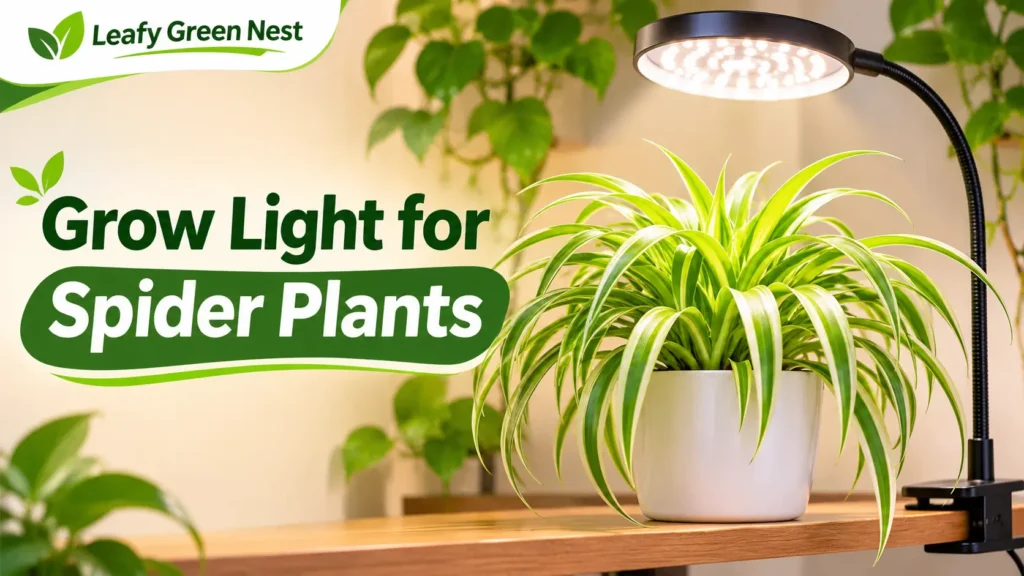
A grow light for spider plants can help maintain healthy foliage, support steady growth, and keep indoor plants thriving when natural sunlight is limited. It is especially useful for spider plants growing in bedrooms, offices, apartments, and shaded corners.
Spider plants (Chlorophytum comosum) are popular because they are attractive and easy to care for. However, they still need suitable light to maintain their green leaves and attractive white stripes. When lighting is insufficient, growth may slow down and new leaves may appear smaller.
The good news is that you do not need an expensive lighting system. A full-spectrum LED grow light can provide the additional light your spider plant needs without exposing it to harsh direct sunlight.
This guide explains the best grow lights for spider plants, how to choose the right one, how many hours to use it, and how to avoid common indoor lighting problems.
Disclosure: This post contains affiliate links. If you purchase through these links, I may earn a small commission at no extra cost to you.
Table of Contents
What Are the Light Requirements of Spider Plants?
Spider plants prefer bright, indirect light but can tolerate moderate and lower-light conditions. Consistent lighting supports healthy leaves, attractive variegation, and balanced growth.
These plants naturally grow in conditions where sunlight is often filtered. This is why they generally perform better with gentle lighting than with intense direct sunshine.
| Lighting condition | Effect on spider plants |
|---|---|
| Bright indirect light | Excellent for healthy growth |
| Medium indirect light | Supports steady growth |
| Low light | Growth becomes slower |
| Strong afternoon sunlight | Can scorch leaves |
| Artificial grow light | Useful when natural light is limited |



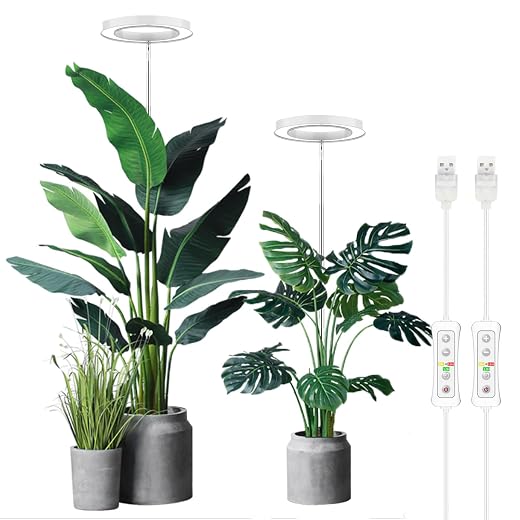

How Much Light Does a Spider Plant Need Indoors?
Spider plants benefit from several hours of bright, indirect light daily. When natural sunlight is insufficient, approximately 10 to 14 hours of supplemental artificial lighting is a useful starting point.
The actual requirement depends on light intensity, distance, and natural sunlight exposure. A plant near an east-facing window may need less artificial lighting than one growing in a windowless room.
Remember that longer lighting hours cannot always compensate for a weak bulb. Both light intensity and duration matter.
Why Use a Grow Light for Spider Plants?
A grow light supplies artificial light that plants use for photosynthesis. This process allows plants to convert light energy into the energy needed for healthy growth.
Supplemental lighting is particularly useful for spider plants growing in shaded homes, apartments, and offices.
Encourages Healthy Leaf Growth
Spider plants produce long, narrow leaves that spread outward from the center. When light levels are insufficient, new growth may become slower and weaker.
Suitable artificial lighting helps maintain consistent growing conditions and supports healthy foliage.
Helps Maintain Leaf Variegation
Many spider plant varieties have beautiful green leaves with white or cream-colored stripes.
Insufficient light can make these patterns less noticeable. Providing suitable lighting helps maintain healthy foliage and the plant’s natural appearance.
Supports Overall Plant Health
Mature spider plants can produce long stems with small baby plants called spiderettes or plantlets.
Adequate lighting supports overall plant health, although plantlet production also depends on maturity, seasonal conditions, and the plant’s natural growth cycle.
Makes Shaded Rooms More Suitable
A grow light allows you to keep spider plants in locations that receive limited natural sunlight, including bedrooms, offices, hallways, and apartments with shaded windows.
Best Types of Grow Lights for Spider Plants
A full-spectrum LED grow light is generally the best choice for spider plants. It provides a broad range of useful wavelengths, produces relatively little heat, and is energy-efficient.
You do not need commercial greenhouse equipment to grow a healthy spider plant indoors.
| Grow light type | Main benefit | Best use |
|---|---|---|
| Full-spectrum LED bulb | Energy-efficient | Individual plants |
| LED grow light strip | Wider coverage | Plant shelves |
| Clip-on LED light | Adjustable positioning | Small spaces |
| LED grow panel | Broad illumination | Multiple plants |
| Fluorescent light | Supplemental lighting | Existing fixtures |
LED vs. Fluorescent Grow Lights
Both LED and fluorescent lights can support indoor spider plants. However, LED lights are generally more convenient for modern home setups.
LEDs usually consume less electricity, produce less heat, and last longer. They are also available in full-spectrum white-light options that work well for indoor foliage plants.
Recommendation: Choose a full-spectrum white LED grow light for a single spider plant or a small indoor plant collection.
Best Grow Lights for Spider Plants: 7 Products Compared
The right grow light depends on your plant’s size, available space, and lighting requirements. Some products are better for individual spider plants, while others provide wider coverage for multiple indoor plants.
Here are seven options based on the product details and features provided.
GooingTop 6000K Full Spectrum Grow Light
The GooingTop 6000K grow light is a practical option for spider plants growing on desks, shelves, or small plant stands. Its white and red LED combination provides supplemental lighting for indoor plants.
Key features:
- 6000K full-spectrum lighting.
- White and red LEDs.
- Clamp-style desk lamp.
- Convenient positioning.
- Suitable for smaller growing spaces.
Best for: Individual spider plants and desk setups.
Grow Light,6000K Full Spectrum Indoor Plant Growing Lamp
Aokrean 48-LED Halo Grow Light
The Aokrean grow light features a halo-style design with a supporting base. Its compact appearance makes it suitable for smaller spider plants placed on desks, tables, and shelves.
Key features:
- 48 LED lights.
- Full-spectrum lighting.
- Halo-style design.
- Base-supported installation.
- Multiple color and pattern options.
Best for: Small spider plants and decorative indoor arrangements.
Grow Lights for Indoor Plants, Full Spectrum Plant Light with Base
LEOTER 80-LED Adjustable Grow Light
The LEOTER grow light is a flexible option for people who want more control over their indoor lighting. It includes adjustable brightness, multiple lighting modes, and an automatic timer.
Key features:
- 80 LED lamps.
- Full-spectrum and red-blue lighting options.
- 10 brightness levels.
- Adjustable gooseneck.
- 3-, 9-, and 12-hour timer.
- Three lighting modes.
Best for: Spider plants that need adjustable lighting and convenient automatic scheduling.
Grow Light for Indoor Plants - Upgraded Version 80 LED Lamps with Full Spectrum & Red Blue Spectrum, 3/9/12H Timer, 10 Dimmable Level, Adjustable Gooseneck,3...
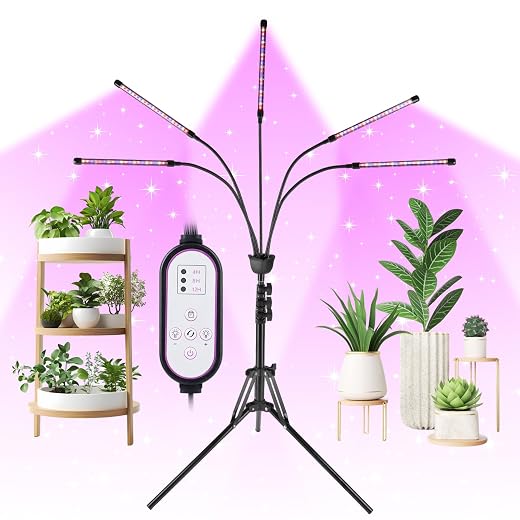
Five-Head Adjustable Tripod Grow Light
This five-head grow light is designed for wider coverage. Its adjustable tripod extends from 15 to 60 inches, making it useful for larger plants and indoor plant collections.
Key features:
- Five adjustable light heads.
- Red, blue, and white lighting.
- Adjustable 15- to 60-inch tripod.
- Automatic on/off timer.
- Wider lighting coverage.
Best for: Large spider plants and multiple indoor pots.
Grow Lights for Indoor Plants,5 Heads Red Blue White Full Spectrum Plant Light with 15-60" Adjustable Tripod Stand, Indoor Grow Lamp with Auto On/Off Timer...
bseah Full Spectrum Grow Light
The bseah grow light is a practical option for people who want adjustable lighting for indoor plants. Its dimming settings and automatic timer make it convenient for everyday growing.
Key features:
- Full-spectrum plant lighting.
- 10 dimmable brightness levels.
- Automatic on/off function.
- 3-, 9-, and 12-hour timer.
- Adjustable lighting intensity.
Best for: Smaller spider plants and indoor plant owners who want flexible lighting controls.
Grow Light Plant Lights for Indoor Plants, Full Spectrum Led Growing Lamp with 3/9/12H Timer, Auto ON & Off, 10 Dimmable Lightness Clip-On Desk
Yadoker Height-Adjustable LED Grow Light
The Yadoker grow light is designed for indoor plants that need flexible light positioning. Its adjustable height makes it useful for plants with different foliage sizes.
Key features:
- Full-spectrum LED lighting.
- Adjustable height.
- Automatic timer.
- 5V low-voltage design.
- Designed for larger indoor plants.
Best for: Medium and larger spider plants that need adjustable light positioning.
Plant Grow Light,yadoker LED Growing Light Full Spectrum for Indoor Plants,Height Adjustable, Automatic Timer, 5V Low Safe Voltage,Idea for Large Plant...
SANSI 36W Full Spectrum Grow Light Bulb
The SANSI grow light is a bulb-style option for people who prefer using a compatible lamp fixture rather than a clip-on light or tripod.
Its 36W power rating and advertised 400W equivalent make it worth considering for an indoor lighting setup.
Key features:
- 36W LED grow light.
- Full-spectrum lighting.
- BR30 bulb design.
- Advertised 400W equivalent.
- Designed for indoor plant growing.
Best for: Spider plants growing under a compatible bulb fixture.
SANSI Grow Lights for Indoor Plants, 36W Plant Lights for Indoor Growing
Comparison of the 7 Grow Lights
| Product | Main features | Best use |
|---|---|---|
| GooingTop 6000K | White and red LEDs, clamp design | Desk and shelf plants |
| Aokrean 48-LED | Halo design, supporting base | Small decorative plants |
| LEOTER 80-LED | Adjustable brightness, timer | Adjustable lighting |
| Five-Head Tripod | Five heads, adjustable stand | Wider coverage |
| bseah Full Spectrum | 10 dimming levels, timer | Flexible lighting controls |
| Yadoker Adjustable | Height adjustment, automatic timer | Larger plants |
| SANSI 36W Bulb | Full-spectrum BR30 bulb | Bulb-style fixtures |
Which Grow Light Is Best for Spider Plants?
The best product depends on your growing setup rather than its LED quantity or advertised power.
- Best for small spaces: GooingTop 6000K.
- Best decorative option: Aokrean 48-LED.
- Best adjustable lighting: LEOTER 80-LED.
- Best wider coverage: Five-Head Tripod.
- Best flexible lighting controls: bseah Full Spectrum.
- Best height adjustment: Yadoker.
- Best bulb-style option: SANSI 36W.
Before purchasing, check the actual light output, coverage, timer settings, mounting requirements, and recommended distance. LED count and wattage alone do not establish how much useful light reaches your plant.
How to Choose the Best Grow Light for Spider Plants
Choosing the right grow light becomes easier when you understand light quality, intensity, coverage, and adjustability. Compare actual light output rather than relying only on advertised wattage.
Choose Full-Spectrum White Light
Full-spectrum lights provide a broad range of wavelengths that support plant growth.
White LED lights are practical because they produce natural-looking light, making it easier to inspect leaf colors and identify potential problems.
Check Light Intensity
Light intensity determines how much useful light reaches your plant. It is more important than electricity consumption alone.
Look for specifications such as PPFD, PPF, manufacturer-recommended coverage, and hanging distance.
PPFD measures the amount of plant-usable light reaching a specific surface each second.
A moderate PPFD level is a sensible starting point. Around 50 to 100 µmol/m²/s at leaf level can be used as an initial trial when natural light is very limited, but this is not a universal requirement.
Consider Light Coverage
Spider plants have long, arching leaves that spread beyond the center of the pot.
A narrow light beam may illuminate only the middle of the plant. Choose an adjustable fixture or wider panel if the outer leaves receive little light.
Look for Adjustable Brightness
Dimmable grow lights allow you to control light intensity. Start with moderate brightness and increase it gradually if your plant shows signs of insufficient light.
Choose a Light With a Timer
A timer helps maintain a consistent daily lighting schedule.
For example, you can set your light to operate from 7 a.m. to 7 p.m. This reduces the need to remember to switch it on and off.
How Far Should a Grow Light Be From a Spider Plant?
A starting distance of 12 to 24 inches between an LED grow light and the foliage is suitable for many indoor foliage plants. However, the correct distance depends on the fixture’s strength and design.
| Light type | Suggested starting distance |
|---|---|
| Low-intensity LED bulb | 8 to 12 inches |
| Moderate LED grow light | 12 to 18 inches |
| Strong LED panel | 18 to 24 inches |
Signs the Grow Light Is Too Close
Excessive light or heat may cause pale patches, bleached leaves, dry areas, or scorched foliage.
Move the light farther away or reduce its brightness if these symptoms appear.
Signs the Grow Light Is Too Far Away
Insufficient lighting may cause slow growth, smaller leaves, and reduced variegation.
If new growth appears weak or stretches toward the light, gradually increase light intensity or move the fixture closer.
How Many Hours Should a Grow Light Be On?
Spider plants generally benefit from approximately 10 to 14 hours of supplemental lighting when natural sunlight is limited. They also need a regular period of darkness.
Here is a practical example:
| Time | Lighting schedule |
|---|---|
| 7 a.m. | Grow light switches on |
| 7 a.m. to 7 p.m. | Supplemental lighting |
| 7 p.m. to 7 a.m. | Darkness |
If your plant already receives several hours of natural sunlight, reduce the supplemental lighting accordingly.
Avoid leaving grow lights on for 24 hours. A consistent day-and-night cycle is a better approach.
Spider Plant Artificial Light: Can They Grow Without Sunlight?
Yes, spider plants can grow under artificial lighting when the light provides sufficient intensity and duration. A suitable LED grow light can support plants in rooms that receive little or no natural sunlight.
Ordinary white LED bulbs may also work if they provide enough brightness at the correct distance. However, decorative lamps and dim bedside lights are often too weak to support healthy long-term growth.
For a windowless room, choose a full-spectrum LED fixture and provide a consistent lighting schedule. Monitor new leaves and adjust the light if growth becomes weak or pale.
Spider Plant Low Light Bathroom: Is It Suitable?
Spider plants can grow in bathrooms with limited natural light, but a completely dark bathroom requires artificial lighting. Higher humidity may help the plant, but it cannot replace the light needed for photosynthesis.
Follow these simple tips:
- Place the plant near a window whenever possible.
- Install a suitable LED grow light if natural light is insufficient.
- Provide around 10 to 14 hours of supplemental lighting when needed.
- Maintain good air circulation.
- Avoid overwatering.
- Use a pot with drainage holes.
A hanging spider plant can make an attractive bathroom decoration when its lighting and watering requirements are properly managed.
Spider Plant Direct Sunlight: Is It Harmful?
Spider plants prefer indirect light, but they can tolerate some gentle direct sunlight. Morning sunlight is generally less intense than strong afternoon sunlight.
Excessive direct sunlight can cause bleaching, dry patches, and scorched leaves. If your plant sits near a south- or west-facing window, use a sheer curtain to filter intense sunlight.
A grow light can provide additional lighting without exposing the plant to harsh afternoon sunshine.
Spider Plant Light Requirements Outdoor
Spider plants can grow outdoors in suitable climates. Their outdoor lighting preferences are similar to their indoor requirements: bright, filtered light or partial shade.
Consider these outdoor placement tips:
- Place containers under a shaded patio.
- Choose a location with morning sunlight and afternoon shade.
- Protect leaves from intense midday sunlight.
- Gradually introduce indoor plants to outdoor conditions.
- Protect plants from cold temperatures.
In hot climates, a shaded balcony or covered outdoor space is often more suitable than an exposed garden.
For additional information about spider plant growing conditions, watering, and general care, read the University of Florida IFAS Spider Plant Guide.
How to Recognize Light Problems in Spider Plants
Changes in leaf color and growth can indicate that your spider plant is receiving too much or too little light. However, watering, fertilizer, soil conditions, and water quality can also cause similar symptoms.
| Plant symptom | Possible cause | Recommended action |
|---|---|---|
| Pale or bleached leaves | Excessive light | Reduce light intensity |
| Slow growth | Insufficient light | Improve lighting |
| Reduced variegation | Low light | Provide brighter indirect light |
| Scorched patches | Strong direct light | Move away from sunlight |
| Brown leaf tips | Water quality or watering stress | Check water and soil |
| Yellow leaves | Overwatering or other stress | Inspect roots and moisture |
Why Are My Spider Plant Leaves Turning Brown?
Brown leaf tips are common in spider plants, but they do not always indicate a lighting problem.
Possible causes include fluoride in tap water, mineral buildup, low humidity, inconsistent watering, excessively dry soil, and root damage.
If your tap water contains high levels of fluoride or dissolved minerals, try using filtered, distilled, or rainwater.
Also, avoid excessive fertilization and ensure that your plant grows in a pot with proper drainage.
Do Spider Plants Need a Lot of Water?
No, spider plants do not need constant watering. Their thick roots can store some moisture, allowing them to tolerate short periods of dryness.
Follow this simple watering routine:
- Check the top 1 to 2 inches of soil.
- Water when this layer feels dry.
- Water thoroughly until excess water drains out.
- Empty the saucer.
- Allow the soil to dry slightly before watering again.
A spider plant growing under a strong grow light may use water faster than one in a cool, shaded room.
Always check the soil before watering rather than following a fixed schedule.
Common Grow Light Mistakes to Avoid
Even a suitable grow light can cause problems when used incorrectly. Avoid these mistakes to maintain healthy indoor spider plants.
Using Excessive Light
Spider plants do not need extremely powerful lighting. A high-intensity fixture positioned too close can damage foliage.
Leaving the Light On All Day
Continuous lighting is unnecessary. Give your spider plant a consistent dark period every day.
Choosing a Bulb Based Only on Wattage
Wattage measures electricity consumption, not the amount of useful light reaching your plant. Compare PPFD, coverage, and manufacturer recommendations instead.
Ignoring Natural Sunlight
If your plant already receives bright indirect sunlight, it may not need many additional hours of artificial lighting.
Forgetting to Adjust the Light
As your spider plant grows, its leaves spread outward. Check whether the fixture still provides even coverage.
Confusing Watering Problems With Lighting Problems
Brown tips and yellow leaves can have several causes. Check soil moisture, drainage, and water quality before changing your lighting setup.
Grow Light vs. Natural Light for Spider Plants
Both natural and artificial lighting can support healthy spider plant growth. The best choice depends on your home’s lighting conditions, available space, and growing goals.
| Factor | Natural light | Artificial grow light |
|---|---|---|
| Availability | Depends on windows | Available throughout the year |
| Consistency | Changes with seasons | Can follow a fixed schedule |
| Cost | Usually free | Requires electricity |
| Placement | Depends on window direction | More flexible |
| Light control | Sometimes difficult | Easier to adjust |
| Best for | Bright indoor spaces | Shaded rooms |
Natural indirect sunlight is an excellent option when your home has suitable windows. However, artificial lighting is useful when natural light is insufficient.
You can also combine both options by placing your plant near a bright window and using an LED grow light for additional lighting.
Grow Light for Spider Plants: The Right Indoor Setup
A full-spectrum LED grow light is usually the best option for spider plants growing in shaded indoor spaces. It provides consistent lighting without requiring expensive equipment or intense direct sunlight.
For healthy growth, remember these recommendations:
- Choose a full-spectrum white LED grow light.
- Start with 12 hours of supplemental lighting.
- Position the light approximately 12 to 24 inches from the foliage, depending on its intensity.
- Avoid excessive brightness and heat.
- Give your plant a regular dark period.
- Monitor new growth and leaf color.
- Maintain proper watering and drainage.
Spider plants do not need complicated lighting systems. Consistent, moderate light and suitable growing conditions are usually enough to maintain attractive, healthy foliage.
Frequently Asked Questions
What is the best grow light for spider plants?
A full-spectrum white LED grow light is usually the best choice. It provides balanced lighting for foliage growth, produces relatively little heat, and works well in most indoor environments.
Is a regular LED bulb enough for a spider plant?
Yes, a regular white LED bulb can work if it provides sufficient brightness at the correct distance. However, a dedicated grow light generally offers more predictable coverage.
Can spider plants grow in a room without windows?
Yes. Spider plants can grow in windowless rooms under suitable artificial lighting. Start with approximately 12 to 14 hours of daily lighting and monitor the plant’s response.
Should I use a grow light for spider plant babies?
Yes. Young spider plantlets can benefit from gentle, moderate artificial lighting. Avoid positioning small plantlets directly beneath a powerful grow light.
Why is my spider plant not producing babies under a grow light?
Plant maturity, seasonal conditions, and overall growing health can affect plantlet production. Adequate lighting supports healthy growth but does not guarantee new spiderettes.
Does a spider plant need grow lights during winter?
Not always. If your plant receives enough natural light, additional lighting may be unnecessary. However, supplemental lighting can help when winter days are short or the plant is far from a window.