
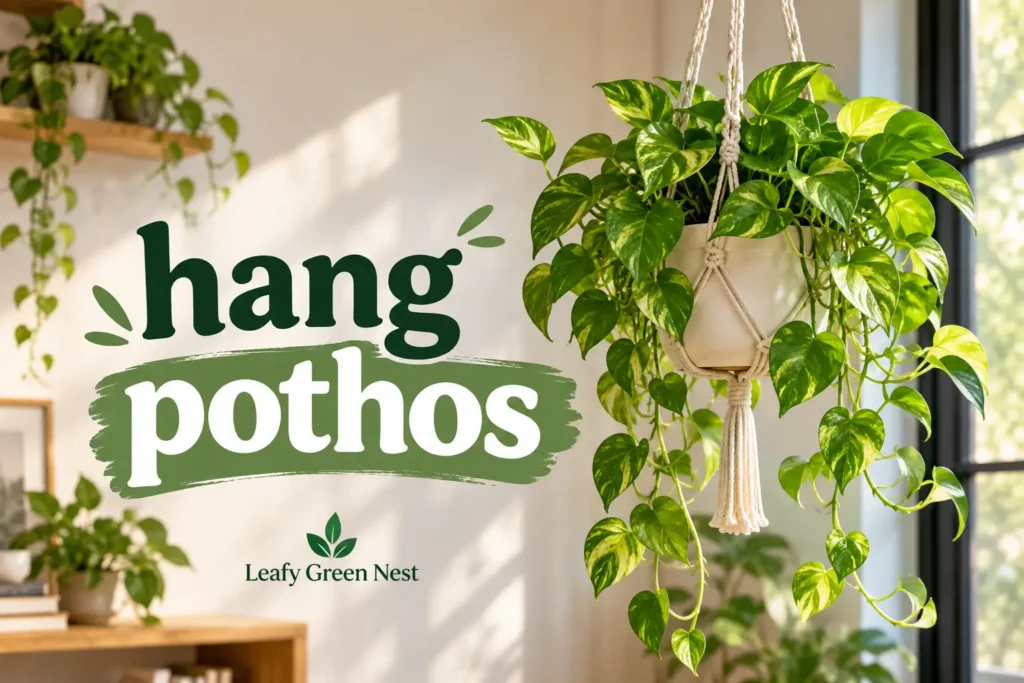
Pothos is an easy-to-grow houseplant that adds natural beauty to almost any room. Learning how to hang pothos indoors helps you decorate empty walls, brighten corners, and display long, trailing vines without taking up valuable floor space.
You can use hanging baskets, ceiling hooks, wall planters, or shelves to create an attractive display. With the right light, proper drainage, and a secure support, your pothos can grow well while adding greenery to your home.
Table of Contents
Key Takeaways
- Hang pothos near a window with bright, indirect light.
- Choose a hanging basket, wall bracket, ceiling hook, or sturdy shelf.
- Use mounting hardware that supports the planter’s fully watered weight.
- Water when the potting mix has dried sufficiently.
- Prune long vines to maintain a neat, healthy appearance.
- Use a moss pole or trellis if you prefer climbing growth.
How to Hang Pothos Indoors in the Best Location
The best place to hang pothos indoors is near a bright window where the plant receives indirect sunlight. A suitable location helps the leaves stay healthy and supports steady growth.
Near a window
Place your pothos near an east-facing window or behind a sheer curtain near a brighter window. Avoid harsh afternoon sunlight that can scorch the leaves.
In a living room
Hang pothos in an empty corner or place it on a tall shelf. The trailing vines can soften plain walls and complement wooden furniture.
In a bedroom
A hanging pothos plant can add greenery without occupying bedside tables. Keep the vines away from your face, bedding, and ceiling fans.
In a kitchen or bathroom
Pothos can grow in these rooms if there is enough light. Avoid placing it near hot appliances, cooking grease, or areas where water frequently splashes.
Pothos Plant Hanging Ideas for Every Room
Pothos plant hanging ideas range from simple baskets to decorative wall displays. Choose a design that suits your space, budget, and ability to water the plant regularly.
Use a macrame plant hanger
A macrame hanger adds texture and works well with natural or minimalist decor. Choose strong cords and a secure mounting point that can support the planter when its soil is wet.
Hang pothos from the ceiling
Ceiling planters create a floating garden effect and allow vines to cascade downward. Use suitable anchors for the ceiling material and keep the plant away from fans, lights, and walkways.
Try hanging pothos on wall brackets
Wall brackets are useful when floor space is limited. Select fasteners designed for your wall type, and check that the bracket can support the total weight of the pot, plant, and wet soil.
Display pothos on a high shelf
A sturdy shelf is one of the easiest ways to display trailing pothos without drilling a ceiling hook. Place the pot near the edge, but leave enough room to remove it for watering.
Choose a traditional hanging basket
A hanging basket creates a classic cascading display. Use an inner pot with drainage holes so excess water can drain before you return the plant to its decorative basket.
Install a minimalist wall planter
A simple wall planter suits modern interiors and keeps the display neat. Choose a container that allows easy access for watering and prevents excess water from collecting around the roots.
Create a window display
Place pothos on a nearby shelf or suspend it beside a bright window. Leave space between the leaves and the glass to avoid excessive heat or cold exposure.
Arrange hanging plants at different heights
Several pothos plants positioned at different heights can create a layered display. Use separate, properly rated supports instead of placing multiple heavy pots on one unsuitable hook.
Let pothos trail from a cabinet
A stable cabinet or bookcase can provide a convenient alternative to wall mounting. Allow the vines to grow over the edge while keeping the plant away from areas where people may pull or trip over the stems.
Create a DIY pothos wall display
Combine sturdy shelves, plant brackets, or a trellis to build a green wall feature. Start with one plant and add more as you learn how much light each location receives.
Make a playful decorative display
Combine a pothos plant with colorful decorative objects or a LEGO-inspired shelf arrangement. Keep the plant in a proper container with drainage rather than planting directly into a decorative structure that cannot handle water safely.
Hanging Pothos on Wall: A Step-by-Step Guide
Hanging pothos on a wall is simple when you choose the right location, planter, and mounting hardware. Plan the installation carefully so the plant stays secure and remains easy to maintain.
Choose the location. Find a spot with suitable indirect light and enough clearance for the growing vines.
- Check the wall material. Determine whether the wall is brick, concrete, drywall, or timber.
- Choose suitable hardware. Select fasteners and brackets rated for the expected load.
- Prepare the planter. Use a pot with drainage holes and a well-draining potting mix.
- Install the bracket. Follow the hardware manufacturer’s instructions.
- Hang the plant. Make sure the pot sits securely without placing pressure on the stems.
- Check accessibility. Confirm that you can remove the planter for watering and pruning.
If drilling is not possible, use a sturdy shelf or freestanding plant stand instead. Do not rely on ordinary adhesive hooks to support heavy, watered planters unless the product is specifically rated for that use.
Hanging Pothos From Ceiling: Safety Tips
Hanging pothos from ceiling hooks can save space and create a striking indoor display. However, the support must be suitable for the ceiling material and the planter’s fully loaded weight.
Before installing a ceiling planter, follow these precautions:
- Identify the ceiling material before drilling.
- Use an appropriate anchor or structural fixing.
- Avoid unsupported drywall or plaster for heavy planters.
- Keep vines clear of ceiling fans and hot light fixtures.
- Choose a lightweight pot when support capacity is limited.
- Arrange a practical way to water and drain the plant.
Check the hook, cords, and planter regularly for signs of wear or loosening. When you are unsure about the required support, consult a qualified installer.
Pothos Climbing Pole DIY: How to Train Your Plant
A pothos climbing pole DIY project can help you grow pothos upward instead of allowing the vines to trail downward. A moss pole, trellis, or sturdy plant stake can provide support for climbing stems.
To make a simple climbing support:
- Choose a sturdy stake or trellis that fits the pot.
- Insert it carefully without damaging the main root mass.
- Guide the stems along the support.
- Attach the stems loosely with soft plant ties.
- Check the ties regularly as the plant grows.
- Extend or replace the support when necessary.
Avoid tying stems tightly because this can damage growing tissue. A moss pole is optional; a basic trellis may be enough for a smaller plant.
For more practical advice on growing and maintaining pothos, read the Pothos Plant Care Guide.
Moss Pole for Pothos or Hanging Basket?
A moss pole for pothos is useful when you want upright growth, while a hanging basket is ideal for long, cascading vines. Both options can work well indoors when the plant receives suitable light and watering.
| Feature | Hanging basket | Moss pole |
|---|---|---|
| Growth direction | Downward | Upward |
| Best use | Cascading displays | Vertical displays |
| Floor space | Minimal | Requires pot space |
| Maintenance | Watering and pruning | Watering, pruning, and tying |
| Installation | Hook, bracket, or shelf | Support inserted into the pot |
Choose the method that matches your preferred appearance. You can also use both methods in different rooms to create variety.
How to Care for Hanging Pothos Plants
Hanging pothos needs suitable light, careful watering, and well-draining soil to remain healthy. Because elevated planters can be difficult to reach, make plant maintenance part of your setup.
Light
Bright, indirect light is usually best. Pothos can tolerate lower light, but growth may slow and variegated leaves may lose some of their patterns.
Watering
Check the soil before watering. When the potting mix has dried sufficiently, water thoroughly and let excess water drain completely.
Avoid leaving the roots in standing water because this can encourage root rot. Do not follow a rigid watering schedule without checking the soil first.
Soil and drainage
Use a suitable houseplant potting mix and a container with drainage holes. If you use a decorative outer pot, remove collected water before returning the plant to its hanger.
Pruning
Trim vines with clean scissors when they become too long or tangled. Cut just above a leaf node to maintain the shape and encourage new growth.
Cleaning and feeding
Wipe dusty leaves gently with a damp cloth. During active growth, use a balanced houseplant fertilizer according to its label, and avoid excessive feeding.
Pothos Wall Ideas and Common Problems
Pothos wall ideas work best when decorative placement does not interfere with plant care. Choose a display that gives the vines room to grow and allows you to inspect the leaves and soil.
| Problem | Possible cause | Solution |
|---|---|---|
| Yellow leaves | Overwatering or natural aging | Check soil moisture and drainage |
| Brown leaf edges | Dry soil or intense sunlight | Review watering and light |
| Sparse vines | Insufficient light | Move the plant to brighter indirect light |
| Drooping leaves | Dry soil or root problems | Check moisture before watering |
| Mushy roots | Root rot | Remove damaged roots and repot |
| Sticky or cottony patches | Possible pests | Isolate and inspect the plant |
Change one growing condition at a time so you can identify what helps. Yellow leaves do not always mean the plant needs more water.
Safety Tips for Hanging Pothos Indoors
Hanging pothos indoors can be safe when the planter is properly mounted and kept away from common household hazards. Regular checks help prevent accidents and keep the plant easier to maintain.
- Use mounting hardware suitable for the wall or ceiling.
- Keep water away from electrical equipment.
- Check cords, hooks, and brackets for damage.
- Keep the plant away from fans and busy walkways.
- Consider pets and children before choosing the location.
Pothos contains calcium oxalate crystals that can irritate the mouth and digestive tract if chewed or swallowed. Keep the plant out of reach of pets and children who may try to eat the leaves.
Simple Checklist Before You Hang Pothos
A quick setup check helps you create a display that looks attractive and remains practical. Review these points before hanging your plant.
- Choose a location with suitable indirect light.
- Select a planter with drainage holes.
- Check the total weight of the watered planter.
- Use suitable mounting hardware.
- Keep the plant away from fans and electrical hazards.
- Make watering and drainage easy.
- Keep the leaves away from pets and children.
- Leave room to trim and maintain the vines.
Make Your Home Greener With Hanging Pothos
Hanging pothos is a simple way to add greenery without using valuable floor space. A hanging basket, wall bracket, ceiling planter, or high shelf can create a beautiful display when the plant receives enough indirect light.
Start with a healthy plant and a secure support. Water according to soil moisture, prune the vines when needed, and inspect the plant regularly. If you prefer upward growth, use a trellis or moss pole.
The best display is one that suits your home, keeps the plant healthy, and makes everyday care easy.
Frequently Asked Questions
What is the best way to hang pothos indoors?
Use a hanging basket, wall bracket, ceiling hook, or sturdy shelf near a window with bright, indirect light.
Can you hang pothos on a wall without drilling?
Yes. Place the plant on a sturdy shelf or freestanding plant stand, or use a suitable existing support.
Is hanging pothos from the ceiling safe?
Yes, when you use mounting hardware suited to the ceiling material and the planter’s fully watered weight.
How often should you water hanging pothos?
Check the soil regularly and water when the potting mix has dried sufficiently. Allow excess water to drain completely.
Should pothos hang or grow on a moss pole?
Hanging encourages cascading vines, while a moss pole or trellis supports upward growth.
Why are the leaves on my hanging pothos turning yellow?
Yellow leaves may indicate overwatering, poor drainage, insufficient light, or natural aging. Check the soil and roots before adjusting your care routine.


