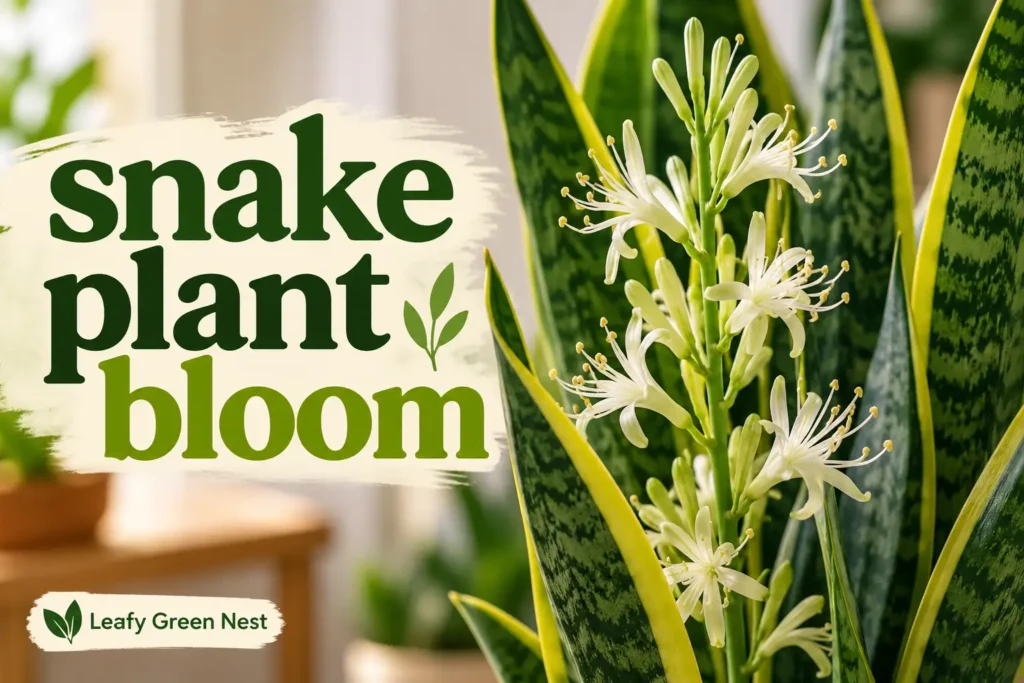
A snake plant bloom is a rare treat for many houseplant owners. Snake plants are known for their upright, sword-shaped leaves, but mature plants can also produce tall flower stalks covered in small, creamy-white or greenish-white flowers. These flowers can release a sweet fragrance that makes the plant even more interesting.
If your snake plant is flowering, you may wonder when the bloom appeared, how long it will last, and whether it means good luck. The answers depend on the plant’s maturity, growing conditions, and natural flowering cycle. Here is what you need to know about snake plant flowers, their meaning, and how to care for your plant.
Table of Contents
What Is a Snake Plant Bloom?
A snake plant bloom is the flowering stage of Dracaena trifasciata, commonly known as the snake plant or mother-in-law’s tongue. The plant produces a tall stalk with clusters of small, tubular flowers that are usually white, cream, or greenish-white.
Snake plants are grown mainly for their attractive foliage, so their flowers often surprise indoor gardeners. Flowering is relatively uncommon in houseplants, and some plants may grow for years without producing a stalk.
A bloom can indicate that a plant has reached maturity and has enough energy to flower. However, flowering does not always mean the plant is perfectly healthy, because environmental stress can also influence flowering.
Snake Plant Bloom Time: When Do Flowers Appear?
Snake plant bloom time varies with plant maturity, light exposure, temperature, and growing conditions. Flowers may appear in spring or summer, although indoor plants can bloom at other times of the year.
In its natural environment, the snake plant follows seasonal growing patterns. Indoor conditions are different, so there is no single month when every snake plant will flower.
What time of year do snake plants bloom?
Snake plants may bloom in spring, summer, or occasionally during other seasons. The timing depends on the plant and its environment.
Several factors can influence flowering:
- Light: Bright, indirect light supports healthy growth and may encourage flowering.
- Maturity: Established plants are generally more likely to flower than young plants.
- Root space: Crowded roots may coincide with flowering in some mature plants.
- Temperature: Warm conditions support active growth.
- Watering: Appropriate watering helps protect the roots and maintain healthy leaves.
How old does a snake plant need to be to bloom?
There is no fixed age when a snake plant must flower. Some plants take several years to mature, and even mature plants may never bloom indoors.
The Royal Horticultural Society lists a typical maturity period of five to ten years for Dracaena trifasciata. Reaching maturity, however, does not guarantee flowers.
Plants grown from leaf cuttings may also take longer to reach flowering maturity than established plants propagated by division. Patience and consistent care are more useful than trying to force a bloom.
Snake Plant Bloom How Long: How Long Do Flowers Last?
A snake plant bloom may remain attractive for several days to a few weeks, depending on the flowers and growing conditions. Individual flowers can fade within a few days, while other buds on the same stalk continue to open.
The flowering process usually follows five stages:
- Stalk growth: A narrow flower stalk emerges from the plant.
- Bud formation: Small buds develop along the stalk.
- Flower opening: Creamy or greenish-white flowers open gradually.
- Flower fading: Individual flowers dry out or fall away.
- Stalk drying: The remaining stalk eventually becomes brown or dry.
How long does a snake plant bloom last indoors?
The full flowering display can last longer than an individual flower because buds may open at different times. Indoor temperature, light, and the plant’s natural cycle can affect the duration.
Keep your plant in a stable location with suitable light. Avoid moving it repeatedly or exposing it to harsh sunlight in an attempt to extend the flowering period.
Snake Plant Bloom Smell: What Does It Smell Like?
A snake plant bloom often has a sweet, floral fragrance. Some people compare it to jasmine or honeysuckle, but the scent can vary in strength and character.
The fragrance may become more noticeable when several flowers open together. Some owners also notice a stronger scent in the evening or at night, although this pattern is not guaranteed for every plant.
Why does a snake plant flower smell sweet?
Flower fragrance can help attract pollinators in the plant’s natural environment. Snake plant flowers can produce nectar, and successfully pollinated flowers may develop fruit.
A sweet floral smell is normal. However, a sour or rotten smell coming from the soil is different and may indicate excessive moisture or root rot.
Check your plant if you notice:
- Soil that stays wet for a long time.
- Soft, mushy, or yellowing leaves.
- A foul smell coming from the potting mix.
- Blackened roots or a collapsing plant base.
These signs suggest that you should check soil moisture and drainage instead of assuming the flower itself is causing a problem.
Snake Plant Flower Lucky: Is a Bloom a Sign of Good Fortune?
A snake plant flower is considered lucky in some cultural and spiritual traditions. People may associate an unexpected bloom with prosperity, positive energy, protection, or a new beginning.
These interpretations are symbolic beliefs, not scientifically proven predictions. Because indoor snake plants rarely flower, their blooms can feel especially meaningful to their owners.
Snake plant flower meaning spiritual
The spiritual meaning of a snake plant flower often centers on growth, patience, resilience, and renewal.
Common interpretations include:
- Good fortune: A bloom may symbolize hope for positive changes.
- Strength: The plant’s toughness can represent resilience.
- New beginnings: Flowering may symbolize personal growth or a fresh start.
- Patience: A rare bloom can remind us that progress takes time.
These meanings differ between individuals and traditions. You can appreciate the symbolism without treating the flower as a prediction of future events.
What does a snake plant flower mean in feng shui?
In feng shui and related home traditions, plants may represent vitality, growth, and positive energy. Some people view a snake plant bloom as an encouraging sign.
There is no universally accepted spiritual meaning for the flower. Its significance depends on personal beliefs and cultural traditions.
How Often Does a Snake Plant Bloom?
A snake plant does not follow a reliable annual flowering schedule indoors. Some mature plants bloom occasionally, while others may never flower inside a home.
The frequency depends on plant maturity, light, and growing conditions. Even two snake plants receiving similar care may behave differently.
| Growing factor | Possible effect |
|---|---|
| Plant maturity | Mature plants are more likely to flower. |
| Bright indirect light | Supports growth and may encourage flowering. |
| Crowded roots | May coincide with flowering in some plants. |
| Watering | Correct watering protects root health. |
| Seasonal changes | Light and temperature changes may affect flowering. |
| Plant variety | Different varieties may respond differently to their environment. |
Do not worry if your plant has never flowered. Healthy leaves, firm roots, and new growth are better indicators of plant health than flowering frequency.
Why Is My Snake Plant Blooming?
A snake plant may bloom because it has matured and receives suitable light and care. In some cases, flowering also occurs when the roots have filled much of the pot.
It is a common misconception that snake plants bloom only when stressed. Flowering can happen under reasonable growing conditions, and crowded roots are only one possible factor.
Does a snake plant bloom when root-bound?
Yes, it can. A root-bound plant has roots that occupy most of the available space in its container. This condition may coincide with flowering in some mature plants, but it is not required for a bloom.
Signs that your plant may need repotting include roots emerging through drainage holes, a distorted pot, water passing through the soil unusually quickly, or very little space for new shoots.
If repotting is necessary, choose a container only slightly larger than the current pot and make sure it has drainage holes.
Should you stress a snake plant to make it bloom?
No. Do not deliberately withhold water, expose the plant to extreme heat, or keep it in poor light to encourage flowers.
Severe stress can damage the leaves and roots without producing a bloom. Instead, provide suitable light, well-draining soil, and careful watering. A healthy plant that never flowers is better than a damaged plant with a flower stalk.
Snake Plant Flower Benefits: What Does the Bloom Offer?
The main benefits of a snake plant flower are its appearance, fragrance, and ornamental value. A tall flower stalk creates an attractive contrast with the plant’s upright leaves.
A bloom can also be a rewarding sign that a plant you have cared for over several years has reached another stage of growth.
Are snake plant flowers beneficial for indoor air quality?
Snake plants are often described as air-purifying plants. However, laboratory research does not show that a typical potted plant removes indoor pollutants at a meaningful rate under normal home conditions.
The flower itself is not a proven air-cleaning device. Enjoy it for its appearance and fragrance, and use proper ventilation or suitable air filtration when indoor air quality is a concern.
Are snake plant flowers safe for pets?
Snake plants contain saponins and are considered toxic to cats and dogs if eaten. Keep the leaves, flowers, and other plant parts away from pets and young children.
If your pet chews the plant and develops vomiting, drooling, or other unusual symptoms, contact a veterinarian for advice.
How to Care for a Snake Plant During Blooming
A flowering snake plant usually needs the same care as a non-flowering one. The goal is to protect the roots, maintain healthy leaves, and let the flowers finish their natural cycle.
1. Provide bright, indirect light
Place the plant near a bright window where it receives plenty of natural light without prolonged exposure to harsh midday sun. If it has been growing in a dark corner, move it gradually to a brighter spot.
2. Water when the soil has dried
Snake plants store water in their thick leaves and underground rhizomes. They can develop root rot if the soil stays wet for too long.
Check the soil before watering. When it has dried sufficiently throughout most or all of the pot, water thoroughly and allow excess water to drain away. Empty the saucer afterward.
3. Keep the plant warm
Normal indoor temperatures are generally suitable. Protect the plant from frost, cold drafts, and sudden temperature changes.
4. Avoid excessive fertilizer
Flowering does not mean your plant needs a large dose of fertilizer. During active growth, use a balanced houseplant fertilizer according to its label if needed. Too much fertilizer can damage roots.
5. Leave the flower stalk in place
You can keep a healthy stalk while the flowers are open. Once flowering ends and the stalk begins to dry, trim it near the base with clean pruning shears.
For additional guidance on snake plant light, soil, watering, and common growing problems, consult this snake plant care guide from North Carolina State University Extension.
Should You Cut Off a Snake Plant Bloom?
You can remove a snake plant flower stalk, but you do not have to. Leaving it in place allows you to enjoy the flowers and fragrance, while removing it after flowering keeps the plant tidy.
| Situation | Recommended action |
|---|---|
| Flowers are open and healthy | Leave the stalk in place. |
| Flowers have faded | Wait for the stalk to dry or remove it if preferred. |
| Stalk is brown and dry | Trim it near the base with clean shears. |
| Stalk is soft or rotting | Remove the affected stalk and check growing conditions. |
| Plant has soft leaves or damaged roots | Address the underlying care problem first. |
Removing the stalk does not normally prevent new leaves from growing, and it does not guarantee that the plant will flower again sooner.
Snake Plant Bloom Problems: Causes and Solutions
A flowering snake plant can still develop problems unrelated to its blooms. Check the leaves, roots, and soil before changing your care routine.
| Problem | Possible cause | What to do |
|---|---|---|
| No flowers for years | Normal growth cycle or insufficient light | Improve indirect light and allow the plant to mature. |
| Flower stalk turns brown | Natural end of flowering | Trim the dry stalk with clean shears. |
| Leaves become soft and yellow | Excess water or root damage | Check drainage and inspect the roots if symptoms persist. |
| Flowers fade quickly | Normal aging or environmental changes | Maintain stable growing conditions. |
| Soil smells rotten | Possible root rot | Check the roots and replace soggy soil if needed. |
A lack of flowers is not a plant health problem by itself. Focus on healthy foliage, firm roots, and suitable growing conditions rather than trying to achieve a bloom every year.
Snake Plant Bloom: Care, Meaning, and Flowering Facts for You
A snake plant bloom brings delicate flowers and sometimes a sweet fragrance to a plant best known for its striking leaves. Flowering can occur in different seasons, and the display may last several days to a few weeks.
Give your plant bright indirect light, well-draining soil, and careful watering. Let the flowers fade naturally, then trim the stalk if you prefer. Never stress the plant just to encourage flowering.
Whether you view the bloom as a symbol of good luck or simply enjoy its beauty, treat it as a welcome bonus. A snake plant can thrive for years without producing flowers.
Frequently Asked Questions About Snake Plant Bloom
What does it mean when a snake plant blooms?
A snake plant bloom means the plant has entered its flowering stage. It may reflect maturity and suitable growing conditions, although flowering can also occur in plants with crowded roots.
Is a snake plant flower lucky?
Some cultural and spiritual traditions associate snake plant flowers with good fortune, prosperity, and positive energy. These interpretations are symbolic beliefs rather than scientifically proven predictions.
Can a snake plant bloom indoors?
Yes. Snake plants can flower indoors, although it is relatively uncommon. Mature plants receiving sufficient light and suitable care may produce fragrant, cream-colored or greenish-white flowers.
When should I cut off a snake plant flower stalk?
You can leave the stalk in place while the flowers are open. Once flowering ends and the stalk begins to dry, trim it near the base with clean pruning shears.
Why does my snake plant bloom smell stronger at night?
Some owners notice a stronger fragrance in the evening or at night. The scent may vary with flower development and environmental conditions, and not every snake plant has the same fragrance pattern.
Does a snake plant bloom turn into fruit?
Yes. A successfully pollinated flower can produce small berries, although fruit is uncommon on indoor plants. Do not eat the fruit, because snake plants are considered toxic if ingested.