
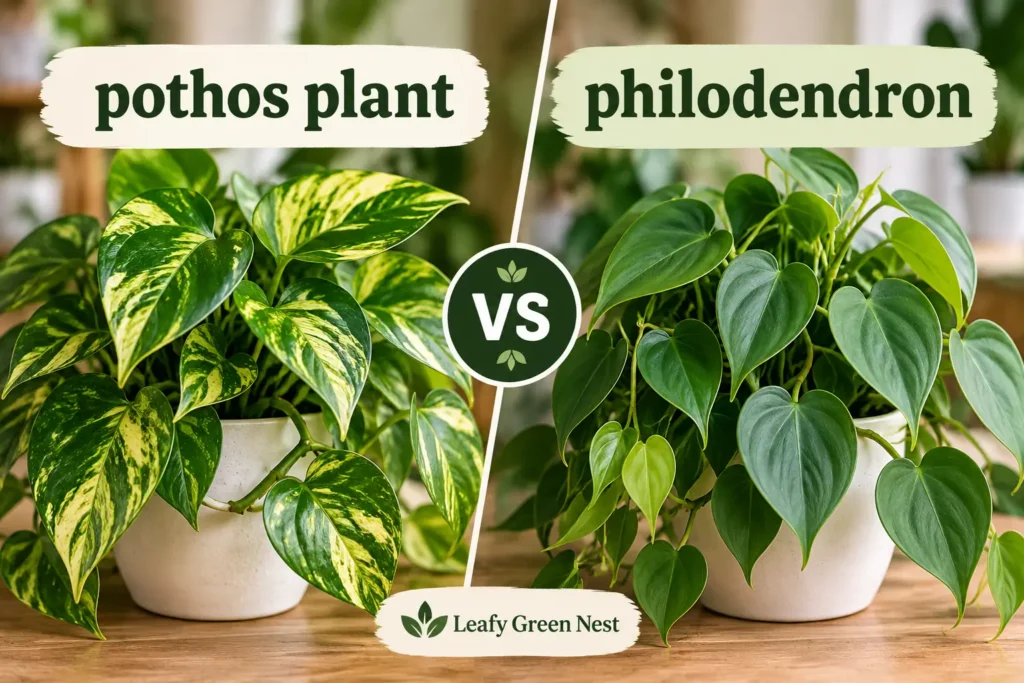
The pothos plant vs philodendron comparison can be confusing because both houseplants have beautiful green leaves, trailing vines, and similar care needs.
These popular indoor plants are easy to grow, making them favorites among beginners and experienced plant lovers. However, a few key differences can help you identify them correctly.
Pothos usually has thicker, waxy leaves, while heartleaf philodendron features softer, more delicate foliage. Their leaf stalks, aerial roots, and new growth also provide useful clues.
In this article, you will learn how to tell them apart, compare their care requirements, understand their growth rates, and choose the best plant for your home.
Table of Contents
What Is the Difference Between Pothos and Philodendron?
Pothos (Epipremnum aureum) usually has thicker, waxy leaves and a grooved leaf stalk. Heartleaf philodendron (Philodendron hederaceum) typically has softer leaves and a smooth, rounded stalk.
Pothos Plant vs Philodendron Pictures: How to Identify Them
Comparing pothos plant vs philodendron pictures can help you recognize differences in leaf shape, texture, and new growth. For accurate identification, examine the leaf stalk and aerial roots instead of relying on leaf color alone.
Leaf shape and texture
Pothos leaves are generally thicker, firmer, and glossier than heartleaf philodendron leaves. Philodendron leaves usually have a more pronounced heart shape, a deeper notch at the base, and a pointed tip.
Stems and aerial roots
Pothos usually has a grooved petiole, while heartleaf philodendron typically has a smooth, rounded one. Pothos often produces prominent aerial roots at its nodes, whereas philodendron may develop several smaller roots.
New leaf growth
Heartleaf philodendron produces a protective sheath called a cataphyll around emerging leaves. Pothos does not produce the same persistent sheath, making new growth another useful identification clue.
Pothos vs Philodendron Care: Light, Water, and Soil
Both plants thrive with bright, indirect light, well-draining soil, and careful watering. Their basic needs are similar, although pothos often tolerates occasional dry soil better.
Light requirements
Pothos grows well in bright, indirect light and can tolerate lower light, although its growth may slow. Heartleaf philodendron also tolerates lower light, but neither plant thrives in complete darkness.
Watering needs
Allow the upper portion of the soil to dry before watering either plant. Water thoroughly, let excess water drain, and avoid leaving the roots in soggy soil.
Soil and temperature
Use a loose, well-draining potting mix and a pot with drainage holes. Both plants prefer warm indoor conditions and generally grow best away from cold drafts and harsh direct sunlight.
For additional growing advice, read Penn State Extension’s guide to pothos as a houseplant.
Philodendron vs Pothos Growth Rate: Which Grows Faster?
Pothos is known for vigorous trailing growth, but heartleaf philodendron can also produce long vines under suitable conditions. Neither plant has a guaranteed growth-rate advantage because light, temperature, nutrition, and root health all affect growth.
How to encourage faster growth
- Provide bright, indirect light.
- Water when the upper soil begins to dry.
- Feed with balanced houseplant fertilizer during active growth.
- Prune excessively long vines to encourage fuller growth.
- Provide climbing support if you want the plant to grow upward.
Pothos vs Philodendron vs Monstera: Key Differences
Pothos, philodendron, and monstera belong to the Araceae family, but they have different appearances and growth habits. Pothos and heartleaf philodendron are popular trailing plants, while many monstera species develop larger leaves and climbing growth.
| Feature | Pothos | Heartleaf philodendron | Monstera |
|---|---|---|---|
| Leaves | Thick and often glossy | Soft and heart-shaped | Often large, sometimes split |
| Growth | Trailing or climbing | Trailing or climbing | Usually climbing |
| Space | Small to medium | Small to medium | Often more space |
| Beginner suitability | High | High | Depends on species |
Choose pothos or heartleaf philodendron for a shelf or hanging basket. Consider monstera if you want a larger tropical plant and have enough room.
Pothos or Philodendron for Aquarium: What to Know
Pothos is commonly grown with its roots in aquarium water while its foliage remains above the surface. Philodendron cuttings can also root in water, but this does not automatically make every aquarium setup suitable.
Keep leaves and most stems out of the water, secure the plant properly, and avoid introducing ordinary houseplant fertilizers or pesticides into the aquarium. Monitor water quality because plants do not replace filtration or routine aquarium maintenance.
How to Propagate Pothos and Philodendron
Both plants are easy to propagate using stem cuttings that contain at least one healthy node. You can root these cuttings in water or a suitable propagation medium.
- Select a healthy vine.
- Cut just below a node using clean scissors.
- Place the node in water or moist propagation medium.
- Keep the cutting warm in bright, indirect light.
- Wait for healthy roots to develop.
- Transfer water-rooted cuttings into suitable potting mix when ready.
Maintain appropriate moisture without keeping the cutting saturated. Newly transplanted cuttings may need time to adjust to growing in soil.
Common Pothos and Philodendron Problems
Yellow leaves, brown tips, drooping foliage, and slow growth can affect both plants. These symptoms often point to watering problems, unsuitable light, poor drainage, or root stress.
| Problem | Possible cause | What to do |
|---|---|---|
| Yellow leaves | Overwatering or natural aging | Check soil moisture and drainage |
| Brown tips | Inconsistent watering or excess fertilizer | Review watering and feeding |
| Long, sparse vines | Insufficient light | Move to brighter indirect light |
| Drooping leaves | Dry soil or root stress | Check soil before watering |
| Slow growth | Low light or seasonal changes | Review growing conditions |
Avoid watering on a fixed schedule without checking the soil. Also, use fertilizer according to the label because excess nutrients can damage roots.
Are Pothos and Philodendron Toxic to Pets?
Yes, common pothos and philodendron houseplants contain insoluble calcium oxalate crystals that can irritate the mouth and digestive tract when chewed. Both plants should be kept away from cats, dogs, and children who might eat their leaves.
Possible symptoms include drooling, vomiting, pawing at the mouth, and difficulty swallowing. Contact a veterinarian if your pet eats either plant and develops symptoms, and seek urgent care for breathing or swallowing difficulties.
Pothos Plant vs Philodendron: Care Tips for Beginners
Both plants are beginner-friendly, but your choice should depend on the appearance you prefer and the conditions in your home. Pothos suits growers who want colorful foliage and a forgiving watering routine, while heartleaf philodendron offers soft, classic heart-shaped leaves.
Use these simple care tips:
- Check soil moisture before watering.
- Provide bright, indirect light.
- Use pots with drainage holes.
- Inspect leaves regularly for pests.
- Prune damaged vines with clean tools.
- Keep toxic plants away from pets.
Pothos Plant vs Philodendron: Choose the Best Indoor Plants!
Pothos is an excellent choice for colorful foliage and tolerance of occasional dry soil, while heartleaf philodendron is ideal for softer, heart-shaped leaves. Both can thrive indoors with suitable light, careful watering, and well-draining soil.
If you are unsure which plant you own, examine its leaf stalk, texture, aerial roots, and new growth. These features offer more reliable clues than leaf color alone.
Frequently Asked Questions
What is the main difference between pothos and philodendron?
Pothos usually has thicker, waxy leaves and grooved leaf stalks. Heartleaf philodendron typically has softer leaves and smooth, rounded leaf stalks.
Is pothos easier to care for than philodendron?
Pothos is often more forgiving of occasional missed watering. However, both plants are beginner-friendly and grow well with indirect light and well-draining soil.
Can pothos and philodendron grow in low light?
Yes, both tolerate lower light conditions. However, growth may slow, and variegated pothos may lose some of its distinctive leaf patterns.
Which grows faster, pothos or philodendron?
Pothos often grows vigorously, but heartleaf philodendron can also produce long vines quickly. Light, temperature, watering, and plant variety influence growth rate.
Are pothos and philodendron safe for pets?
No. Both plants contain insoluble calcium oxalate crystals that can irritate the mouth and digestive tract if chewed or swallowed.
Can you propagate pothos and philodendron in water?
Yes. Take a healthy stem cutting with at least one node and place it in water with the node submerged. Provide indirect light and wait for roots to develop.
