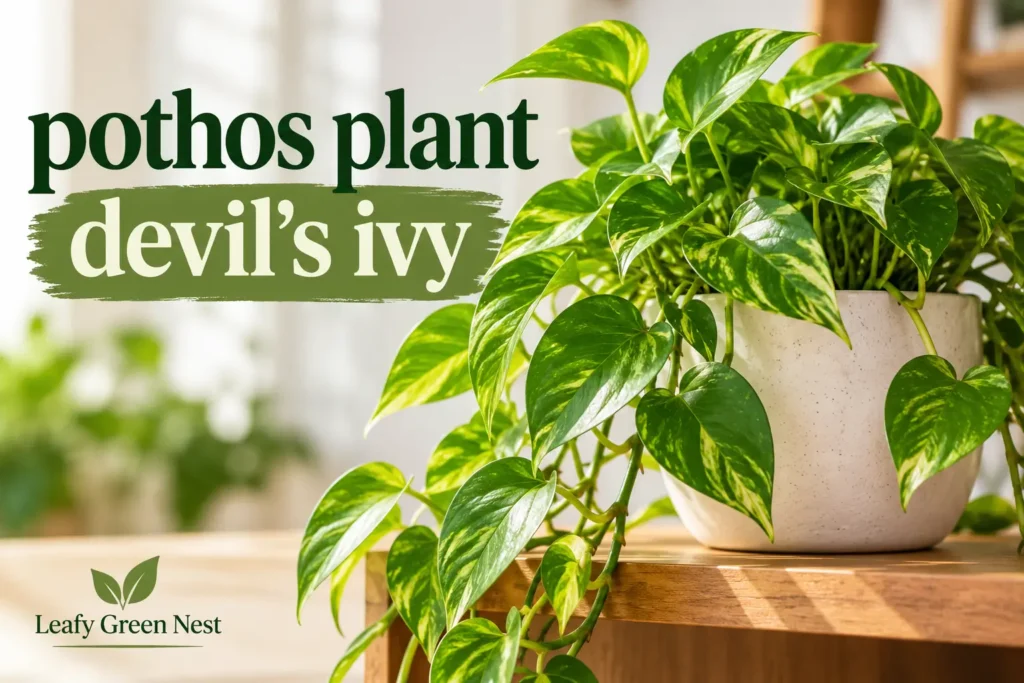
The Pothos plant Devil’s Ivy is a popular indoor houseplant known for its heart-shaped leaves, trailing vines, and simple care requirements. It adds greenery to living rooms, bedrooms, offices, and small apartments without demanding constant attention.
Devil’s Ivy is especially popular with beginners because it tolerates lower light than many tropical plants. However, it still needs proper watering, good drainage, and suitable growing conditions to stay healthy.
This article explains how to grow Devil’s Ivy indoors, propagate new plants, understand its benefits, identify common problems, and keep it safe around pets and children.
Table of Contents
What Is the Pothos Plant Devil’s Ivy?
The Pothos plant, scientifically known as Epipremnum aureum, is a tropical evergreen vine in the arum family, Araceae. It is grown as a houseplant for its glossy leaves and flexible trailing or climbing growth habit.
Its leaves can be solid green or patterned with yellow, cream, or white. Although commonly called Devil’s Ivy, it is not a true ivy and belongs to a different botanical group from English ivy.
Pothos Plant Devil’s Ivy Care: Essential Facts
Devil’s Ivy grows best in bright, indirect light, well-draining soil, and a watering routine based on soil moisture. Understanding its basic needs helps prevent common problems such as yellow leaves, weak growth, and root rot.
| Care factor | Recommendation |
|---|---|
| Botanical name | Epipremnum aureum |
| Common names | Pothos, Devil’s Ivy, golden pothos |
| Light | Bright, indirect light |
| Watering | When the upper soil layer has dried |
| Soil | Loose, well-draining potting mix |
| Temperature | Around 18–29°C |
| Humidity | Average household humidity is generally suitable |
| Fertilizer | Balanced houseplant fertilizer during active growth |
| Propagation | Stem cuttings containing a node |
| Pet safety | Toxic to cats and dogs if chewed or swallowed |
Devil’s Ivy Plant Care Indoors: 7 Essential Tips
Successful Devil’s Ivy plant care indoors depends on consistent, simple habits rather than expensive equipment. Focus on light, watering, drainage, temperature, and occasional pruning to support healthy growth.
1. Provide Bright, Indirect Light
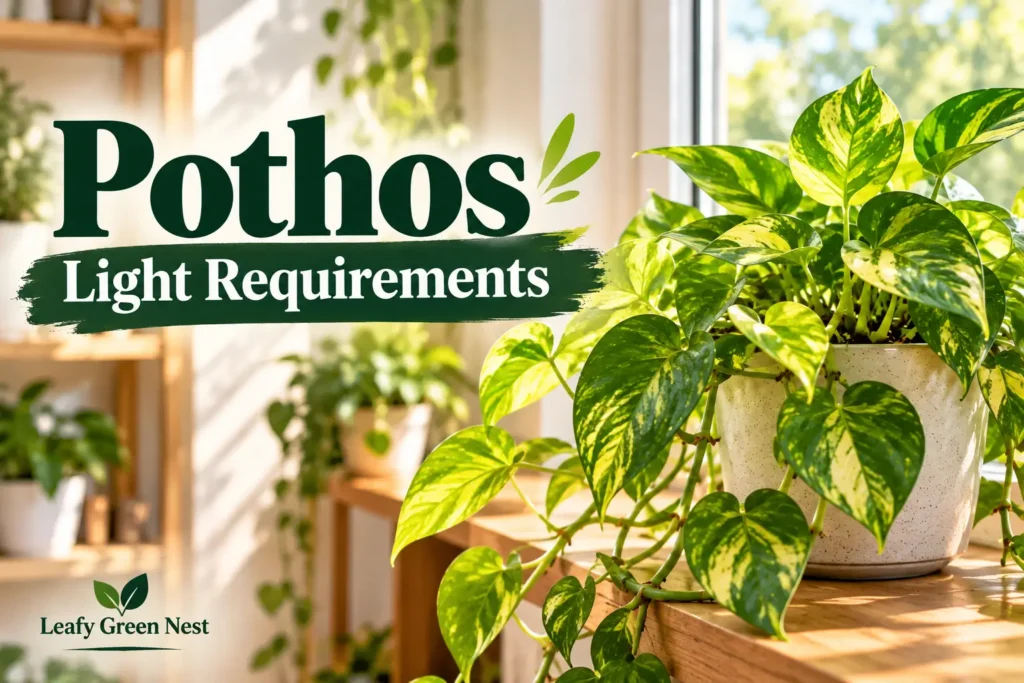
Bright, indirect light is ideal for most pothos varieties. Place the plant near a bright window where sunlight is filtered or does not fall directly on the leaves for long periods.
Pothos can survive in lower light, but growth may slow and variegated varieties may lose some of their yellow or cream markings. Strong direct sunlight can scorch the leaves, so move the plant if you notice pale, dry patches.
2. Water According to Soil Moisture
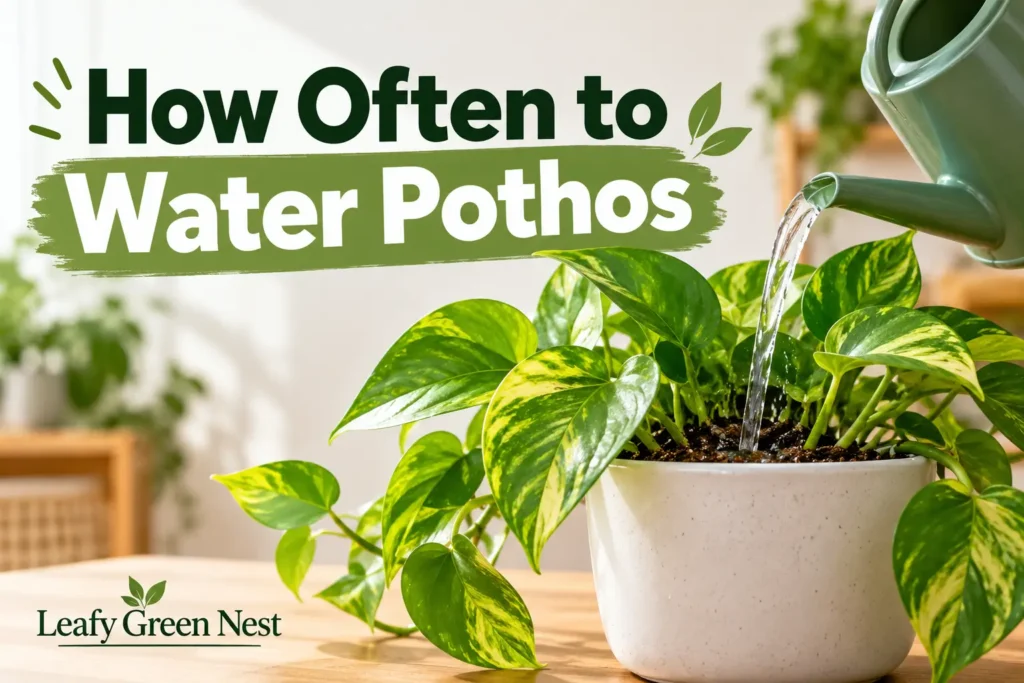
Water your Pothos when the upper 2–5 cm of soil feels dry. Water thoroughly until excess moisture drains through the bottom of the pot, then empty the saucer.
Avoid watering on a rigid weekly schedule. A plant in a warm, bright room may dry out faster than one in a cooler room with limited daylight.
Practical example: If the leaves droop but the soil is dry, the plant may need water. If the leaves droop while the soil remains wet, check for drainage problems or damaged roots before watering again.
3. Choose Well-Draining Soil
Pothos needs a growing medium that retains some moisture without becoming waterlogged. A quality indoor potting mix usually works well when used in a container with drainage holes.
For extra airflow, combine two parts potting mix with one part perlite. This is a practical option, not a strict formula. Avoid heavy garden soil that compacts easily inside indoor containers.
4. Maintain a Comfortable Temperature
Pothos generally grows well at temperatures around 18–29°C. Protect it from cold drafts, sudden temperature changes, and direct blasts of hot or cold air from heating and cooling equipment.
In hot weather, keep the plant away from intense afternoon sunlight. Check soil moisture more often if the pot dries quickly, but do not assume that warm conditions always mean the plant needs more water.
5. Keep Humidity at a Suitable Level
Devil’s Ivy usually adapts to average household humidity and does not require regular misting. If the air is very dry, grouping plants together or using a humidifier may help maintain more consistent conditions.
Good drainage and appropriate watering are more important than frequently spraying the leaves. Avoid leaving the foliage wet for long periods.
6. Fertilize During Active Growth
Use a balanced liquid houseplant fertilizer according to the product label during spring and summer, when growth is usually strongest. Reduce feeding when growth slows during cooler or darker periods.
Excess fertilizer can cause salt buildup and root damage. If the plant is growing well, increasing the fertilizer dose is unlikely to improve its health.
7. Prune to Encourage Fuller Growth
Pruning controls the plant’s size and can encourage branching. Use clean scissors to cut a vine just above a leaf node, where a leaf and growth buds emerge from the stem.
Remove yellow or damaged leaves and trim excessively long vines. You can use healthy stem cuttings to grow additional plants.
Devil’s Ivy Plant Benefits: Why Grow It Indoors?
The main Devil’s Ivy plant benefits are its decorative appeal, flexible growth habit, and relatively simple maintenance. It is a useful ornamental plant, but claims about air purification and health benefits should be considered carefully.
Adds Natural Greenery
Trailing vines create a lush appearance on shelves, desks, and plant stands. Hanging baskets are especially useful when you want greenery without taking up floor space.
Makes a Good Beginner Houseplant
Pothos tolerates lower light and occasional missed watering better than many houseplants. However, it is not indestructible, and prolonged wet soil can still cause root rot.
May Absorb Certain Airborne Compounds
Laboratory research has examined the ability of plants to remove volatile organic compounds, or VOCs, from enclosed environments. These findings do not mean that a few ordinary houseplants can effectively clean the air in a typical home.
Ventilation and controlling pollution sources are more dependable ways to improve indoor air quality. Pothos should be grown primarily for its ornamental value, not as a replacement for ventilation or air filtration.
Provides an Enjoyable Gardening Hobby
Watering, pruning, and watching new leaves develop can make indoor gardening rewarding. These are personal and recreational benefits rather than guaranteed medical effects of the plant.
Pothos Plant Devil’s Ivy Propagation: Step-by-Step
Pothos propagation is a straightforward way to grow new plants from a healthy vine. The most reliable method is to take a stem cutting containing at least one node and root it in water or potting mix.
How to Propagate Pothos in Water
- Select a healthy vine with several leaves.
- Cut just below a node using clean scissors.
- Remove the lowest leaf if it would sit underwater.
- Place the node in a clean glass of water, keeping the leaves above the surface.
- Put the glass in bright, indirect light.
- Refresh the water when it becomes cloudy.
- Transfer the cutting to potting mix after it develops a healthy root system.
Rooting often begins within a few weeks, but timing depends on light, temperature, and cutting health.
How to Propagate Pothos in Soil
- Take a healthy cutting containing at least one node.
- Place the node just below the surface of moist potting mix.
- Keep the leaves above the soil.
- Position the pot in a warm place with indirect light.
- Keep the mix lightly moist, not soggy.
- Watch for new growth over the following weeks.
Important: A detached leaf without a node usually cannot develop into a complete new pothos vine. Always check the cutting before planting it.
For additional botanical information on pothos care, propagation, and common growing problems, consult the North Carolina State University Extension plant profile for Epipremnum aureum.
Devil Ivy Plant Poisonous: Is Pothos Safe for Pets?
Devil’s Ivy is toxic if chewed or swallowed because it contains insoluble calcium oxalate crystals. These needle-like crystals can cause irritation and pain in the mouth and throat.
Possible symptoms include:
- Burning or pain in the mouth
- Drooling or pawing at the mouth
- Swelling of the lips or tongue
- Difficulty swallowing
- Vomiting in some cases
Keep the plant away from pets and young children who may chew the leaves. Collect fallen foliage after pruning, and wash your hands after handling damaged stems.
If a person or pet chews or swallows pothos, contact a medical professional, poison information service, or veterinarian for advice. Do not induce vomiting unless a qualified professional instructs you to do so. Breathing difficulties or severe swelling require urgent medical attention.
Devil’s Ivy Spiritual Meaning and Symbolism
The spiritual meaning of Devil’s Ivy varies across personal beliefs and cultural traditions. Some people associate its evergreen foliage and persistent growth with resilience, renewal, prosperity, and good fortune.
Pothos is sometimes called a money plant and kept indoors as a symbol of abundance. These associations are symbolic beliefs, not scientifically established effects.
Why Is It Called Devil’s Ivy?
Devil’s Ivy gets its name from its persistent growth habit and ability to survive in conditions that challenge many other houseplants. Its vines can continue growing in relatively low light, and it can be difficult to remove once established in suitable tropical environments.
The name does not mean that the plant has supernatural properties. Its aerial roots also help the vines attach to supports and climb in suitable growing conditions.
Common Pothos Problems and How to Fix Them
Most pothos problems are linked to watering, light, drainage, or pests. Checking the soil and roots before changing your routine helps you choose the right solution.
| Problem | Possible cause | Recommended action |
|---|---|---|
| Yellow leaves | Overwatering or natural aging | Check soil moisture and drainage |
| Brown leaf tips | Inconsistent watering or fertilizer buildup | Review watering and feeding |
| Long, sparse vines | Insufficient light | Move to brighter indirect light and prune |
| Drooping leaves | Underwatering or root damage | Check soil moisture first |
| Soft, dark roots | Root rot | Remove damaged roots and repot in fresh mix |
| Speckled leaves or tiny pests | Spider mites, mealybugs, or scale | Isolate the plant and treat the pest appropriately |
How to Distinguish Overwatering From Underwatering
Both conditions can cause drooping leaves, so leaf appearance alone is not enough to diagnose the problem.
- Underwatering: The soil is dry, the pot feels lighter, and leaves may become limp or curl.
- Overwatering: The soil stays wet, leaves may turn yellow, and roots may lose their firmness.
- Root rot: Roots may appear dark or mushy, and the soil may develop an unpleasant smell.
If root rot is present, remove the plant carefully, trim away damaged roots with clean scissors, and repot it in fresh, well-draining mix. Do not add more water while the soil remains saturated.
How to Make Devil’s Ivy Grow Faster Indoors
Healthy pothos growth depends on suitable light, healthy roots, warm temperatures, and consistent care. Improving these conditions is more useful than applying extra fertilizer or watering too often.
Use this checklist:
- Provide bright, indirect light.
- Water when the upper soil layer dries.
- Use a pot with drainage holes.
- Maintain comfortable indoor temperatures.
- Fertilize lightly during active growth.
- Prune long vines to encourage branching.
- Check regularly for pests and damaged leaves.
- Repot when roots become crowded.
Growth naturally slows when daylight decreases or temperatures drop. If the plant remains healthy but produces fewer leaves during winter, it may simply be responding to seasonal conditions.
When Should You Repot a Pothos Plant?
Pothos does not need repotting every year if its roots have enough room and the soil drains properly. Repotting becomes useful when the roots crowd the container or the growing medium breaks down.
Look for roots emerging from drainage holes, a dense mass of circling roots, or water passing through the pot unusually quickly. Choose a container only slightly larger than the existing one to avoid holding excessive moisture around the roots.
Is the Pothos Plant Devil’s Ivy Right for Your Home?
Devil’s Ivy is a good choice if you want an attractive, adaptable houseplant that requires relatively little maintenance. Its trailing vines and varied leaf patterns make it suitable for shelves, hanging baskets, and many indoor spaces.
However, it is not ideal for every household because it is toxic if chewed or swallowed. If pets or young children can reach the leaves, place the plant securely out of reach or choose a non-toxic alternative.
Frequently Asked Questions About Devil’s Ivy
These answers address common questions about Devil’s Ivy plant care, propagation, benefits, and safety. They provide quick guidance for readers who want to solve everyday growing problems.
What is the difference between Pothos and Devil’s Ivy?
Pothos and Devil’s Ivy usually refer to Epipremnum aureum, the same tropical vine. Golden Pothos is one of its most familiar varieties, known for green leaves with yellow patterns.
Is Devil’s Ivy a good indoor plant?
Yes. Devil’s Ivy is relatively easy to maintain and tolerates lower light than many houseplants. It still needs suitable watering, drainage, and protection from harsh direct sunlight.
Can Devil’s Ivy grow in water permanently?
Yes. Pothos can grow in water for an extended period when provided with clean water, suitable light, and nutrients formulated for water-grown plants.
Should you mist a Pothos plant?
No. Regular misting is not necessary. Appropriate light, careful watering, and good drainage are more important for healthy growth.
Why is my Devil’s Ivy turning yellow?
Yellow leaves can result from overwatering, poor drainage, or natural aging. Check soil moisture first and inspect the roots if the potting mix stays wet for long periods.
Does Devil’s Ivy bring good luck or money?
Some traditions associate Devil’s Ivy with prosperity and abundance. These are symbolic beliefs rather than scientifically proven effects, although many people enjoy the plant for its decorative value.