Can you grow pothos in an aquarium? Yes, an aquarium pothos plant can grow successfully when its roots stay underwater and its leaves remain above the surface. This popular houseplant, scientifically known as Epipremnum aureum, can absorb nutrients from aquarium water while developing long, healthy roots.
Pothos is a tropical climbing plant commonly grown in homes and offices. Also known as devil’s ivy and golden pothos, it adapts well to growing in water. This makes it a practical choice for aquarium owners who want natural greenery and an additional way to absorb dissolved nutrients from the tank.
However, pothos is not a true underwater aquarium plant. Its leaves and stems are not adapted to stay fully submerged for long periods. The best setup allows the roots to grow into the aquarium while the foliage grows above the tank.
When managed correctly, this arrangement can support plant growth and help absorb some excess nutrients from the water. However, pothos should complement, not replace, proper filtration, regular water changes, and responsible fish care.
Table of Contents
Quick Answer: Aquarium Pothos Plant
Yes. You can grow pothos in a freshwater aquarium by placing its roots in the water and keeping its leaves above the surface.
- Best setup: Roots submerged, leaves exposed to air.
- Main benefit: Roots absorb nitrate and other dissolved nutrients.
- Growth rate: New roots may appear within days to a few weeks, while noticeable leaf growth often takes several weeks.
- Best varieties: Golden pothos, jade pothos, and marble queen pothos.
- Fish compatibility: Generally suitable for many freshwater tanks when properly secured and maintained.
- Main risk: Rotting plant material, restricted water flow, or excessive reliance on the plant for filtration.
- Important warning: Do not keep the entire pothos plant underwater or allow leaves to decay inside the aquarium.
Quick Reference: Growing Pothos in an Aquarium
| Factor | Recommendation |
|---|---|
| Growing method | Hydroponic growth with roots in aquarium water |
| Water exposure | Submerge healthy roots, not the entire plant |
| Lighting | Bright, indirect light or suitable aquarium lighting |
| Temperature | Match the plant’s tropical needs with the aquarium’s safe temperature range |
| Fertilizer | Usually unnecessary in a stocked aquarium; test water and avoid unsafe additions |
| Maintenance | Inspect roots weekly and trim excessive growth |
| Filtration | Keep the normal aquarium filter running |
| Best for | Many freshwater aquariums, including suitable betta tanks |
| Difficulty | Easy to moderate |
Benefits of Growing Pothos in an Aquarium
Pothos offers several benefits for aquarium owners, especially those who want to manage excess nutrients and add natural greenery without filling the tank with submerged plants.
1. Helps Reduce Nitrate Levels
One of the biggest benefits of pothos in an aquarium is its ability to absorb nitrate through its roots.
In a healthy aquarium, beneficial bacteria convert fish waste and uneaten food into ammonia, then nitrite, and finally nitrate. Nitrate can build up over time. Pothos uses some of this dissolved nitrogen to produce new leaves, stems, and roots.
This makes pothos useful as an additional nutrient-removal method.
However, the results depend on the plant’s size, growth rate, light exposure, nutrient levels, and the aquarium’s stocking density. A small cutting will not have the same effect as a large plant with an extensive root system.
2. May Help Control Algae
Pothos can help limit algae growth by absorbing some of the nutrients that algae also need.
For example, if your aquarium has elevated nitrate levels, a healthy pothos plant may help slow the rate at which nitrate accumulates. This can support better nutrient management.
But pothos will not automatically eliminate algae. Excess light, phosphate, leftover food, and poor maintenance can still cause algae problems.
For better results, combine the plant with appropriate lighting, sensible feeding, regular water testing, and routine aquarium cleaning.
3. Provides Natural Hiding Places for Fish
The long roots of pothos can create a natural shelter for small fish and shrimp.
Fish may swim between the roots, rest beneath them, or use them as cover. This can make the aquarium look more natural and give small aquatic animals additional places to explore.
Keep enough open swimming space for your fish. If the roots become too thick, trim them carefully.
4. Grows Without Aquarium Substrate
Unlike many aquatic plants, pothos does not need gravel, aquarium soil, or a planted substrate when grown with its roots suspended in water.
This makes it a useful option for aquariums with bare bottoms, simple decorations, or limited space for rooted plants.
You can grow it in a suitable filter compartment, a mesh holder, or an aquarium-safe plant clip.
5. Adds Greenery Above the Tank
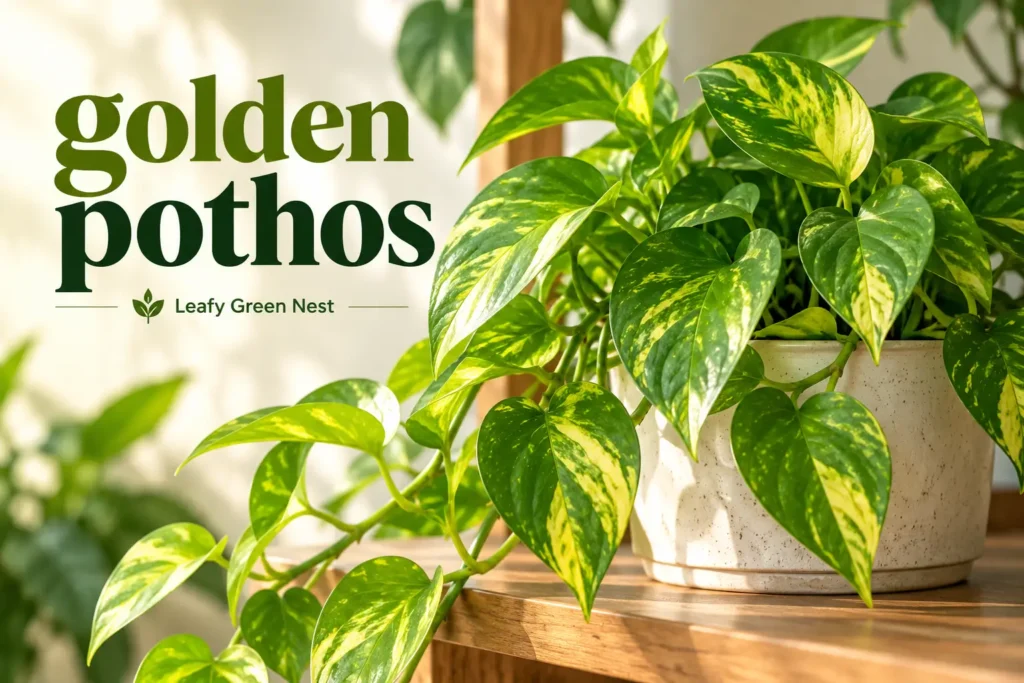
Pothos grows long vines with attractive green leaves. Golden pothos has yellow-and-green patterns, while jade pothos has solid green foliage.
The trailing vines can make an aquarium look like a small indoor garden. You can guide the stems along a shelf or let them trail naturally beside the tank.
Can Pothos Grow Underwater?
No, pothos is not a true aquatic plant and should not be grown fully underwater.
Its roots can adapt to growing in water, but its leaves and stems are not designed for permanent submersion. When the foliage remains underwater, it can deteriorate and rot.
This is the key difference between growing pothos in an aquarium and growing a plant that naturally lives underwater.
| Plant part | Can it stay underwater? | What to do |
|---|---|---|
| Healthy water-adapted roots | Yes | Allow them to grow freely in the tank |
| Lower stem nodes | Usually, if only the rooting portion is submerged | Keep the growing tip above water |
| Leaves | No, not for long-term growth | Keep every leaf above the surface |
| Main growing tip | Best kept above water | Secure the vine near the rim |
| Soil and fertilizer pellets | No | Remove them before introducing the plant |
A common mistake is pushing the entire cutting into the tank because the plant appears to enjoy moisture. This can lead to rotting leaves, decaying stems, and deteriorating water quality.
If you want greenery that grows completely underwater, consider genuine aquatic species such as Java fern, Anubias, or suitable aquatic stem plants instead.
How to Put Pothos in a Betta Tank or Aquarium
You can add pothos to a betta tank or many other freshwater aquariums with a few simple steps. The goal is to expose the roots to nutrient-rich water while keeping the leaves dry and the aquarium equipment unobstructed.

Step 1: Choose a Healthy Pothos Plant
Start with a healthy plant or an untreated cutting from a plant you trust.
Look for:
- Firm green stems.
- Healthy leaves without signs of pests.
- At least one visible node on a cutting.
- No mushy, black, or foul-smelling roots.
A node is the small point on a stem where a leaf or root can emerge. It is important because new roots often develop from submerged nodes.
Golden pothos is a particularly convenient choice because it is widely available and generally easy to grow.
Step 2: Clean the Plant Thoroughly
If your pothos comes from a pot, remove the plant carefully and wash away all potting mix from its roots.
Gently rinse away soil, bark, fertilizer pellets, and loose debris. Avoid damaging the roots while cleaning them.
If you are using a fresh cutting, make sure the plant has not been treated with pesticides, insecticides, leaf-shine products, or other chemicals that could contaminate the aquarium.
Important: Washing the leaves and roots does not reliably remove systemic pesticides, which can be present inside plant tissues. A plant’s treatment history matters, especially in aquariums containing shrimp or other sensitive invertebrates. An untreated cutting from a trusted source is the safer choice.
Step 3: Position the Roots in the Water
Place the cutting so that its roots and a suitable lower node can reach the aquarium water.
Keep the leaves and growing tip above the surface.
You do not need to bury the plant in the substrate. In fact, leaving the stem above the waterline can help prevent stem rot.
Step 4: Secure the Plant
Choose a mounting method that suits your aquarium.
- Aquarium rim: Drape the vine over the edge while the roots hang into the water.
- Plant holder: Use an aquarium-safe clip or mesh basket to hold the cutting in place.
- Hang-on-back filter: Position the roots in an appropriate compartment with flowing water, away from moving parts.
- Aquarium lid: Use a suitable opening to hold the stem securely without pinching it.
Avoid placing roots where they can block the filter intake or interfere with an impeller.
Step 5: Give the Leaves Enough Light
Pothos needs light for photosynthesis, even when its roots grow in aquarium water.
Bright, indirect light is usually a good starting point. A suitable aquarium light can also work if it illuminates the leaves, not just the water and substrate.
Avoid harsh direct sunlight that can overheat the aquarium or encourage excessive algae growth.
If the aquarium has a closed lid, make sure the plant has enough space and airflow above the waterline.
Step 6: Monitor Water Quality and Plant Growth
Check the aquarium during the first few weeks after adding pothos.
Watch for:
- Yellowing or soft leaves.
- Black or mushy roots.
- Unusual cloudiness.
- Reduced filter flow.
- Unexpected changes in ammonia, nitrite, or nitrate.
- Signs of stress in fish or shrimp.
Test the water according to your normal aquarium maintenance schedule. Keep the established filter running and continue routine water changes.
How Fast Can You Grow Pothos in an Aquarium?
Pothos can establish roots within one to three weeks under favorable conditions, although some cuttings take longer. Noticeable new leaf or vine growth often takes several weeks.
The exact speed depends on the plant’s health, temperature, light, nutrient supply, and whether you start with a fresh cutting or an established root system.
Here is a practical timeline rather than a guarantee.
| Time after setup | What you may notice |
|---|---|
| First few days | The cutting adjusts to its new environment |
| 1–3 weeks | New roots may begin to appear |
| 3–6 weeks | Root growth becomes easier to see; new leaves may develop |
| 1–3 months | Healthy plants may produce longer vines and a larger root system |
These ranges are approximate. A cutting may root faster or slower, and a plant that already has healthy roots may establish more quickly than a newly cut stem.
How to Encourage Faster Growth
To encourage healthy growth:
- Start with a healthy cutting that has at least one node.
- Keep the roots in clean, oxygenated aquarium water.
- Provide sufficient light for the leaves.
- Maintain a stable aquarium temperature appropriate for your fish and the plant.
- Avoid unnecessary fertilizer additions.
- Remove dead leaves and damaged roots promptly.
- Give the plant room to grow without blocking equipment.
If the plant produces new roots but few leaves, check the light and the health of the above-water foliage before assuming it needs more fertilizer.
What Is the Best Type of Pothos for an Aquarium?
Golden pothos is usually the easiest choice for an aquarium because it is hardy, widely available, and relatively fast-growing. Other common varieties can work as well when their roots are properly positioned.

1. Golden Pothos: Best overall
Golden pothos has green leaves with yellow markings. It is easy to find, adaptable, and a good starting point for most aquarium owners.

2. Jade Pothos
Jade pothos has solid green leaves and a classic appearance. It is a good option if you prefer foliage without variegated patterns.

3. Marble Queen Pothos
Marble queen has attractive white-and-green foliage. It generally grows more slowly than vigorous green varieties under similar conditions.

4. Neon Pothos
Neon pothos has bright yellow-green leaves. It is a useful choice if you want a bold color contrast above the aquarium.
All four varieties can be grown with their roots in aquarium water and their foliage exposed to air. No variety should be treated as a fully submerged aquatic plant.
Is Pothos Safe for Fish, Bettas, Shrimp, and Snails?
Pothos is commonly used in freshwater aquariums, and aquarium hobbyists have reported successful setups with many fish species. The main concerns are plant chemicals, decaying material, and whether the fish or invertebrates can damage the roots.
Is Pothos Safe for Betta Fish?
Pothos can be a useful addition to a betta tank when it is secured properly.
Betta fish may explore the dangling roots, and the foliage above the water can create a natural look. However, keep the roots from crowding the swimming area or interfering with the filter.
Bettas also need access to the water surface to breathe atmospheric air. Do not let the roots or other plant material block their access.
Is Pothos Safe for Shrimp and Snails?
Pothos roots may provide shelter for shrimp and small aquatic animals. However, shrimp and snails can be particularly vulnerable to some pesticides and other chemical contaminants.
Use a plant with a known, untreated growing history. Avoid introducing a newly purchased houseplant directly into a shrimp tank if you cannot verify its treatment history.
Is Pothos Toxic to Aquarium Fish?
There is a difference between a plant’s toxicity when eaten and the suitability of its healthy roots in aquarium water.
The ASPCA lists pothos as toxic to dogs and cats because it contains insoluble calcium oxalates. That warning concerns ingestion by those animals. It does not, by itself, prove that healthy pothos roots are poisonous to fish.
Nevertheless, keep all leaves out of the water, remove decaying material, and avoid pesticides or other chemicals. If fish show unexplained distress after adding a plant, remove it and check the aquarium’s water parameters.
Can Pothos Destroy Your Aquarium?
Pothos does not normally destroy an aquarium when used correctly. Problems can occur when the plant is introduced carelessly or allowed to interfere with the aquarium’s normal operation.
The search phrase “pothos destroyed my aquarium” reflects a real concern among aquarium keepers: a plant that should help manage nutrients can cause trouble if it introduces contaminants or decays in the water.
Here are the most common causes of problems.
| Problem | Why it happens | How to prevent it |
|---|---|---|
| Cloudy water | Soil, debris, or decaying plant tissue enters the tank | Clean the roots and remove dead material |
| Fish distress | Chemical contamination or poor water quality | Use untreated plants and test the water |
| Blocked filter | Roots grow into an intake or moving parts | Secure the plant and trim roots regularly |
| Rotting leaves | Foliage stays underwater | Keep leaves above the waterline |
| Excessively dense roots | The plant grows without pruning | Trim roots while preserving good water flow |
| Poor plant growth | Inadequate light or an unhealthy cutting | Improve lighting and inspect the stem and roots |
What to Do If Your Aquarium Develops Problems
If you suspect the pothos is harming your aquarium, take these steps:
- Remove the plant temporarily if you suspect contamination or decay.
- Remove any dead leaves, mushy roots, or other plant debris.
- Test ammonia, nitrite, and nitrate.
- Check that the filter is operating properly.
- If ammonia or nitrite is detectable, or fish are distressed, take prompt aquarium-appropriate action, including a partial water change with properly conditioned water when indicated.
- Do not add extra fertilizer or chemicals to compensate for the problem.
- Monitor the fish and water quality before deciding whether to reintroduce the plant.
A healthy aquarium should never depend on pothos alone to remain safe for fish.
How to Maintain Pothos in an Aquarium
Pothos is relatively easy to maintain, but occasional checks help prevent overgrowth and water-quality issues.
Check the Roots Weekly
Healthy new water roots are often white, cream, or light tan. Older roots may become darker without necessarily being unhealthy.
Look for roots that are mushy, slimy, or foul-smelling. These may indicate decay.
Trim away clearly damaged sections with clean scissors. Avoid removing more healthy roots than necessary.
Prune Long Vines and Excess Roots
Pothos can grow long vines, especially when it receives adequate light and nutrients.
Trim vines when they become tangled, reach unwanted areas, or interfere with the aquarium lid. Cut roots when they begin blocking water flow or crowding the tank.
You can use healthy vine cuttings to propagate additional pothos plants.
Keep the Filter Running
Pothos is an additional nutrient-uptake tool, not a complete aquarium filtration system.
The filter and its beneficial bacteria remain essential for processing fish waste. Pothos also does not reliably remove all dissolved waste, pathogens, or other unwanted substances.
Continue your usual filter maintenance and water-change schedule.
Avoid Unnecessary Fertilizers
Aquarium water often provides some of the nutrients pothos needs. Adding houseplant fertilizer directly to the tank can expose fish and invertebrates to unsuitable ingredients or concentrations.
If the plant is struggling, first check lighting, root health, and water conditions. If additional nutrients are genuinely needed, choose a treatment compatible with the aquarium and its inhabitants rather than using an ordinary houseplant product.
Common Mistakes to Avoid
The easiest way to grow pothos in an aquarium successfully is to avoid a few preventable errors.
- Submerging the entire plant: Keep the leaves and growing tip above water.
- Adding a soil-covered plant: Remove all visible potting mix and fertilizer pellets before setup.
- Ignoring pesticide history: Nursery plants may have been treated with chemicals that are unsuitable for aquariums.
- Removing the filter: Pothos does not replace biological filtration.
- Letting roots block water flow: Trim the root mass when necessary.
- Using harsh direct sunlight: This can heat the tank and encourage algae.
- Overlooking water tests: Clear water does not guarantee safe ammonia or nitrite levels.
- Assuming every fish is compatible: Plant-eating fish may damage the roots, while some aquarium setups have special needs.
- Ignoring pets around the aquarium: Keep trailing foliage out of reach of cats and dogs that may chew it.
Pothos vs. True Aquarium Plants
Pothos and aquatic plants can both contribute to a healthy, attractive tank, but they serve different roles.
| Feature | Pothos | True aquatic plants |
|---|---|---|
| Main growth location | Above the water, with roots submerged | Underwater or partly submerged, depending on species |
| Substrate required | No, when grown with roots in water | Depends on the species |
| Nutrient uptake | Absorbs some dissolved nutrients through roots | Absorbs nutrients through roots, leaves, or both |
| Main visual effect | Greenery above and around the aquarium | Underwater greenery |
| Maintenance | Pruning vines and roots | Varies by species |
| Best use | Additional nutrient uptake and above-water decoration | Aquascaping and underwater plant growth |
The best choice depends on your goal. If you want a trailing plant that helps absorb nutrients, pothos is a practical option. If you want a lush underwater landscape, choose plants adapted to aquatic life.
Where to Buy Pothos for an Aquarium
You can often find pothos at plant nurseries, garden centers, houseplant shops, or through local plant sellers.
You do not need a plant marketed specifically as an aquarium plant. A healthy cutting can work well if its growing history is known and it has not been exposed to unsuitable chemicals.
Before buying, check:
- Whether the plant looks healthy and pest-free.
- Whether the seller can explain its pesticide treatment history.
- Whether the cutting includes a healthy node.
- Whether you can rinse the roots thoroughly before placing them in the tank.
- Whether the price and plant size suit your aquarium.
For more options, see [Where to Buy Pothos Plants]. If you are still deciding between common houseplants, [Pothos vs. Philodendron: Key Differences] can help you identify the plant you have.
Expert Tips for Better Results
Experienced aquarium keepers can get more value from pothos by paying attention to the plant’s growth and the aquarium’s nutrient levels rather than simply adding more roots.
- Start small. One healthy cutting is enough to test whether the setup works for your tank.
- Track nitrate before and after adding the plant. This helps you see whether it makes a measurable difference in your aquarium.
- Keep the growing point dry. Position the node near the waterline so new growth develops above the surface.
- Use a filter compartment carefully. Flowing water can help expose the roots to nutrients, but keep them away from the impeller and other moving parts.
- Do not chase zero nitrate. Fish and aquatic plants have different needs, and some planted aquariums benefit from maintaining suitable nutrient levels.
- Keep a simple maintenance log. Record water-test results, pruning, and any unusual fish behavior.
A small amount of consistent maintenance is more useful than repeatedly changing the setup in response to minor changes in plant appearance.
Key Takeaways
- Pothos can grow in aquarium water without being planted in soil.
- The roots can help remove nitrate and other nutrients from the water.
- The plant needs adequate light and access to air for healthy foliage.
- Pothos is not a substitute for a properly cycled aquarium filter.
- A securely mounted plant holder helps keep leaves and stems out of the water.
- Regularly inspect the roots, leaves, and aquarium water to prevent problems.
- Pothos contains insoluble calcium oxalate crystals, so keep it away from pets that may chew it.
Frequently Asked Questions
How fast can you grow pothos in an aquarium?
Pothos may develop new roots within one to three weeks, while visible vine growth often takes several weeks. Light, plant health, temperature, and available nutrients all affect the speed of growth.
Can pothos grow underwater in a fish tank?
Pothos roots can grow underwater, but the plant is not adapted to remain fully submerged. Keep the roots in aquarium water and the leaves and growing tip above the surface to prevent decay.
Is pothos good for a betta fish tank?
Yes, pothos can be a useful addition to many betta tanks. Its roots may provide shelter and absorb nutrients, but they must not block the betta’s access to the surface or interfere with filtration.
Does pothos remove ammonia from an aquarium?
Pothos can take up some ammonium and other nitrogen compounds, but it should not be relied on to control dangerous ammonia levels. A properly cycled biological filter and regular water testing remain essential.
Should I put pothos roots directly into my aquarium filter?
You can place pothos in a suitable filter compartment if the roots are secured and cannot reach moving parts. Check the filter regularly and trim roots before they restrict water flow.
Why are my pothos roots turning brown in an aquarium?
Brown roots are not always unhealthy, particularly as older roots age. However, soft, slimy, or foul-smelling roots may indicate rot. Remove damaged sections and check water conditions, root placement, and plant health.
Final Verdict: Can You Grow Pothos in an Aquarium Safely?
Yes, pothos is a practical choice for many freshwater aquariums when grown with its roots underwater and its foliage above the surface. Golden pothos is an easy variety for beginners, while jade, marble queen, and neon pothos offer other options.
The plant can absorb some dissolved nutrients and provide a natural look, but it cannot replace a proper filter or routine aquarium maintenance. Keep the setup clean, avoid chemical contamination, and prune the roots when needed.
References:
Use authoritative sources to support the article’s aquarium setup and plant-safety advice.
- Aquarium Co-Op: How to Use the Pothos Plant as a Natural Aquarium Filter. Practical guidance on cleaning roots, positioning pothos, and reducing nitrate buildup.
- ASPCA: Golden Pothos Toxicity Information. Supports the warning about ingestion by cats and dogs.
- American Society for the Prevention of Cruelty to Animals: Toxic and Non-Toxic Plants Database. Additional pet-safety information.