Pothos plant care is easy when you understand the basics of watering, light, soil, and fertilizer. This popular houseplant is known for its heart-shaped leaves, trailing vines, and ability to adapt to different indoor environments.
Also called devil’s ivy, pothos is an excellent choice for beginners. You can grow it in a pot, hang it from a shelf, train it to climb, or keep it in a jar of water. With a few simple habits, you can maintain healthy leaves and encourage steady growth throughout the year.
Table of Contents
What Is a Pothos Plant?
A pothos plant is a tropical evergreen vine commonly grown as a houseplant. Its botanical name is Epipremnum aureum, and it belongs to the Araceae family.
Pothos plants are popular because they grow in different indoor conditions and require relatively little maintenance. Their leaves may be solid green or display yellow, white, or cream-colored patterns, depending on the variety.
Common pothos varieties include:
- Golden Pothos: Green leaves with golden-yellow patches.
- Marble Queen Pothos: Green leaves with white marbling.
- Neon Pothos: Bright lime-green leaves.
- Jade Pothos: Solid, deep-green leaves.
- N’Joy Pothos: Small leaves with distinct white and green sections.
Pothos is sometimes confused with heartleaf philodendron because both plants have heart-shaped leaves. However, they are different species with distinct growth habits and leaf characteristics.
Pothos Plant Care Indoor: Light and Temperature
Pothos plant care indoors starts with choosing the right location. Bright, indirect light, warm temperatures, and protection from harsh sunlight help the plant produce healthy leaves and attractive vines.
Best Light for Pothos
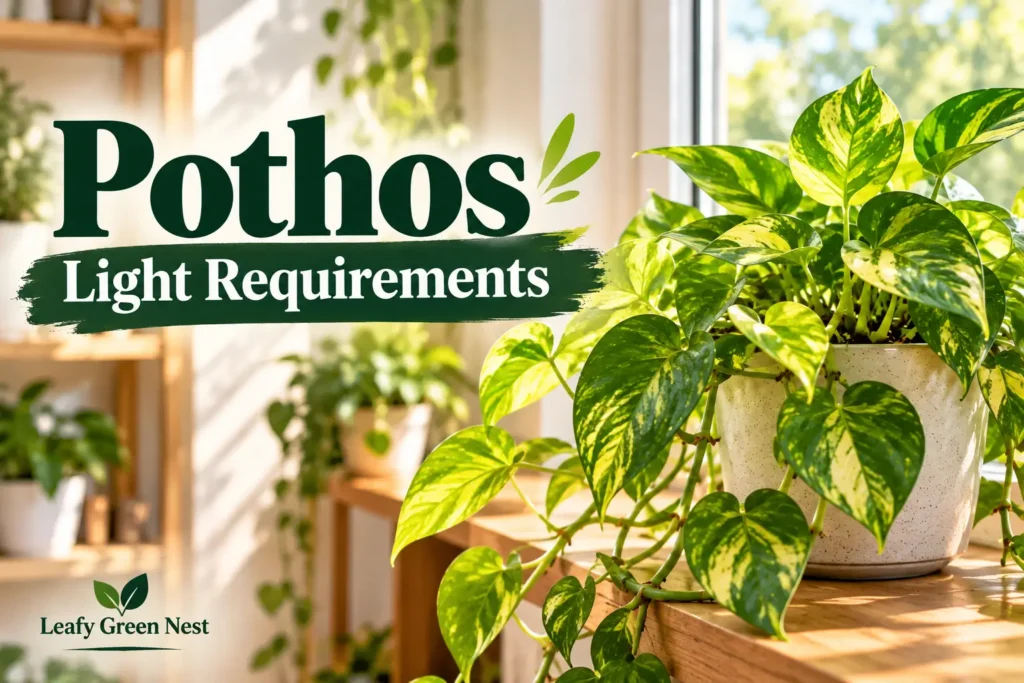
Place your pothos near a bright window where sunlight is filtered through a curtain. East-facing windows are often suitable, while plants near south- or west-facing windows may need protection from intense afternoon sunlight.
Pothos can tolerate low light, but growth may become slower, leaves may become smaller, and variegated varieties may lose some of their colorful patterns.
Ideal Temperature and Humidity
Pothos generally grows well at temperatures between 65°F and 85°F (18°C and 29°C). Keep it away from cold drafts, sudden temperature changes, and strong air-conditioning vents.
Average household humidity is usually sufficient. If your home is very dry, a humidifier may help, but regular misting is rarely necessary.
Expert tip: Rotate your plant occasionally so that different sides receive light. This encourages more balanced growth instead of allowing all the vines to lean toward one window.
Pothos Plant Care Watering: How Often Should You Water?
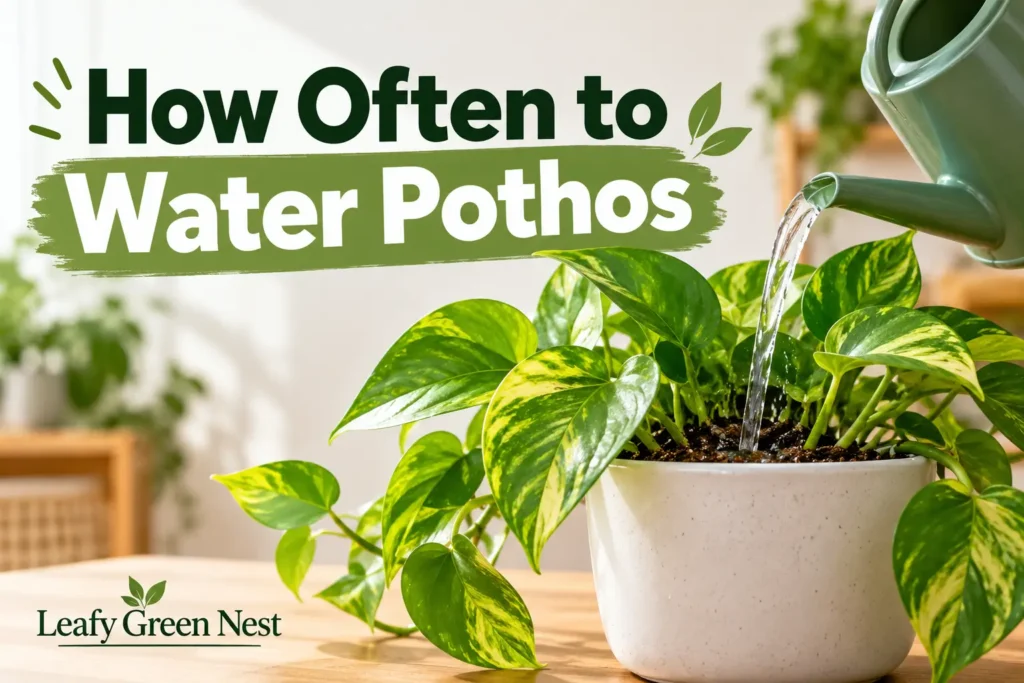
Pothos plant care watering depends on soil moisture, light, temperature, and pot size. Water your plant when the top 1 to 2 inches of soil feel dry, then allow excess water to drain completely.
Overwatering is a common cause of yellow leaves and root rot. Underwatering can also cause drooping and curled leaves, so always check the soil before deciding what your plant needs.
How to Water Pothos Correctly
Follow these simple steps to maintain suitable soil moisture:
- Check the top 1 to 2 inches of soil with your finger.
- If the soil feels damp, wait and check again later.
- If the soil feels dry, water slowly around the surface.
- Continue until water flows from the drainage holes.
- Empty the saucer to prevent the roots from sitting in standing water.
Avoid watering your pothos in small amounts every day. Thorough watering followed by an appropriate drying period is generally better.
Signs of Overwatering and Underwatering
Overwatered pothos may develop yellow leaves, soft stems, or dark, mushy roots. If the soil stays wet for many days, inspect the drainage and root system.
Underwatered pothos may have limp leaves, dry soil, and curled leaf edges. Water the plant thoroughly and allow the excess to drain away.
Remember that drooping leaves do not always mean the plant needs water. Check the soil first to avoid making the problem worse.
Pothos Plant Care Fertilizer: Best Feeding Practices
Pothos benefits from fertilizer during active growth, especially in spring and summer. A balanced liquid houseplant fertilizer can supply nutrients that support healthy roots, new leaves, and stronger stems.
What Is the Best Fertilizer for Pothos?
A balanced fertilizer containing nitrogen, phosphorus, and potassium is a practical choice for most indoor pothos plants. Products labeled 10-10-10 or 20-20-20 may be suitable when used according to their instructions.
Nitrogen supports leafy growth, while phosphorus and potassium contribute to other essential plant functions. No single fertilizer ratio is best for every growing environment.
How Often Should You Fertilize Pothos?
Feeding about once a month during active growth is a reasonable starting point for many indoor plants. Follow the product label, and reduce or stop feeding when growth slows during winter.
Keep these fertilizer tips in mind:
- Never exceed the recommended fertilizer concentration.
- Avoid fertilizing plants with severely damaged roots.
- Do not use extra fertilizer to compensate for insufficient light.
- Flush the soil with clean water if fertilizer salts accumulate.
- Avoid feeding a newly repotted plant heavily while it adjusts.
Too much fertilizer can cause brown leaf tips and root damage. Light, consistent feeding is usually more effective than frequent heavy applications.
Pothos Plant Care Repotting: When and How to Repot
Pothos plant care repotting gives crowded roots more space and replaces old potting mix. Many indoor pothos plants need repotting every one to two years, but the timing depends on their growth and root development.
Signs Your Pothos Needs Repotting
Look for these common signs:
- Roots grow through the drainage holes.
- The root ball becomes tightly packed.
- Water runs through the pot unusually quickly.
- The plant dries out much faster than before.
- Growth slows despite suitable light and watering.
Slow growth alone does not always mean repotting is necessary. Check the roots and growing conditions before changing the pot.
Steps for Repotting Pothos
- Choose a pot with drainage holes that is about 1 to 2 inches wider than the root ball.
- Carefully remove the plant from its current container.
- Inspect the roots and trim any soft, rotten sections with clean scissors.
- Add fresh, well-draining potting mix to the new pot.
- Position the plant at approximately the same depth as before.
- Fill around the roots without compacting the soil too tightly.
- Water as needed and allow excess water to drain.
Spring is often a convenient time to repot because pothos usually grows more actively in warmer conditions.
Pothos Plant Care Propagation: Grow New Plants Easily
Pothos plant care propagation allows you to grow new plants from healthy stem cuttings. The easiest method is to root cuttings in water, although you can also propagate pothos directly in soil.
A cutting must include at least one node, which is the joint on a stem where a leaf or aerial root emerges.
How to Propagate Pothos in Water
Follow these steps to grow a new plant:
- Select a healthy vine with several leaves.
- Cut a section just below a node using clean scissors.
- Remove leaves that would sit underwater.
- Place the cutting in a clean jar with the node submerged.
- Keep the jar in bright, indirect light.
- Replace cloudy water and top it up when necessary.
- Transfer the cutting to soil once the roots are established, if desired.
Roots often begin to develop within a few weeks, depending on warmth, light, and cutting health.
Can You Propagate Pothos in Soil?
Yes. Place a cutting with at least one node into lightly moist potting mix. Keep the mix from drying out completely while roots develop, but avoid waterlogged conditions.
Water propagation makes it easy to observe root growth. Soil propagation avoids the need to transition water-grown roots into soil.
For more plant-growing guidance, read this related guide on how to grow and care for indoor plants.
Pothos Plant Care Indoor in Water: A Simple Guide
Pothos can grow in water without soil, making it a convenient option for decorative displays and small spaces. However, long-term water growing requires attention to water quality, root health, and nutrients.
How to Grow Pothos in Water
- Choose a healthy stem cutting or a plant already adapted to water.
- Place the lower stem and roots in a clean container.
- Keep the leaves above the waterline.
- Refresh the water regularly, especially when it becomes cloudy.
- Place the container in bright, indirect light.
- Use a suitable hydroponic fertilizer if you want sustained growth.
Ordinary potting soil fertilizer is not automatically appropriate for water culture. Choose a product designed for hydroponic or water-grown plants and follow its instructions.
Water vs. Soil: Which Is Better?
| Feature | Growing in water | Growing in soil |
|---|---|---|
| Watering | Maintain and refresh the water | Water when the soil begins to dry |
| Root visibility | Easy to observe | Roots remain hidden |
| Nutrients | Must be supplied for sustained growth | Provided by the growing mix and fertilizer |
| Maintenance | Requires clean water and nutrient management | Requires moisture and drainage management |
| Best use | Decorative displays and propagation | Traditional long-term houseplant growing |
Both methods can work well. Choose the one that best suits your space and maintenance routine.
Pothos Plant Care Outdoor: Growing in Warm Climates
Pothos can grow outdoors in warm, sheltered locations with filtered light and well-draining soil. It needs protection from intense sunlight, cold temperatures, and prolonged waterlogging.
For outdoor pothos care, follow these practices:
- Start the plant in shade or filtered sunlight.
- Check soil moisture more often during hot weather.
- Protect container-grown plants from cold nights.
- Use pots with drainage holes.
- Avoid placing containers where the roots become excessively hot.
In Lahore’s hot summers, a shaded balcony or covered patio may be more suitable than an exposed rooftop. Strong afternoon sunlight can scorch leaves, especially when plants have been growing indoors.
Pothos can spread aggressively in some warm regions, so check local environmental guidance before planting it directly in the ground. Growing it in a container helps control its spread.
Pothos Plant Care Problems: Common Issues and Solutions
Most pothos problems are related to watering, lighting, nutrients, or pests. Identifying the cause helps you choose the right treatment instead of making unnecessary changes to your care routine.
| Problem | Possible cause | Recommended solution |
|---|---|---|
| Yellow leaves | Overwatering or natural aging | Check soil moisture and root health |
| Brown leaf tips | Dry conditions or fertilizer buildup | Review watering and feeding |
| Drooping leaves | Dry soil or waterlogged roots | Check soil before watering |
| Small leaves | Insufficient light | Move to brighter indirect light |
| Loss of variegation | Low light | Improve indirect light gradually |
| Long, sparse vines | Insufficient light or natural growth | Prune and improve lighting |
| Mushy roots | Root rot | Remove damaged roots and improve drainage |
| Cotton-like insects | Mealybugs | Isolate and treat the plant |
Why Are Pothos Leaves Turning Yellow?
Yellow leaves can result from excess moisture, damaged roots, insufficient light, or normal aging. Check the soil first and inspect the roots if the pot stays wet for too long.
If only an occasional older leaf turns yellow while the rest of the plant looks healthy, it may be part of the plant’s normal growth cycle.
How Do You Make Pothos Fuller?
Prune long vines just above healthy nodes and root suitable cuttings. Planting several rooted cuttings in the same container can create a fuller appearance.
Provide enough indirect light to support new growth. Pruning alone will not necessarily fill every bare section of an old vine.
Is Pothos Toxic to Cats?
Yes. Pothos is toxic to cats and dogs when chewed or eaten because it contains insoluble calcium oxalate crystals. These crystals can irritate the mouth and digestive tract.
Possible symptoms include excessive drooling, vomiting, mouth irritation, pawing at the mouth, and difficulty swallowing.
Keep pothos out of reach of pets, including trailing vines that hang over shelves. If your pet eats the plant, contact a veterinarian for advice. Seek urgent veterinary care if breathing or swallowing becomes difficult.
Simple Pothos Plant Care Routine
A short weekly check can help you maintain healthy pothos without spending hours on plant care. Adjust the routine to your plant’s growth, the season, and the conditions in your home.
Weekly Checklist
- Check the top layer of soil before watering.
- Look for yellow leaves, brown tips, or drooping.
- Inspect the undersides of leaves for pests.
- Make sure the pot drains freely.
- Rotate the plant if its growth leans toward the window.
Monthly and Seasonal Tasks
- Monthly: Check whether the plant needs fertilizer during active growth.
- Every few months: Clean dusty leaves with a soft, damp cloth.
- In spring: Assess the roots and prune overgrown vines.
- During winter: Reduce fertilizer and check soil moisture less frequently if the mix dries slowly.
These are flexible reminders rather than strict deadlines. Let your plant’s actual condition guide your decisions.
Final Thoughts on Growing Healthy Pothos Plants Every Day
Pothos plant care becomes simple when you focus on the essentials: suitable indirect light, careful watering, well-draining soil, and moderate fertilizer during active growth. Repot when roots become crowded, prune long vines when needed, and propagate healthy cuttings to create new plants.
Whether you grow pothos indoors, outdoors in a suitable climate, or in a jar of water, consistency matters more than complicated routines. Avoid overwatering, protect the plant from harsh sunlight, and keep it away from pets that may chew its leaves.
With these practical habits, beginners can grow attractive pothos plants that remain healthy and produce lush, trailing vines.
Frequently Asked Questions
What is the best soil for pothos plants?
Pothos grows best in a loose, well-draining potting mix. A quality indoor potting mix amended with perlite helps retain some moisture while allowing air to reach the roots.
Is pothos suitable for low-light rooms?
Pothos can tolerate low light, but growth may slow and variegated leaves may lose some of their patterns. Bright, indirect light generally produces healthier growth.
Can pothos grow without soil?
Yes. Pothos can grow in water when its roots receive suitable conditions and nutrients. Refresh the water regularly and use an appropriate hydroponic fertilizer for long-term growth.
Should you prune pothos regularly?
Pruning is optional but useful for controlling vine length and improving the plant’s shape. Cut healthy stems just above a node and use suitable cuttings for propagation.
Why is my pothos not growing new leaves?
Slow growth can result from insufficient light, cool temperatures, poor root health, or limited nutrients. Check the growing conditions before adding fertilizer or repotting.
Does pothos need fertilizer in winter?
Usually, less fertilizer is needed during winter because growth often slows. Resume regular feeding when active growth returns, following the fertilizer label and your plant’s needs.