
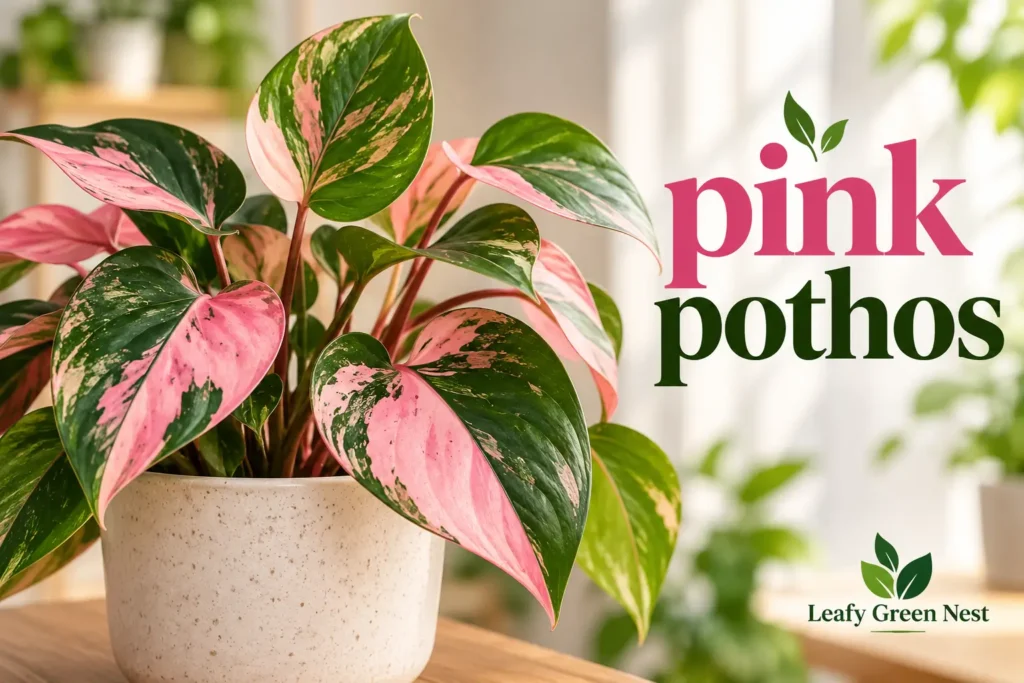
Pink pothos is a popular search term for people looking for a houseplant with striking pink and green leaves. However, the name can be misleading because the plant many shoppers want is Pink Princess Philodendron, not a true pothos. Identifying the plant correctly helps you choose suitable growing conditions and avoid confusing product listings.
This guide explains pink pothos care, plant identification, indoor growing conditions, propagation, common problems, and buying tips. It also includes practical troubleshooting examples, a plant inspection checklist, reliable horticultural references, and technical SEO recommendations for publishing a useful, trustworthy article.
Table of Contents
What Is Pink Pothos?
Pink pothos is an informal name used in online searches and some plant listings, rather than a widely recognized botanical name for a pink-leaved pothos cultivar. True pothos, Epipremnum aureum, usually has green leaves with yellow, cream, or white variegation.
The plant many people mean is Pink Princess Philodendron, botanically known as Philodendron erubescens ‘Pink Princess’. This tropical climbing plant has dark green leaves with pink patches or streaks. Because sellers sometimes use informal names, checking the botanical identity is the safest starting point.
Quick Facts About Pink Pothos
The most useful first step is to identify the plant before choosing a care routine. The details below describe Pink Princess Philodendron, which is commonly associated with pink pothos searches.
| Feature | Details |
|---|---|
| Common search term | Pink pothos |
| Likely plant match | Pink Princess Philodendron |
| Botanical name | Philodendron erubescens ‘Pink Princess’ |
| Plant family | Araceae |
| Leaf appearance | Dark green with pink variegation |
| Light | Bright, indirect light |
| Watering | When the upper soil begins to dry |
| Soil | Airy, well-draining potting mix |
| Growth habit | Climbing tropical houseplant |
| Propagation | Stem cuttings containing a node |
| Pet safety | Toxic if chewed or swallowed |
These details apply to Pink Princess Philodendron, not every plant advertised as pink pothos. If a seller provides a different botanical name, confirm the species before following this care advice.
Pink Pothos Care: Light, Water, and Soil
Pink pothos care usually refers to growing Pink Princess Philodendron indoors. The plant generally does best with bright, indirect light, careful watering, warm conditions, and a potting mix that allows excess water to drain.
Light Requirements for Pink Pothos Indoors
Bright, indirect light is a good starting point for Pink Princess Philodendron. Place it near a bright window where a sheer curtain filters sunlight. An east-facing window often works well, while a brighter south- or west-facing window may require protection from intense direct sun.
Insufficient light can cause slower growth, longer spaces between leaves, and smaller new foliage. Strong direct sunlight can scorch the leaves.
If new growth becomes mostly green, gradually improve the light and observe subsequent leaves. Do not assume that more sunlight will always produce more pink. Variegation depends partly on genetics, and individual leaves can develop different patterns even under similar conditions.
How Often Should You Water Pink Pothos?
Water when the top 1 to 2 inches of soil feel dry. Apply water evenly until it drains through the bottom of the pot, then empty the saucer.
Avoid following a rigid weekly schedule. A plant in a warm, bright room may dry faster than one in a cooler location. Pot size, soil composition, airflow, and season also affect watering needs.
Practical troubleshooting example: If several leaves turn yellow while the soil stays wet for days, check the drainage holes and inspect the roots. Dark, mushy roots may indicate root rot. If the soil dries normally and only one older leaf turns yellow, natural aging may be responsible.
This is a useful diagnostic approach because it connects visible symptoms with growing conditions rather than treating every yellow leaf as the same problem.
Best Soil for Pink Princess Philodendron
Use an airy, well-draining mix that retains some moisture without becoming waterlogged. A practical starting mixture is approximately 40% indoor potting mix, 30% perlite or pumice, and 30% orchid bark.
These proportions are a flexible starting formula, not a fixed scientific requirement. Adjust the mixture according to how quickly it dries in your home.
Choose a pot with drainage holes. Avoid placing a small root system in an unnecessarily large container because unused soil can stay wet for too long. If the mix becomes compacted or drains poorly, repot the plant into a more open medium.
Temperature and Humidity
Pink Princess Philodendron generally grows well at indoor temperatures around 65 to 80°F (18 to 27°C). Keep it away from cold drafts, sudden temperature changes, and direct airflow from heating or cooling vents.
Moderate to higher humidity can support healthy leaf development, especially when new leaves are unfolding. A humidifier can help in a very dry room, but frequent misting is not essential because its effect on humidity is brief.
Good airflow and suitable watering remain important. High humidity does not compensate for waterlogged soil.
Fertilizing and Pruning
Use a balanced houseplant fertilizer during active growth, usually in spring and summer. Follow the product’s dilution instructions and reduce feeding when growth slows.
Too much fertilizer can cause salt buildup and damage roots. If the plant is stressed, first review watering, drainage, and light rather than adding more fertilizer.
Prune damaged leaves and excessively long stems with clean scissors. A moss pole or other suitable support can encourage climbing. Pruning helps manage the plant’s shape, but it cannot guarantee a particular amount of pink variegation.
Pink Pothos Name: Pink Princess Philodendron vs. True Pothos
Pink pothos and Pink Princess Philodendron are not interchangeable botanical names. Comparing their foliage and growth habits helps you identify the plant before buying it or following a care guide.
| Plant | Botanical identity | Typical foliage | Growth habit |
|---|---|---|---|
| Pink Princess | Philodendron erubescens ‘Pink Princess’ | Dark green with pink patches | Climbing |
| Golden Pothos | Epipremnum aureum | Green with golden-yellow markings | Trailing or climbing |
| Marble Queen Pothos | Epipremnum aureum cultivar | Green with cream or white markings | Trailing or climbing |
| Neon Pothos | Epipremnum aureum cultivar | Bright lime green | Trailing or climbing |
| Heartleaf Philodendron | Philodendron hederaceum | Usually solid green | Trailing or climbing |
If you want noticeable pink-and-green leaves, Pink Princess Philodendron is generally the better match. If you prefer a trailing vine with familiar green and yellow patterns, Golden Pothos may be more suitable.
How to Identify Pink Princess Philodendron
Look for dark green leaves with pink patches, streaks, or larger pink sections. The stems can have reddish tones, and the plant often climbs when given suitable support.
Pink patterns vary naturally. One leaf may have large pink areas, while another may have very little pink. This variation does not automatically indicate poor health.
Do not confuse Pink Princess with Pink Congo Philodendron, which is a different plant. When shopping, check the botanical name and ask for clear photographs of the actual specimen.
For an additional reference on identification and growing conditions, consult the Royal Horticultural Society’s Pink Princess Philodendron growing guide.
Pink Pothos Propagation: How to Grow New Plants
Pink Princess Philodendron can be propagated from a healthy stem cutting containing at least one node. A node is the point on a stem where a leaf or new growth can emerge.
Follow these steps to give your cutting a good start.
- Choose a healthy stem. Select a firm section with at least one node and preferably one healthy leaf.
- Make a clean cut. Use clean, sharp scissors to cut just below the node.
- Select a rooting medium. Place the node in water or a lightly moist, airy propagation mix.
- Provide suitable conditions. Keep the cutting warm in bright, indirect light.
- Monitor root development. Replace cloudy water as needed, or keep the propagation medium lightly moist rather than saturated.
- Transfer the cutting. Once a useful root system develops, plant the cutting in a small pot with drainage holes and suitable potting mix.
Rooting time depends on temperature, light, and cutting health. Avoid repeatedly removing the cutting to inspect its roots because unnecessary disturbance can slow establishment.
A leaf without a node generally cannot develop into a complete new vine. Before cutting your plant, make sure the section includes a node capable of producing new growth.
Pink Pothos Problems: Yellow Leaves and Fading Color
Yellow leaves, brown tips, slow growth, and fading pink patterns can have several causes. Diagnose symptoms alongside soil moisture, light exposure, root condition, and recent changes in care.
| Symptom | Possible cause | What to do |
|---|---|---|
| Yellow leaves with wet soil | Overwatering or root damage | Check drainage and inspect roots |
| One older yellow leaf | Natural aging | Monitor the rest of the plant |
| Brown, dry edges | Inconsistent watering, dry air, or salt buildup | Review moisture and fertilizer use |
| Mostly green new leaves | Natural variation or insufficient light | Improve indirect light gradually |
| Long, bare stems | Low light or sparse growth | Improve light and prune if needed |
| Soft stems or mushy roots | Root rot | Remove damaged tissue and repot if necessary |
| Small new leaves | Limited light, crowded roots, or insufficient nutrients | Review growing conditions |
| Visible insects | Pest infestation | Isolate the plant and identify the pest |
Why Is My Pink Princess Losing Its Pink Color?
Pink coloration varies naturally, so not every new leaf will show the same pattern. If new growth repeatedly appears mostly green, check whether the plant receives enough bright, indirect light.
Move the plant gradually to a brighter location and observe subsequent leaves. Avoid intense direct sunlight because it can scorch foliage.
If one stem repeatedly produces only green leaves, pruning it back to a section with better variegation may encourage a different growth pattern. This is not guaranteed because variegation depends on the plant’s genetics and growth.
Why Are the Leaves Turning Yellow?
One older leaf turning yellow occasionally may be normal. Several yellow leaves appearing together may point to a watering problem, root damage, or an unsuitable growing environment.
Check whether the soil stays wet for too long, whether the pot has drainage holes, and whether the roots feel firm. Dark, mushy roots or an unpleasant smell can indicate root rot.
If the roots look healthy, review light levels, watering frequency, and fertilizer use. Change one condition at a time so you can judge whether the adjustment helps.
How to Check for Common Houseplant Pests
Inspect the undersides of leaves, stem joints, and new growth. Spider mites may leave fine webbing or pale speckling. Mealybugs can appear as small white, cotton-like clusters, while scale insects may look like small bumps attached to stems or leaves.
If you find pests, isolate the plant from other houseplants. Identify the pest and use an appropriate treatment according to its label. Check the plant again over the following weeks because one treatment may not eliminate every pest or egg.
Pink Pothos Plant for Sale: How to Choose a Healthy Plant
When searching for a pink pothos plant for sale, look for Pink Princess Philodendron if you want dark green leaves with pink variegation. Checking the botanical name and the plant’s actual condition helps you avoid misleading listings.
What to Check Before Buying
Use this checklist before visiting a nursery or ordering pink pothos online.
- Confirm the botanical name: Look for Philodendron erubescens ‘Pink Princess’.
- Inspect the leaves: Choose firm foliage without widespread yellowing or severe damage.
- Check the stems: Avoid plants with soft, rotting, or badly damaged stems.
- Look for pests: Examine leaf undersides and stem joints.
- Request current photographs: Online listings may show a mature specimen rather than the plant you will receive.
- Ask about variegation: Check whether the photographs show the actual plant.
- Compare the total cost: Include the plant, pot, delivery, packaging, and return policy.
- Check delivery conditions: Tropical plants can suffer from prolonged exposure to excessive heat or cold.
A small plant with healthy roots may be a better purchase than a larger plant with damaged foliage. Choose a seller who can confirm the plant’s identity and explain its current growing conditions.
Pink Pothos Near Me: Finding Local Sellers
Searching for “pink pothos near me” can help you find nurseries, garden centers, houseplant shops, and independent sellers. Ask specifically for Pink Princess Philodendron because sellers may use different common names.
Confirm current stock, size, price, and delivery arrangements before visiting or paying. For online purchases, request clear photographs of the actual plant and details about how it will be packaged.
Pink Pothos Atlanta: Buying in a Specific City
If you are searching for Pink Pothos Atlanta, try more precise phrases such as “Pink Princess Philodendron Atlanta” or “Pink Princess plant nursery Atlanta.” These searches can help distinguish the plant you want from ordinary pothos varieties.
Contact the seller before travelling. Ask for current photographs, confirmation of the botanical name, and information about plant size. Prices and availability vary by seller, maturity, variegation, and season. Keep this section only if Atlanta is part of your intended audience.
Pink Pothos Indoors: Benefits, Drawbacks, and Pet Safety
Pink Princess Philodendron can make an attractive indoor display because of its contrasting pink and green foliage. However, it needs appropriate light, careful watering, and protection from pets or children who may chew houseplants.
| Benefits | Drawbacks |
|---|---|
| Distinctive pink-and-green foliage | Pink patterns vary between leaves |
| Suitable for indoor growing | Needs bright, indirect light |
| Can be propagated from stem cuttings | New plants take time to establish |
| Can climb a support or trail from a pot | May need pruning and training |
| Adds color to a plant collection | Can cost more than common pothos |
| Works as a decorative focal point | Toxic if chewed or swallowed |
Is Pink Princess Philodendron Safe for Pets?
No. Pink Princess Philodendron is not considered pet-safe. Philodendrons contain insoluble calcium oxalate crystals that can irritate the mouth and digestive tract when chewed.
Possible symptoms include mouth pain, drooling, swelling, and difficulty swallowing. Keep the plant away from pets and children. If ingestion causes symptoms, contact a veterinarian or medical professional. Seek urgent help if breathing or swallowing becomes difficult.
Expert Tips for Healthy Pink Foliage
The best approach is to support healthy growth instead of trying to force the plant to produce more pink. Consistent care and regular observation can help you identify problems before they become severe.
- Rotate the pot occasionally to distribute light more evenly.
- Clean pruning tools before using them on another plant.
- Check new leaves regularly for pests and changes in color.
- Keep a simple record of watering dates and new growth.
- Check drainage before increasing watering frequency.
- Avoid changing several growing conditions at once when the plant looks unwell.
- Focus on healthy roots and leaves rather than maximizing pink coloration.
Practical care tip: When a leaf changes color, check the soil and inspect the plant before adding fertilizer or moving it into stronger light. This reduces the risk of making several unnecessary changes at once.
Pink Pothos Care: Is This the Right Plant for Your Home?
Pink pothos is a useful search term, but Pink Princess Philodendron is usually the better match if you want pink-and-green foliage. Correct identification, bright indirect light, careful watering, and well-draining soil are the foundations of good care.
Before buying, confirm the botanical name and inspect the plant’s condition. With suitable growing conditions and realistic expectations about pink variegation, this tropical houseplant can become a colorful addition to your indoor collection.
Frequently Asked Questions
What is the real name of the pink pothos plant?
The plant commonly meant by pink pothos is Pink Princess Philodendron, botanically known as Philodendron erubescens ‘Pink Princess’. True pothos is Epipremnum aureum.
Is Pink Princess Pothos a real pothos variety?
No. Pink Princess Pothos is an informal search or seller name. The pink-and-green plant usually sold under this name is a philodendron, not a true pothos.
Can pink pothos grow indoors?
Yes. Pink Princess Philodendron can grow indoors with bright, indirect light, warm temperatures, and well-draining soil. Water when the upper soil begins to dry, and avoid leaving the roots in standing water.
Should I mist my Pink Princess Philodendron?
Misting is not essential because its effect on humidity is brief. If your indoor air is very dry, a room humidifier is a more reliable way to increase humidity around the plant.
Why is my Pink Princess plant losing its pink color?
Pink patterns vary naturally. If new leaves repeatedly appear mostly green, check whether the plant receives enough bright, indirect light. Avoid harsh direct sunlight, which can burn the leaves.
Does Pink Princess Philodendron need special soil or fertilizer?
It benefits from an airy, well-draining potting mix and balanced fertilizer during active growth. Specialty products marketed for pink plants are unnecessary. Good light, healthy roots, and sensible watering matter more.


